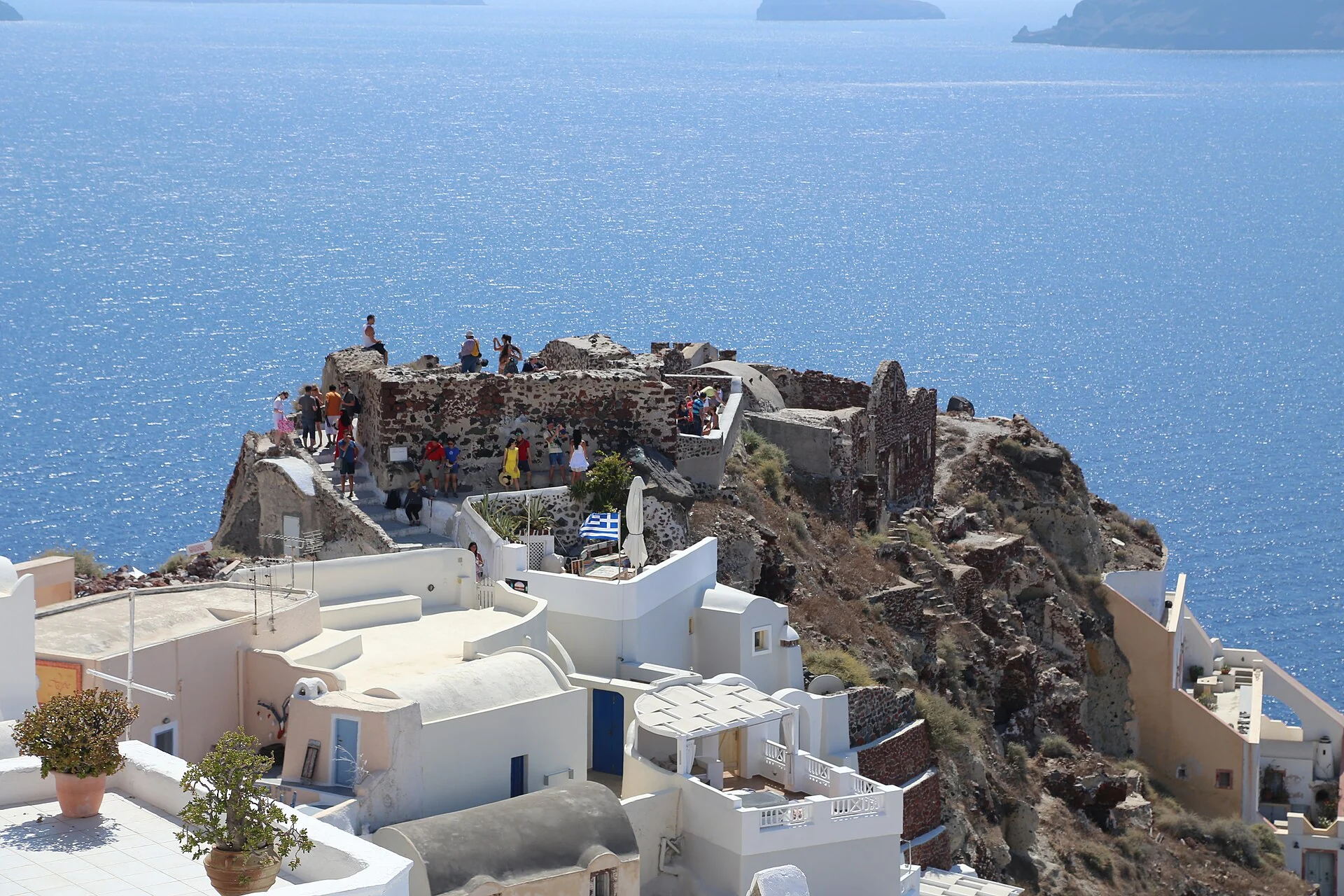
Horizontal, blue sea ahead, white houses along the cliff edge, red flowers near

Oia, Santorini, Greece

Oia, SantoriniWhite houses stepping down the cliff

From the sea the houses look grown from the brown cliff. Inside you learn the path rises and falls, domes, terraces and steps crowded together, and rounding a corner opens onto a wholly open sea.

At the island's northwest tip, the village and Thirasia share one municipality; the main street is a stone path along the ridge.

PlaceOia, Santorini, Greece
TypeClifftop village on volcanic cliffs
SuitsTravelers who want to know why the white houses follow contours
Best seasonSummer noon bleaches the steps; thin cloud reveals white against rock

Cliff, houses and sea

Oia, Santorini, Greece — Clifftop village on volcanic cliffs.

First take in the village and the sea's drop together from the cliff edge.

Captain's houses and cave dwellings sit side by side, two house types telling one seafaring era.

Blue-domed churches and windmills stand at opposite ends; walking over you'll find the path isn't level.

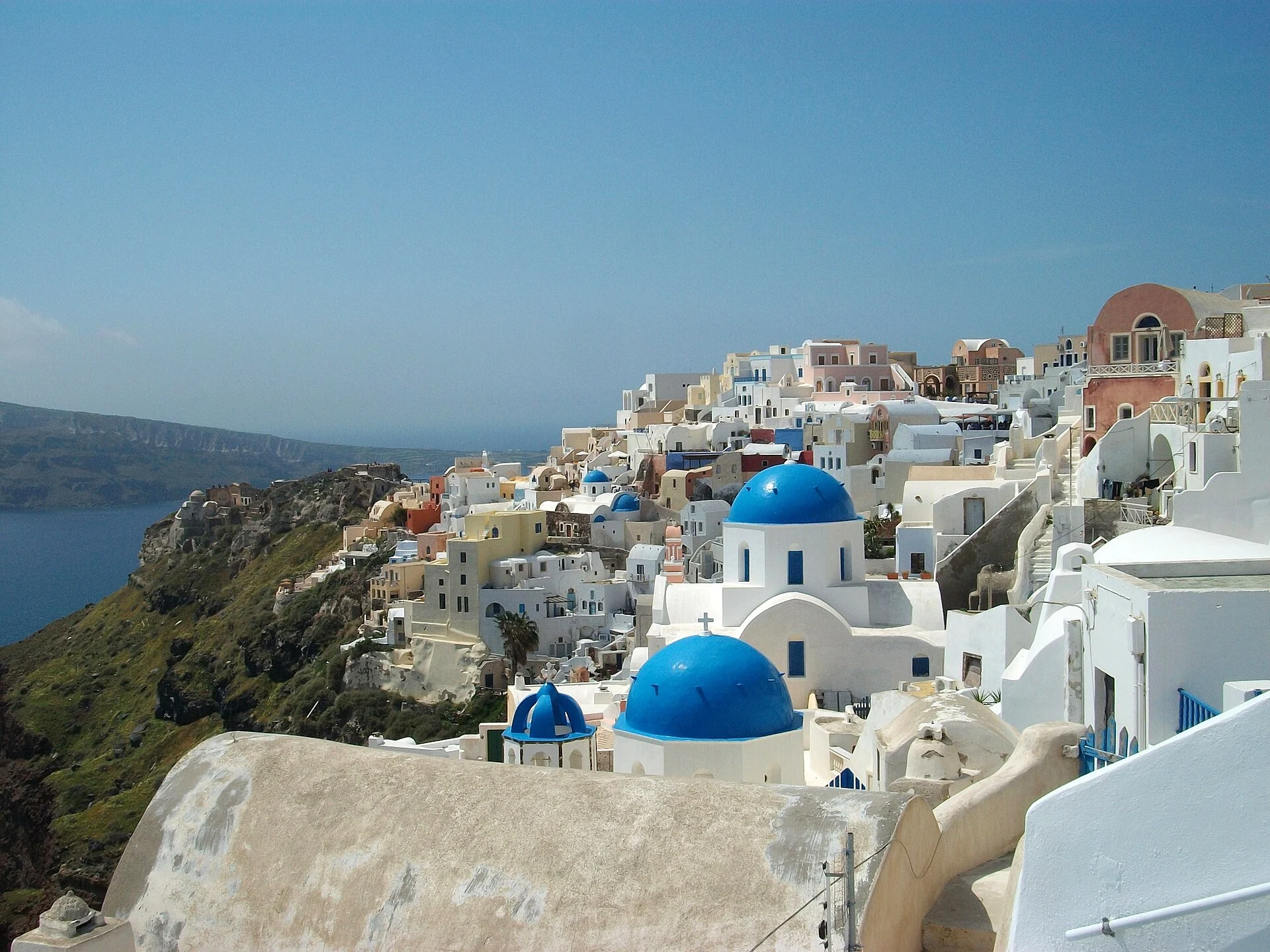
Horizontal, brown cliff face and layered white houses, blue domes between
Cliff face and blue domes
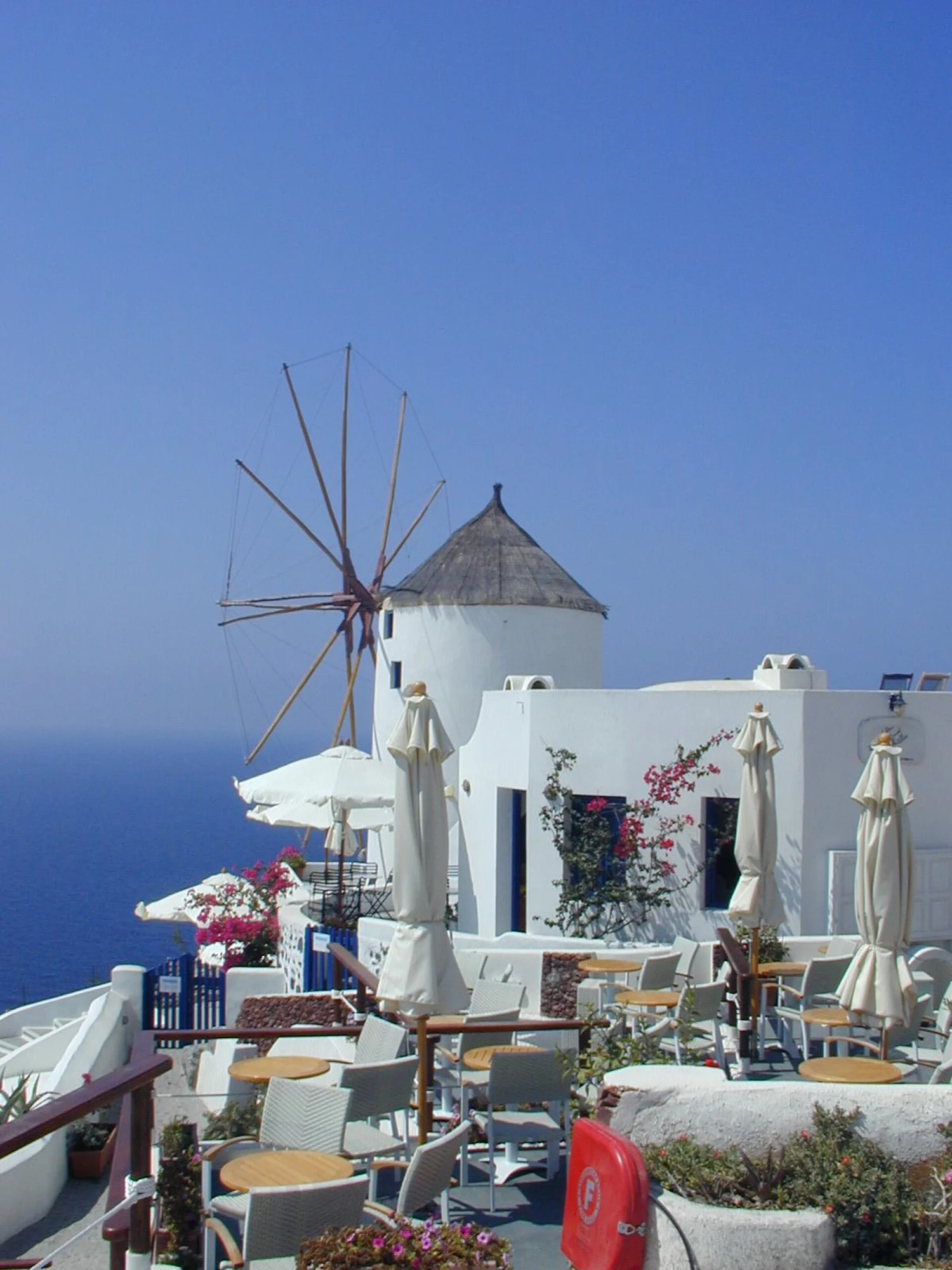
Vertical, white windmill under deep blue sky, terrace tables and parasols in front
Windmill and terrace
Horizontal, two blue-domed churches and layered white walls, a line of sea beyond

A village built on the cliff ridge

Oia is in the Cyclades of the South Aegean, part of the municipality of Santorini, covering the whole of Thirasia island and the northwest corner of the main island. In 2021 its population was 1,087 and land area 19.449 square kilometres. The main street is Nikolaou Nomikou; the village's old name means 'upper', still used by locals.

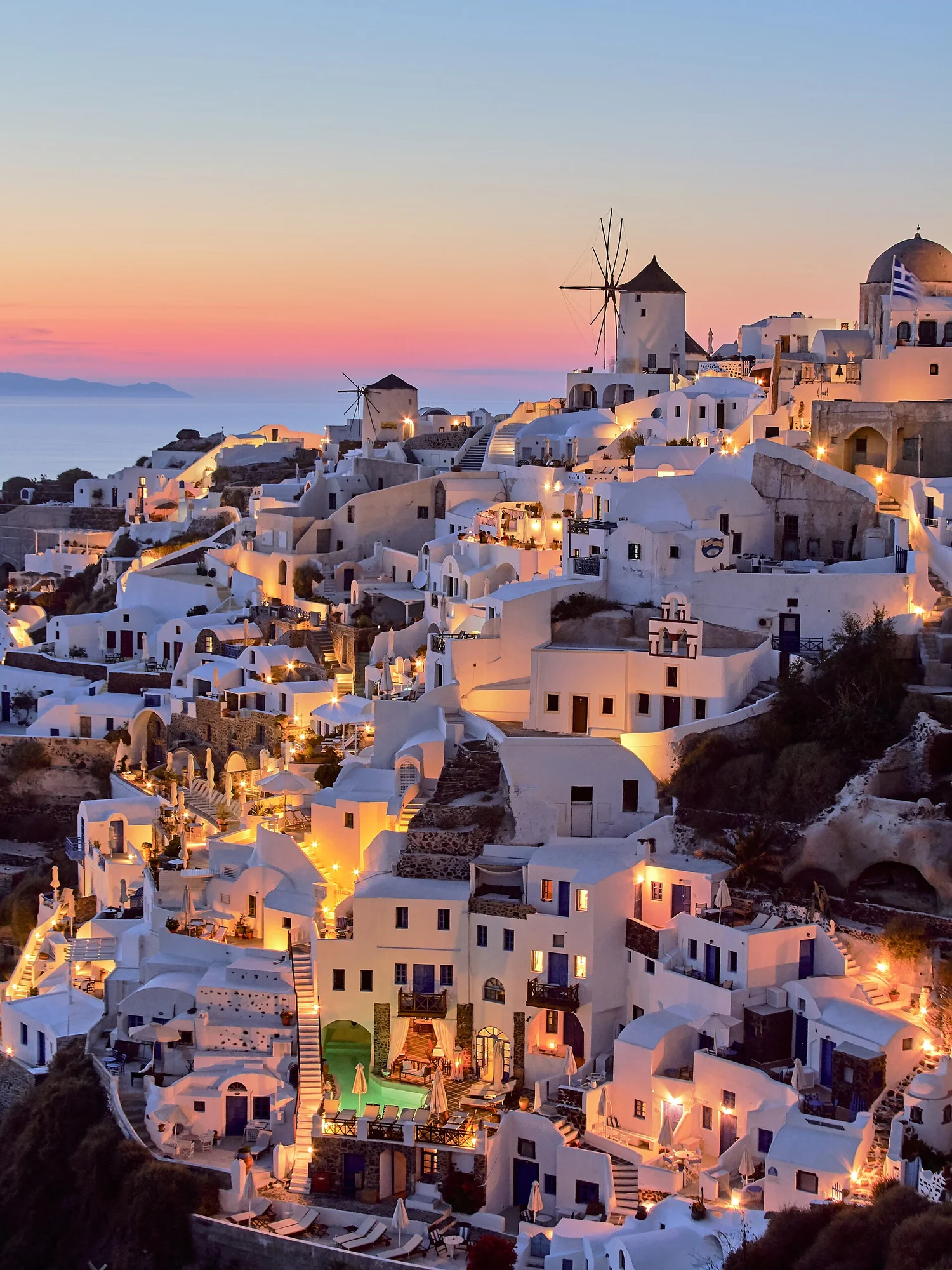
Vertical, the whole village lit at dusk, sky turning orange to purple

Two-storey houses left by merchant ships

What widened the cliff top was sea trade. In the last decades of the 19th century the local fleet worked the eastern Mediterranean, routes linking Alexandria and Russian ports; around 1890 the population was about 2,500 with some 130 sailing ships. The thick-walled, high-windowed two-storey houses on the cliff top date from that time.

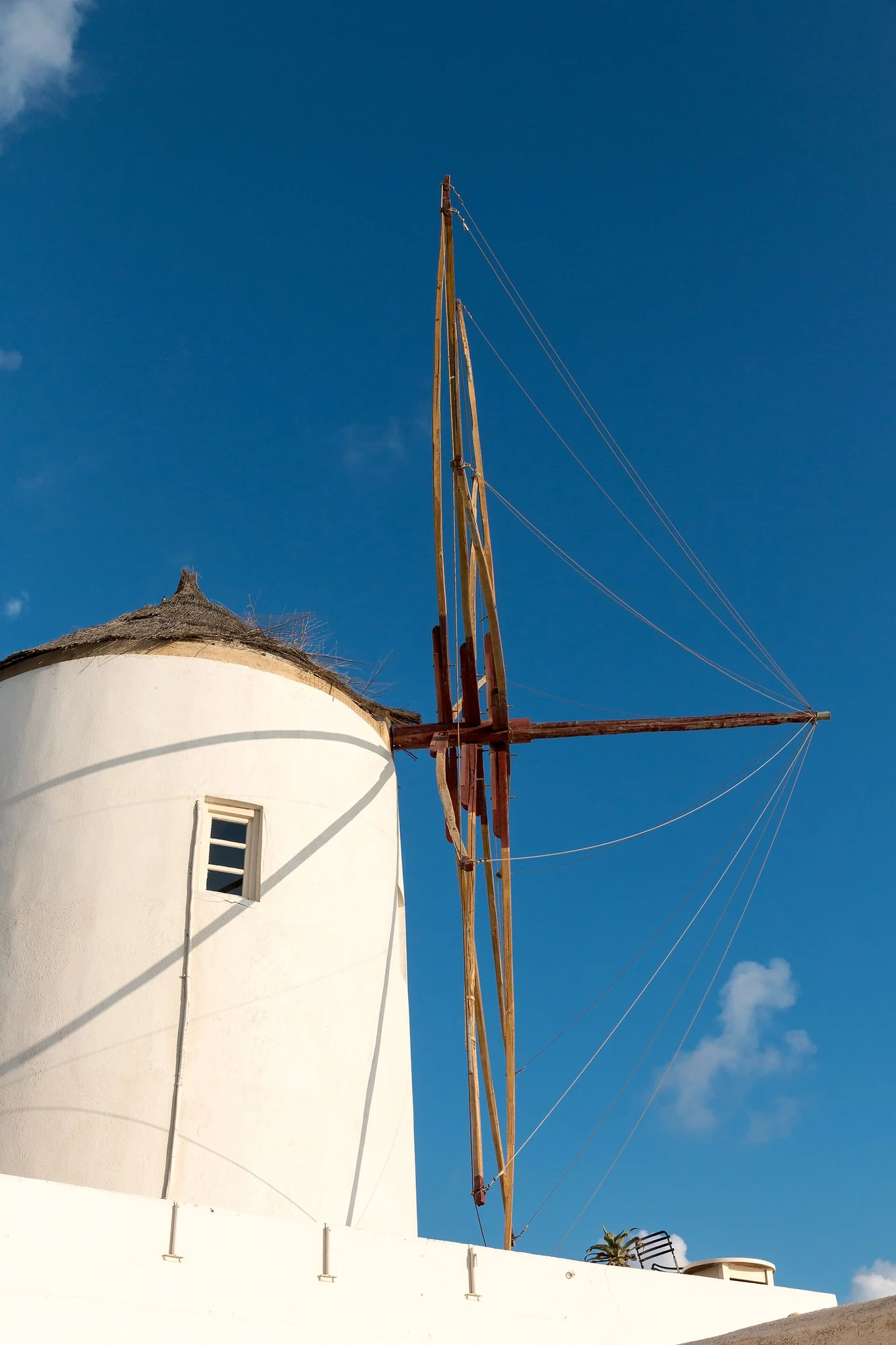
Vertical, looking up at the windmill's blades and spokes, deep blue sky behind

After the earthquake

A magnitude 7.8 earthquake in summer 1956 collapsed part of the cliff-top houses and people left. The white walls and domes rebuilt afterward mostly belong to the following decades; fresh plaster and old stone sit side by side on the same wall, their shades distinguishable.

Horizontal, a brown rock ridge topped with a layer of white houses, clear sky
Route

An afternoon on the cliff ridge

Don't slot it on the island-departure day. Stay on the island the night before, walk the lanes in the morning, save the cliff-edge light for the afternoon, and no night driving.

How the cliff edge is lived on

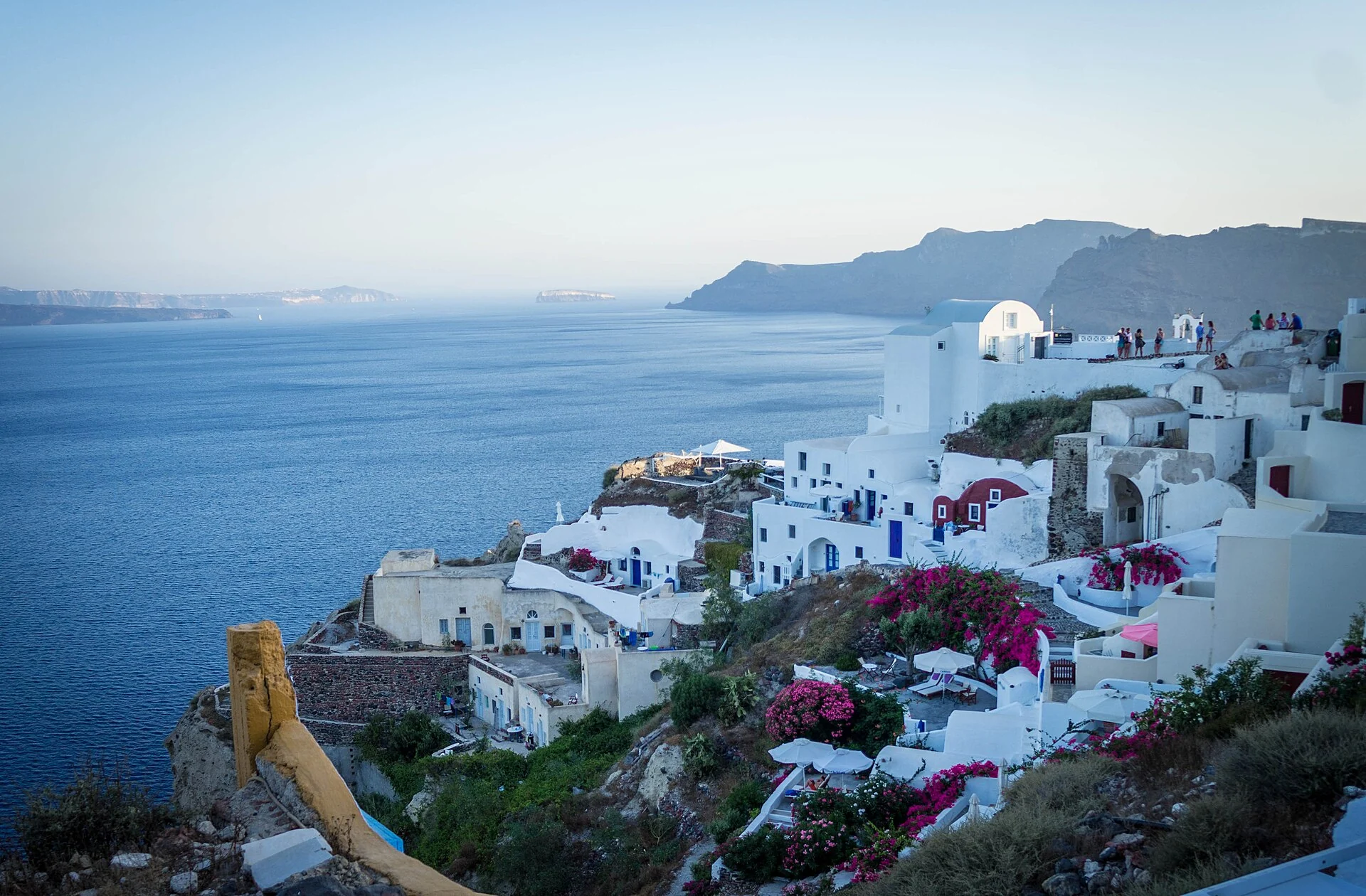
From the sea, first you see not houses but the brown cliff. White walls step down the cliff face, terraces and roofs borrowing each other's positions, almost no flat ground. The northwest tip is windy; house shapes follow the terrain first, good looks came later.

The main street runs along the ridge, shops and homes mixed. A few steps into a side lane, the steps suddenly narrow, and rounding a wall reveals the whole sea again. This contraction and release is the common rhythm of volcanic-island villages, and why walking costs more than the map suggests.

Ancient Greece had another same-named port, southeast of the island near today's Kamari, not this village. The name changed to Oia only in the latter half of the 19th century; before that maps mostly marked it Apanomeria; a mid-17th-century traveller also used the name Castle of Agios Nikolaos.

Captain's houses and cave dwellings

The village's good days were at sea. From the late 19th to early 20th century the merchant fleet ran the eastern Mediterranean, especially the Alexandria-to-Russia line, and money returned to the cliff top. Around 1890 some 2,500 residents and about 130 sailing ships are the numbers left by that time.

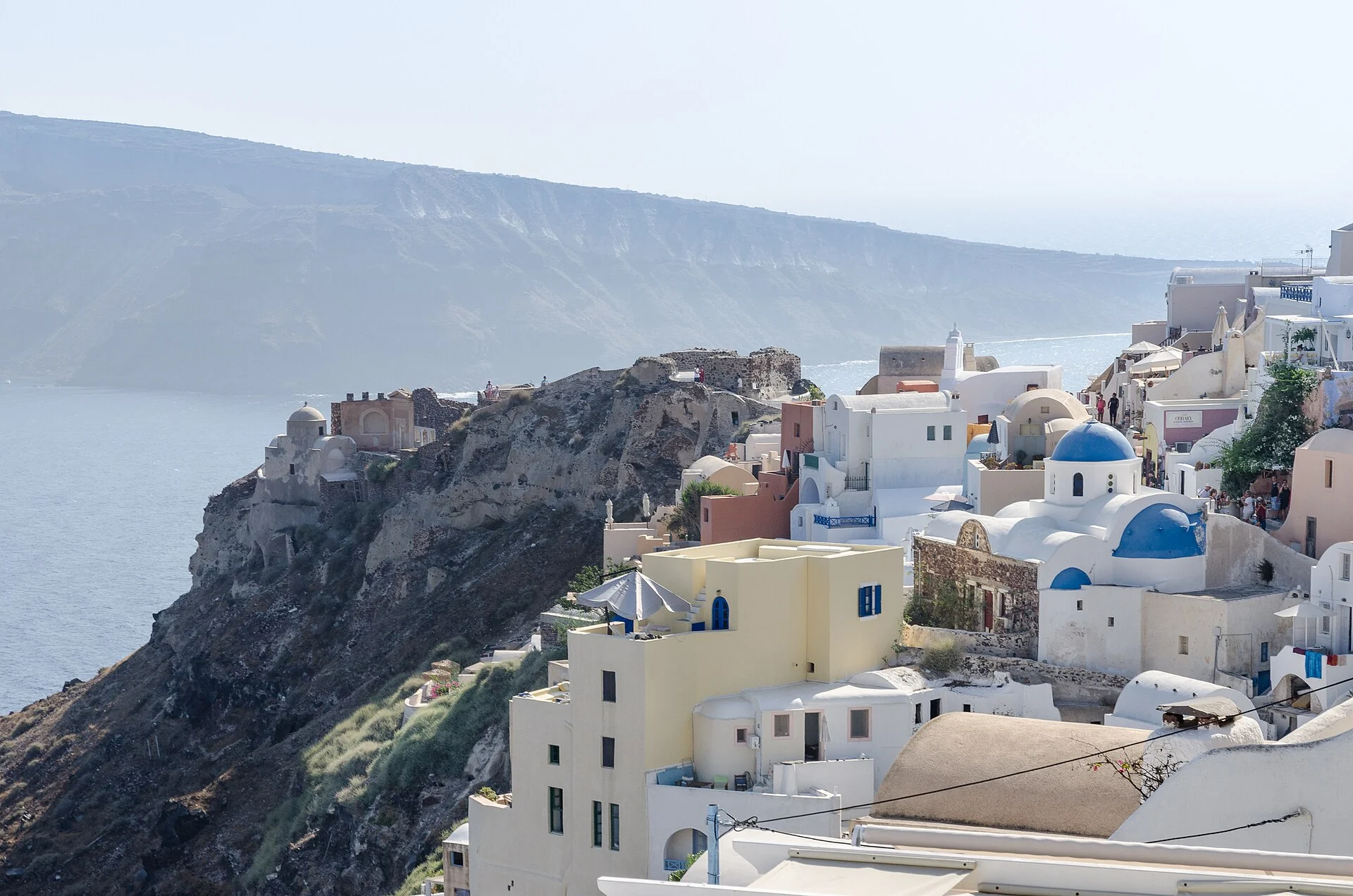
At the highest point, the two-storey captain's houses, thick-walled and high-windowed, sit almost two different buildings from the cave dwellings dug into the soft rock, yet on the same street. The former seeks a view; the latter, warmth in winter and cool in summer. Seeing both side by side tells more than one white wall about how the village grew.

Further back, after the Venetians came to the islands in 1207 and imposed feudal rule, the Castle of Agios Nikolaos under the Dacoronia family was one of five local castles. Goulas residence-fortress remains in the oldest southwest corner, where you can see why the first settlement chose this spot.
The gap left by the earthquake

On 9 July 1956 a magnitude 7.8 earthquake destroyed part of the village, after which population kept falling to just 306 by 1977. Most of the tidy white walls seen today were slowly rebuilt after that; close up the stone joints still show old and new.

Because of this gap, the village was never re-laid as a modern town. Steps, terraces and narrow lanes stayed; new parts continue the old, and from the cliff edge the houses still step along the contour.

At dusk people gather at the village's west end, light warms the white walls and the sea sinks. On the way back, the windmill end is much quieter; the same ridge, the two ends completely different sounds, worth keeping both for this trip.

An afternoon along the cliff ridge

First read the terrain at the cliff edge, walk the main street to the west end, detour on the return to the captain's houses, then wait for the light at the windmill side.

Time needed

At least a half day for the main street return plus the windmill and castle ruins at both ends; allow extra for the island's south.

Opening

Which paths and viewpoints are open changes by period; at dusk the ridge crowds and some steps go one-way.

Access

All stone steps and narrow lanes, constant up and down, hard midday glare. Slow movers rest mid-main-street.

Best light

Summer noon bleaches the steps; thin cloud or autumn raking light separates white wall from rock.

Talk through my trip idea

If you're planning those days on Santorini, tell me whether you'll keep a half day or a full day, and whether anyone moves slowly or dislikes sun.

[email protected]

Read this page in Chinese

Discuss this journey