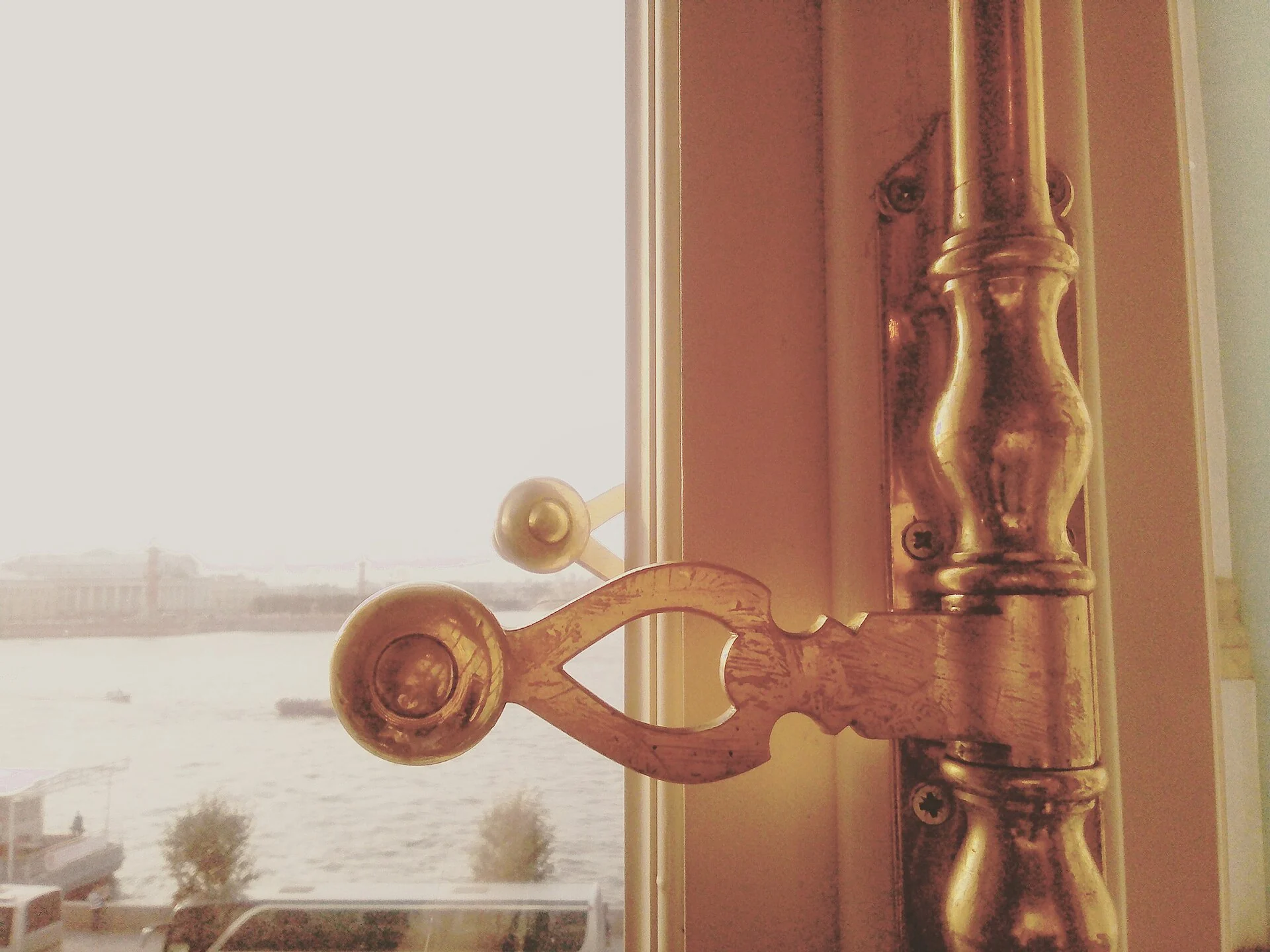
A gilded bronze ornament by a window, grey river water beyond the glass

Saint Petersburg, Russia

State Hermitage MuseumThe palace itself is the exhibit

Inside, you climb a white-and-gold staircase first, looking up at rows of arched windows and gilded flourishes, the marble underfoot worn bright. Deeper in, room follows room, green stone columns, red drapery, and gilded doors changing colour in turn. This was once the tsar's residence; after the paintings moved in, the building never stepped back.

On the Palace Embankment along the south bank of the Neva, several buildings line the river, fronting the Palace Square.

PlaceSaint Petersburg, Russia
TypePalace complex and art museum
SuitsThose who'll give one building a half day and read rooms as craft, not only famous paintings

Palace, halls, and paintings

Saint Petersburg, Russia — Palace complex and art museum.

First tell the riverside buildings apart, or you'll read one spread of houses as a single museum.

The staircases, the Malachite Room, and the Armorial Hall doors are themselves specimens of architecture and craft.

The collection's story holds more than what's hung; rounds of purchase, evacuation, and sale all stay in the record.

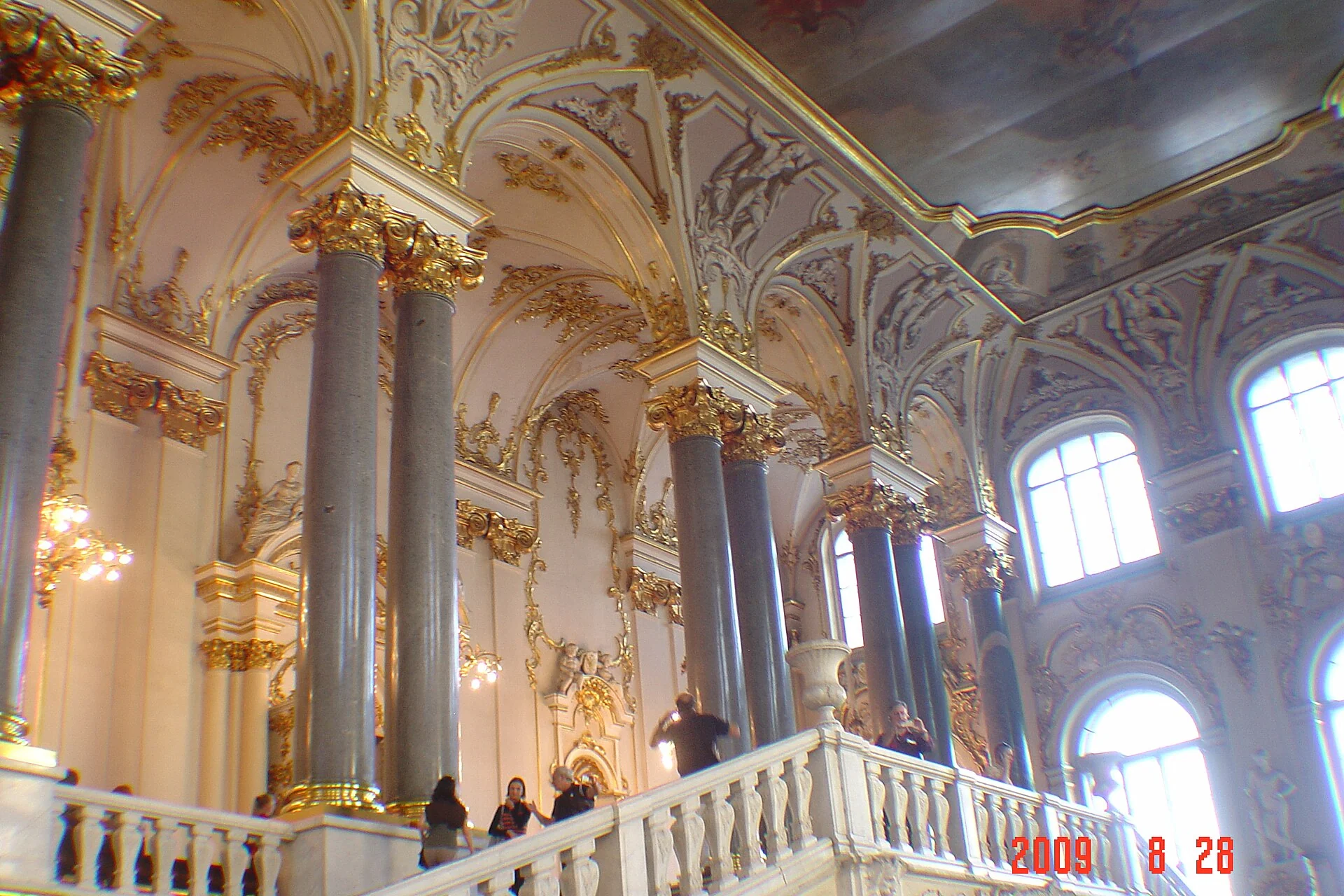
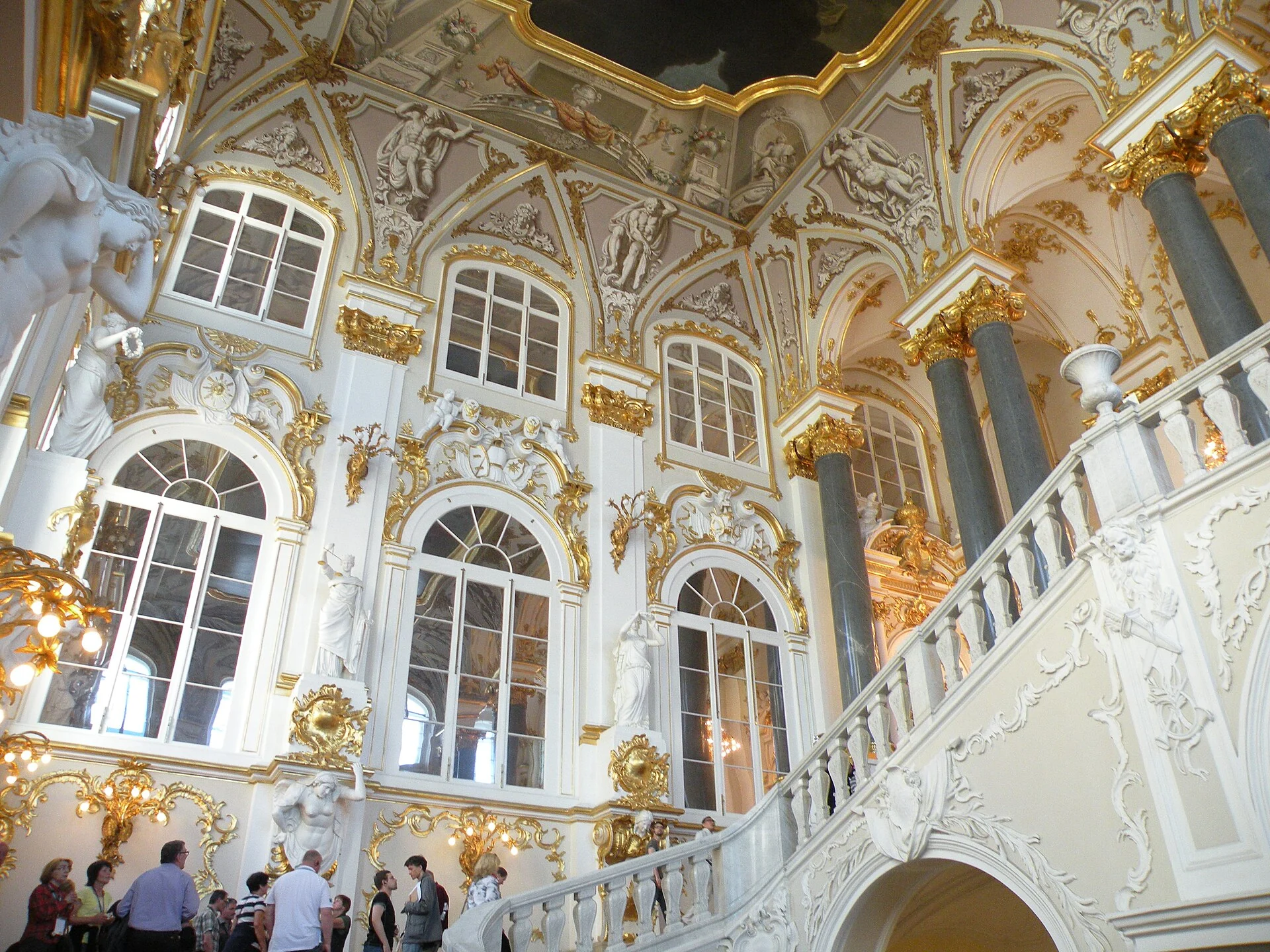
White-and-gold staircase hall with rows of arched windows and railings, visitors below
The white-and-gold staircase hall with its rows of arched windows
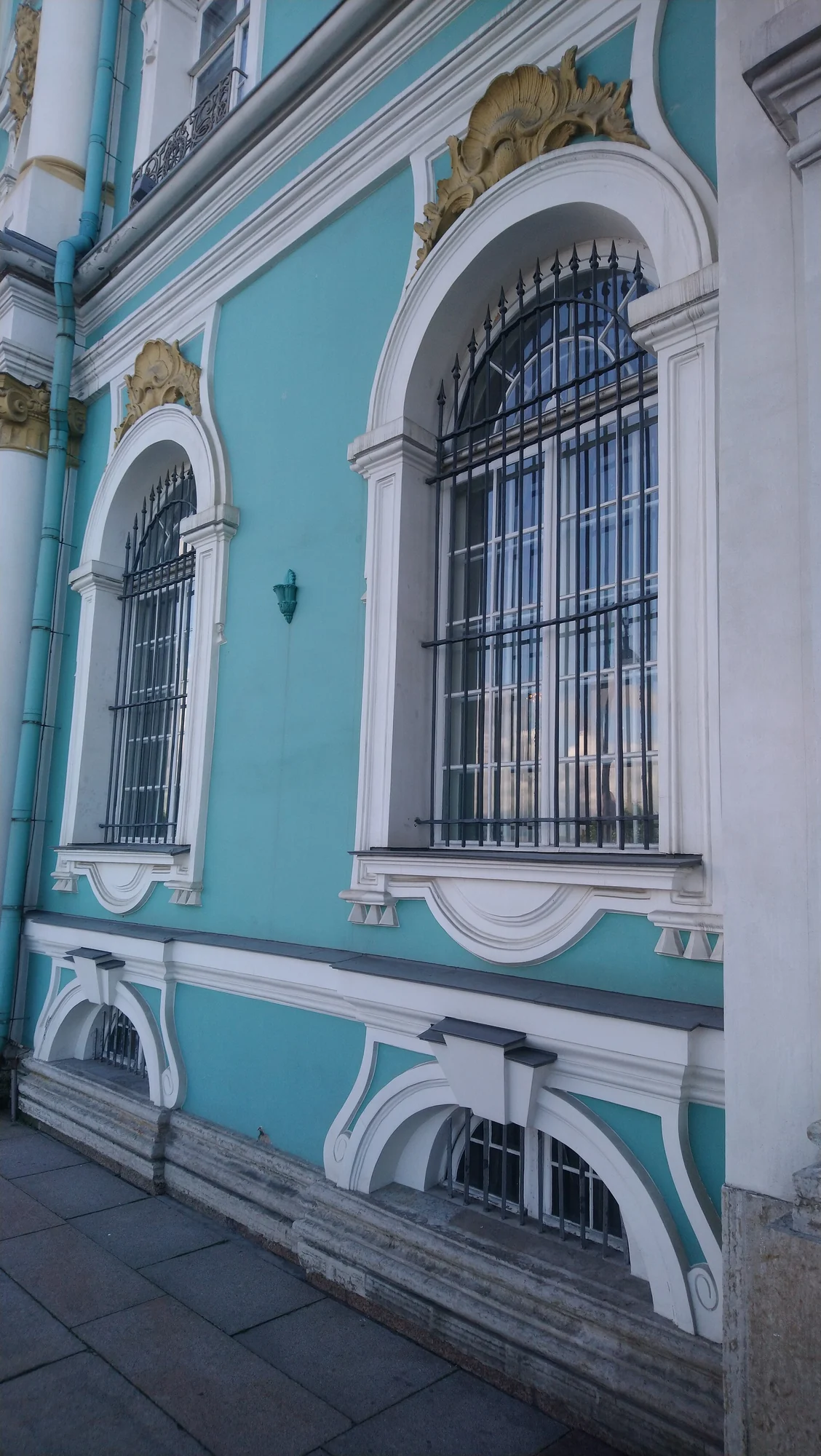
A long arched window with iron grille on a green-and-white outer wall
A long arched window on the green wall
A gilded decorative hall with rows of columns and a chandelier

A batch of paintings in 1764

Catherine II bought a group of Western European paintings from the Berlin merchant Gotzkowsky, taken as the start of the collection. Accounts differ at 225 or 317 works, mainly Flemish and Dutch, with Rembrandt, Rubens, and Van Dyck among them. That group included the 1636 'Danaee', still in the museum today.

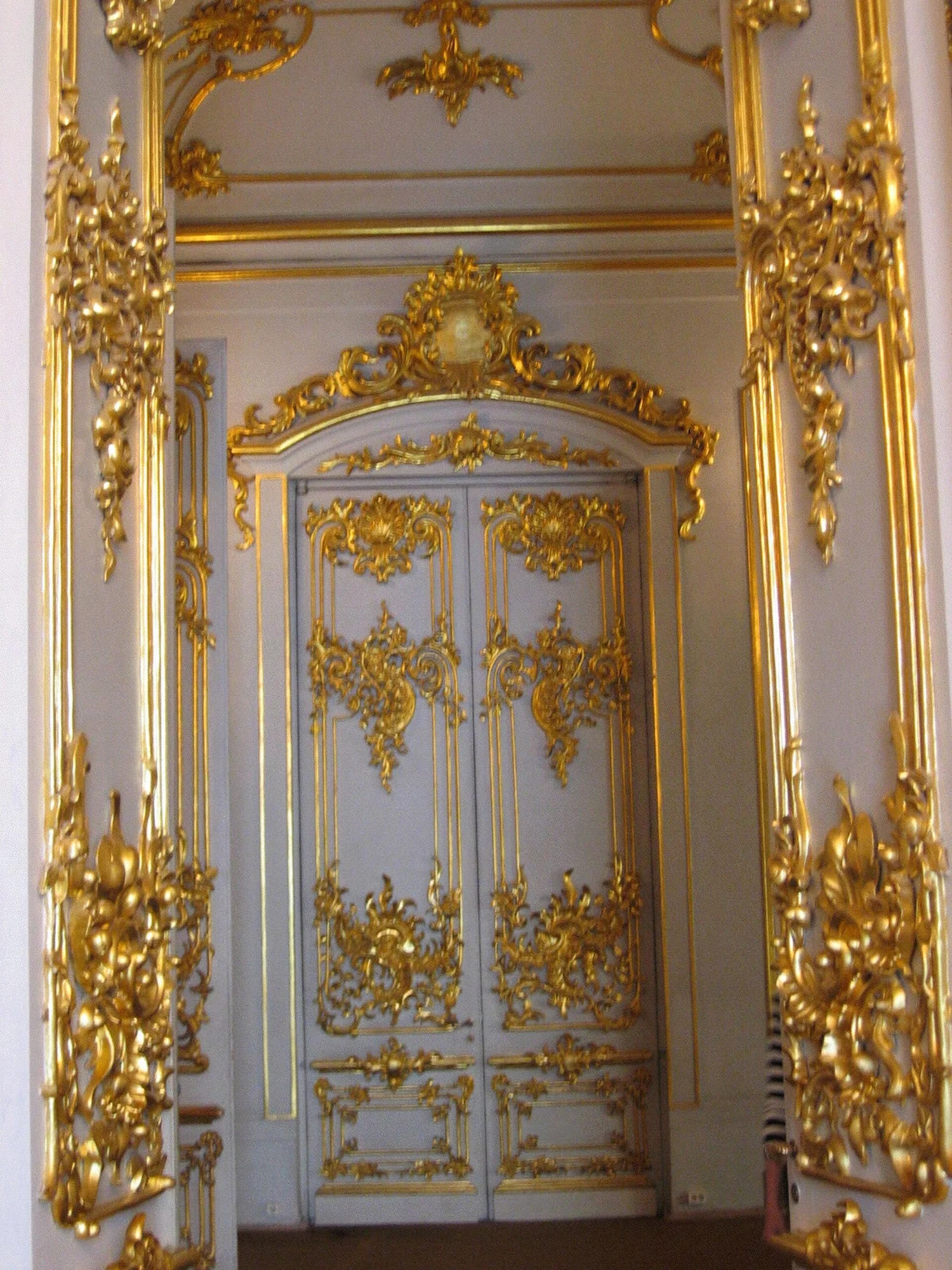
Two gilded doors on a white wall, dense gilding all around

The name meant a place to withdraw

Hermitage means the dwelling of a hermit. The few private apartments inside the Winter Palace were so called because the tsar wanted to slip away from court ceremony, keeping only his close circle. As the private collection grew it spilled building by building along the embankment; the group now called the Small Hermitage still carries that old sense.

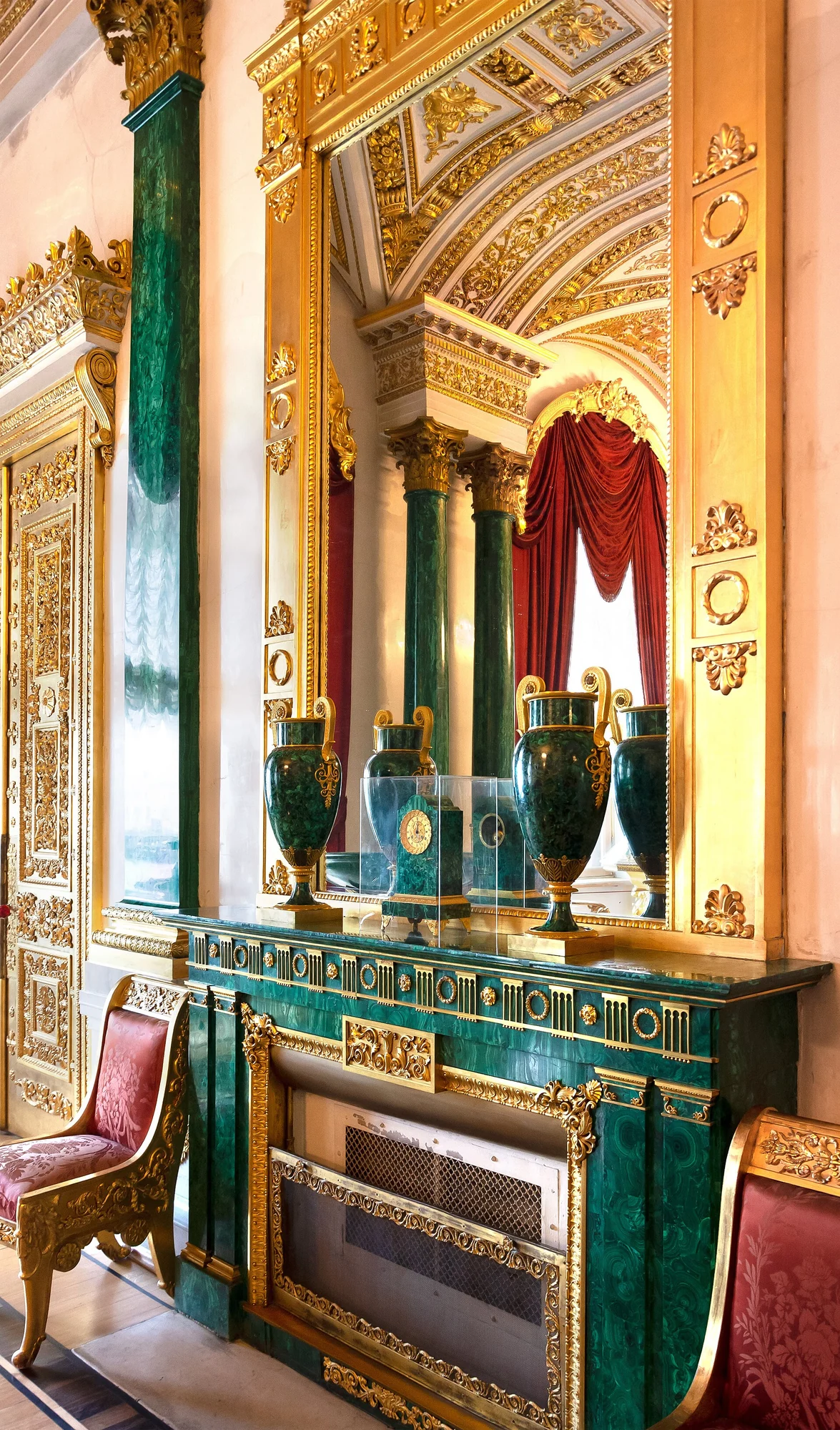
Green stone columns between red drapery, a blue porcelain vase set among them

Three million items, only a fraction shown

The holdings total over three million objects, about a third of them coins. Only a small part is on permanent display, the rest in storerooms and other sites. Of the six historic buildings along the Palace Embankment, five are open to the public — the Winter Palace, Small Hermitage, Old Hermitage, New Hermitage, and Hermitage Theatre — and the east wing of the General Staff Building also belongs here.

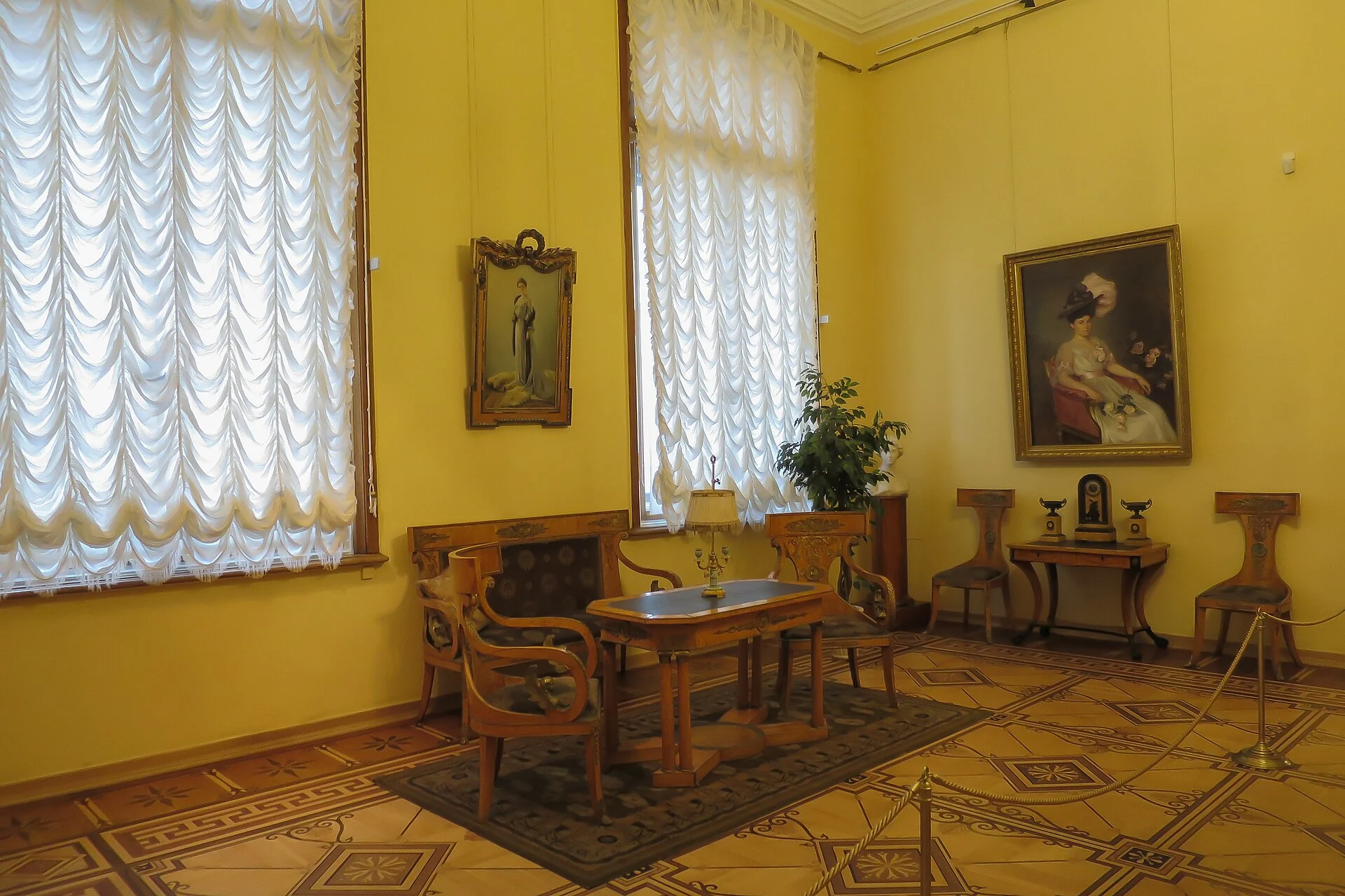
A yellow-walled room with lace curtains, wooden tables and chairs, and two small paintings
Route

Shortly after opening

Don't slot it on a transfer day. Enter in the morning when it's quiet; walking several buildings takes real stamina, and the afternoon suits only a short add-on.

The riverside buildings added over time

In 1764 Felten was ordered to add a wing east of the Winter Palace, finished two years later as the south pavilion of the Small Hermitage. In 1767 to 1769 de la Mothe built the north pavilion on the Neva bank; eight years later the two were joined by a gallery, and the paintings hung in those galleries. That whole Neoclassical group came to be called the Small Hermitage.

The collection outgrew the building. In her lifetime she took in 4,000 Old Master paintings, 38,000 books, 10,000 carved gems, 10,000 drawings, 16,000 coins and medals, plus two galleries of natural-history specimens. In 1771 she asked Felten for another building, completed in 1787 — the Large Hermitage, also called the Old Hermitage.

In 1838 Nicholas I asked the German architect Klenze for a building open to the public. The Shepelev Palace and Imperial Stables were demolished to free the ground; from 1842 to 1851 Stasov and Efimov supervised, folding in Quarenghi's wing with the Raphael Loggias. The New Hermitage opened on 5 February 1852.
Staircase and a few halls

The Jordan Staircase is the big space you meet first inside the Winter Palace: white walls with gilded ornament, arched windows splitting the light between upper and lower, the balustrade curling upward. It belongs to the palace's ceremonial part, not designed to hang pictures, yet it's the first thing many remember of the building.

Further in, the rooms change material by room. The Malachite Room uses green stone columns and gilding to hold an entire wall; the Armorial Hall doors are white with gilt, their detail so fine you must step close. On the New Hermitage ground floor stands a 2.57-metre, 19-tonne jasper vase, the body set up in 1843 before the surrounding wall was built.

The pavilion hall of the Small Hermitage's north pavilion, made by Stackenschneider in 1858, holds an eighteenth-century peacock clock and a set of mosaics. The New Hermitage's eastern Knight's Hall was first designed in Greek Revival style for coins, later given to fifteenth-to-seventeenth-century Western arms and armour. In one museum, the rooms' uses keep changing.

The comings and goings of the collection

After Catherine the buying never stopped. In 1769 the 600-odd paintings of Bruhl in Saxony; in 1779 the 198 of Walpole in London; in 1865 the 'Litte Madonna' then attributed to Leonardo; in 1914 the 'Benois Madonna'. The 38 bought from Josephine's heirs in 1815 once made this Rembrandt holdings the world's largest.

Two great twentieth-century moves ran opposite ways. From 1930 to 1934, over 2,000 works were quietly auctioned abroad or sold straight to foreigners, among them named works by Raphael, Titian, and Van Eyck. Before the 1941 German invasion and the Leningrad siege, two trains carried a batch of holdings to Sverdlovsk; during the siege the building took two bombs and several shells, reopening in November 1945.

The museum holds later notes too: in 1985 someone threw sulfuric acid on Rembrandt's 'Danaee' and slashed it twice; restoration ran to 1997, and the painting now shows behind armoured glass. A colony of cats lives in the courtyard, old residents looked after by the museum's own staff. These small records, like the paintings, belong to the place.

A half day walking the river

Start up the Winter Palace staircase to the second floor, take in the ceremonial halls, cross to the Small Hermitage by corridor, and rest once in the skylit room of the New Hermitage.

Opening & route

Check the current open areas, entry flow, and hall schedules; confirm which rooms are open that day before you leave.

Time needed

At least a half day to walk the buildings in sequence; allow extra to sit in the Western painting rooms.

Season

Winter days are short and window-side rooms brighten in the morning; summer's long light flatters the riverside facades. Check the weather first.

Good to know

Confirm which spots you may approach and which are view-only against the on-site guidance.

Talk through my trip idea

If you're working out those days in Saint Petersburg, tell me whether you mean to give it a half day or a full one, and whether anyone in your group walks slowly.

[email protected]

Read this page in Chinese

Discuss this journey