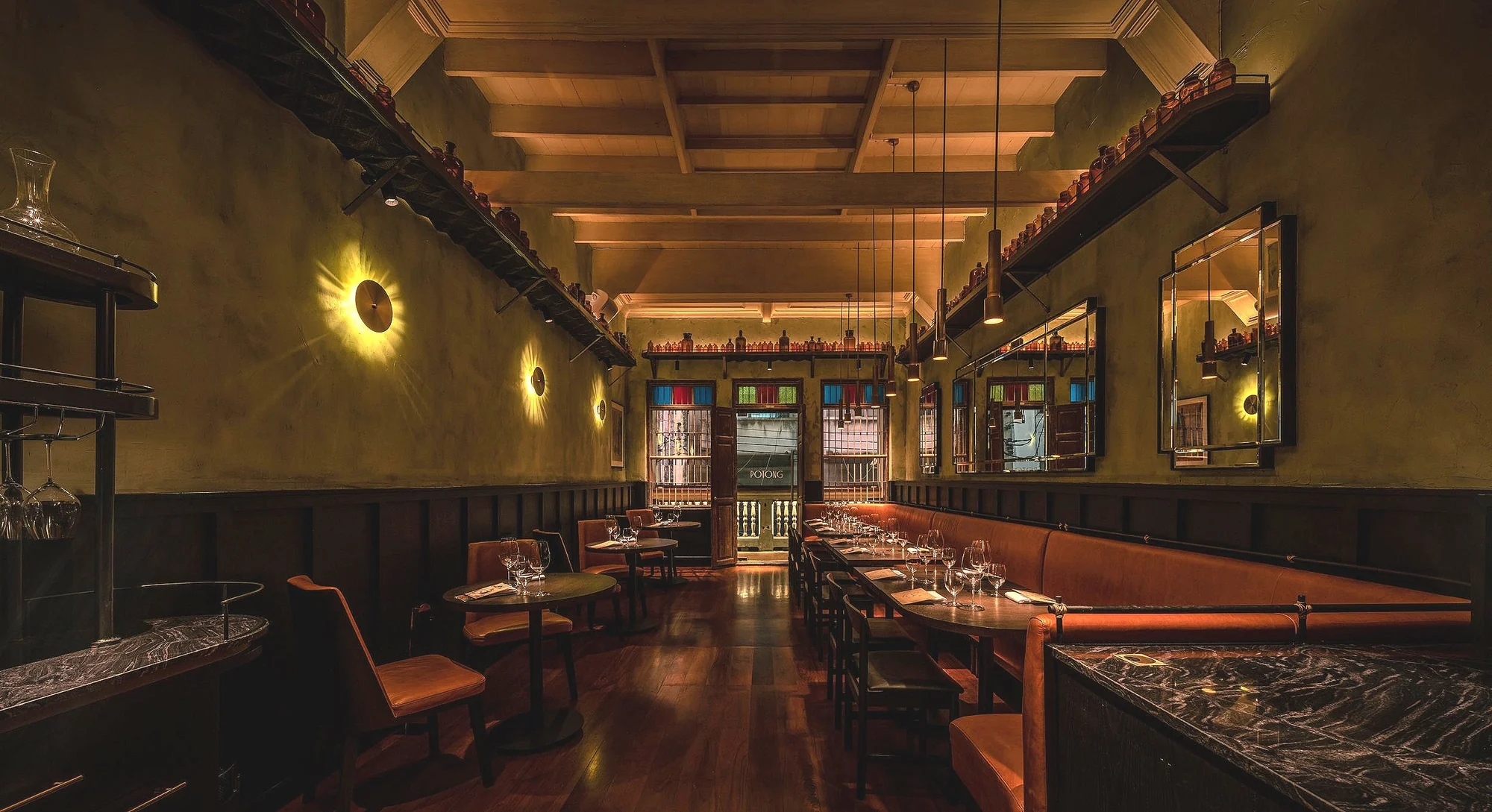
A long dining room with green walls, shelves of glass jars with red lids on both sides and a door with a strip of coloured glass at the far end

Chinatown, Bangkok, Thailand

Restaurant POTONGA five-storey shophouse with a different job on every floor

A five-storey former apothecary where each floor does one thing: drinks below, dinner on the second, a shrine on the third, another bar above, and the roof looking down the street.

The building stands on the inner side of Bangkok's Chinatown, one turn off Yaowarat Road, the main street of the district. It is a shophouse, and the rooms run upwards from the bar.

PlaceChinatown, Bangkok
StyleThai-Chinese tasting
BuildingFive floors
ClosedWednesday

Two kinds of time in one building

Chinatown, Bangkok, Thailand — Thai-Chinese cooking in a five-storey former apothecary.

There is one menu only, built on five elements and five senses: salt, sour, spice, texture and the Maillard reaction, with every dish expected to hold on all five. Twenty courses run as a single line, and the order carries what she remembers, so whoever sets down a plate can say which year, and which person, it belongs to.

The building keeps old and new in the same frame. Bottles hang under a wooden ceiling that is a century old, and present-day tables and chairs stand beside the old medicine cabinets, with the worn signboards left where they were.

The house is where her family made Chinese medicine. Four generations lived here and worked here, and the old logo still carries the name of the medicine they prepared. More than two years of rebuilding came before the restaurant opened.
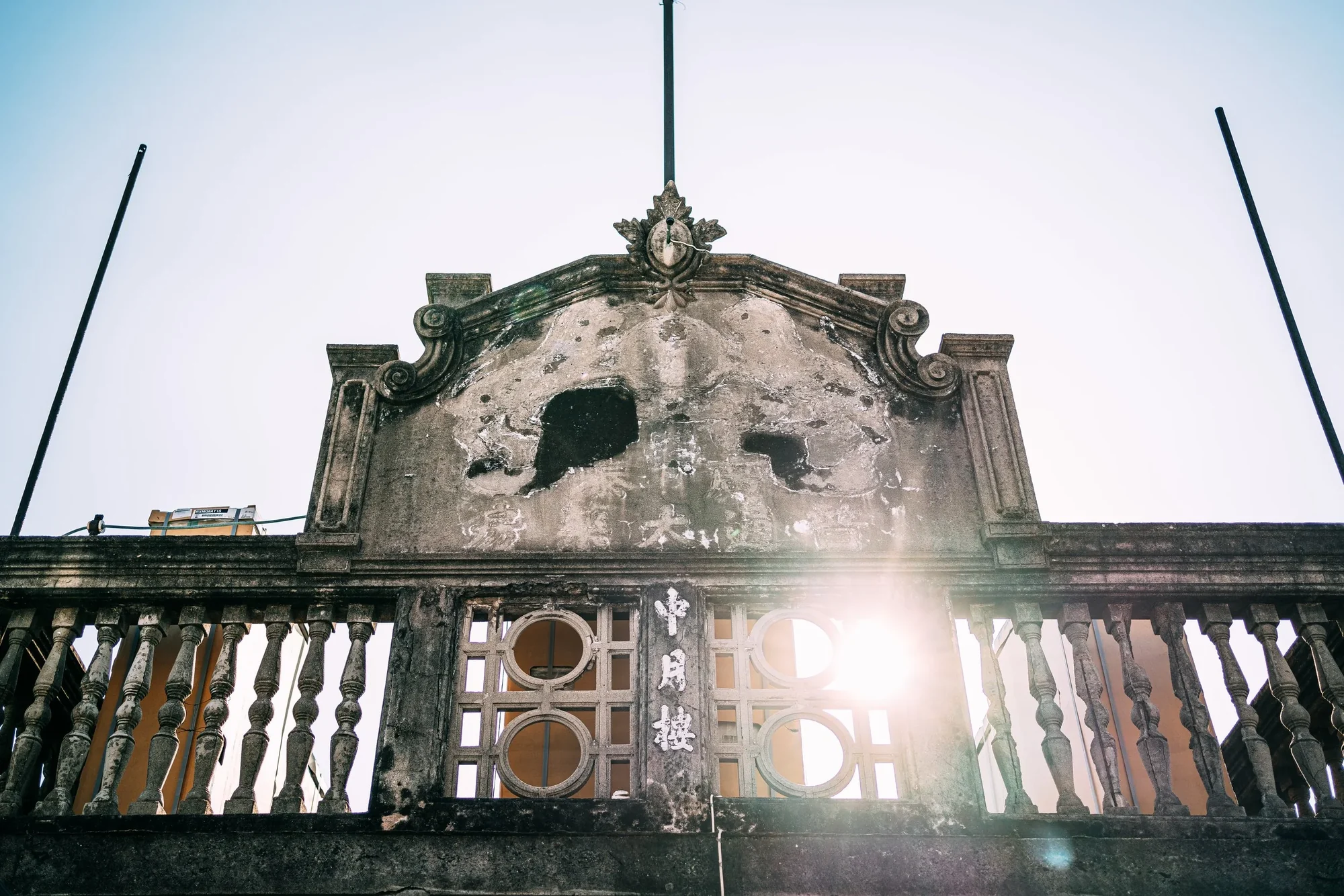
The gable of the roof with its plaster fallen away, a carved crest at the centre, turned wooden balusters and a carved stone slab below
Fallen plaster on the gable, a carved crest below
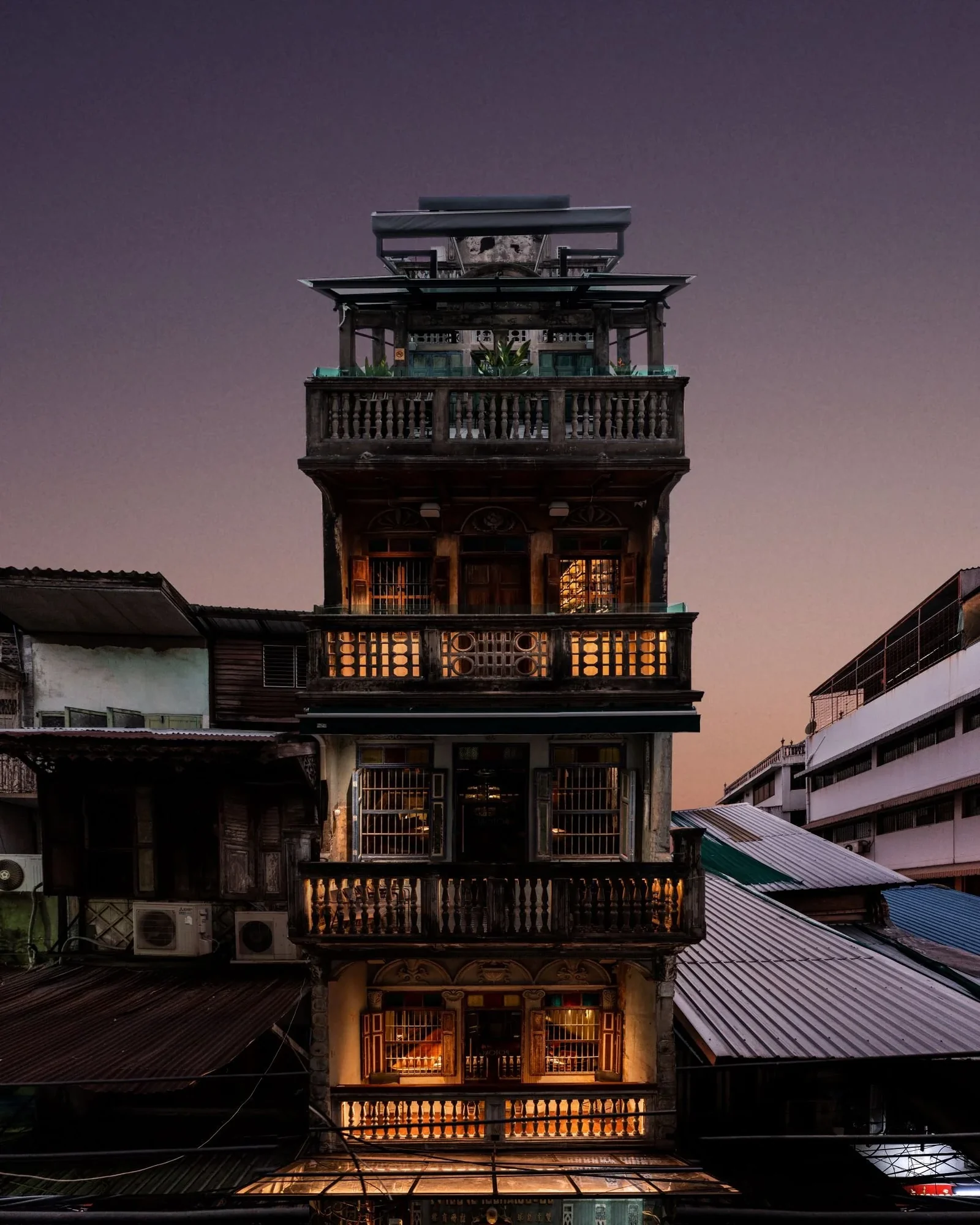
The five-storey building at dusk, a lit window on every balcony and a roof terrace above the highest one
Five balconies lit at dusk, narrowing as they rise
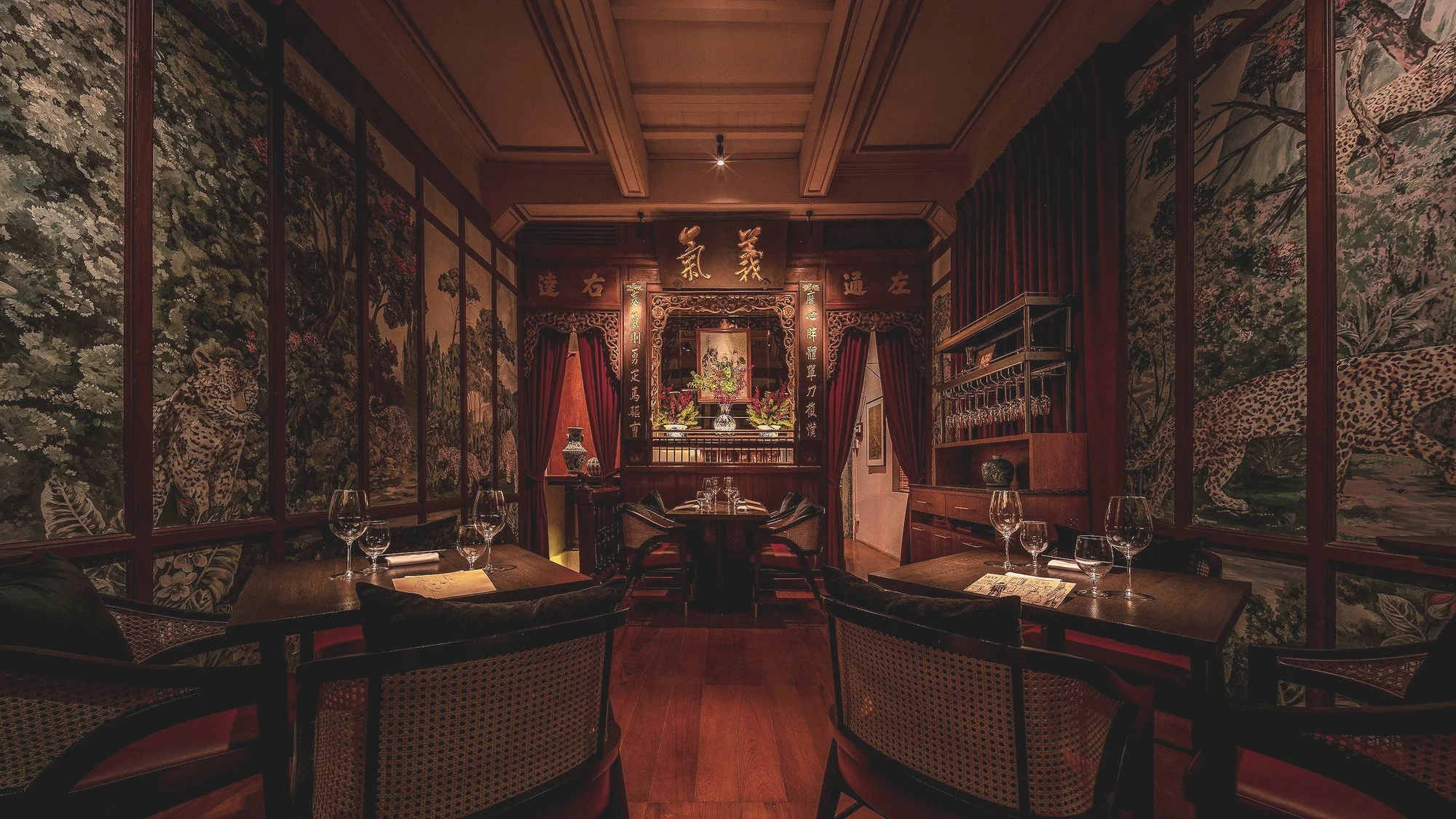
The third-floor dining room with a red and gold shrine at the far end, wooden screens painted with animals and plants on both sides and wine glasses on the tables

A shrine left on the third floor

A shrine stands in the middle of the floor, flowers and fruit on the offering table, a ring of red-lacquered wooden screens around it painted with animals, trees and flowers.

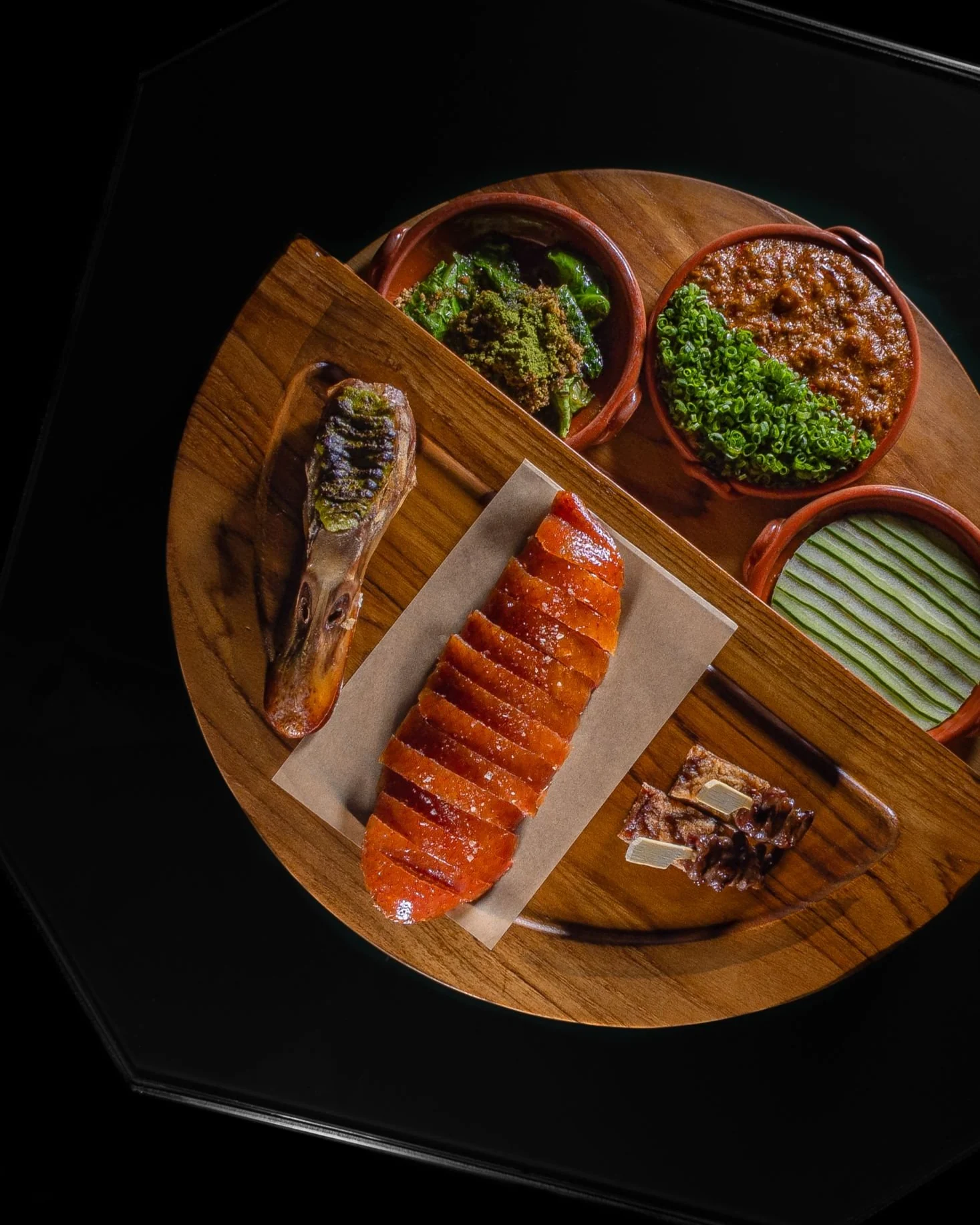
Sliced roast duck on a wooden tray with several small clay bowls and a sheet of paper that has soaked up the fat

Duck served with the leg

The roasted duck is sliced and stacked skin up on paper, skin red and glossy, with small clay bowls of green sauce and brown sauce and cut strips beside them; the leg lies on its own at the left of the wooden tray, its skin crackled.

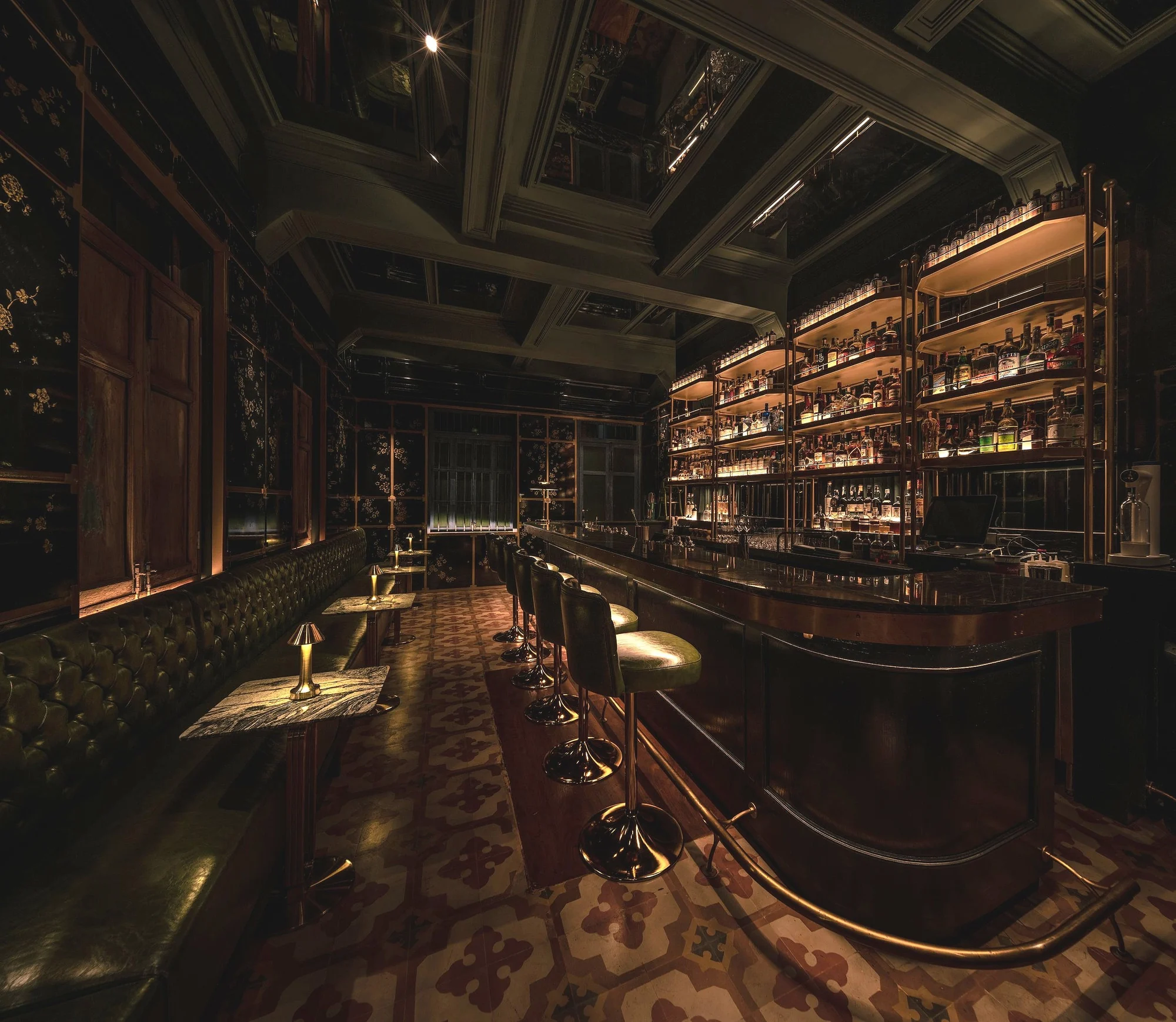
A curved bar with lit bottle shelves behind it and green leather sofas along the wall

The bar upstairs

The counter bends through an arc, bottles lit row by row on the shelves behind it, and green leather sofas run along the wall. It sits on an upper floor of the building, one level above the dining rooms.

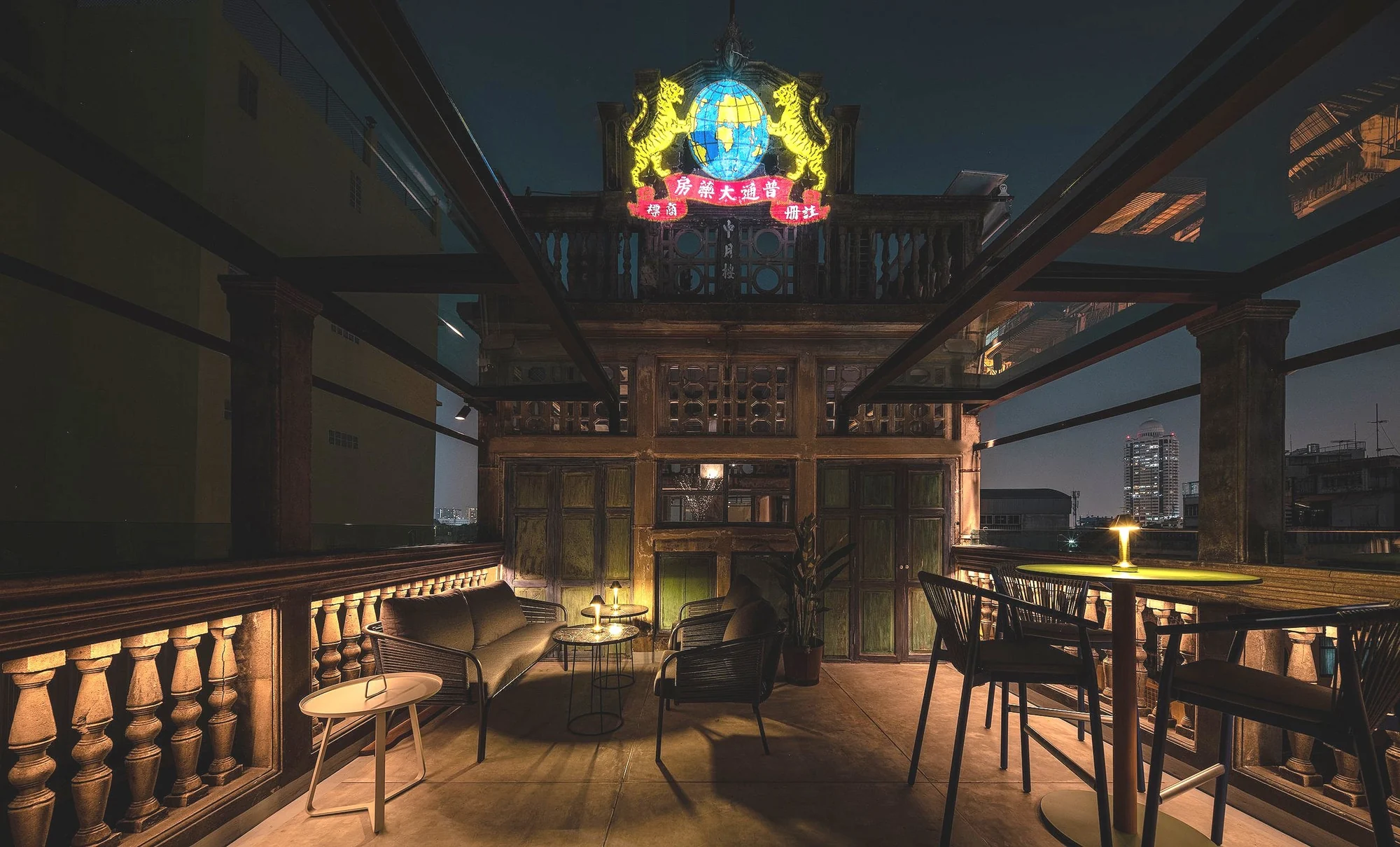
The roof terrace at night with rattan sofas, a railing and a neon sign of two lions above the building
Route

A night on Yaowarat

Put it on the first night in Bangkok, so the bar downstairs is still open after dinner; it works for a last night too, with Yaowarat Road a short walk for the rest of the evening.

Five floors, five jobs

The building is a five-storey Sino-Portuguese shophouse, not deep from front to back. The ground floor held the counter of the medicine shop and now holds a bar, and the wooden ceiling above it is kept as it was a hundred years ago. It is the first thing overhead as guests come in.

From the second floor up the rooms are for eating: the old partitions, the windows and a small balcony onto the street all remain, long tables run along the wall, and a door at the far end opens to the street. The third floor has barely been touched, a shrine left at its centre and eight hidden tigers painted on the wooden screens for wealth and smooth passage. The fourth floor, once the room of the opium beds, is now the Opium Bar; the fifth is the roof, where the family sat out and watched the stars, with the old signboard overhead.

Lifting a kitchen into a hundred-centimetre shaft

The rebuilding took more than two years, brought in over seventy people and covered five hundred square metres. The hardest piece was hoisting nearly all the kitchen equipment up through a goods shaft a hundred centimetres square; the lift in the middle went in only afterwards.

There is a fermentation room in the building. Kombucha is fed on local Thai-Chinese fruit and herbs, the rice wine goes to a local bottling house, and two single-variety rices are poured: glutinous rice from San Pa Tong in Chiang Mai, and black glutinous rice grown at six hundred and fifty metres by Hmong people in Tak.

Also worth knowing

How to walk in, where to leave the car, how a booking can be moved, and the house rules on the stairs.

01

How to walk in

Take the Blue Line to Wat Mangkon and come up at exit 1, follow Plaeng Nam Road to its end, cross Yaowarat Road and carry on along Yaowa Phanit Road to the four-way corner. The walk takes about five minutes.

02

Parking

The lane is narrow and large cars struggle. Cars can be left at the car park at Wat Pathumkongka, with a shuttle called by phone and a wait of five to ten minutes, or at Wat Chaiyaphum Karam, three minutes on foot from the door.

03

The booking rules

A table is held for three hours, and arriving more than half an hour late may mean the arrangement has to change. Bookings can be moved; changes made more than forty-eight hours ahead cost nothing, and inside forty-eight hours the deposit is not returned.

04

The stairs inside

Up and down is not all done in one lift, and most of the time it is on foot. The official site therefore asks women to avoid heels and very short skirts, and men to wear closed shoes and long trousers; sandals are not allowed.

05

Children and restrictions

Children are welcome from nine and eat the same menu as the adults. Dietary requirements have to be given seven days ahead, and the restaurant states that it cannot cover every allergy.

06

What was left in place

The old signboard, the carved stone slabs and the wooden ceiling on the ground floor all stay where they were. Before work began, several months went into gathering objects scattered across the floors, among them a full set of drawings left by her grandfather's brother, K. Vichai.

Putting a dinner here into the trip

One tasting menu, one dinner sitting, a deposit, and five floors to move through before the last course.

Cuisine

Thai-Chinese cooking in a single tasting menu, built on salt, sour, spice, texture and the Maillard reaction, and run to twenty courses.

Booking

Through the official site or by LINE. A deposit is required before the table is held.

Hours

Dinner only, closed on Wednesday. Entry times are shown on the reservation page rather than published as fixed sittings.

Dress and diet

Smart casual, with shoes that stay on the foot for the stairs; heels and very short skirts are discouraged. Dietary requirements need seven days' notice.

Plan this into a journey

Tell us the dates and who is travelling, and we can talk through how an evening here fits a Bangkok itinerary.

[email protected]

Read this page in Chinese

Discuss this journey