Water had to be tamed first
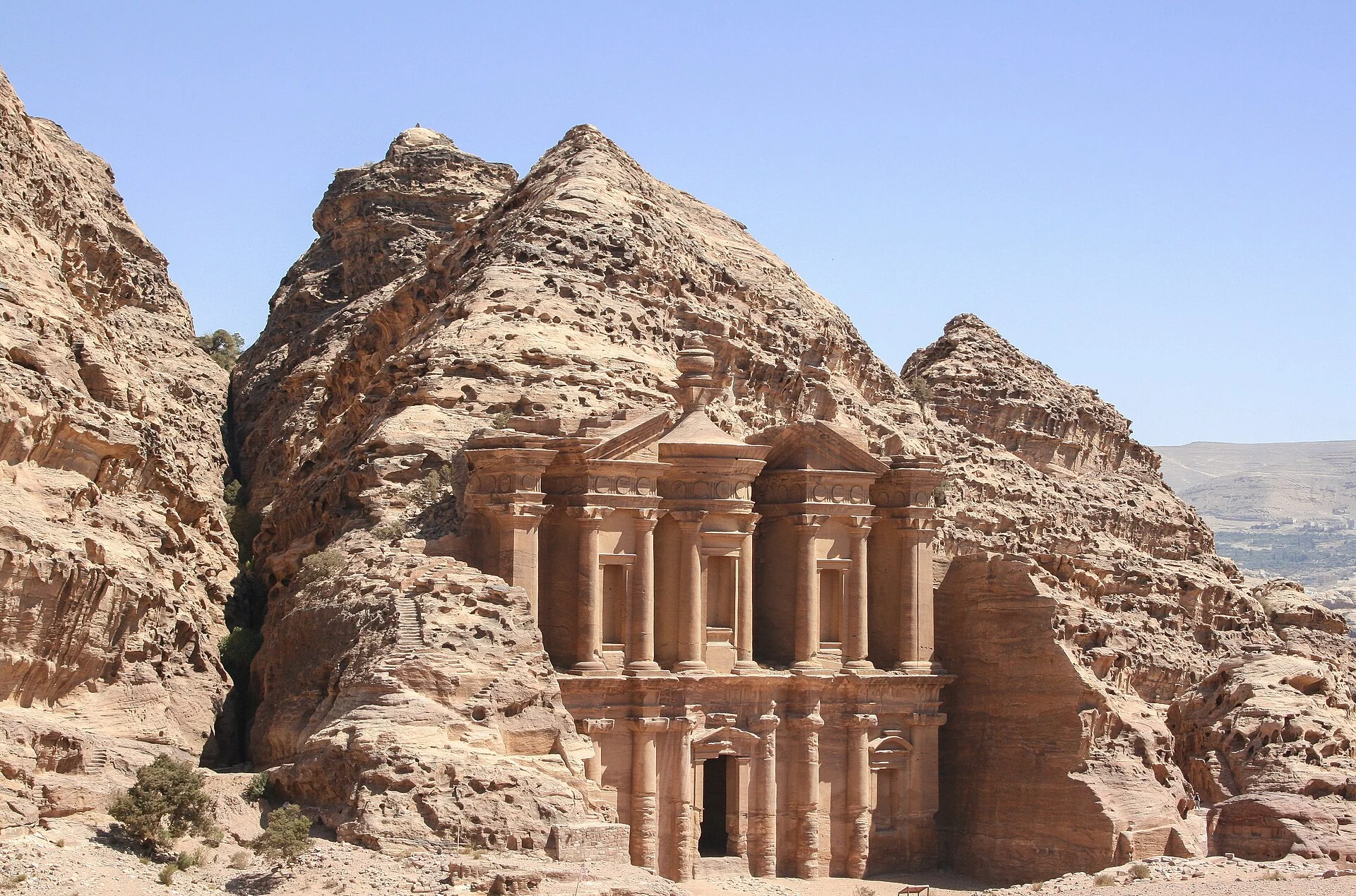
People settled here as early as 7000 BC, and at Beidha to the north a Neolithic village survived. In the 4th century BC the Nabataeans made a foothold among these rocky hills, and two centuries later made it the capital of their kingdom. They had been nomads following water and pasture, and chose this spot because the cliffs enclosed it tightly and a spring there never ran dry.
Flash floods were another matter. Dams, cisterns and channels dug from the archaeology show they held back the sudden water and stored it, drawing on it through the dry season. Terracotta pipe lines cut into the rock faces and ground carried water from the canyon edges into the city. With steady water, the city could become an oasis in the desert.
With water steady, goods could move. The frankincense route passed through here, and the Nabataeans made the city a regional hub: west to Gaza, north to Damascus, south to the Red Sea, and a desert road to the Persian Gulf. At its peak in the 1st century AD the city held some 20,000 people.