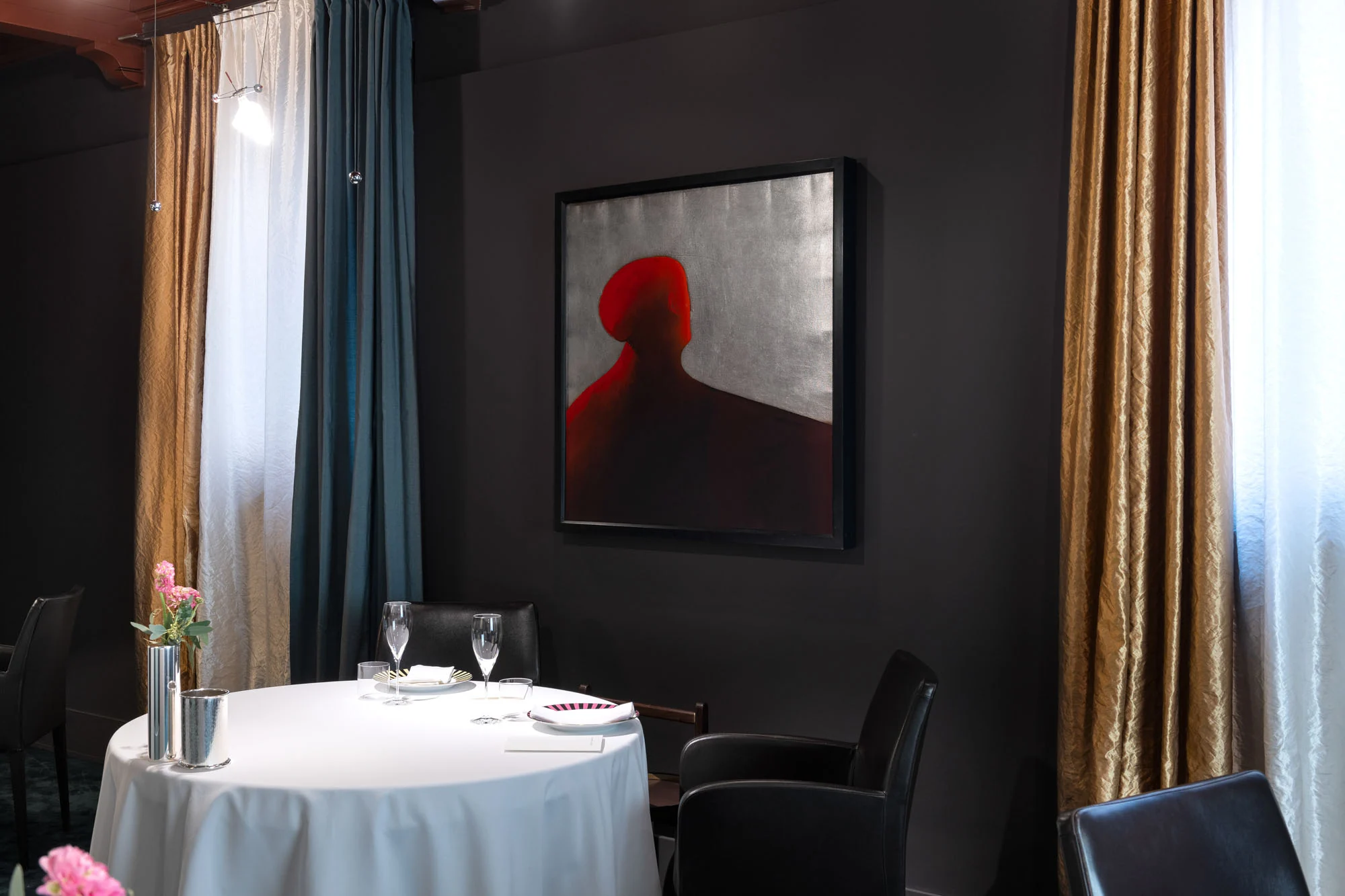
A corner of a private room: charcoal-grey walls, gold and dark green velvet curtains, a round table under a white cloth, and a silver-grey painting of a red human silhouette hanging on the wall

Modena, Italy

Osteria FrancescanaA red corridor leads to the room, and the walls are charcoal and teal

White cloth, a vase of pink roses, two goblets set down before anything else. On one wall a painting holds the red silhouette of a figure, and the room behind it is nearly black.

The restaurant stands in the middle of old Modena, in Emilia-Romagna, with the door on Via Stella and the dining rooms behind it.

PlaceModena, Italy
StyleEleven-course tasting menu
KitchenMassimo Bottura
LengthAbout three hours

Tradition, seen from ten kilometres off

Modena, Italy — Eleven courses, or à la carte.

The official site calls the place a laboratory of ideas, and an observation post. Looking back at the past, it says, takes a critical eye rather than nostalgia; tradition is always evolving, which in the original phrasing means standing ten kilometres back from cooking tradition so the best of what is behind can be brought into the future. On paper that turns into dish names: Tagliatelle followed by 10.0, the same pasta still being changed at its tenth version, and another dish named after a question, asking where this bowl of bean pasta goes next.

One tasting menu is offered, called HO FAME! HO FAME!, which reads as I'm hungry, I'm hungry. The name is borrowed from a ceramic kept in the cellar and standing among the bottles. Eleven courses are listed on it.

Massimo Bottura was born in Modena and says he grew up under the kitchen table, his grandmother rolling out pasta while the flour fell on his feet. The room he cooks in now stands in the middle of that same old town.
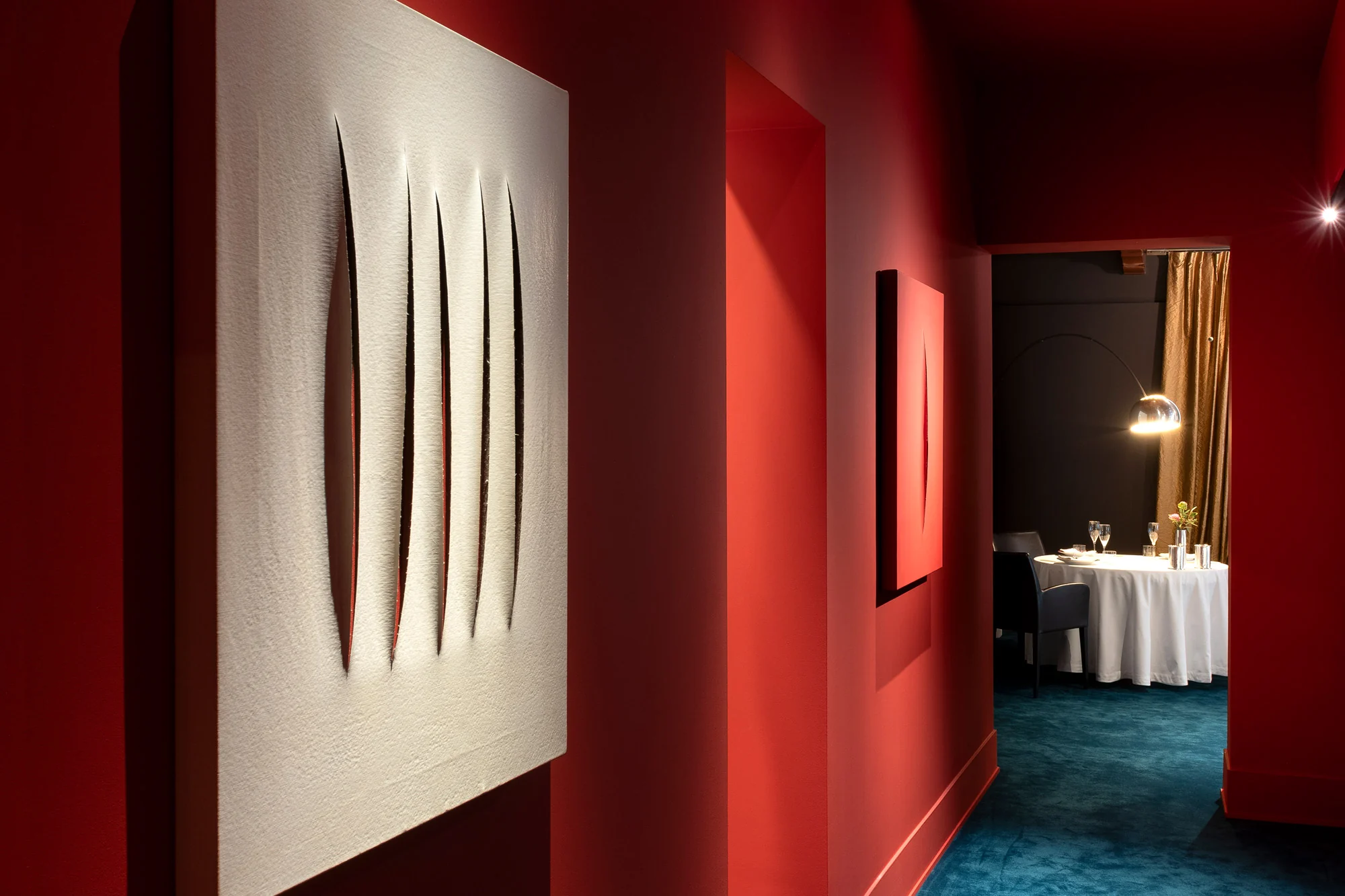
A deep red corridor with a cream relief panel set into the left wall, cut with five long vertical slits, a blue-green carpet running to an opening at the far end
Five vertical slits in the cream panel
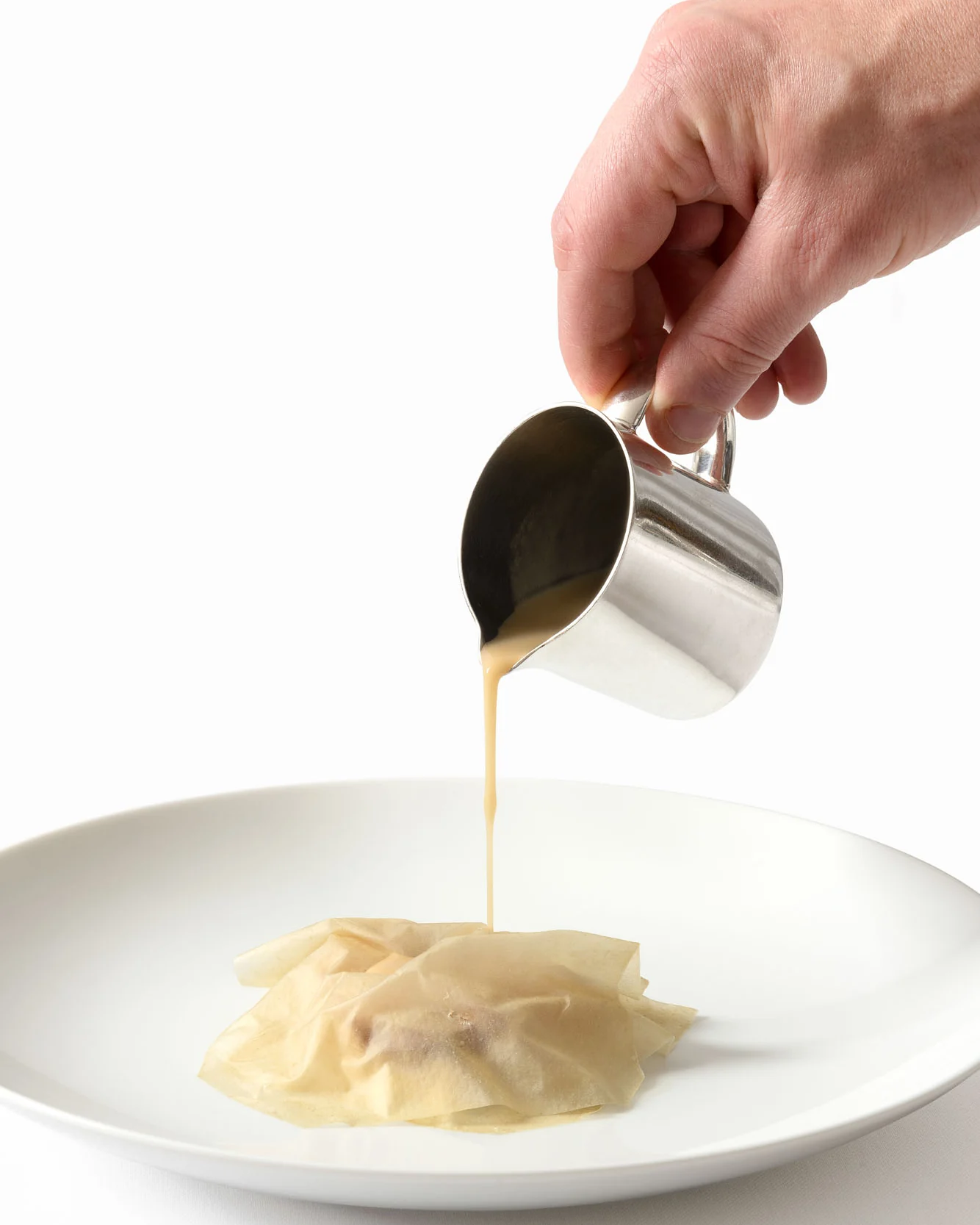
A small stainless steel jug pouring pale brown broth over a pale yellow sheet of pasta at the centre of a white plate, plain white behind
Broth poured over a thin sheet of pasta
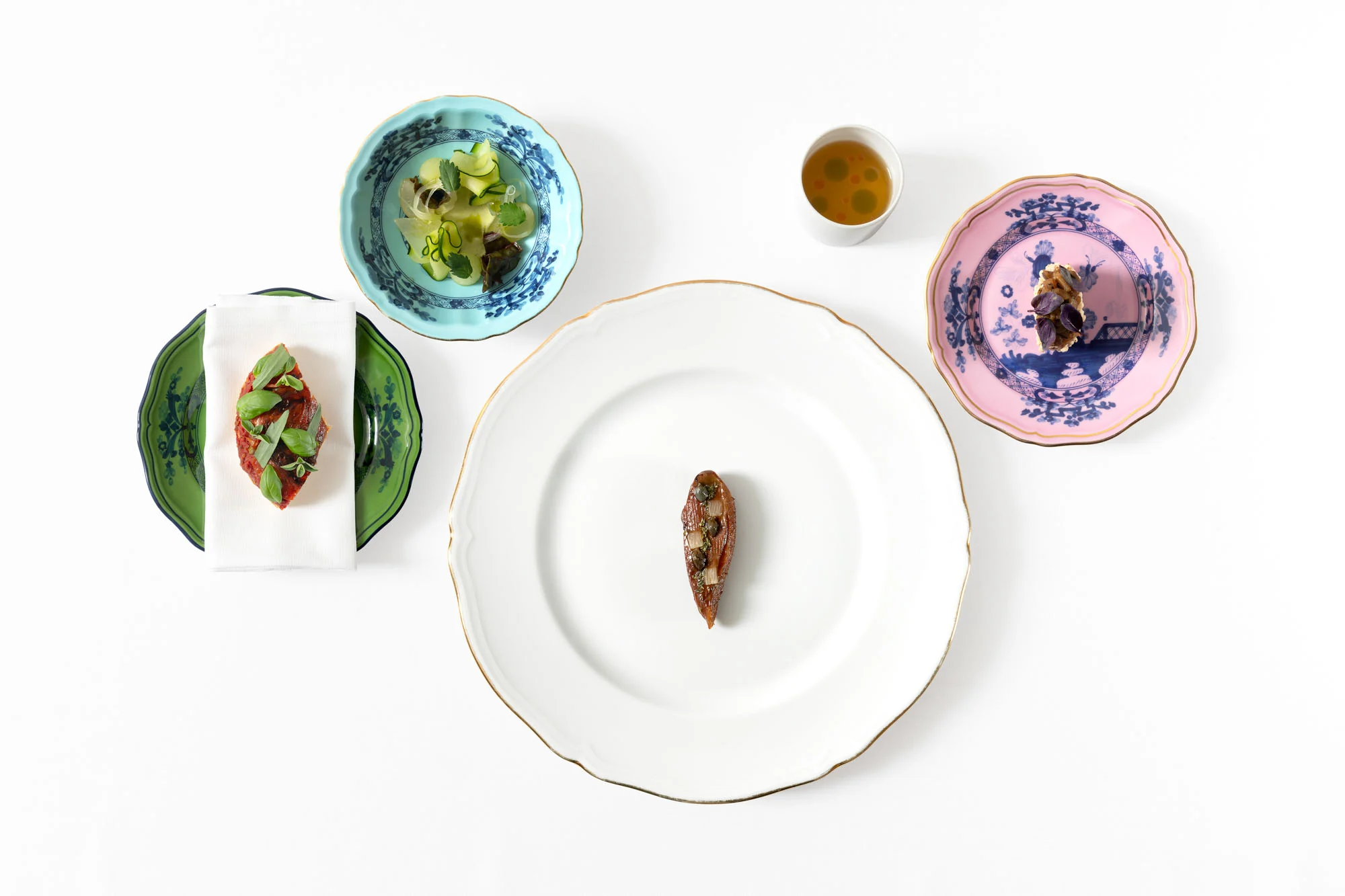
Seen from above on a white ground, five plates of different patterns, the central white porcelain plate with a gold rim holding only a short piece of dark food

Five patterned plates on white

Seen from above, five plates are spread across a white ground. The largest is white porcelain with a gold rim and holds one short piece of something dark; beside it a pale blue plate carries leaves and thin pale slices, a pink plate dark specks, a green one a red block on a folded napkin.

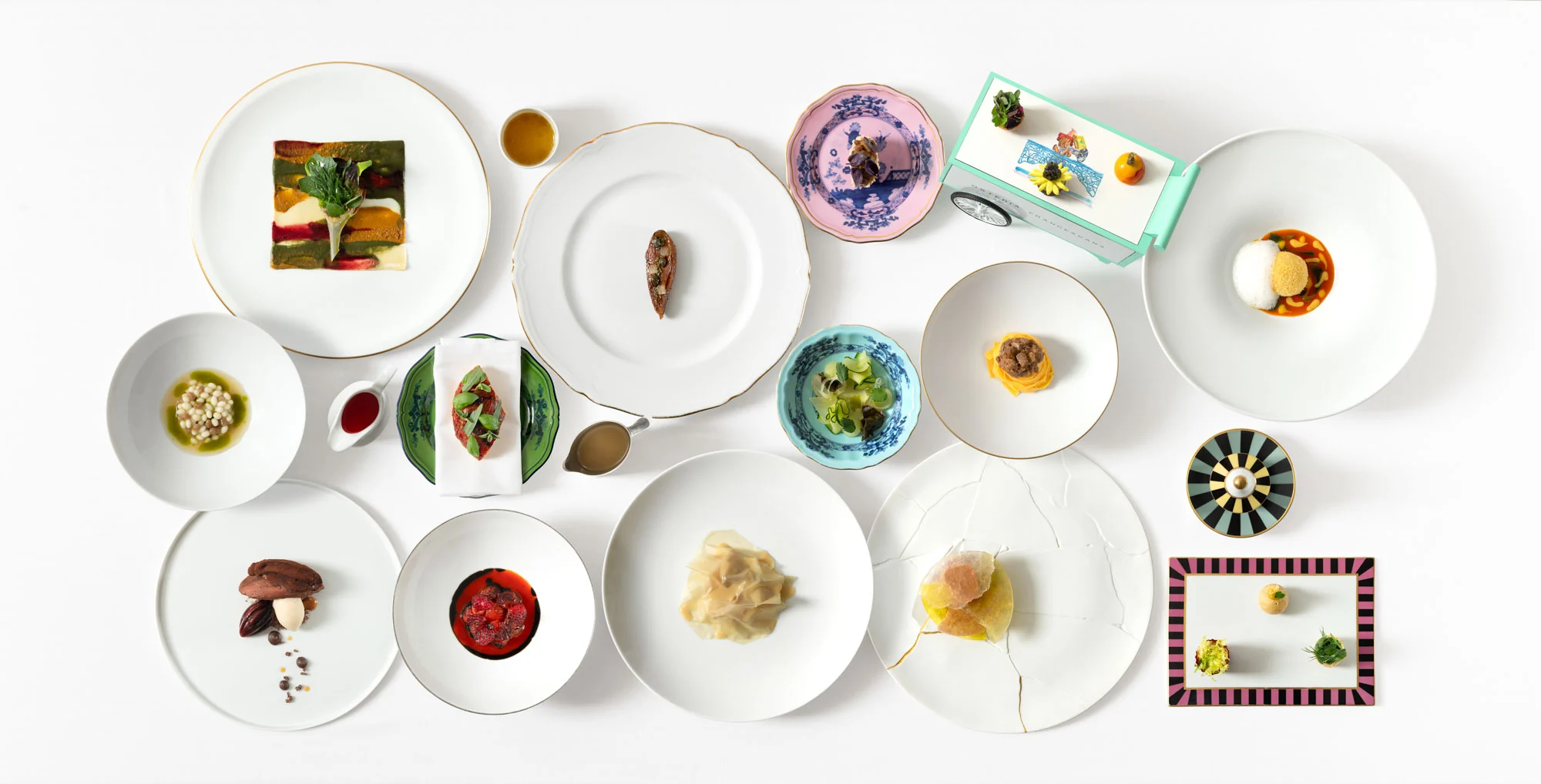
Seen from above on a white ground, a dozen white plates spread out, the corner of a striped square dish showing at the lower right

A dozen plates opened out

A dozen white plates lie scattered on white, each holding a single mouthful: a green cube with a leaf standing on it, a translucent sheet on a cracked plate, a small dark spoonful. The corner of a striped square dish comes into the frame at the lower right.

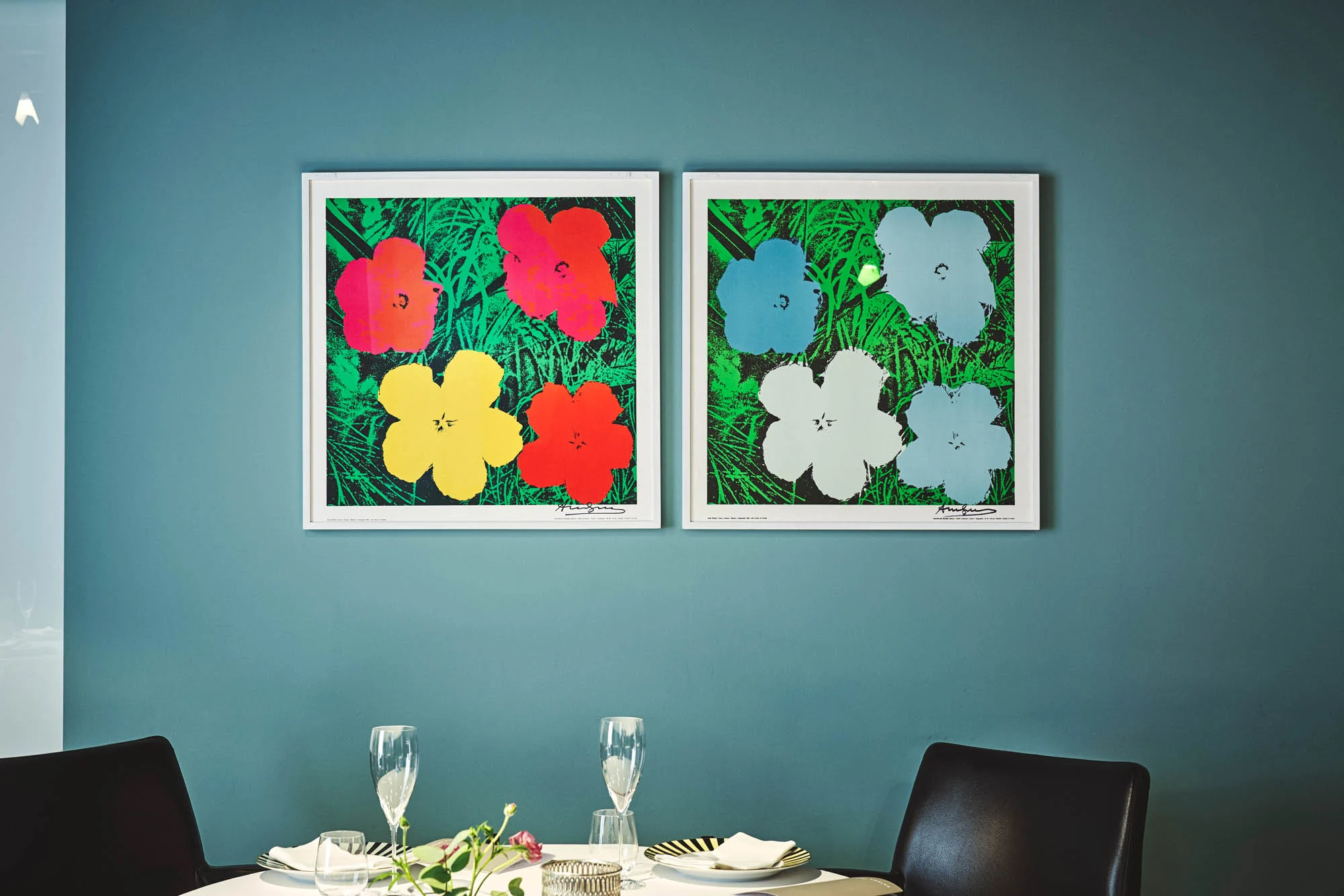
Two framed flower prints hanging side by side on a teal wall, flowers in pink, yellow and orange in one and blue and white in the other against dark green leaves, two goblets standing on the table below

Teal wall, two flower prints

Two framed prints hang side by side on a teal wall. One holds flowers in pink, yellow and orange, the other flowers in blue and white, both against dark green leaves. Below them a white-clothed table waits with two goblets standing together and napkins folded on the plates.

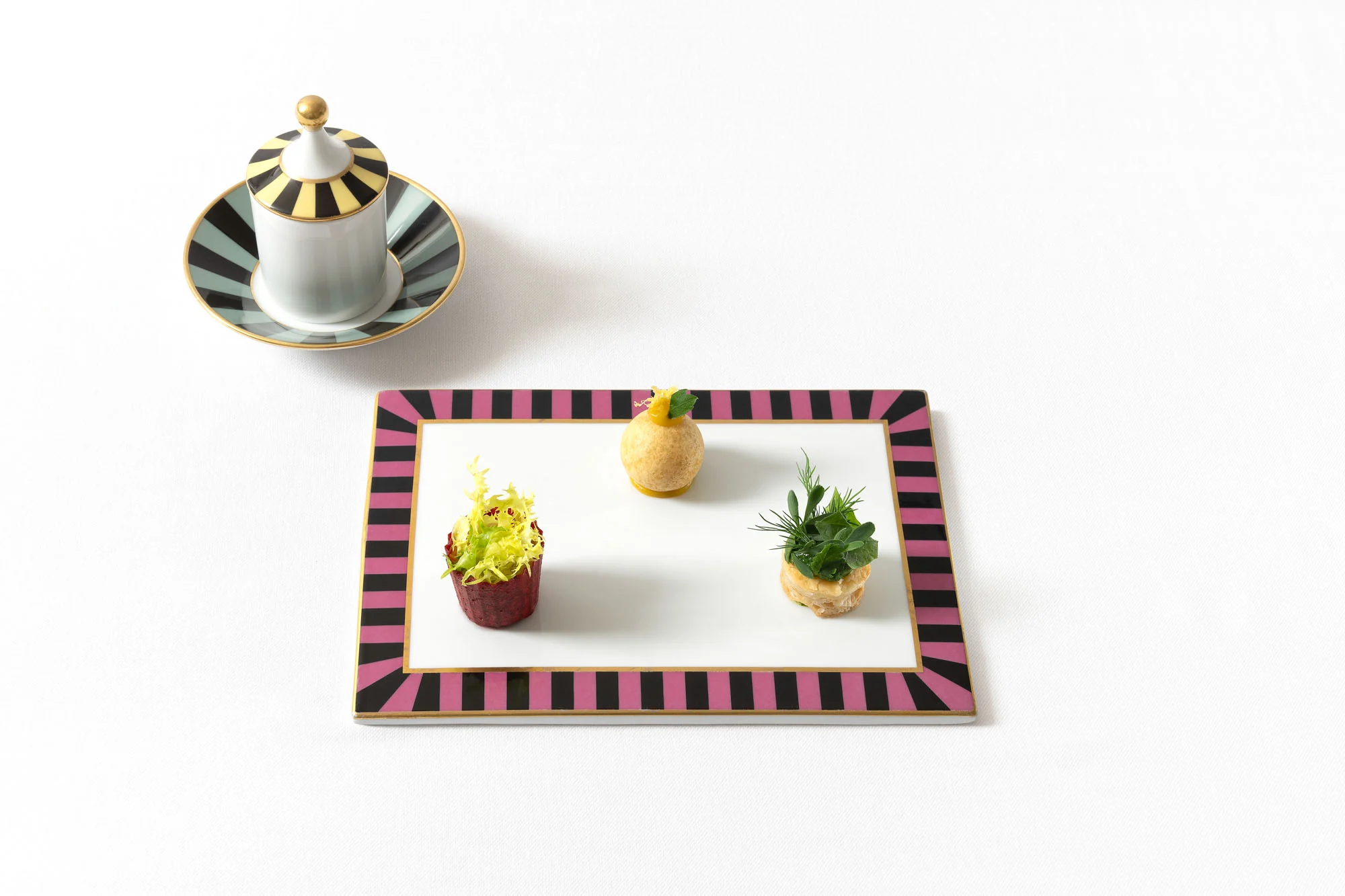
Three small pieces on a pink and black striped tray against a plain white ground, a lidded white porcelain pot on a black-and-white striped saucer at the upper left
Route

In from the car park passage

Lunch leaves the afternoon free for the old town; dinner sends you back to the hotel. Three hours at the table plus the walk each way means one meal a day is the honest way to plan around it.

The red corridor in

The door is on Via Stella and opens into a narrow corridor painted a deep red. On the left a cream-coloured relief panel is set into the wall, cut with five long vertical slits, and light falls across it from the side so that red shows through the openings. A blue-green carpet runs the length of the floor.

At the end of the corridor an opening leads into the restaurant itself. Dark leather chairs stand at the tables, a curved-arm lamp hangs down from the ceiling to the cloth, and two-tone velvet curtains are layered at the windows, gold over dark green, with the light of the street coming through.

The pictures on the wall, the ceramic in the cellar

The walls are painted in two colours. One is a charcoal that reads almost black, and holds a silver-grey painting of a single figure in red silhouette. The other is teal, and carries two prints in white frames, their flowers built up in blocks of colour rather than painted petal by petal.

The official site describes the pictures as windows onto landscapes of ideas, there to keep the conversation between dining room and kitchen going. The phrase I'm hungry was taken from a piece in the cellar. Cooking, the kitchen says, is a living language, and a string of recipes does not come close to it.

One tasting menu, one à la carte list

The tasting menu runs in order, all eleven courses printed on the page, and the names are often whole sentences: one is called Criticism or Nostalgia, another simply Untitled. The à la carte list stays open, divided into antipasti, first courses, mains and desserts, with cheese on a column of its own.

The rule is set out in the questions section: if the tasting menu is taken, the whole table takes the same one. What is printed at midday is what is printed in the evening, so the decision is about when to sit down rather than what will be eaten.

Also worth knowing

When it opens, how to book, who can come, and where the car goes.

01

Every day

Monday to Sunday, with the same menu at lunch and at dinner. The official site allows about three hours for the meal, which is worth building into whatever comes after it.

02

Online only

Reservations go through the booking page on the official site, which is updated as tables open. When it is full there is a waiting list, and card details are left to hold the table.

03

Party size

Bookings run from two people to ten. A larger group cannot be broken into several separate reservations; the restaurant does not take split bookings of that kind.

04

Children and clothes

Guests are seated from the age of twelve. There is no dress rule, and the official site asks for neat casual rather than anything more formal.

05

Where to park

The old town is a restricted zone and driving into it brings a fine. The nearest paid parking is on Viale Vittorio Veneto, where number 59 has a passage through to the restaurant, two minutes on foot.

06

Allergies and telephone

Tell the kitchen a week ahead and both the tasting menu and the à la carte list are adjusted. The booking line is +39 059 223912, answered daily from 10:00 to 19:00.

Putting a meal here into a trip

One menu of eleven courses, a booking that only exists online, and a restricted zone around the door.

Cuisine

Emilian cooking in a single eleven-course tasting menu, with an à la carte list alongside. Lunch and dinner use the same sheet.

Booking

Only requests sent through the reservation page on the official site are accepted. A credit card is left to hold the table.

Hours

Open every day of the week, at midday and in the evening. The official site puts a meal at roughly three hours.

Dress and diet

No rule is set; the site suggests smart casual. Allergies and restrictions should reach the kitchen a week before the meal.

Plan this into a journey

Tell us the dates and who is travelling, and we can talk through which evening in Modena has three hours in it.

[email protected]

Read this page in Chinese

Discuss this journey