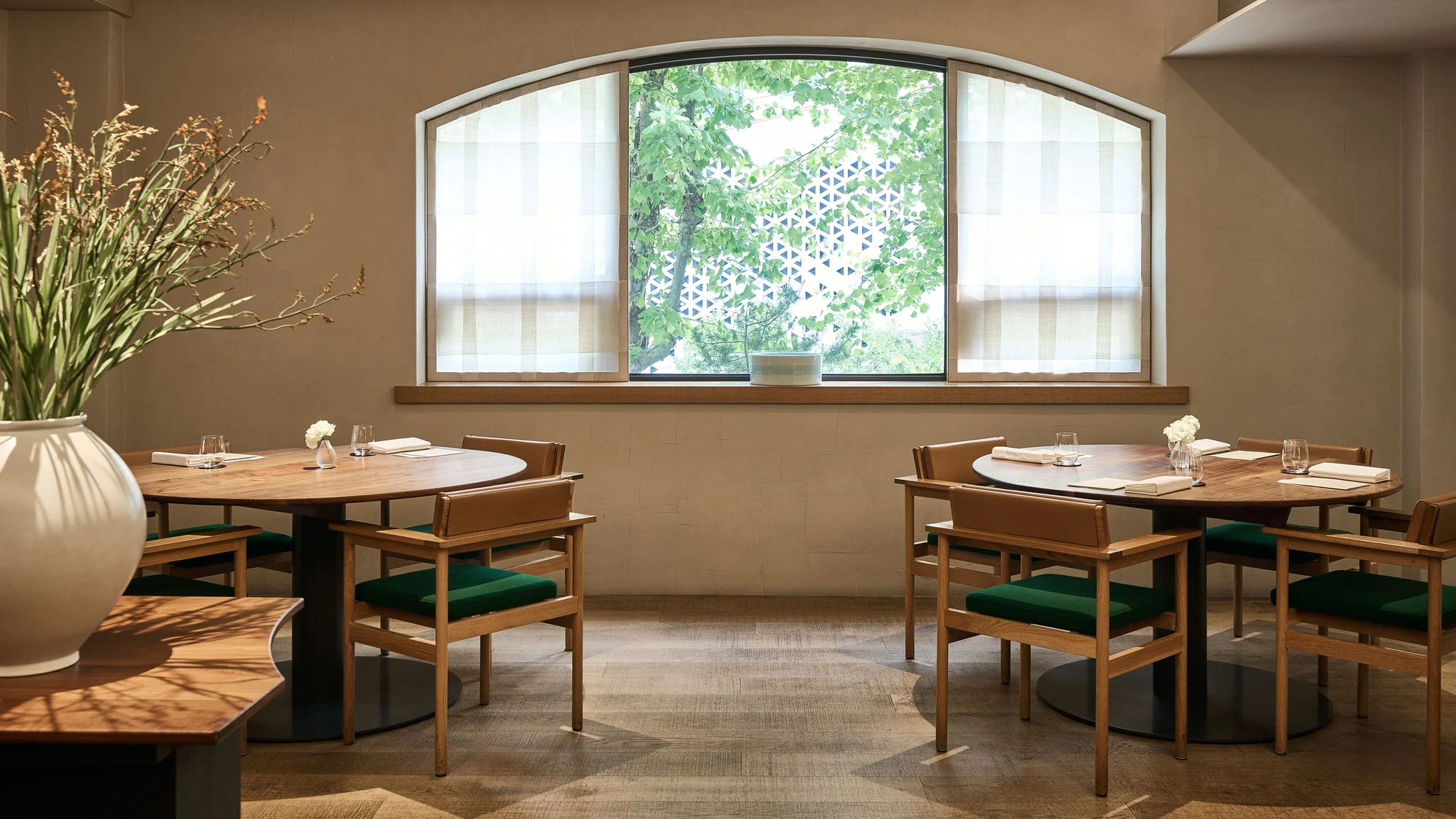
A dining room with beige walls, a half-translucent blind over an arched window, two round wooden tables with green-cushioned chairs and a large ceramic vase of dry branches at the left

Cheongdam-dong, Gangnam, Seoul, South Korea

MinglesA dinner that begins with a jar of sauce

The restaurant takes Korean cooking apart at the base: three fermented sauces, vegetables in season, a few wooden tables, and one menu that runs from the first course to the last.

The dining room is on the second floor of a building in a lane in Cheongdam-dong, in the Gangnam district of Seoul. From the street, the entrance to the building comes first.

PlaceCheongdam, Seoul
StyleKorean tasting, built on jang
KitchenMingoo Kang
MenusLunch and dinner

Where the flavour under the flavour comes from

Cheongdam-dong, Gangnam, Seoul, South Korea — Korean tasting menu built on three fermented sauces.

Three fermented sauces carry the cooking. Soybeans, water and salt go into clay jars and sit outside in the weather, and the flavour comes half from the beans, half from the walls of the jar and time. The menu follows the season; each dish is there to put those base notes on the plate.

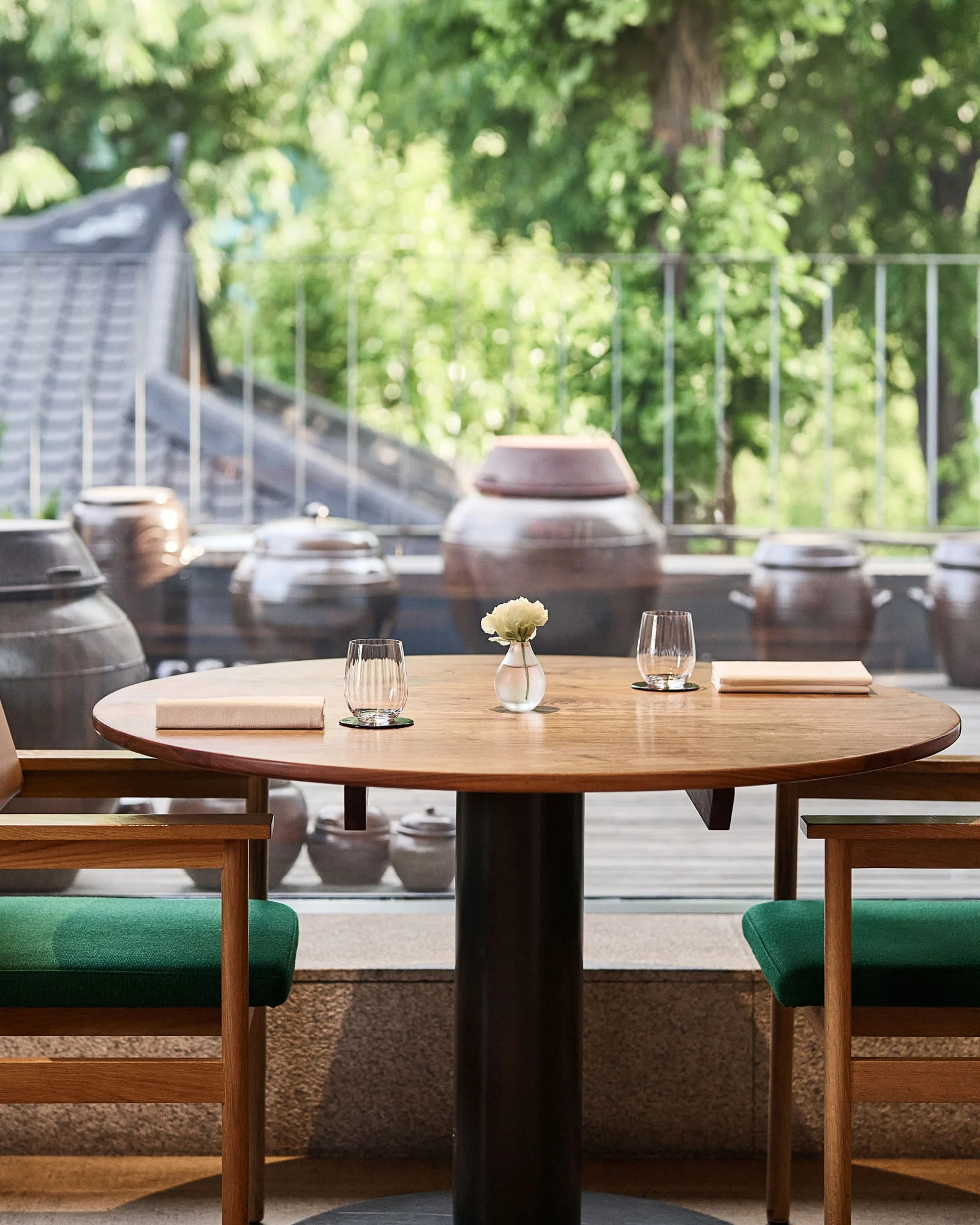
A row of brown jars stands on the terrace outside the window, facing the tables through the glass, and the room itself holds only a few wooden tables set well apart. The sauce is already inside the dishes rather than served beside them, so the meal reads as one line.

Mingoo Kang trained in the United States, Spain, France and the Bahamas before returning to Korea and opening this room in Gangnam. The tables are set well apart, and the windows look into the trees in the courtyard.
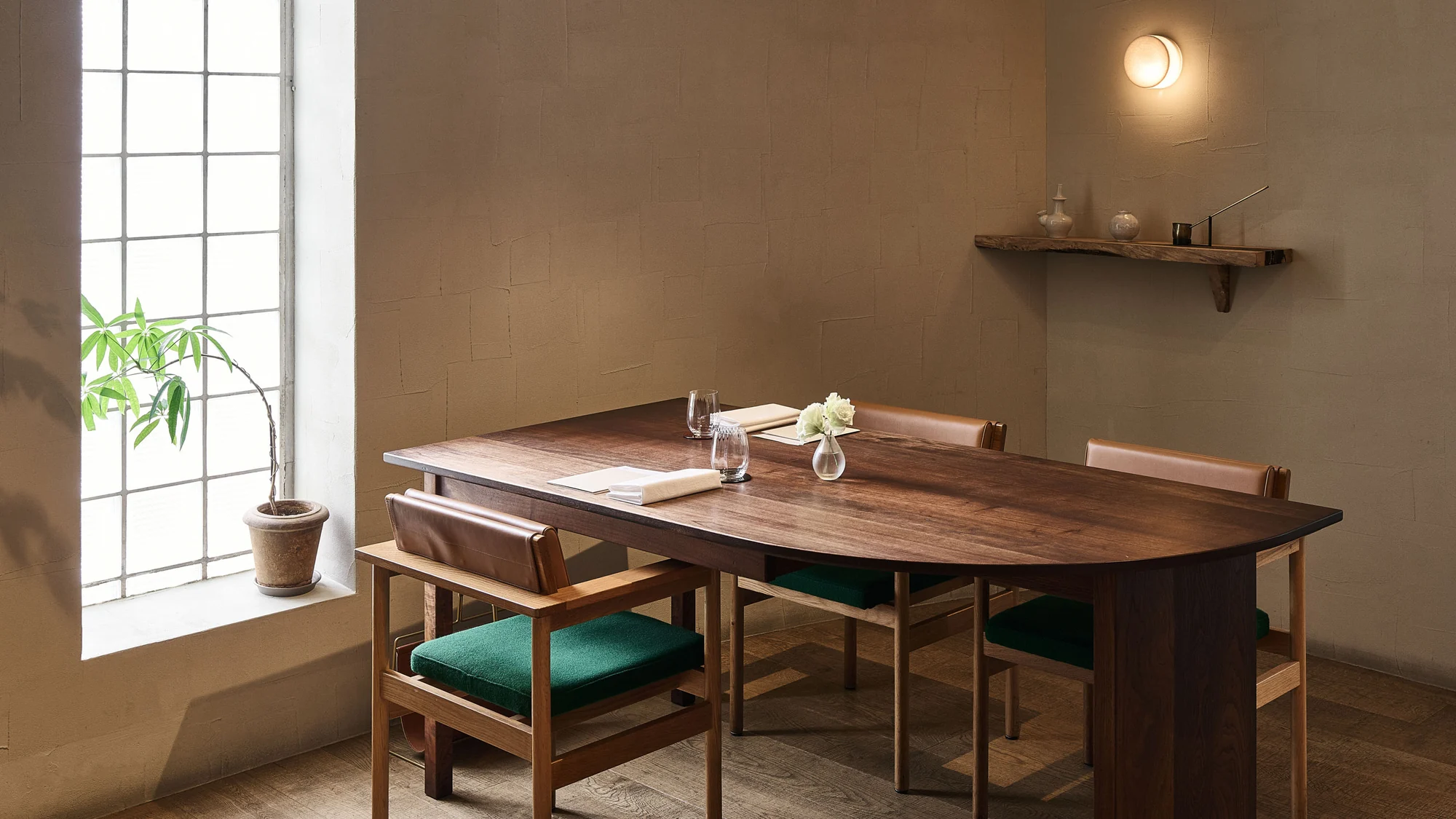
A dark wooden table by a small window divided by steel bars, water glasses and a small vase of white flowers on it, a crescent-shaped wall light above
A dark table under a steel-barred window, one small vase
A round wooden table with a green-cushioned chair on each side, and beyond the window a row of brown clay jars on a terrace below a tiled roof
Green-cushioned chairs, brown jars on the terrace outside
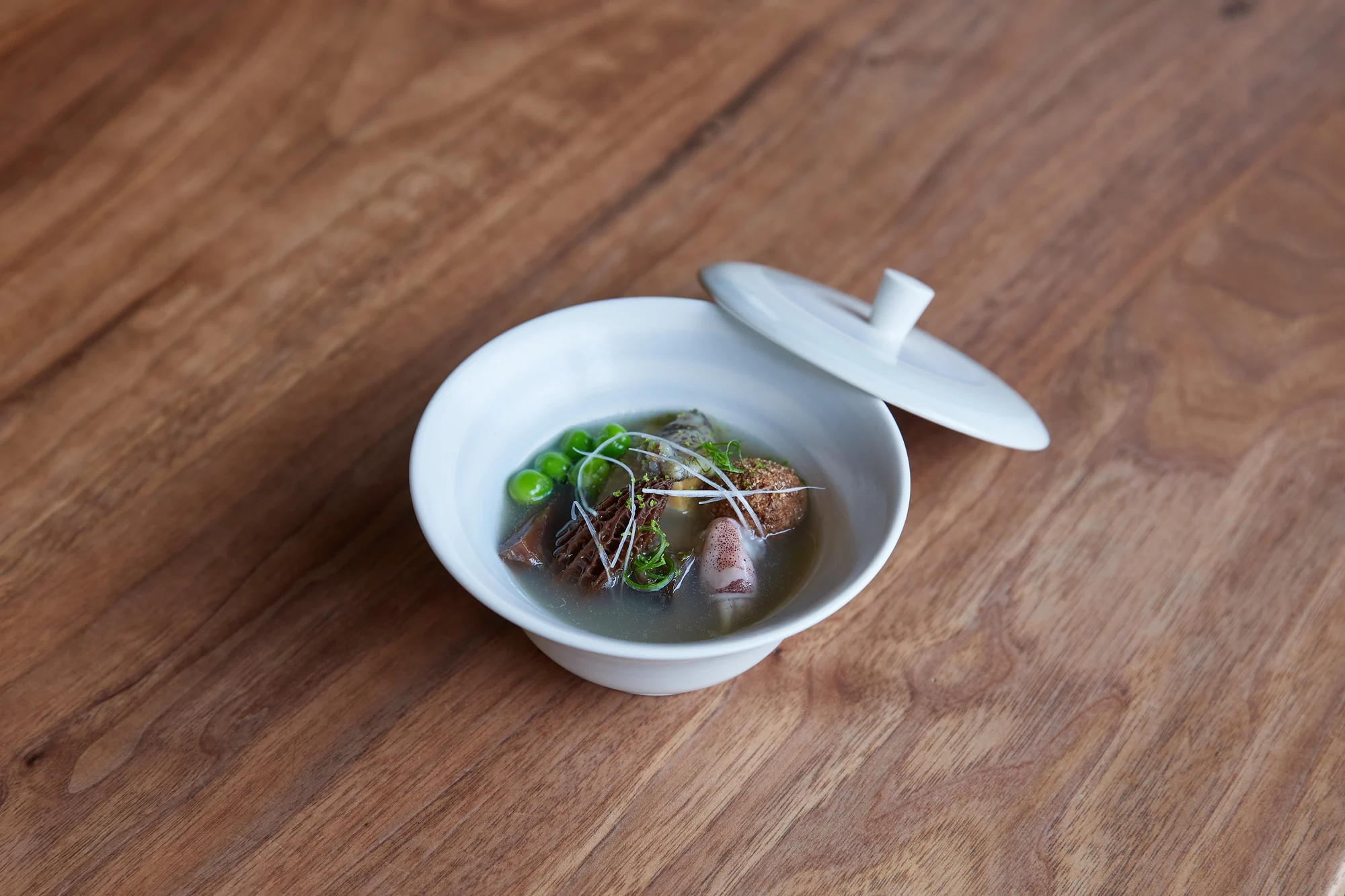
A white porcelain bowl with its lid leaning beside it, clear broth holding green peas, thin slices of mushroom and a piece of meat

Clear soup in a lidded bowl

A white porcelain bowl arrives with its lid leaning to one side. The broth is clear, green peas, sliced mushrooms and a piece of meat at the bottom, and a few fine strands floating on the surface.

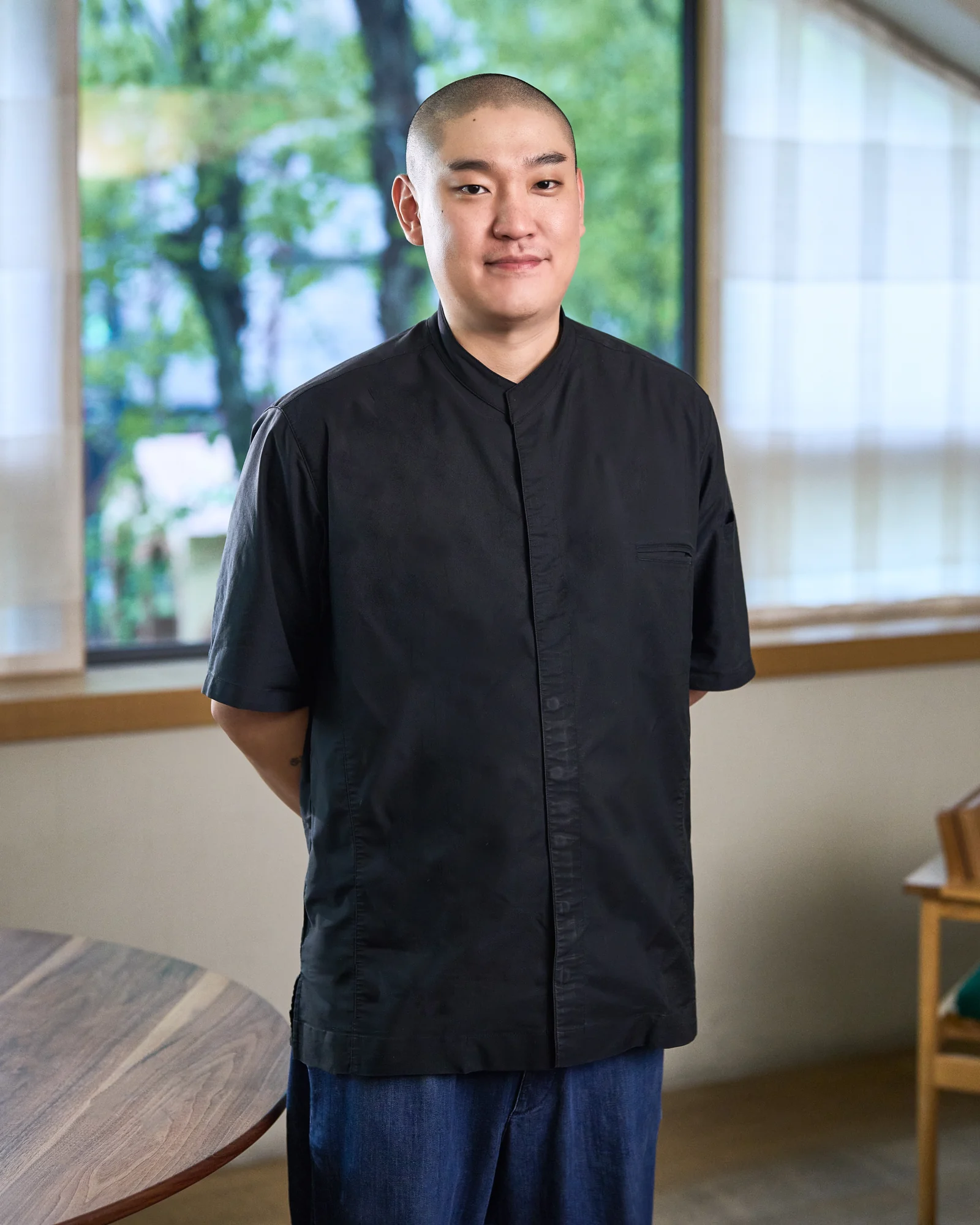
A man in a short-sleeved black shirt with a stand collar standing at a window table with his hands behind his back, tree shadows behind him

The man at the window table

He wears a black top with a stand collar and stands at a wooden table by the window with both hands behind his back, the shadow of leaves on the glass behind him.

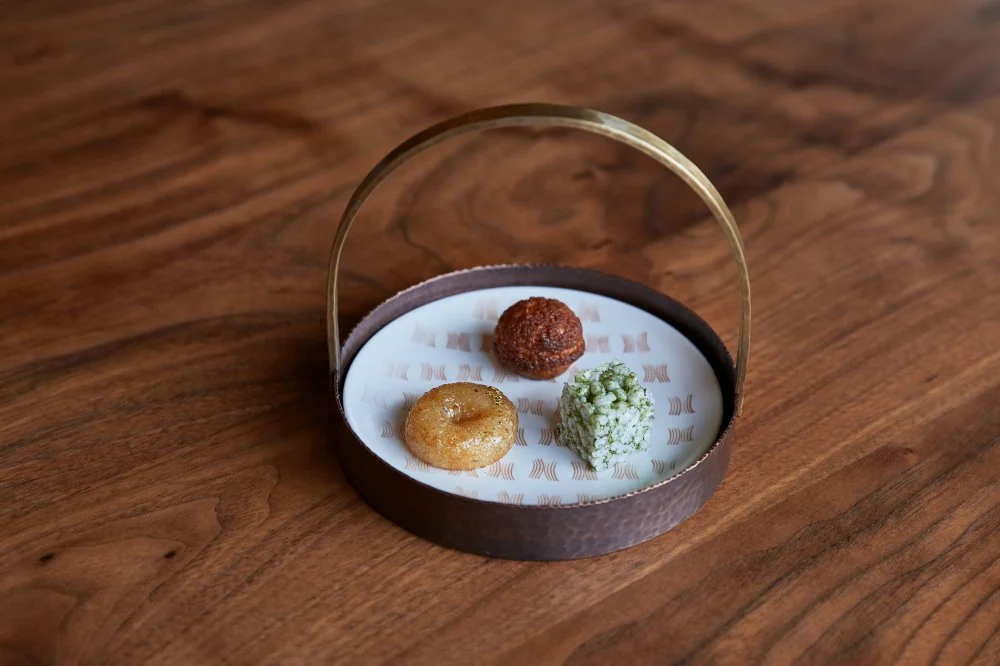
A hammered copper tray with a curved brass handle, printed white paper underneath and three small pieces laid out in a row

Three bites on one handle

A hammered copper tray carries a single curved brass handle, printed white paper underneath, and three small pieces in a row: one fried gold, one dark sphere, one cube covered in green crumbs.

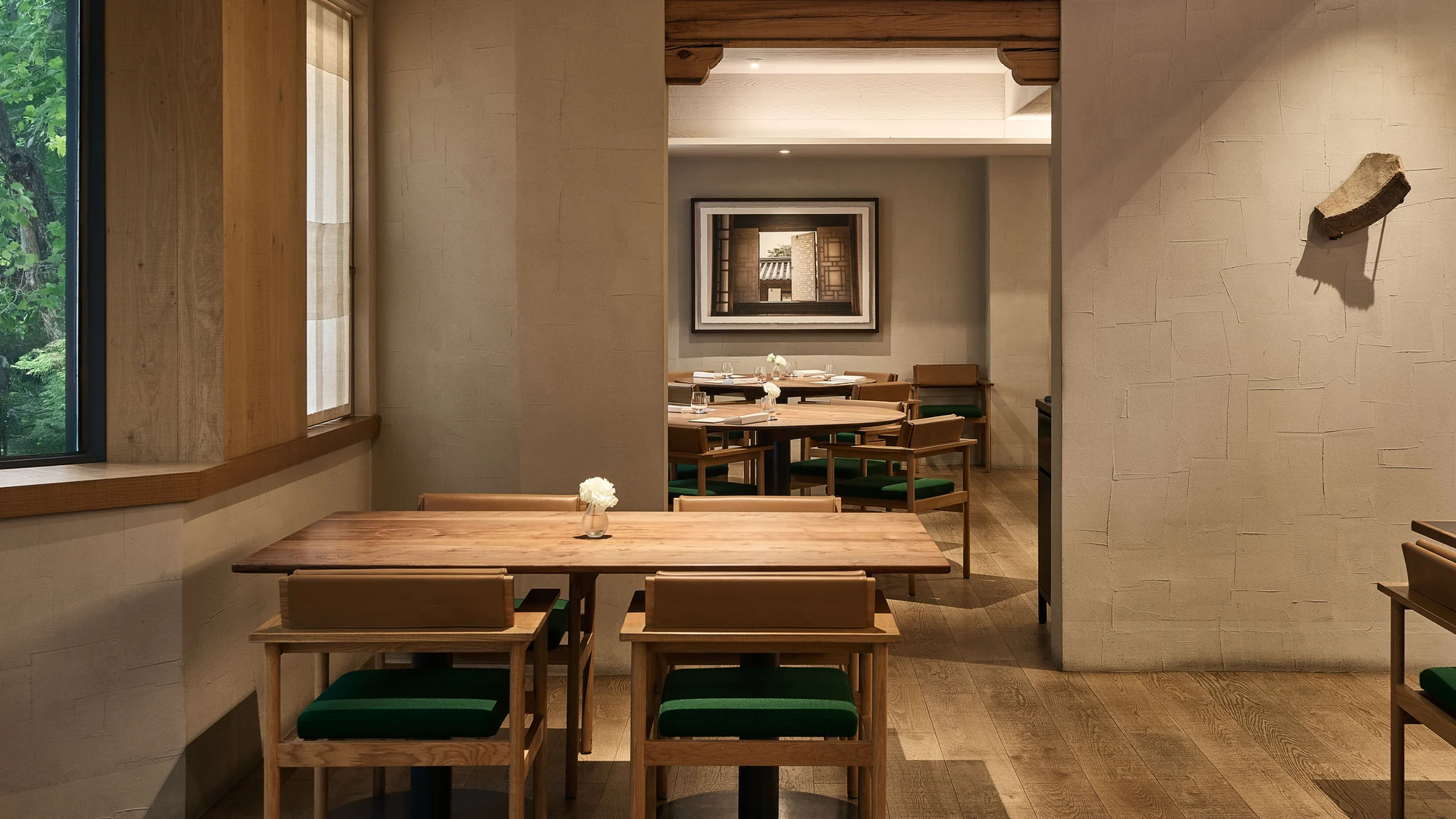
A view from a wooden table through a doorway to a framed old photograph on the far wall, with more tables set in the inner room
Route

A dinner in Cheongdam-dong

This fits a day of walking around Cheongdam best, since the room sits a short walk from the shopping streets. Lunch suits anyone who has to be somewhere else the same afternoon.

Three sauces, one jar

Korean cooking keeps its base in the sauces. Gochujang, doenjang and soy sauce start from the same three things, soybeans, water and salt, put into clay jars to sit, ferment and wait. The beans are only the beginning; the rest is handed to the local climate and the mould that forms on the inside wall of the jar. That is the whole of the recipe, and everything after it is a matter of time.

The restaurant takes that system as its spine: soup, stews, seasoned vegetables, marinades, and even dessert carry some trace of it. On the terrace outside the window a row of brown jars stands facing the dining room through the glass: the same beans, water and salt, still working their way towards the three sauces. They are kept in view rather than stored out of sight.

A room on the second floor

The space is quiet. Walls are finished in beige plaster, the window frames are divided by thin steel bars, tables and chairs are dark wood with deep green cushions, and a crescent-shaped wall light sits in one corner. A second room further in is darker than the first, which leaves the outer room as the brighter half of one continuous space.

There are two menus only, lunch and dinner, each posted on the official site as a downloadable file. Produce follows the season, and the restaurant states that it deals directly with producers around Korea, the vegetables, fruit and seafood all coming out of their hands.

Also worth knowing

The door, the calendar, the two menus, the people in the kitchen, and a book about sauce.

01

Finding the door

The address is 19, Dosan-daero 67-gil, second floor, in the Cheongdam-dong area. The restaurant is upstairs, so the entrance to the building has to be found from the street first.

02

How to book

The reservation page on the official site runs on a Catchtable calendar. A date and a party size are chosen, and seats are released month by month rather than held open.

03

Two menus, not one

Lunch and dinner each carry their own menu, and both can be downloaded from the menu page. They are not the same, so it is worth reading them before fixing a time of day.

04

Who is in the kitchen

Kang is chef and owner, Youngdae Kim is executive chef, Soyun Park runs the hot kitchen, Jang Hanna looks after pastry and Hyeonjae Lee the wine. General manager Minsung Kim has been there since the restaurant opened.

05

A second restaurant in Hong Kong

Hansik Goo, the group's second restaurant, is in Hong Kong and follows the same Korean line. It is a different room in a different city, run as its own house.

06

A book about jang

He later wrote Jang with Joshua David Stein and Nadia Cho, breaking the history and the making of the three sauces into sixty recipes. It is the same three jars the menu is built on, taken apart at length.

Putting a meal here into the trip

Two menus, a room one floor up, and a booking calendar that decides which sitting a given day will take.

Cuisine

Korean tasting menu built on three fermented sauces, with produce bought in season and the menu changing with it.

Booking

The booking page on the official site runs on a Catchtable calendar. Choose a date and a party size; seats open month by month.

Hours

Lunch and dinner, with dates set by the reservation calendar rather than published as fixed times. Both menus can be downloaded from the menu page.

Dress and diet

The official site lists no dress code, and no dietary policy is published there; restrictions should be confirmed with the restaurant when booking.

Plan this into a journey

Tell us the dates and who is travelling, and we can talk through how a table here fits a few days in Seoul.

[email protected]

Read this page in Chinese

Discuss this journey