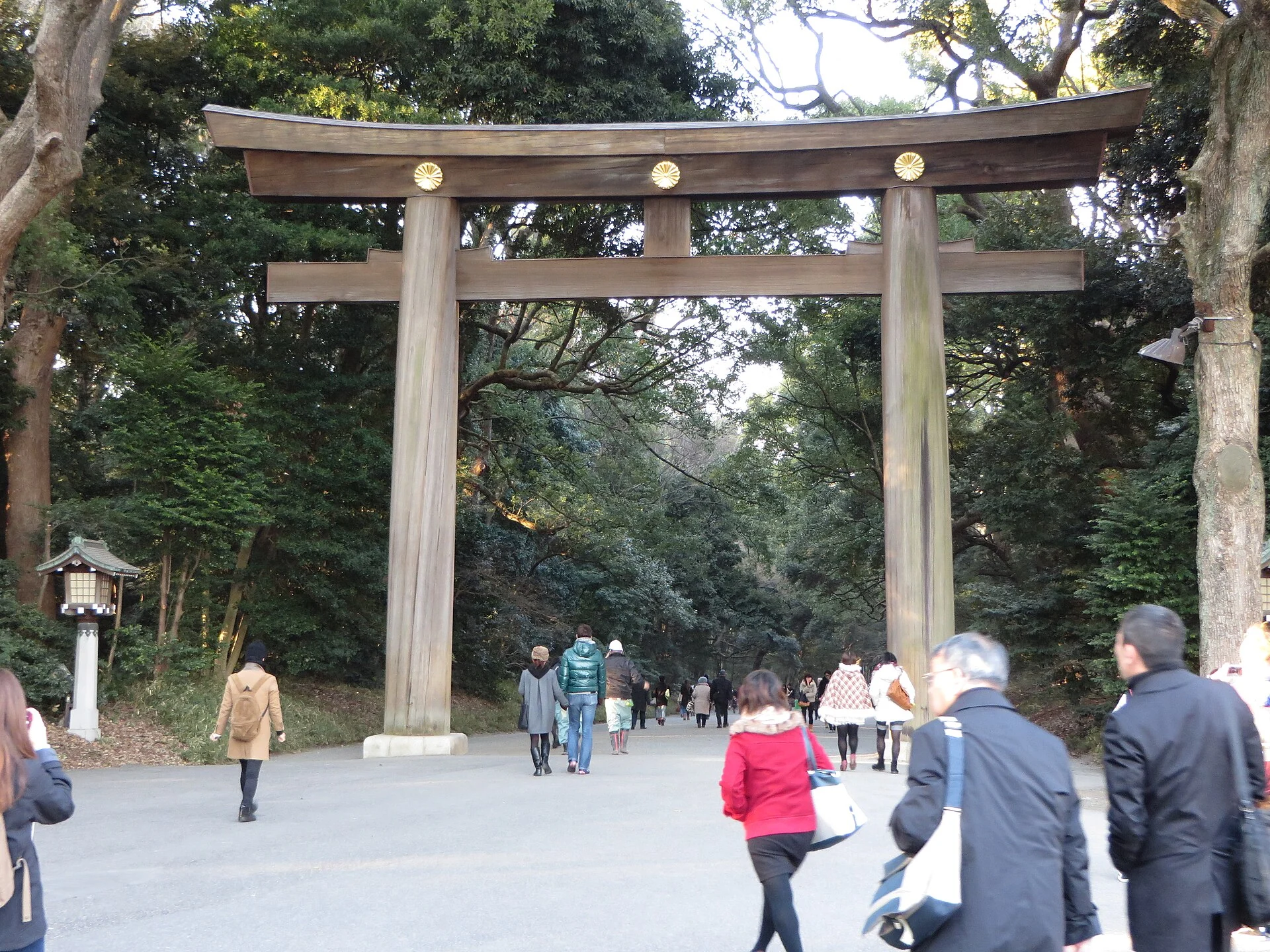
A large natural-timber torii at the path entrance, pedestrians passing in the tree shade

Tokyo, Japan

Meiji ShrineThe forest arrives before the hall

Pass the first torii and the smell of cypress rises, gravel crunching underfoot. The approach bends twice, shutting out the towers behind until only trees remain, and then you see the shrine's low eaves. There is no tomb here; what is enshrined is the spirit of an imperial couple.

Around Shibuya and Yoyogi, the shrine bridge leaves the station's street noise outside the woods; the inner and outer precincts sit apart.

PlaceTokyo, Japan
TypeShinto shrine set in an evergreen forest
SuitsVisitors who'll walk the forest path and read the timber, not only pose at the torii

Forest, timber, and torii

Tokyo, Japan — Shinto shrine set in an evergreen forest.

First walk out the forest's layers along the approach path.

The shrine is built of cypress and copper, kept to the same measure as this forest.

The inner and outer precincts are not the same thing; read them apart or you'll miss something.

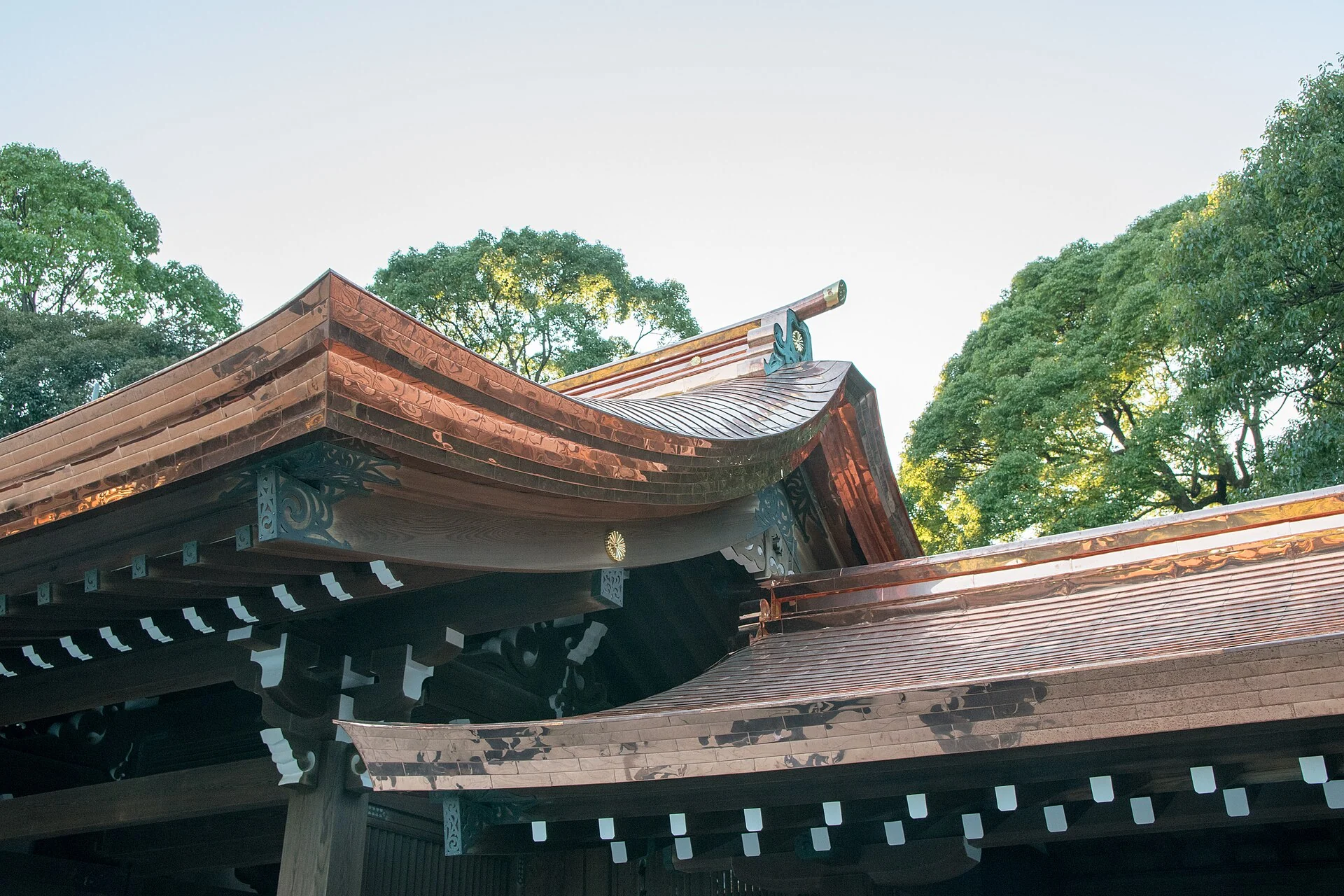
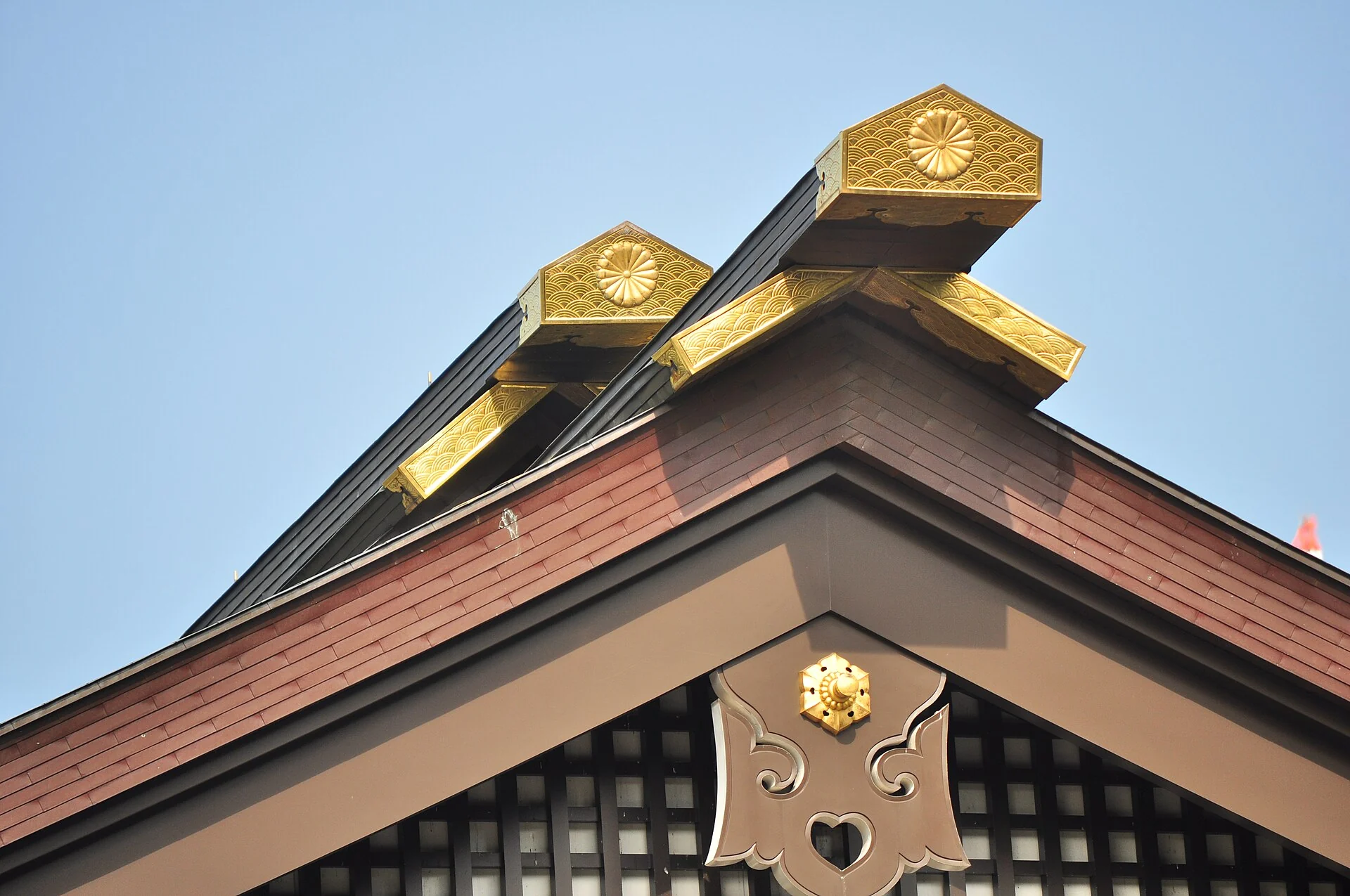
Gilded chrysanthemum crest and wooden lattice under the eaves, pale blue sky behind
Gilded chrysanthemum crest and wooden lattice tucked beneath the shrine eaves
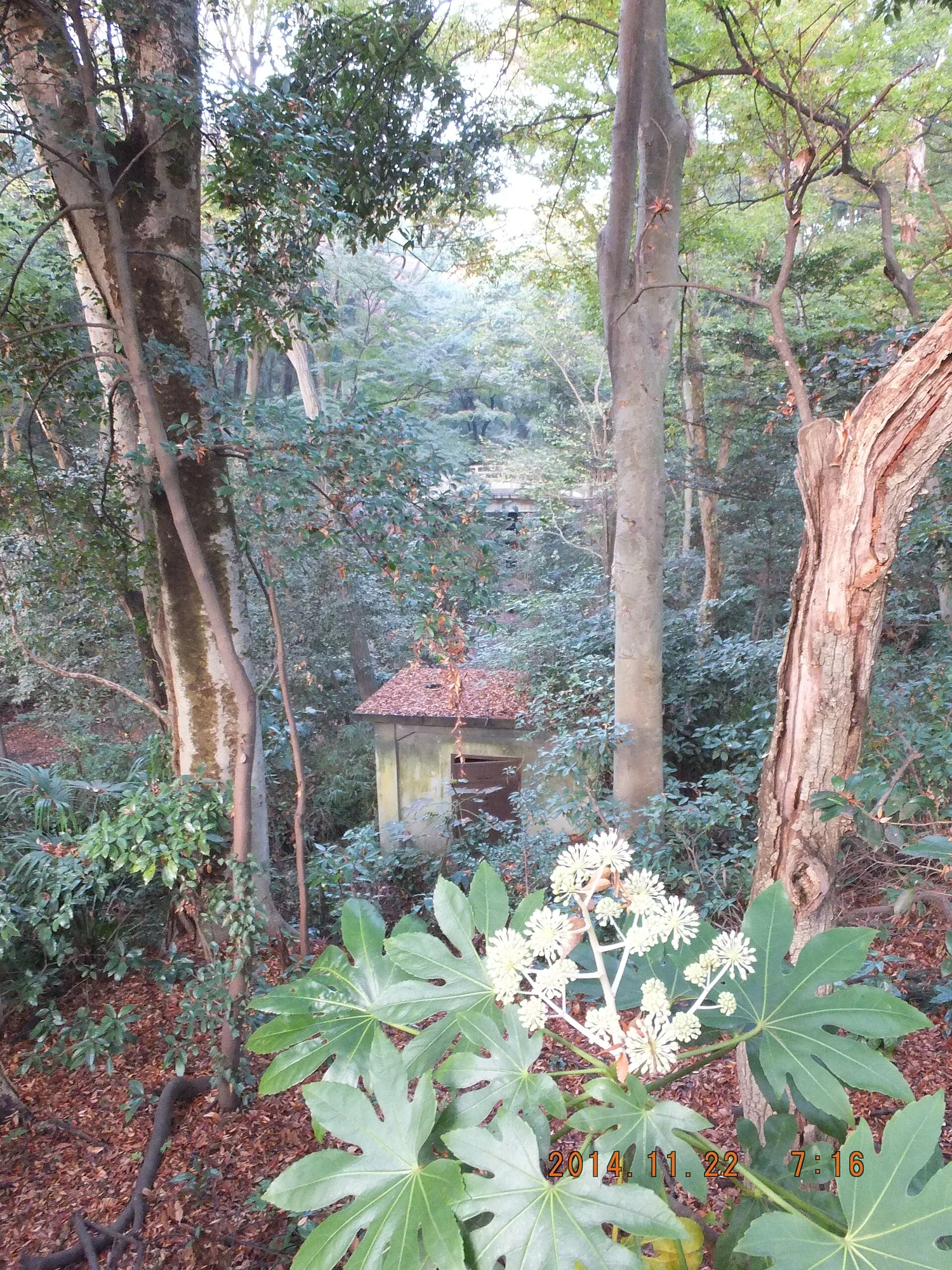
A forest path leading to a stone lantern, white blossoms in the foreground
A quiet stretch of forest path leading toward a stone lantern
Verdigris eaves and layered timber framing, dense canopy behind

The trees were sent from across Japan

When work began in 1915, the land was a familiar iris garden the imperial couple had often visited. The garden trees were donated from all over Japan: 120,000 trees of 365 species, now grown into a 70-hectare evergreen forest. The project was treated as a national affair, with youth groups and civic organisations giving labour and money; timber came from Kiso in Nagano and Alishan, and each prefecture supplied materials.

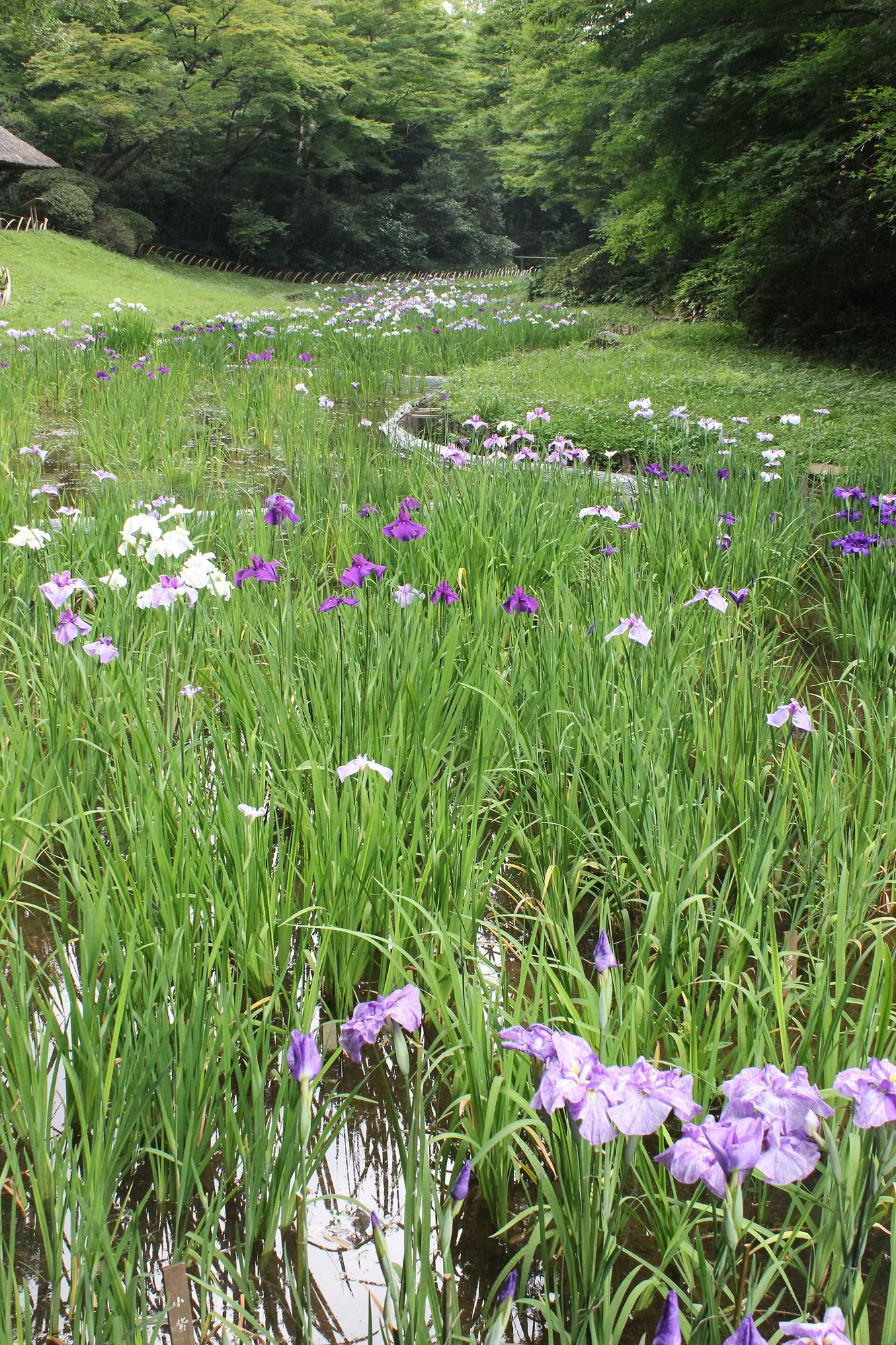
Purple and white irises with green grass in the inner-precinct iris garden

A quarter, on the books

The construction cost recorded in 1920 was about 5,219,000 yen, only around a quarter of what was actually spent; the gap is exactly the donated materials and labour. The first shrine was consecrated on 3 November that year and finished the next, the grounds complete by 1926; until 1946 it was listed among the kanpei-taisha, the first rank of state-supported shrines.

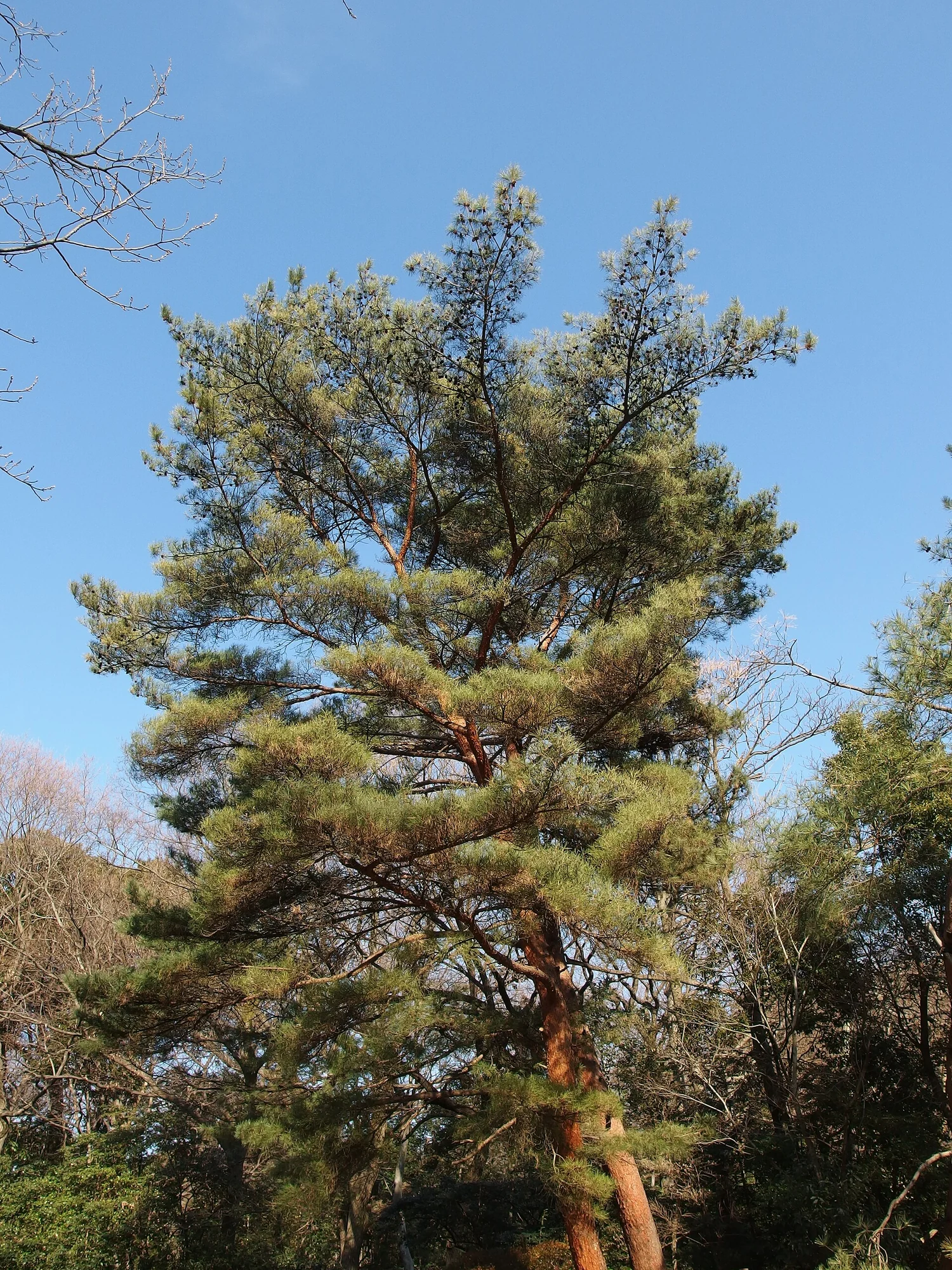
An old tree with spreading branches filling the blue sky

The outer precinct drew a warning

In February 2023 Tokyo approved a roughly 28.4-hectare redevelopment of the outer precinct, proposing a new stadium, a hotel, and three high-rises. That September, ICOMOS warned that if completed as planned the cultural heritage would suffer irreversible harm, and some 3,000 trees and a stretch of open green space would be lost.

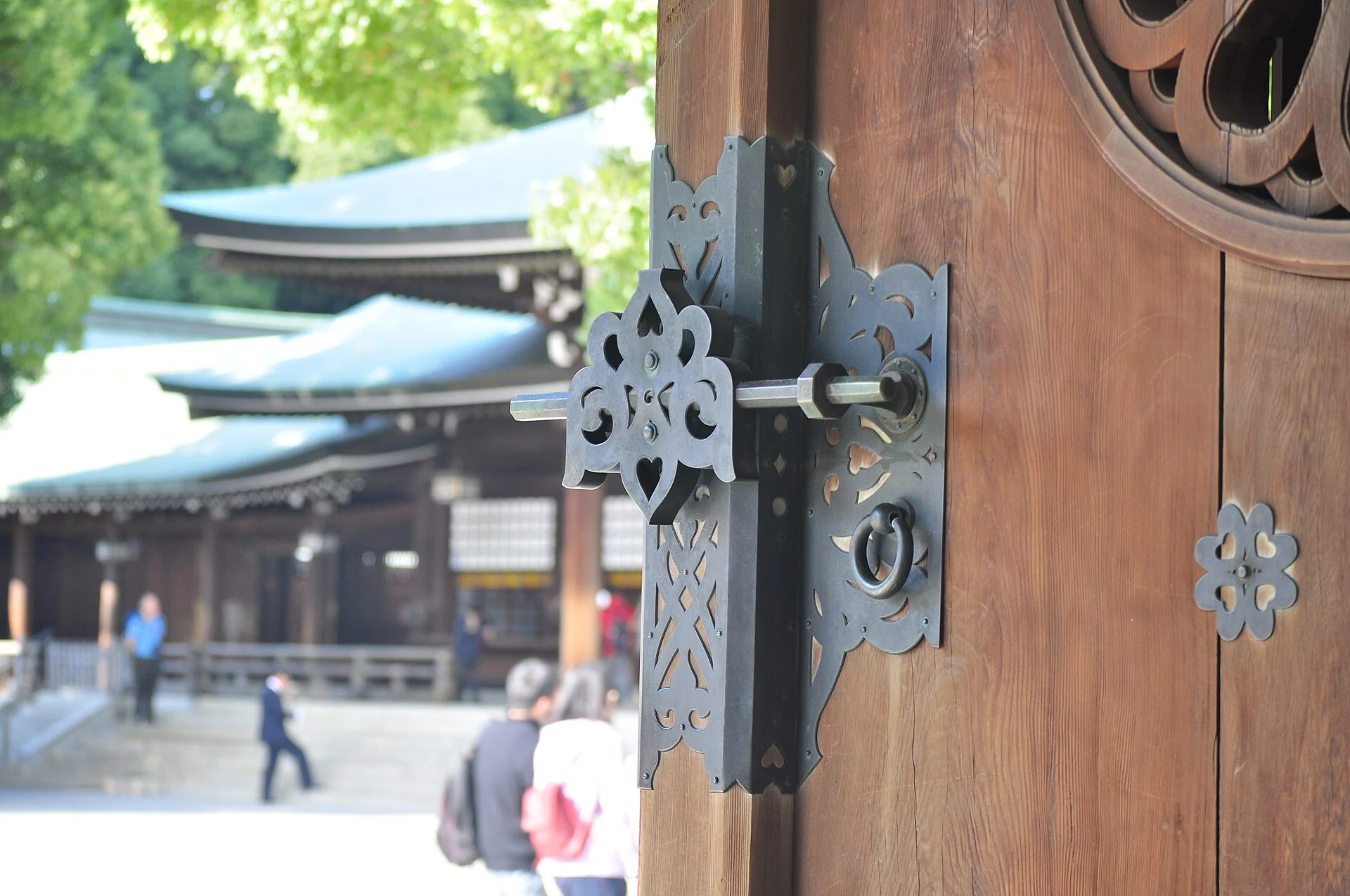
Iron decorative fittings on a wooden gate and a corner of the garden beyond
Route

Shortly after opening

Don't slot it on a transfer day. Enter early when it's quiet and the forest light is soft; you'll still have energy for the city afterwards.

How the forest grew

Enter from the shrine bridge and the ground turns to gravel, evergreen broadleaf trees on both sides shutting out the street noise. The site borders Yoyogi Park and is now a rest spot for many in central Tokyo. The gate opens at sunrise and closes at sunset; the day's light is sliced into segments by the forest, and morning and evening are not the same colour.

This is not virgin forest; the trees were sent from across Japan. The land was once an iris garden the emperor and empress often visited; the inner precinct still keeps that iris garden, which flowers in June, a rare bright note among the deep green.

The forest is not tidy, tall trees and low shrubs mixed. The approach bends twice before the hall, and along it you hear only gravel underfoot; walk that stretch slowly, then look up at the eaves, and you understand why the building was kept so low.

The shrine's timber and copper

The hall follows the nagare-zukuri style, its main material Japanese cypress and copper, the gilded ridge and eave ornaments bright in sunlight. Ito Chuta led the 1915 works, putting traditional method together with the materials then available; the wood is left unpainted, its joints and overhangs exposed.

What is enshrined is the spirit of Emperor Meiji and Empress Shoken, though the emperor's tomb lies at Fushimi Momoyama in Kyoto. The inner precinct centres on the hall and also holds a treasure house in azekura style storing the couple's belongings; beyond the eaves there is little to see, and the emptiness is intentional.

The first buildings were lost in the Tokyo air raids of the war; the present one was completed in October 1958, funded by public subscription. The rites mark their days through the year: the autumn grand festival runs four days, with dance offered at the main hall on 31 October and the emperor's birthday on 3 November; the sumo yokozuna's dohyo-iri often falls in early January or at the autumn festival, and a new yokozuna usually makes his first offering here.

Inner and outer precincts

The shrine divides into inner and outer precincts, walked in wholly different ways. The inner precinct wraps the hall and treasure house in approach paths, gravel, and cypress; the outer precinct is another tract holding the eighty large paintings of the Meiji Memorial Picture Gallery, depicting the lives of the emperor and empress, and several stadiums.

The Meiji Kinenkan once hosted government conferences, including the discussions that drafted the Meiji Constitution. Today the outer precinct has lawns, stands, and a hall for Shinto weddings, a world apart from the tree-enclosed feel of the inner precinct, separated by a whole block.

To move between the two you leave the forest and cross a road; many only walk the inner ring. If time allows, give the outer precinct a half day and you'll see more clearly what place this shrine holds in Tokyo: on one side a forest deliberately grown, on the other an open ground left for the city's people.
A half day on the approach

Enter the forest from the shrine bridge, walk the approach to the hall, detour to the iris garden midway, and return to the torii for the slanting light.

Opening

The grounds open at sunrise and close at sunset, shifting with the season; check the notice for open areas and rite days.

Time needed

At least a half day to circle the inner precinct; allow extra for the outer precinct's art museum and lawns.

Season

The iris garden flowers in June amid high humidity; late autumn colours the leaves and breaks the path light. Midday summer stays shaded.

Good to know

Confirm which spots you may approach and which are view-only against the on-site guidance.

Talk through my trip idea

If you're working out those days in Tokyo, tell me whether you mean to give it a half day or a full one, and whether anyone in your group walks slowly.

[email protected]

Read this page in Chinese

Discuss this journey