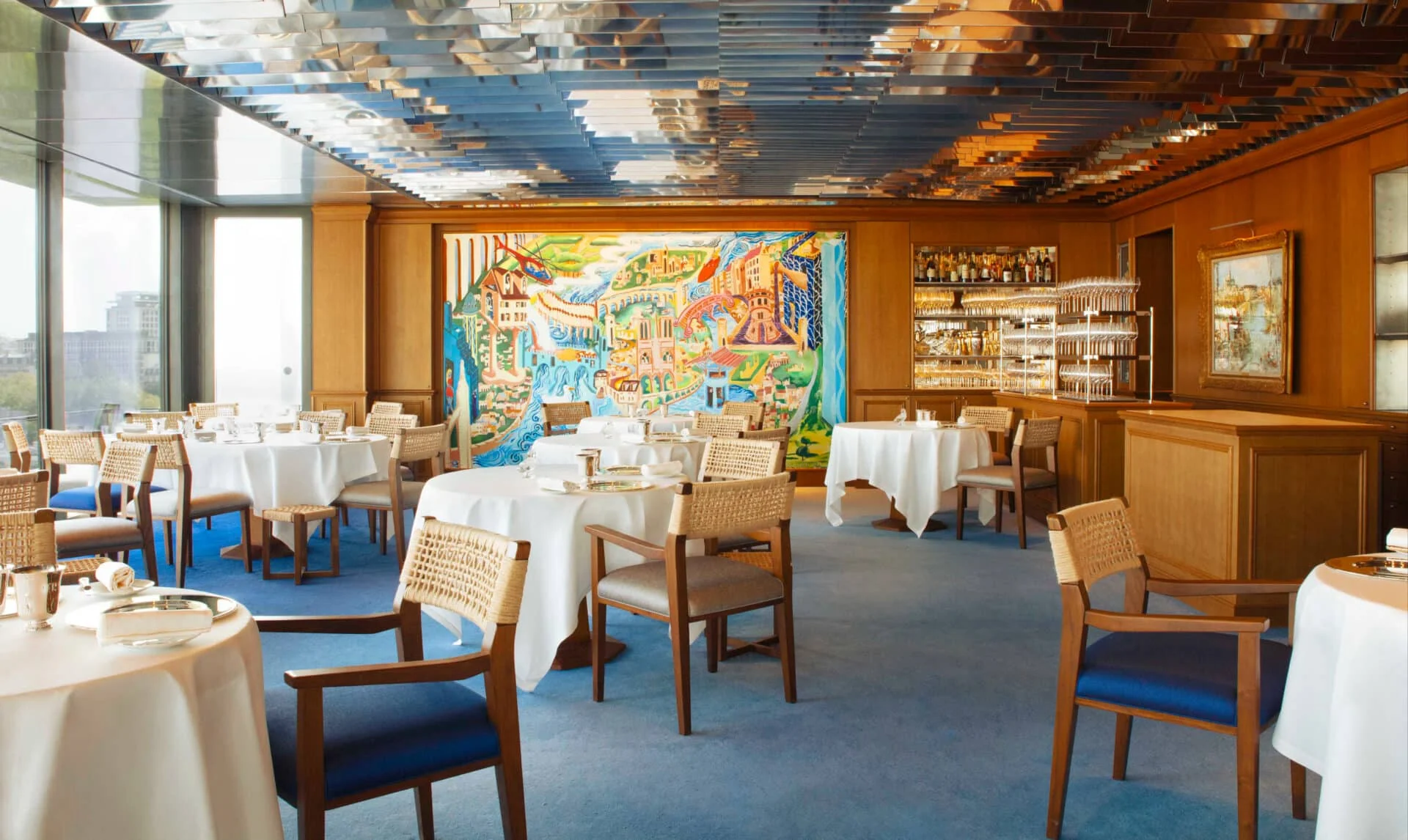
A dining room with blue upholstered chairs and white-clothed tables, the Seine visible through the windows

5th arrondissement, Paris, France

La Tour d'ArgentSix floors up, facing Notre-Dame

A whole row of windows onto the Seine, Notre-Dame and Île Saint-Louis. The room is painted blue, the cloths are white, and the tables stand far enough apart for a conversation across one.

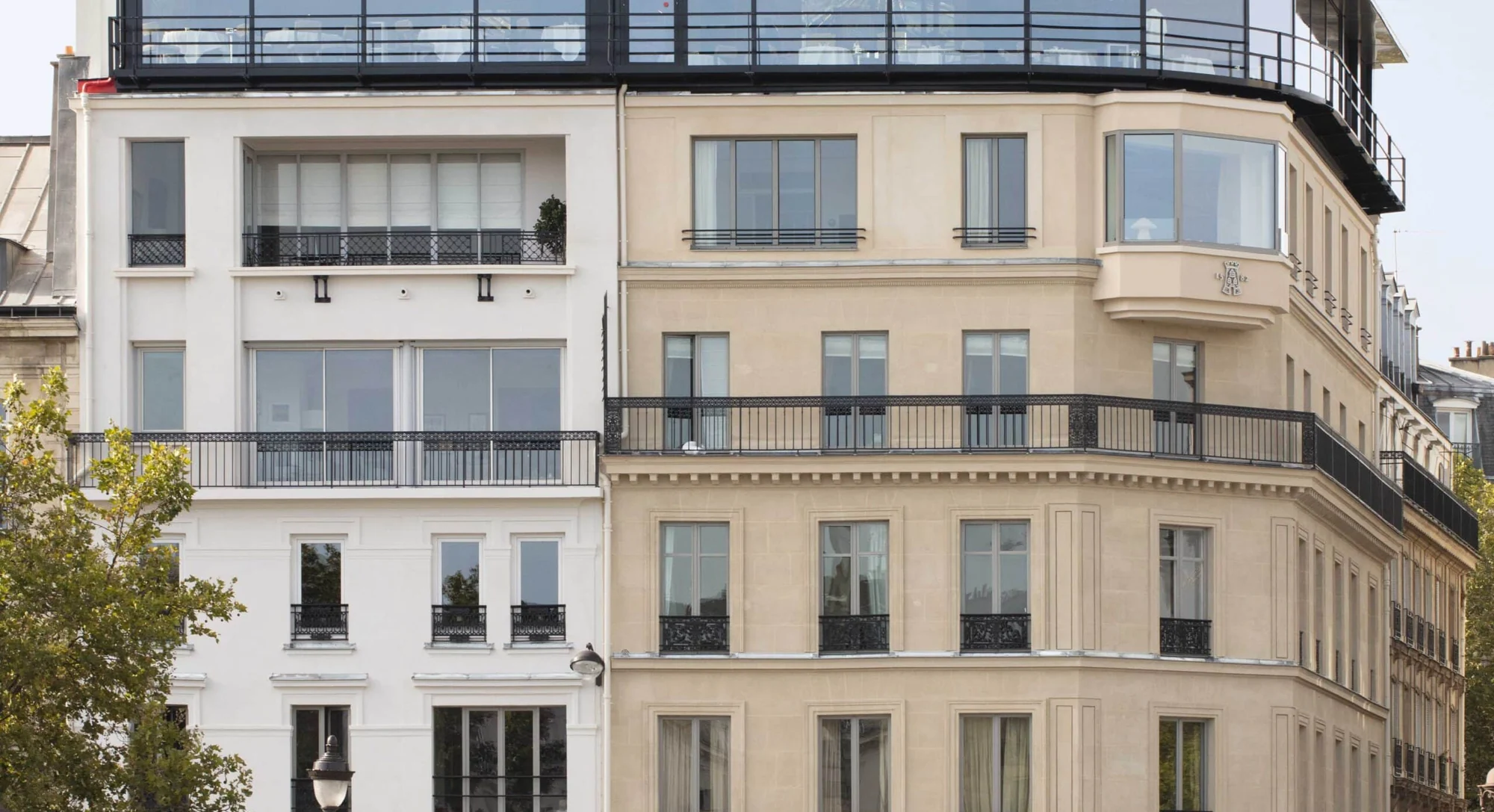
On the Left Bank in the 5th arrondissement, in an old building facing the Seine and Île Saint-Louis, with the restaurant taking the whole of the sixth floor.

Place5th arrondissement, Paris
StyleFrench, seasonal menu
KitchenYannick Franques
CellarVictor González

The window on the sixth floor

5th arrondissement, Paris, France — French cooking on the sixth floor above the Seine.

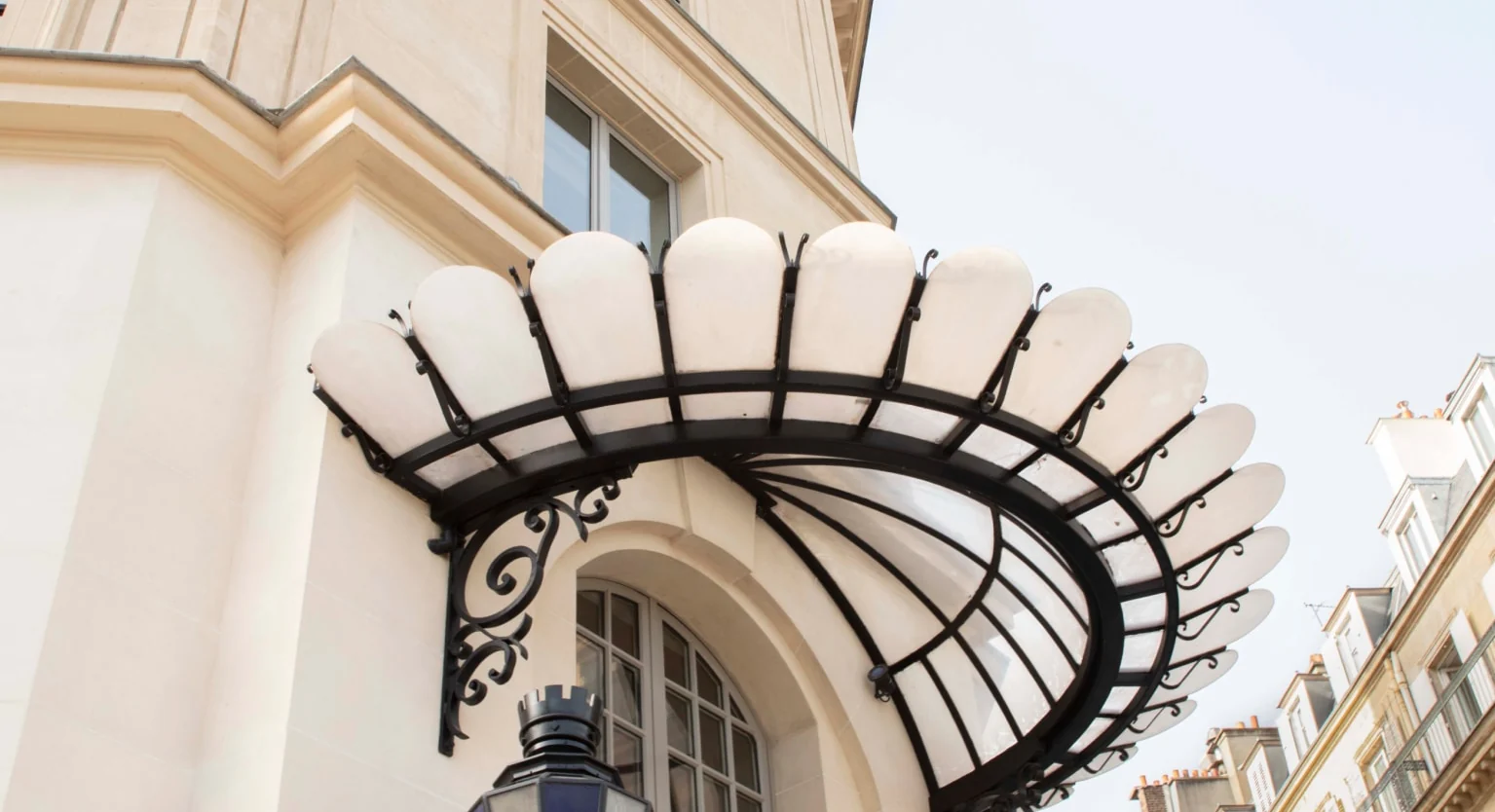
The frontage is small: one wrought-iron lamp above the door, the name written on the glass. A lift takes you to the sixth floor and the doors open onto the river. The windows run in a line from Notre-Dame to Île Saint-Louis, and in daylight the water throws light up at the white cloths.

The house has been serving since the sixteenth century. Owners have come and gone several times; the building has not moved, and neither has the cellar below it, where the stairs and the bottles have stayed in the same stone.

It opens on few days. Tuesday to Saturday only; lunch begins at twelve and finishes at two, dinner starts at seven and runs past midnight. A date worth having has to be built around that timetable rather than the other way round.
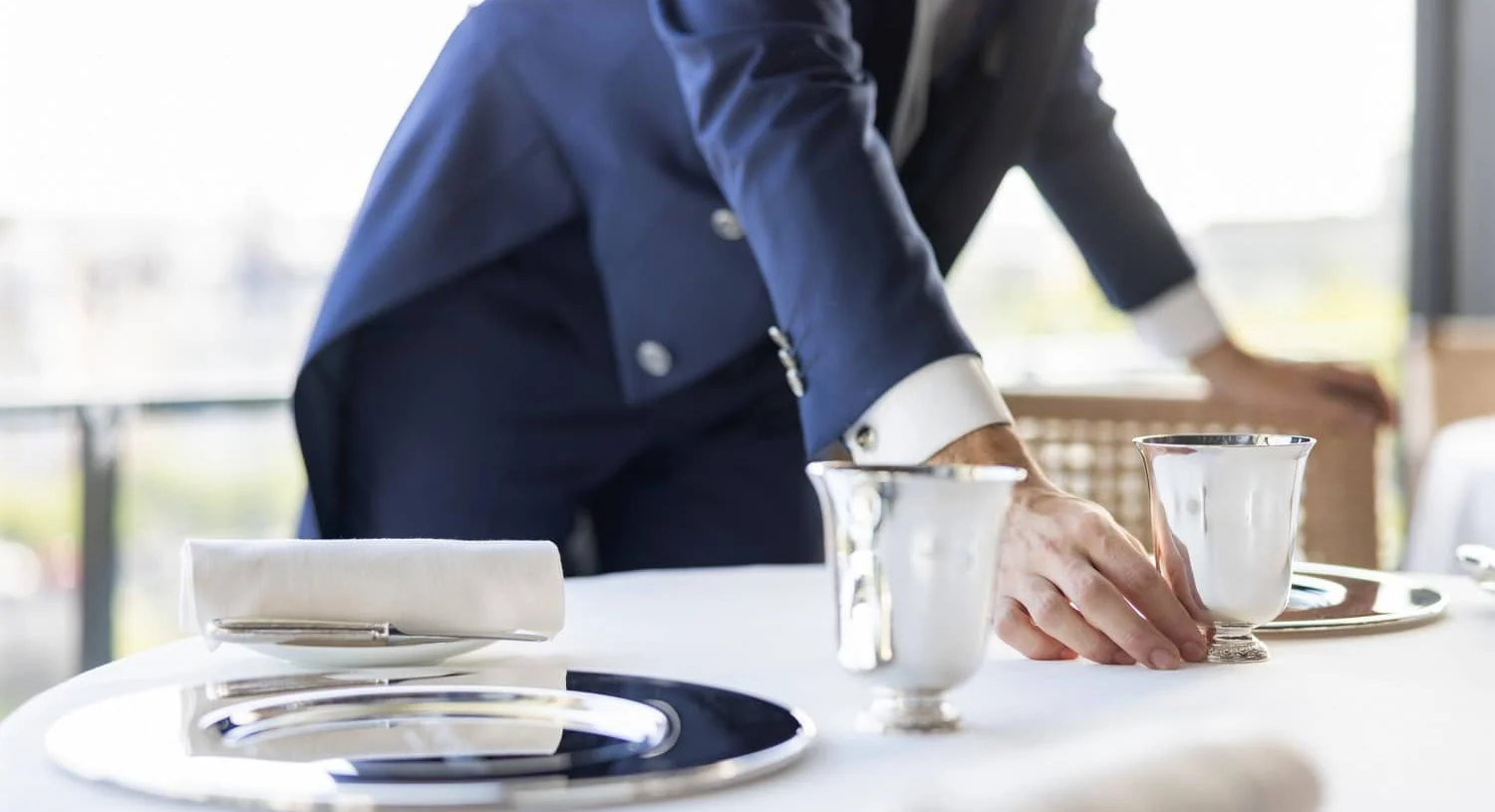
A waiter in a dark jacket arranging food on a plate beside a table
A waiter plating at a table
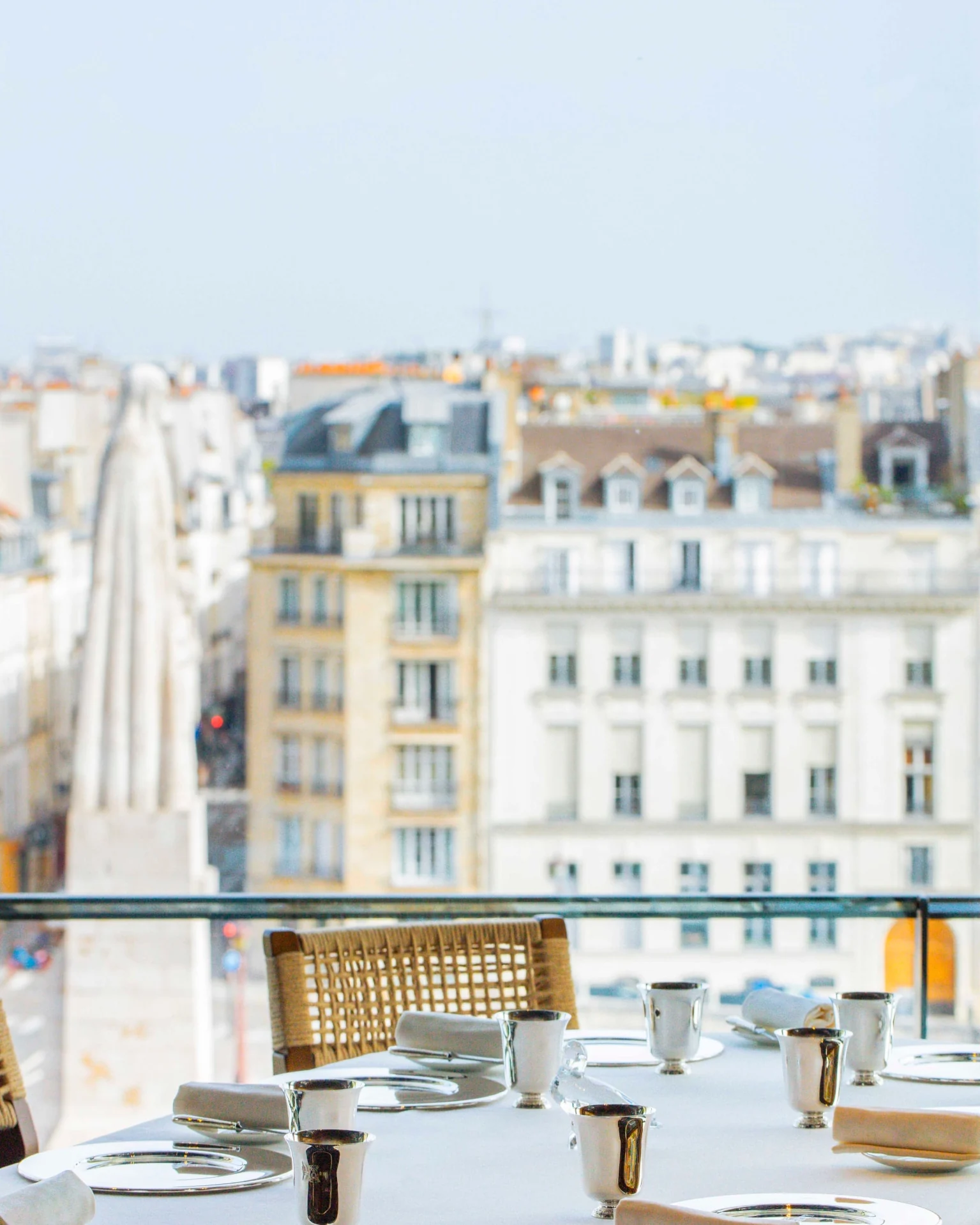
A table set by the window, with the roofs of Paris beyond the glass
A window table over the roofs of Paris
The stone building on the Left Bank of the Seine, seen from the river side

The building on the Seine

Pale stone on the Left Bank, facing Île Saint-Louis, windows open in rows. From the street there is no sign of a dining room overhead, only the iron lamp and the lettering on the glass at the door.

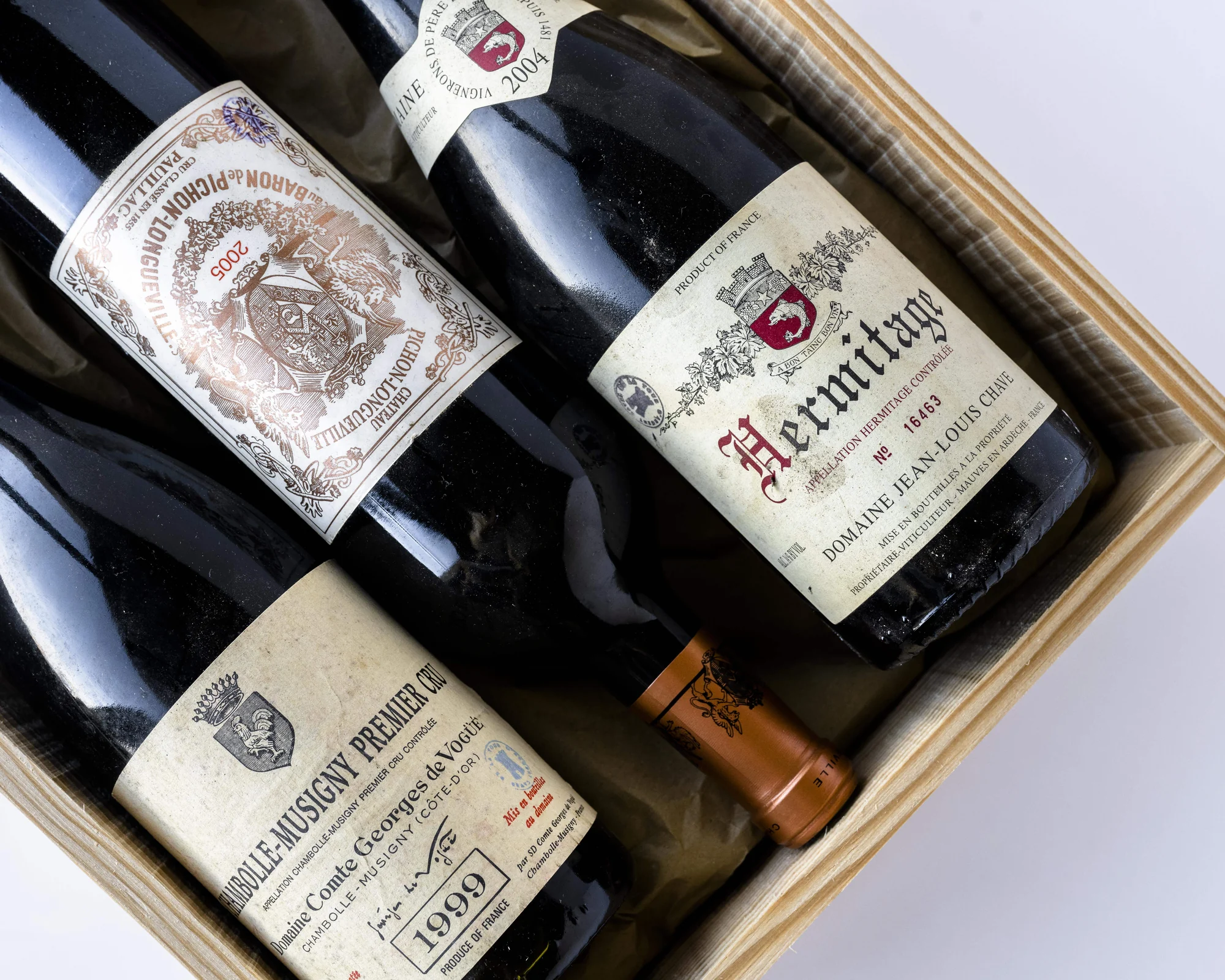
Wine cases and old bottles stacked in the cellar

The cellar below

In 1914 the wine collection of the neighbouring shop was folded into the Tour d'Argent, and the two have been one cellar ever since. Victor González runs it as head sommelier: every bottle is sealed on arrival and aged down there until it is opened. Waiters take the same stairs to fetch it, past a stone bust of Bacchus that the site says keeps watch over the stock.

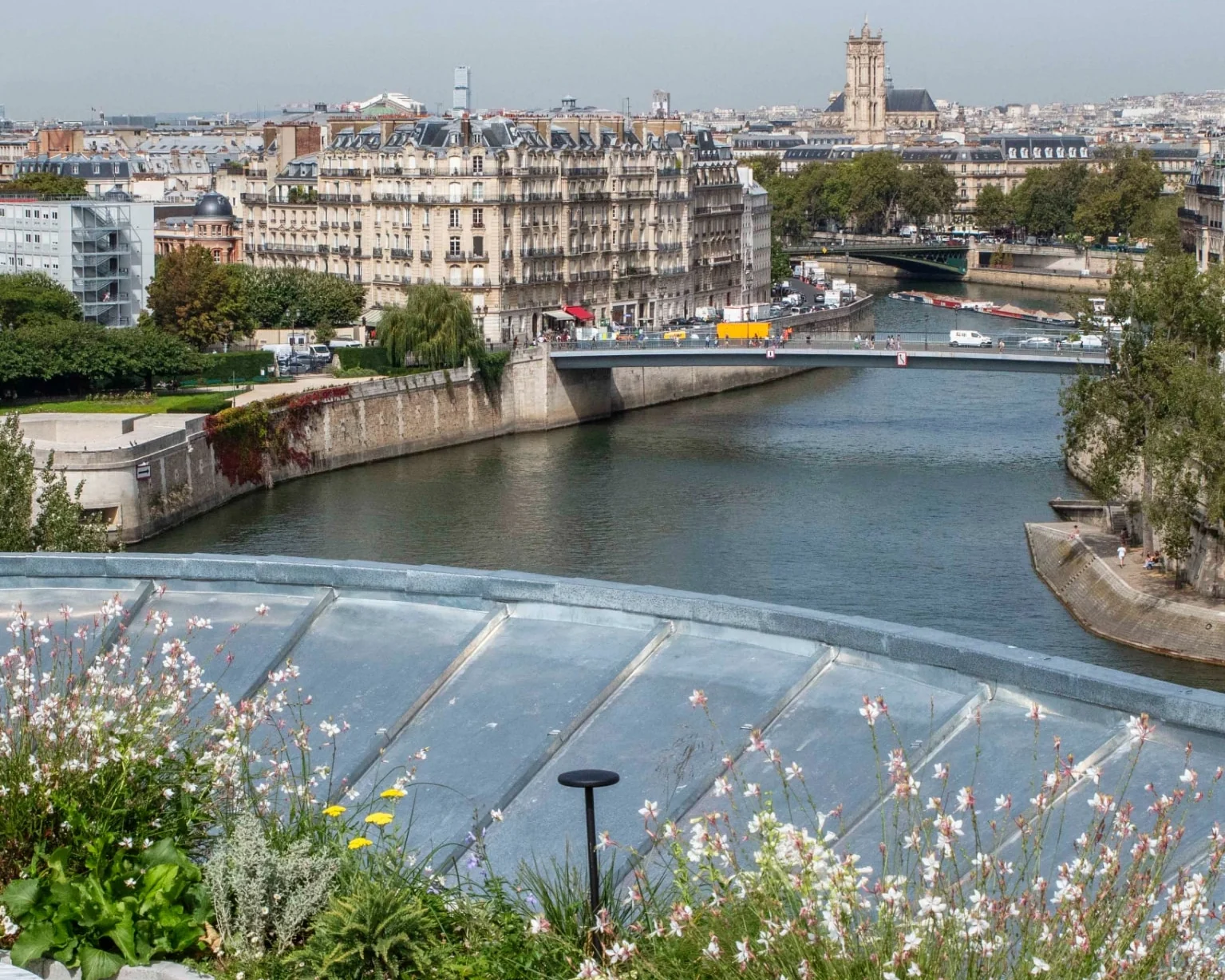
The zinc-roofed terrace on the seventh floor, plants along the edge and the river below

The floor above the roof

One level up is the seventh-floor terrace, Le Toit de la Tour, laid in zinc with plants around the edge, serving champagne and light food through the evening. It opens by season only and shuts for the winter, so it is worth checking before climbing the last few steps.

The street entrance with its wrought-iron sign lamp above the door
Route

Coming up from the river

Lunch fits most easily: sit down at twelve, out by two, then a walk along the Seine or over the bridge to Île Saint-Louis. Dinner runs past midnight, which rules out an early flight the next morning.

Older than most of Paris

In the sixteenth century, under Henri III, a man called Rourteau opened an inn on the bank of the Seine, opposite the quay where wine was unloaded and just inside the Porte Saint-Bernard. It served the people around the king. The small Tournelle castle beside it was built of stone from Champagne and caught the light with a silver shine, and the inn took that name for its own.

The fork is said to have appeared at a French table here for the first time. People ate with their hands then; to keep the white ruff at his collar clean, Henri IV used a fork at a dinner, and the story went round Paris afterwards. He came back often and ordered a chicken dish from Africa. The same king gave the house the right to hang a coat of arms.

From Richelieu to the Revolution this was where a serious dinner was eaten. The Duke of Richelieu gave a banquet for forty at which every dish on the table was beef, cooked thirty different ways. After the Revolution the house was rebuilt by Lecoq, who had cooked in the imperial kitchens, and the room went back to the work it had been doing.

In 1867, the year Paris held its world fair, the Café Anglais was at its height. Alexander II of Russia, the tsarevich who became Alexander III, King Wilhelm I of Prussia and Bismarck sat at one table, and the chef Dugléré cooked for them. The meal has been called the dinner of the three emperors ever since, and the recipes from that kitchen came to this house with the Terrails.

One duck, one number

In the middle of the nineteenth century Frédéric Delair moved from maître d'hôtel to owner and fixed the method for the house's duck in blood, which has carried his name since: canard Frédéric Delair. He carved it at the table with a fork, the knife never touching the plate, the slices falling as they were cut. He also began numbering every duck sold, and the count has run on without a break.

In 1911 André Terrail, grandfather of the present owner, bought the house from Delair and brought two things with him: Dugléré's recipes and the rare old bottles left behind by the neighbouring shop. In 1947 he passed it to his son Claude, who opened a second house in Tokyo and took the restaurant past its four hundredth year. Claude died in 2006 and his son André took over; the family is on its third generation.

Also worth knowing

Who is cooking now, and the four things that are booked one at a time.

01

The kitchen faces the room

Yannick Franques cooks, a Meilleur Ouvrier de France. He came through the kitchens of Eric Frechon, Christian Constant and Alain Ducasse, and worked at Château Saint-Martin in Vence. The kitchen was rebuilt to open onto the dining room, so the work is visible from the table.

02

Four doors

There are four things to book: the restaurant on the sixth floor, the roof bar on the seventh, an apartment that takes a single night, and the food shop downstairs with its cellar. Each keeps its own days, and the roof opens only in season.

Putting a meal here into the trip

One room six floors up, four separate things to book, and a week that only gives you five days.

Cuisine

French, with the menu following the season. The signature is duck pressed in its own blood, each bird carrying its own number.

Booking

Tuesday to Saturday only. The sixth-floor restaurant, the seventh-floor terrace, the apartment and the food shop downstairs are booked separately, by phone or through the site.

Hours

Lunch 12:00 to 14:00; dinner from 19:00, finishing at 00:30. The room shuts at 16:00, between the two services. Valet parking runs during service hours only.

Dress and diet

No dress code is listed on the site. The terrace is a few more steps up, which is easier in shoes made for walking. Dietary requests are not addressed there and should be confirmed with the restaurant.

Plan this into a journey

Tuesday to Saturday, and dinner that runs past midnight: the days around this table are easier to plan once the seating is fixed.

[email protected]

Read this page in Chinese

Discuss this journey