Three storeys, not one kind of house
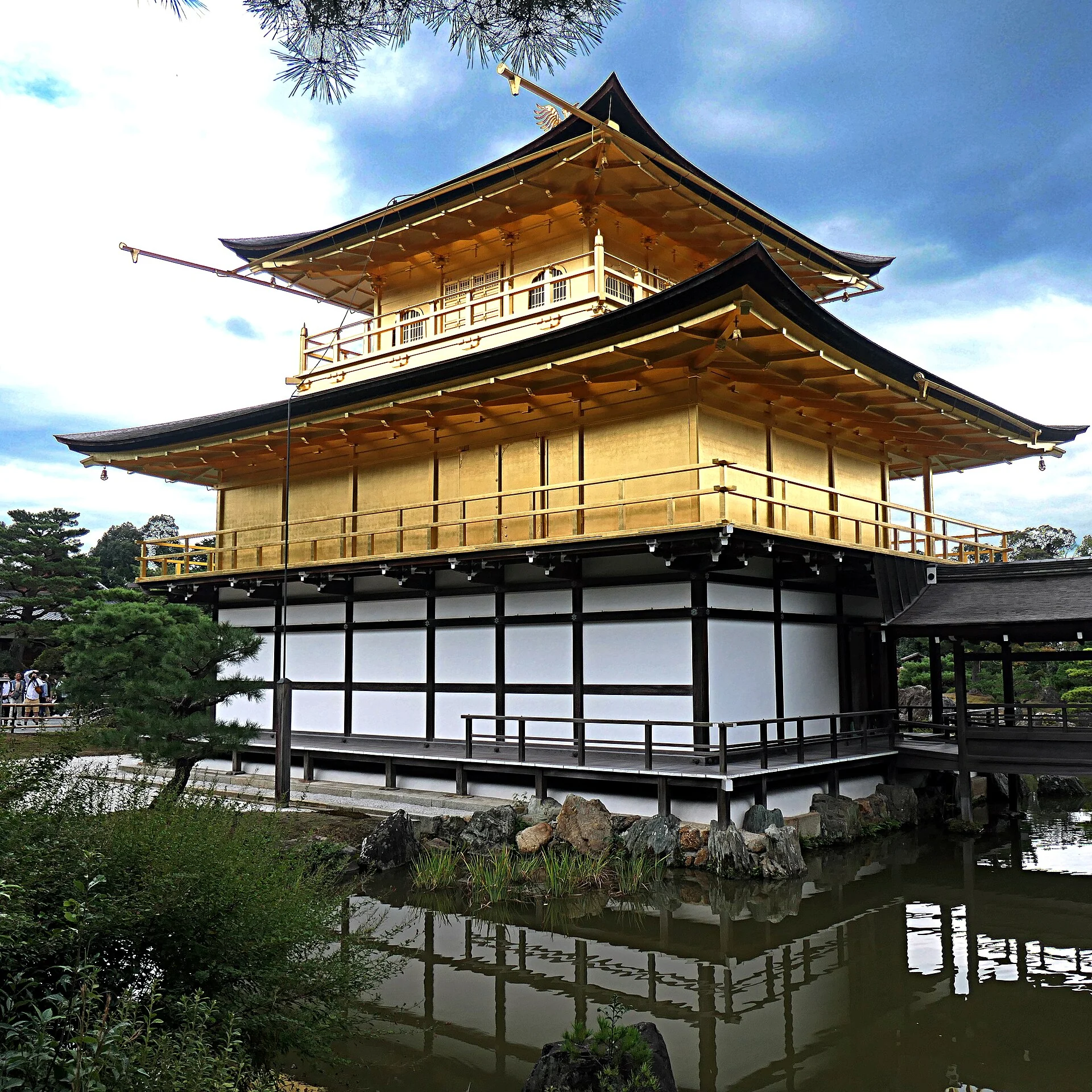
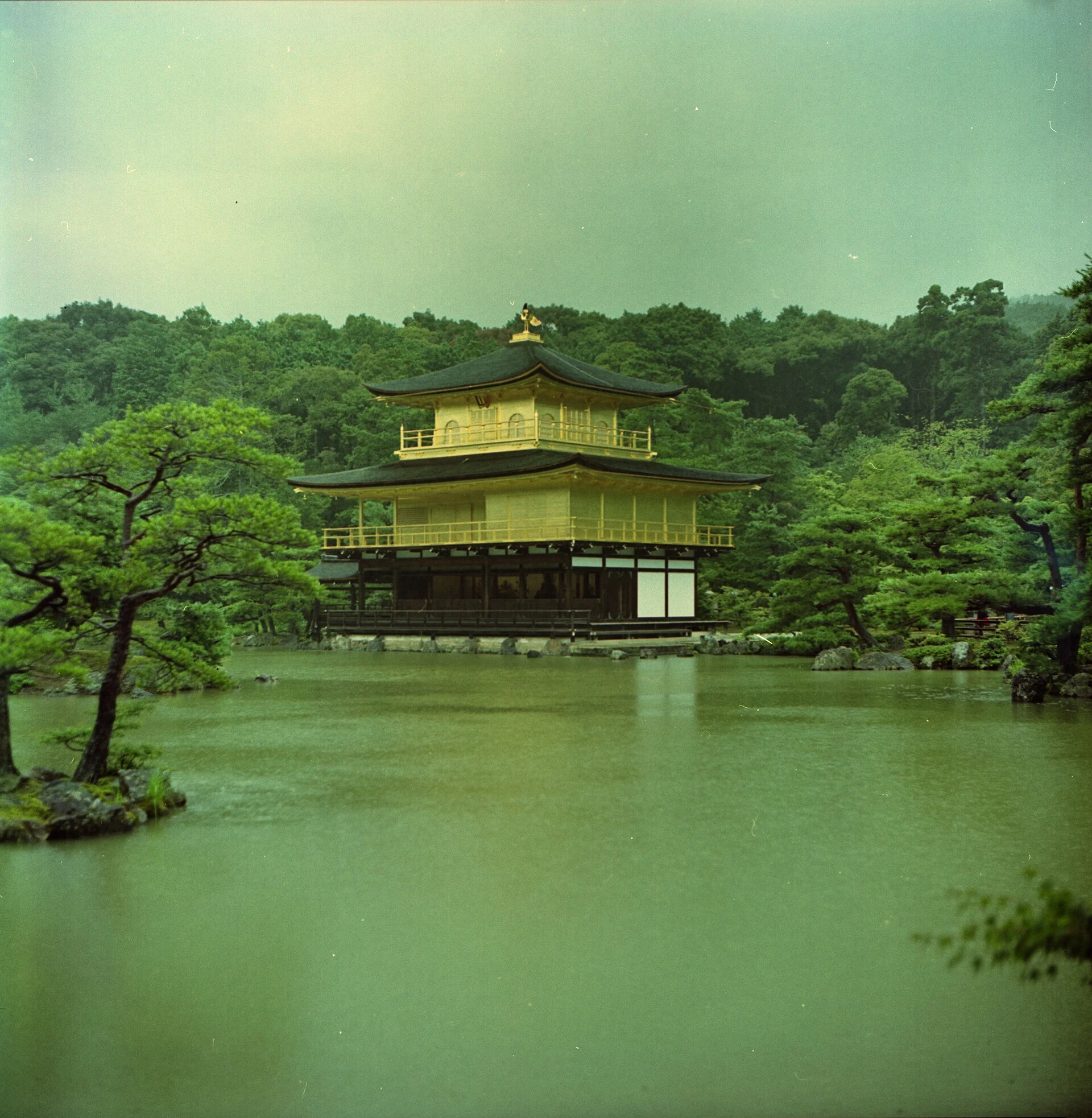
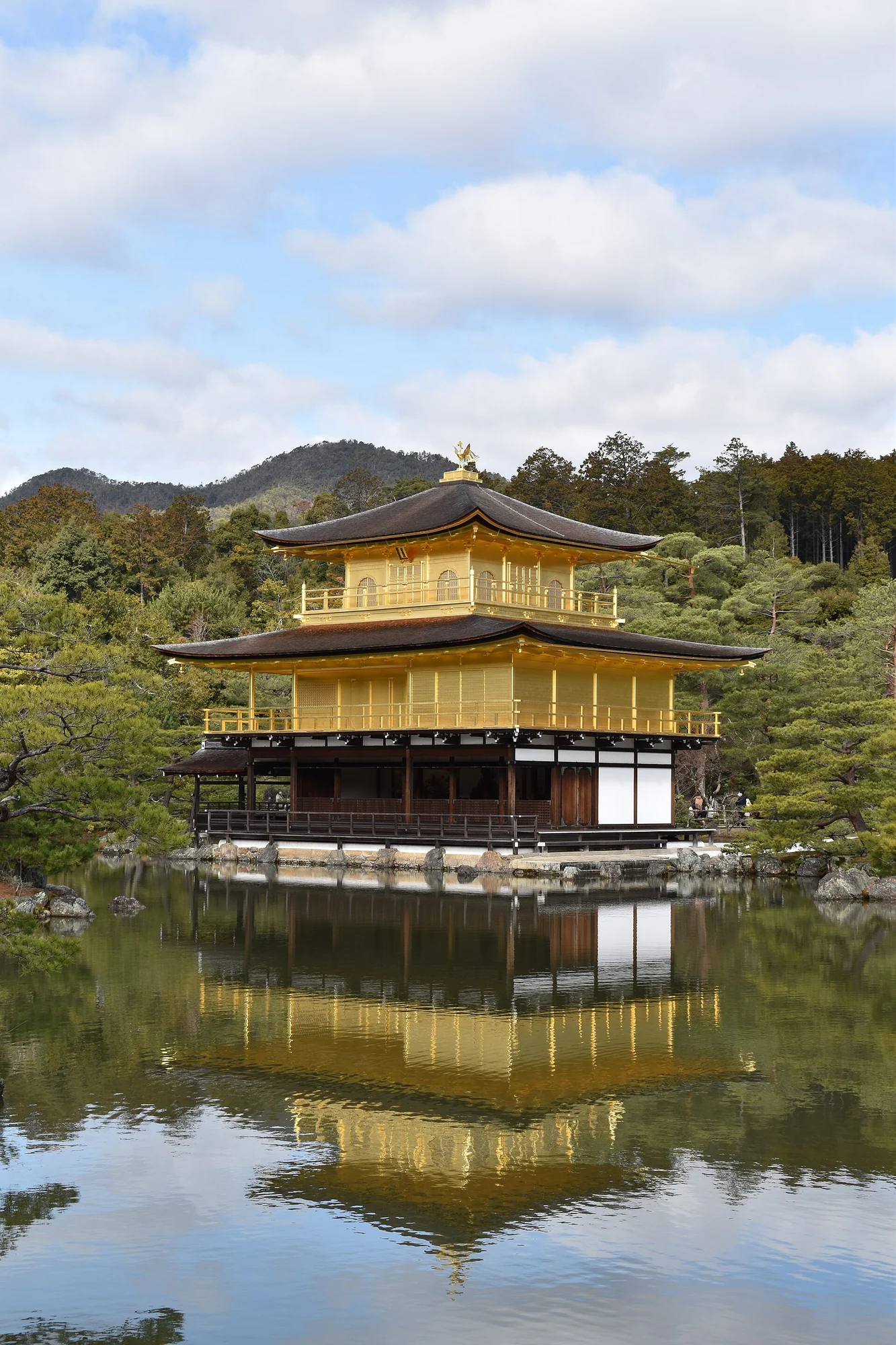
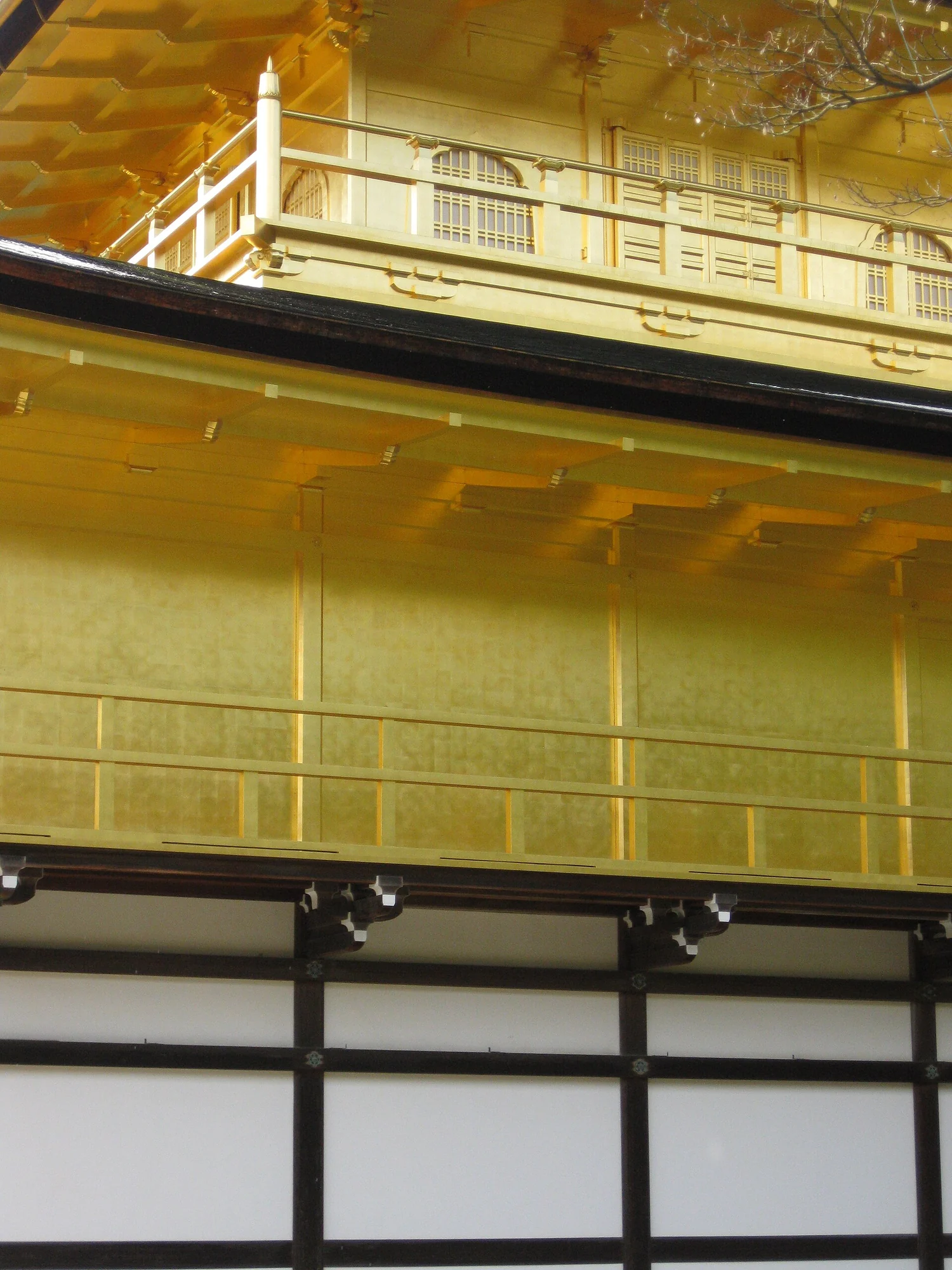
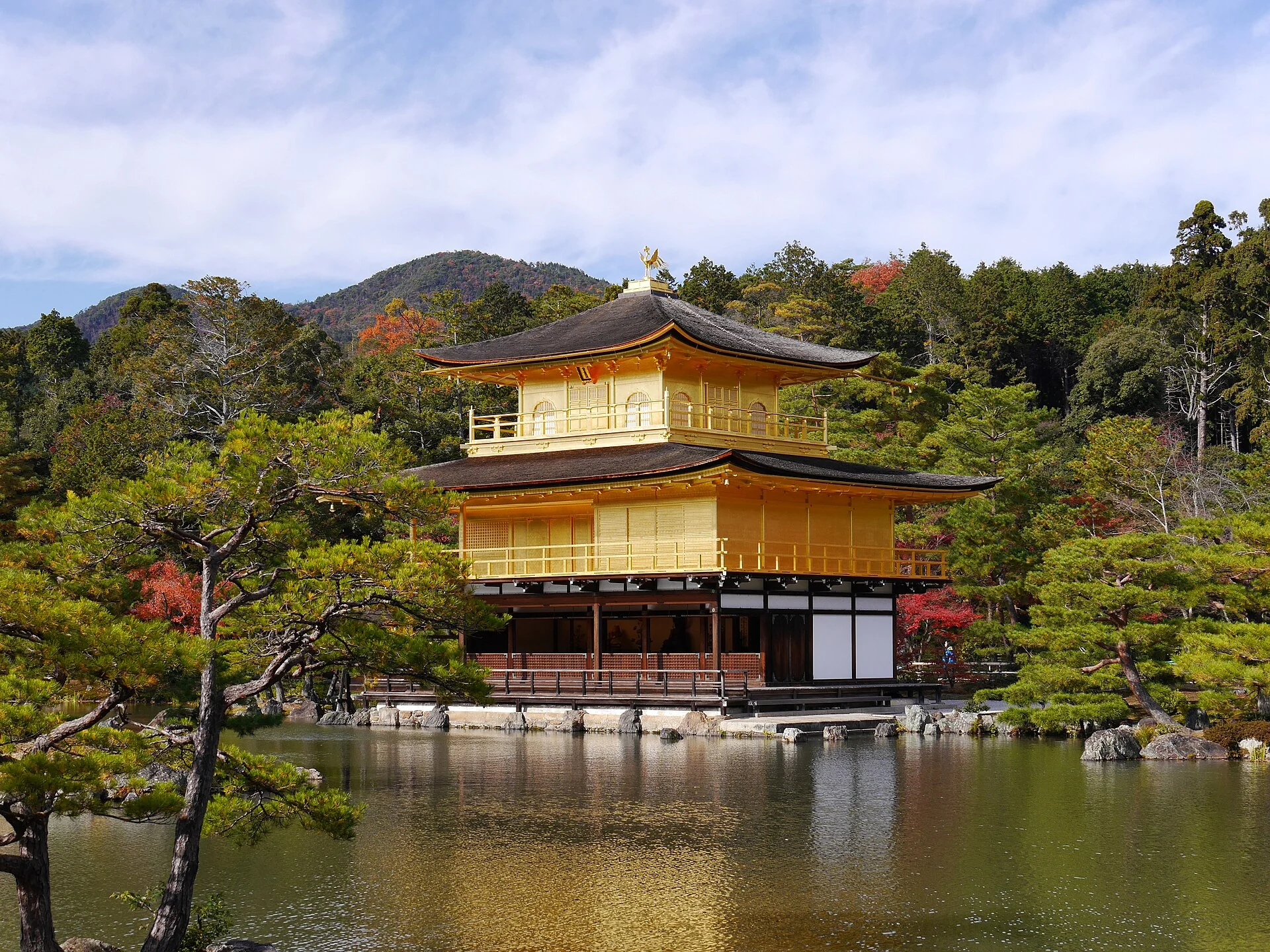
The hall stands 12.5 metres and each of its three storeys uses a different method. The ground floor, Hojo-in, follows the shinden style of Heian aristocratic homes: unpainted timber, white plaster walls, and a surrounding veranda; its walls are mostly sliding board doors whose opening and closing change both the light that enters and the view beyond.
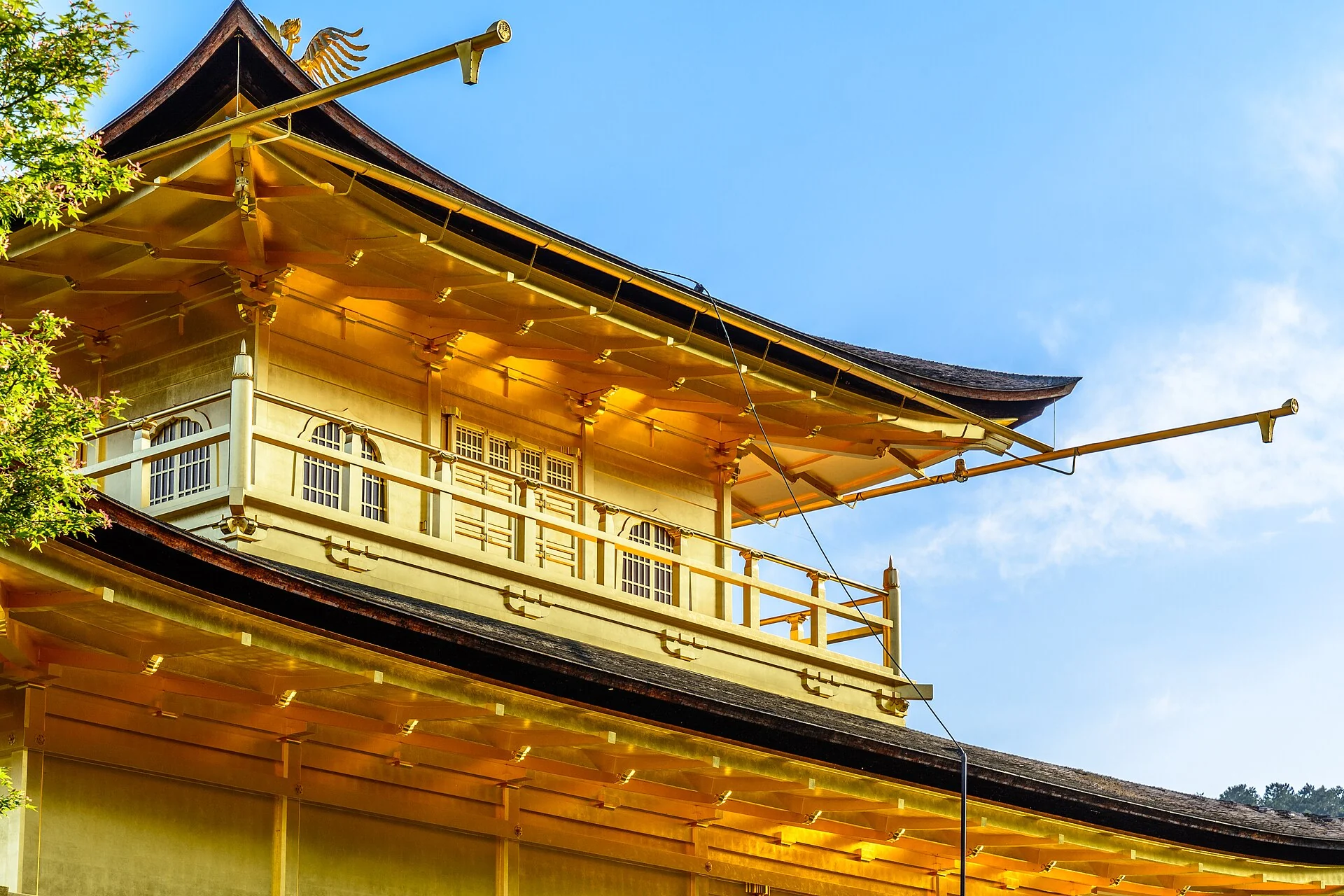
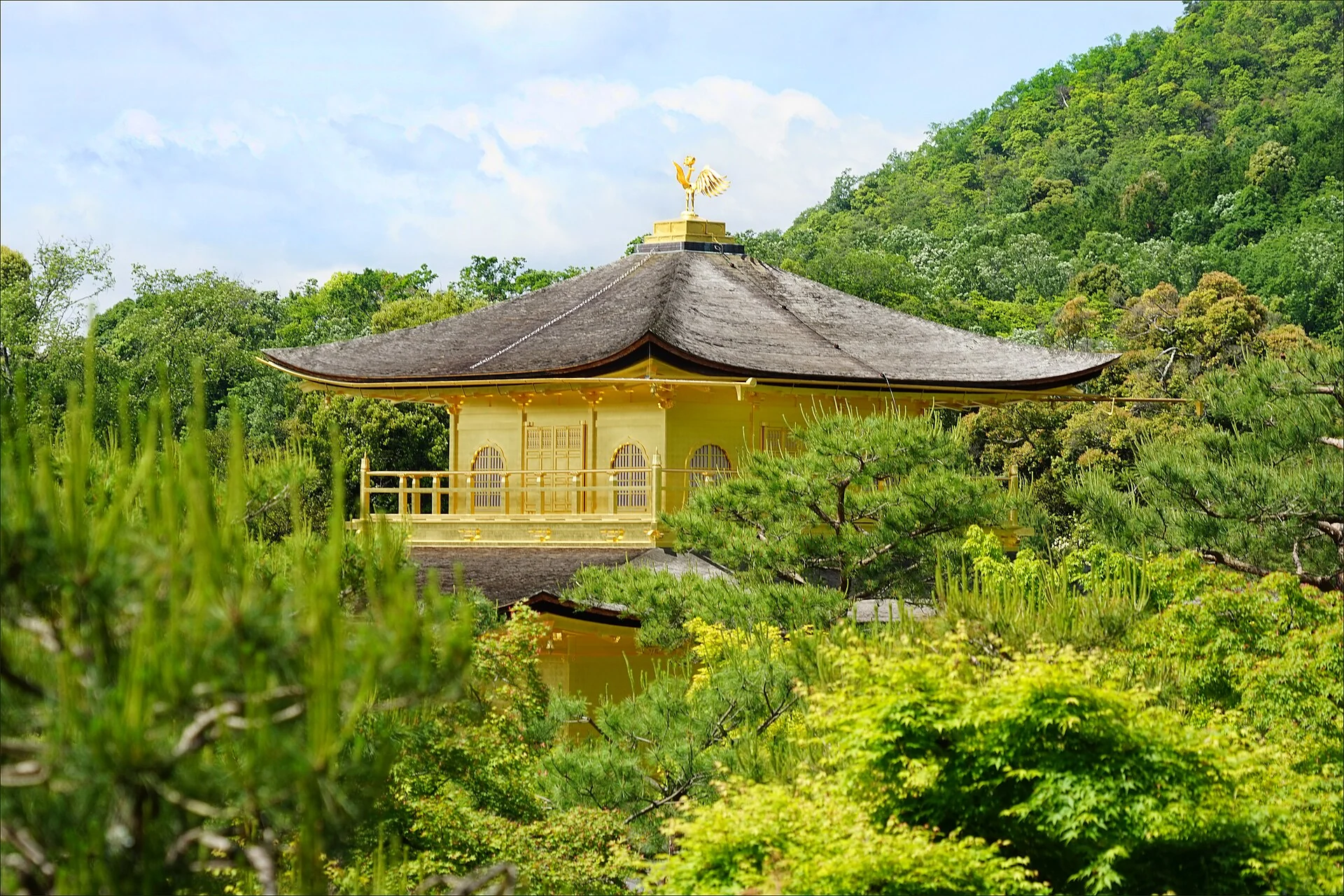
The second floor, Cho-on-do, switches to the buke style, with sliding wooden doors and lattice windows that lighten the facade, holding a Buddha hall and a small niche for Kannon. The third floor, Kukyo-chu, is a Zen hall form, its roof drawn into a pyramid of shingled gables crowned by a bronze phoenix.
The upper two storeys wrap pure gold leaf and enshrine Buddha's relics, which is why the building is called a reliquary hall. The gold carries another meaning here: it was meant to purify defilement and quiet thoughts of death. Muromachi taste also loved visual excess, and when sunlight fell on the leaf and bounced into the water, the whole garden seemed to brighten.