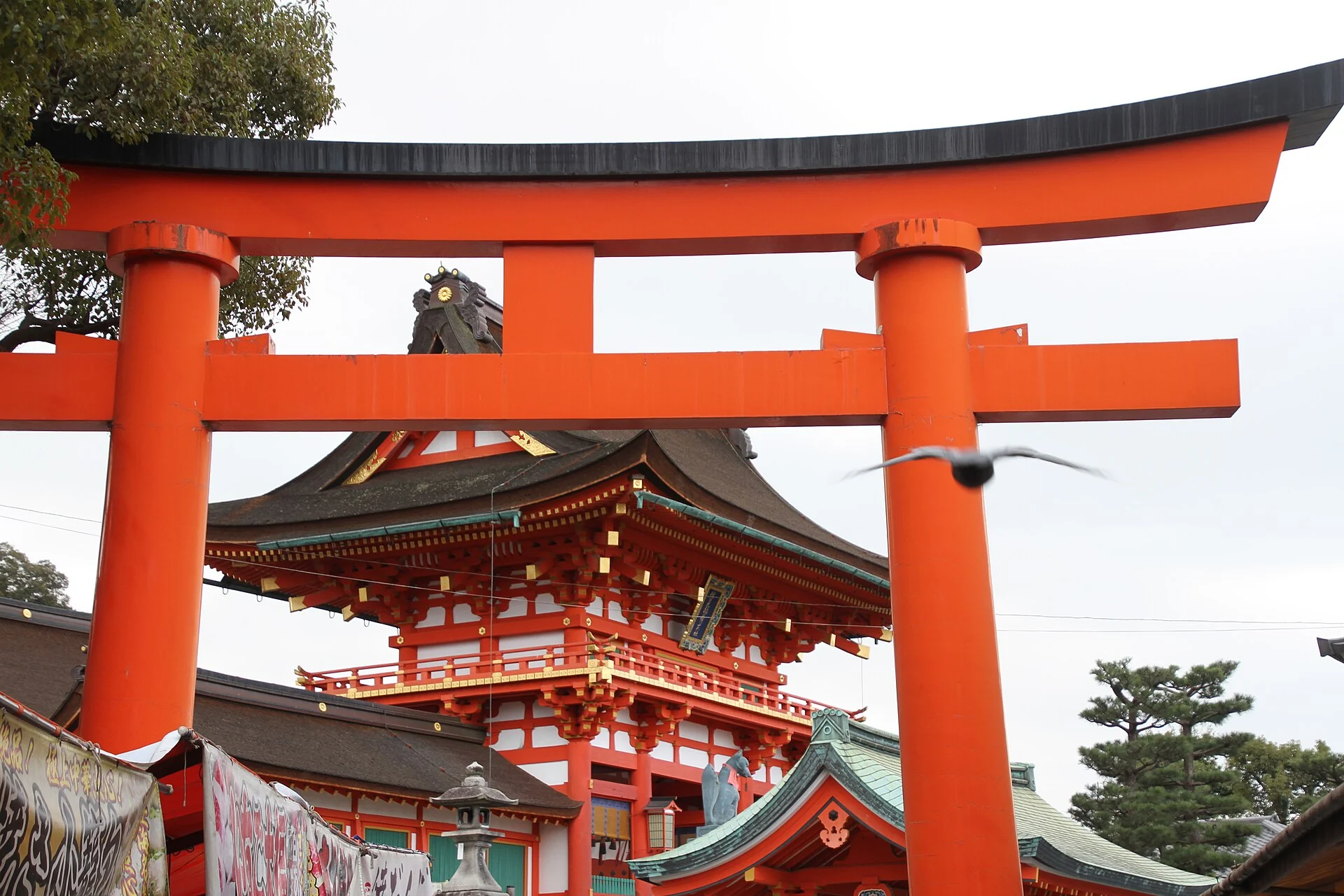
Vermilion shrine front, dark eaves pressing down on a row of columns

Fushimi Ward, Kyoto, Japan

Fushimi Inari-taishaVermilion gates one after another

Pass under the gate tower and ahead is row after row of vermilion torii, the pillars so close they slice the sky into strips. Turn a corner and look back, and that first gate has vanished.

The shrine gate sits right against the city; a few steps in and the trees close overhead.

PlaceFushimi Ward, Kyoto, Japan
TypeShrine and mountain trail
SuitsThose who want to know where so many red gates came from, not just to pass through the tunnel
Best seasonOvercast days show the vermilion at its deepest; avoid the humid, slippery summer after rain

The gates were donated

Fushimi Ward, Kyoto, Japan — Shrine and mountain trail.

Pause before the main shrine, then take the mountain path — don't dive into the torii the moment you arrive.

Those rows of vermilion gates were offered one by one by merchants; the pillars carry their names.

The trail runs over four kilometres uphill; the higher you go the fewer the people, with small shrines scattered in the woods.

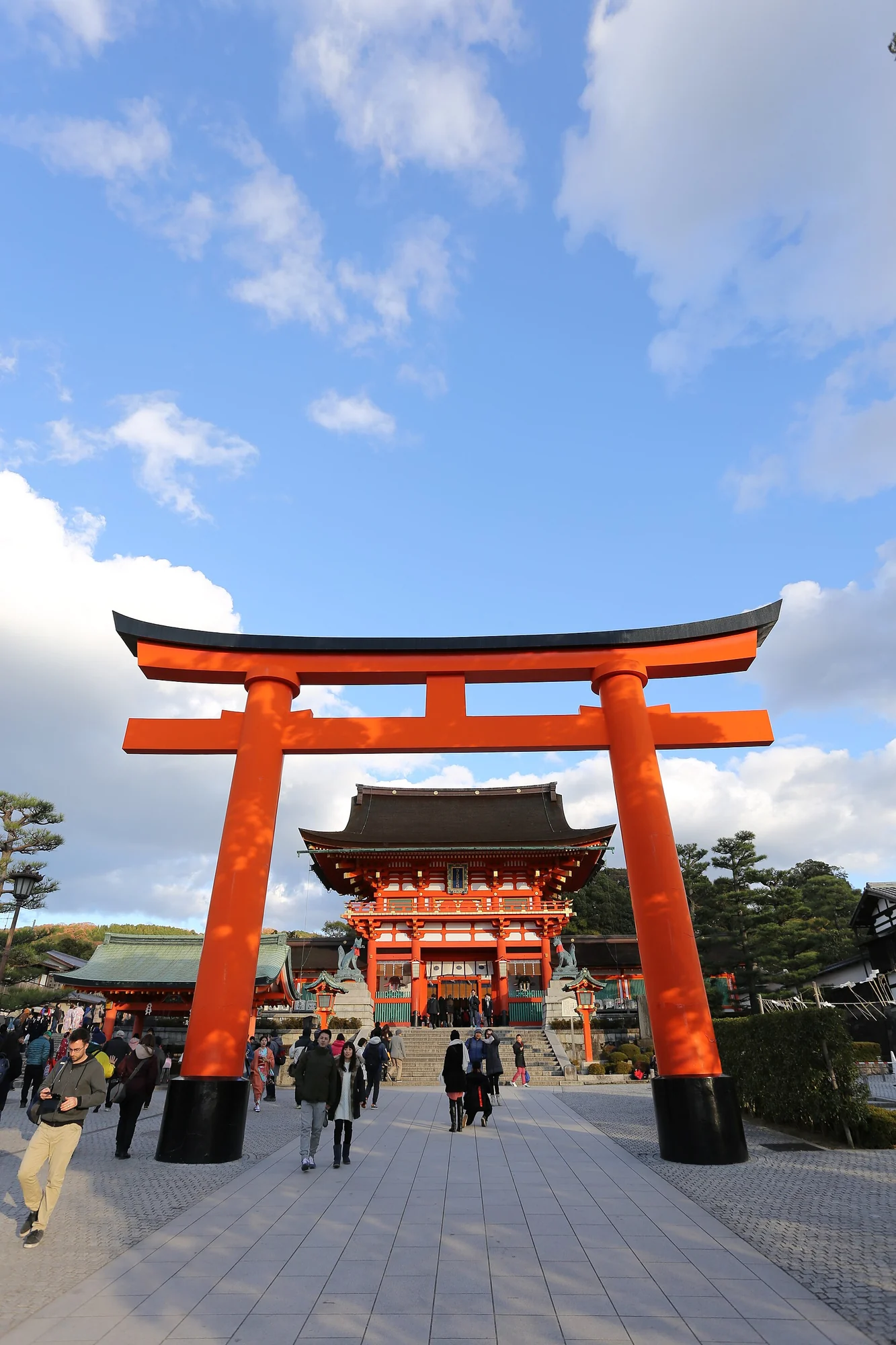
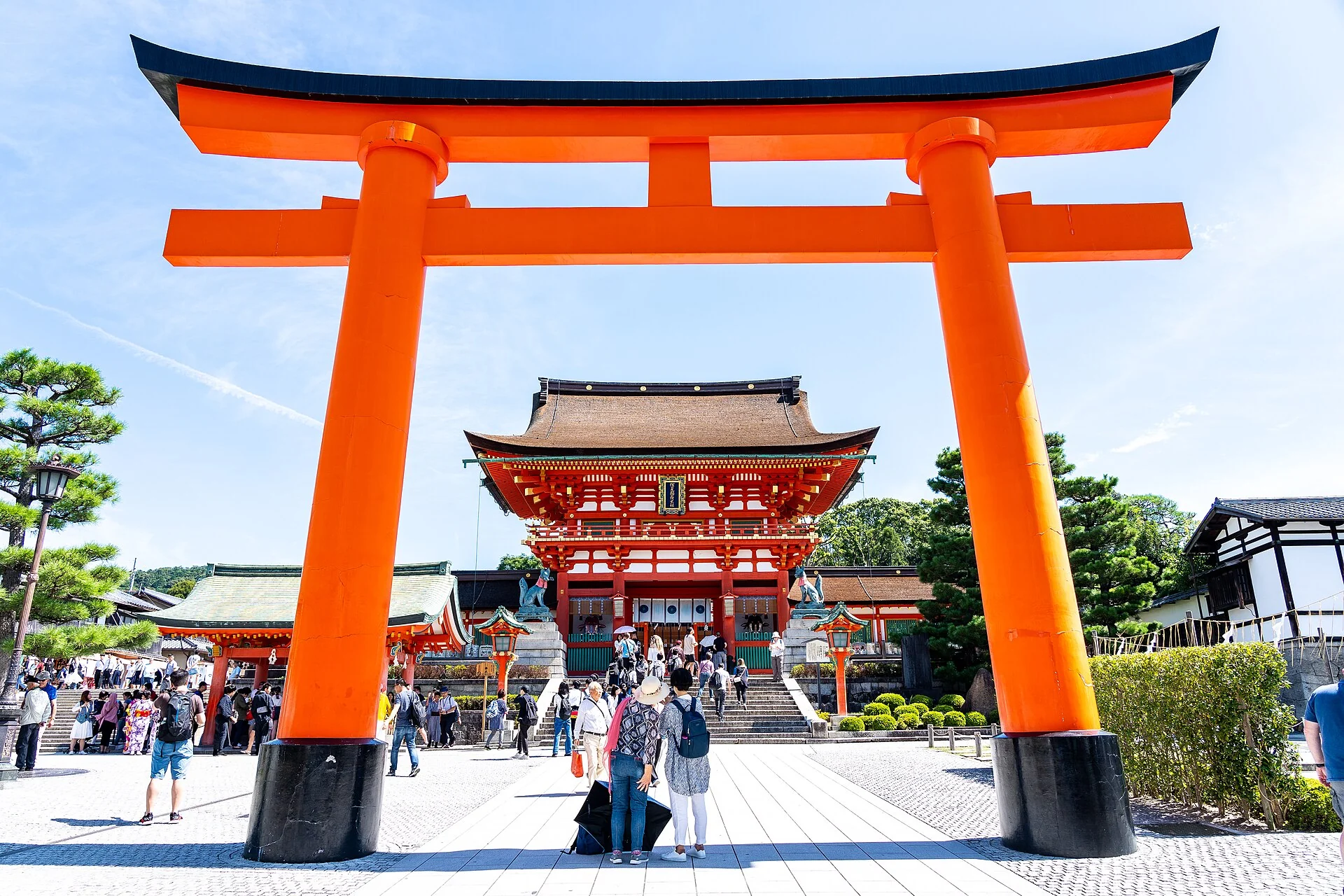
Great torii lying across the approach, visitors standing beyond the gate
The crossbeam over the approach
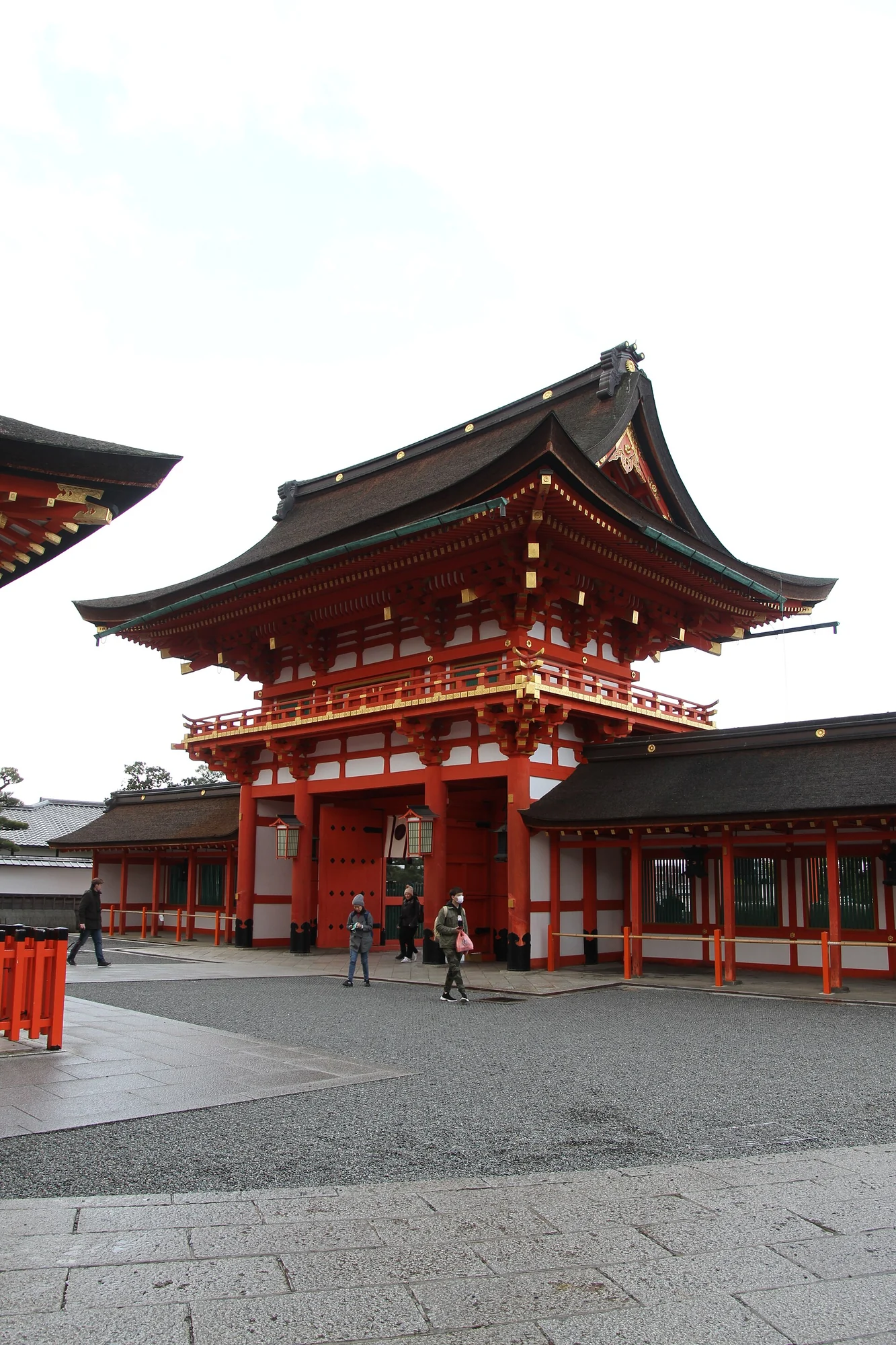
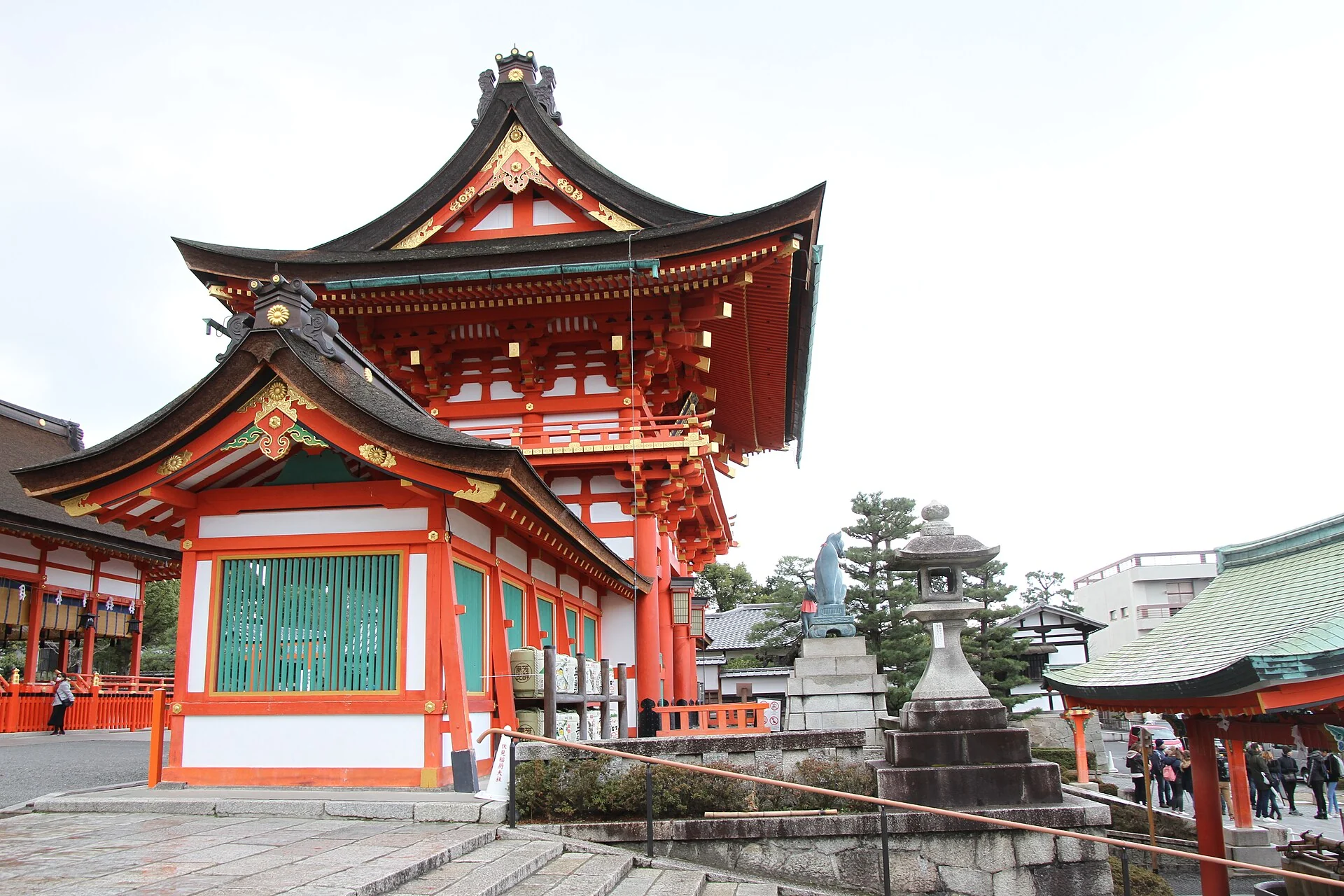
Looking up at the gate tower, eaves projecting to both sides, white wall behind
The jutting eaves
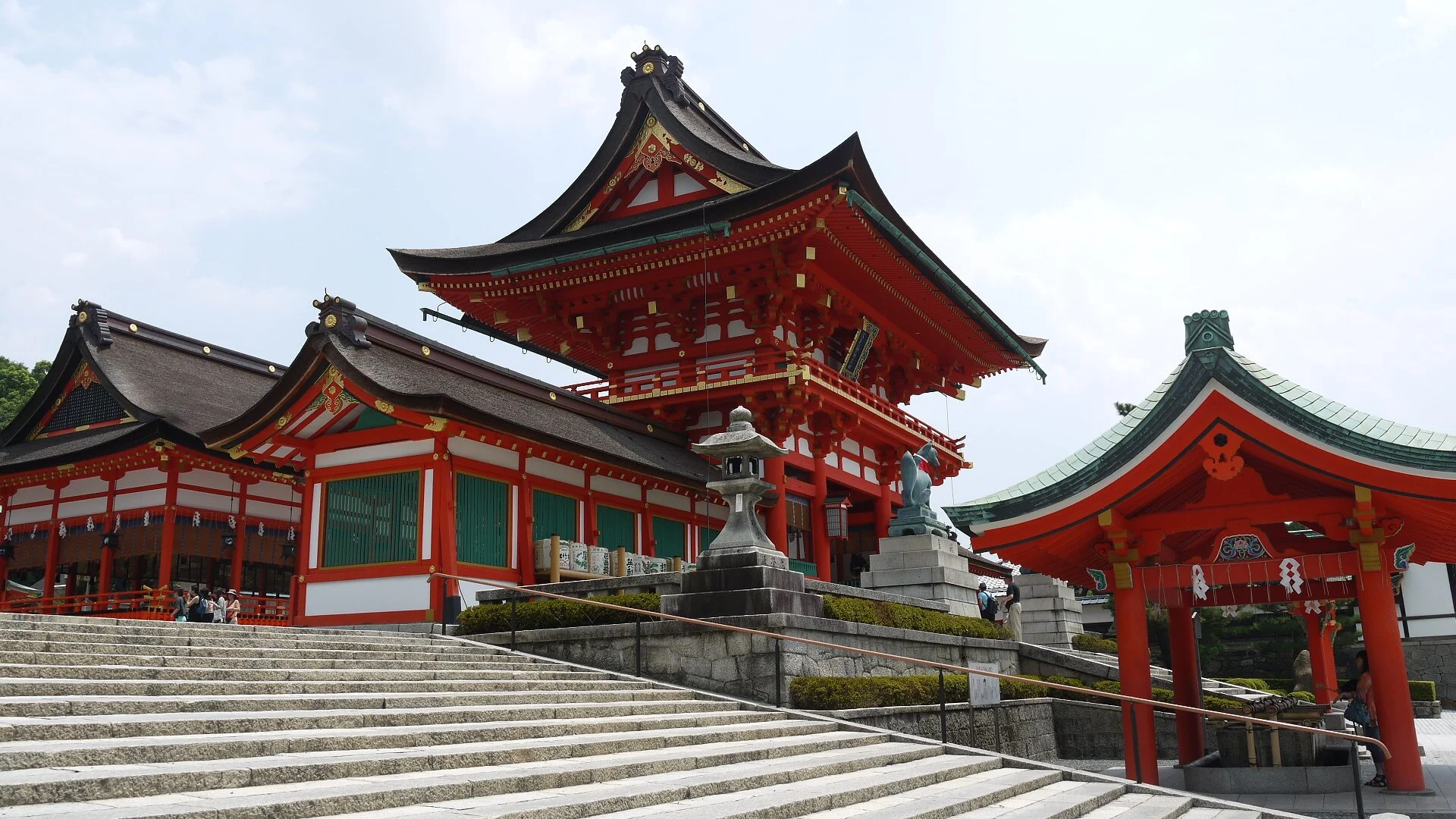
Several shrine halls staggered front to back, open ground before the stone steps

First sight under the gate tower

Before the main shrine stands a great vermilion torii whose crossbeam spans the whole approach. Behind the gate the eaves step forward and back, red-lacquered pillars set against dark tiles, a stone fox crouching on each side. Standing under the gate and looking in, the approach runs straight, and only at its end shows the shrine's true face.

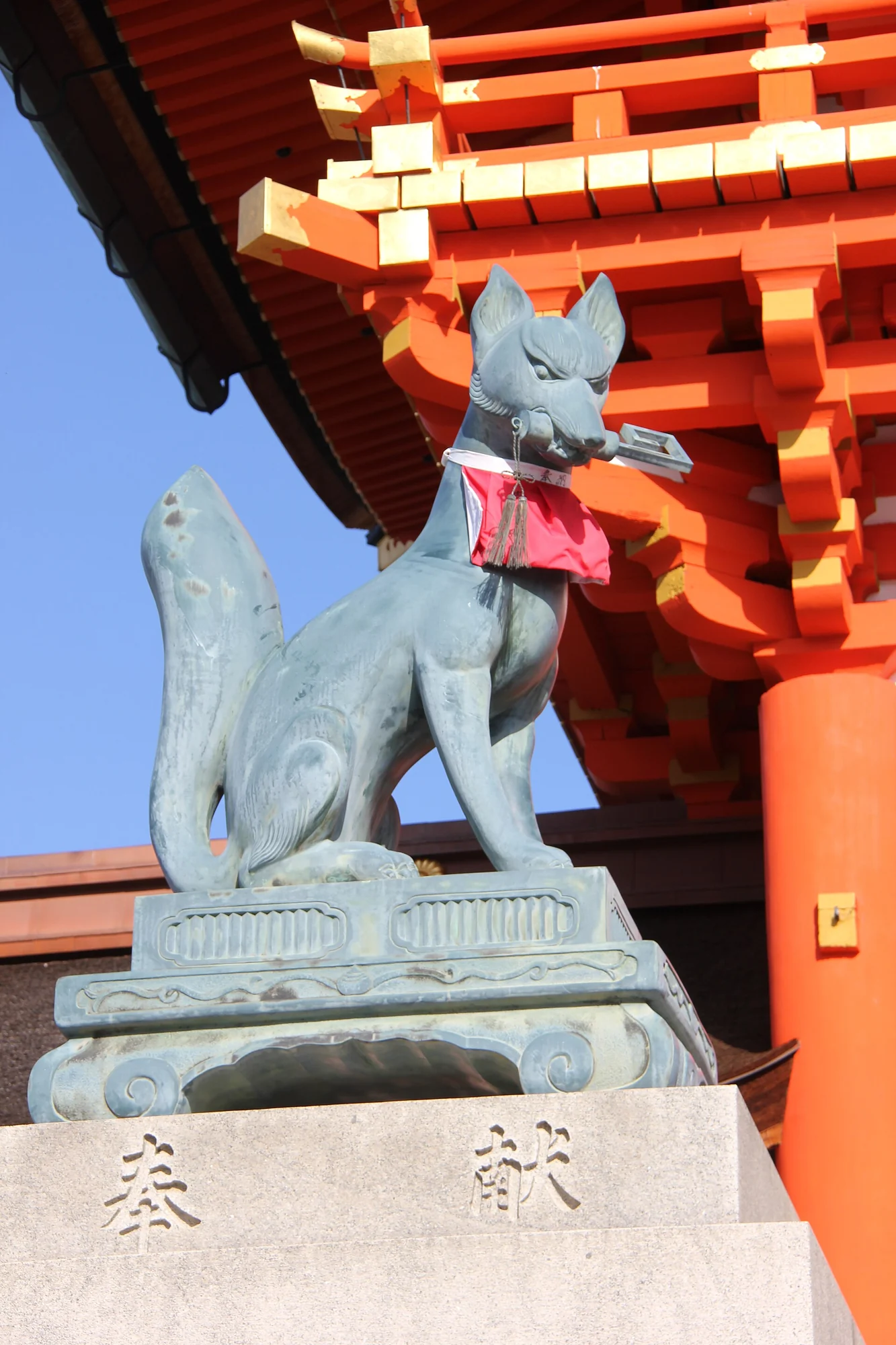
Stone fox crouching beside a vermilion pillar, characters carved on its base

Names on the pillars

The mountain path is lined by some eight hundred torii packed into a tunnel, the gates so close that light leaks only through the gaps. The shrine holds nearly ten thousand in all, most donated by Japanese merchants, with the donor's name and date carved at the foot of each pillar. Reading those names as you walk is more interesting than counting gates from above.

Great torii framing the approach, a corner of the distant shrine showing

Quieter the higher you climb

The climb runs a little over four kilometres, with small shrines scattered along it and a full loop taking about two hours. Past the Senbon torii the crowds thin and the path becomes stone steps and woods, occasionally meeting a small shrine and a few stone foxes at a corner.

Vermilion gate framing a stretch of roof tiles, only a strip of sky above
Route

A morning in southeast Kyoto

Don't put it on your shinkansen day. Stay in Kyoto the night before, go to the southeast corner in the morning, and you'll still have energy to return downtown in the afternoon.

Starting from the Hata clan's mountain

This head shrine sits in Fushimi Ward, Kyoto, dedicated to the god Inari, at the foot of Mount Inari. The mountain rises 233 metres and its loop trail runs about four kilometres, with small shrines strung along it one after another. Which came first, the mountain's name or the shrine's, is no longer clear.

The shrine's founding is set in 711 and tied to the Hata clan. This family of immigrants came from the Korean peninsula, settled in Yamashiro in the Kofun period, and brought irrigation, sericulture and brewing. The Yamashiro Fudoki records a legend: Hata no Irogu shot an arrow at a rice cake, which turned into a white bird, flew to the mountain peak, and where it landed rice grew — there he enshrined the deity.

Inari began as a god of rice and farming, and later merchants took it as a patron of business. In the early Heian period its rank rose; in 965 Emperor Murakami sent imperial messengers with proclamations to the guardian deities of the realm, and Inari was among the first sixteen shrines to receive one.
Where the ten thousand gates came from

The shrine's torii number nearly ten thousand in all, almost all donated by Japanese businesses one by one. About eight hundred stand packed in a line, the famous Senbon torii, walked as though through a tunnel. On the back of the pillars are the donors' names and dates; reading down the rows, they vary in length and age.

Donating gates is directly tied to Inari being worshipped by merchants as a patron. The gate marks the entrance to the sacred precinct and was also thought to block ill fortune; so they multiplied along the mountain path until they formed today's stretch.

Inari shrines are spread extremely widely across Japan. The head shrine itself doesn't overwhelm by size; the main hall is moderate in scale, and what really opens out is the path up the mountain.

The four kilometres up the mountain

On arrival, don't rush into the torii. The open ground before the gate tower is best for pausing to take in the vermilion columns, dark tiles and the stone foxes on either side, then follow the approach to the main shrine.

The tunnel of gates is crowded and there's no need to push; past it, stone steps and woods take over, small shrines appear at the corners, and tiny offerings often sit before the stone foxes.

The mountain path climbs for about two hours and grows quieter the higher you go. Looking back, that mass of vermilion has shrunk to a line at the mountain's foot, with Kyoto's roof tiles spreading in the distance. This view and the first sight under the gate tower look at the two ends of the same mountain.

A half-day for Inari mountain

Spend the morning slowly between the gate tower and the main shrine, then climb the Senbon torii stretch; even the first short section is enough, but allow two more hours to reach the heights.

Time needed

One to two hours for the gate, shrine and the tunnel-like gates; more for the upper trail

On the day

Some trail sections close temporarily for weather or repair; check notices for what's open

Getting around

The approach is flat; above, stone steps and a few steep slopes — the lower section alone is rewarding

Season

Kyoto summers are humid on the trail and steps are slippery after rain; check the weather first

Talk through my trip idea

If you're planning your Kyoto days, tell me whether you want half a day or a full day here, and whether anyone in your group moves slowly.

[email protected]

Read this page in Chinese

Discuss this journey