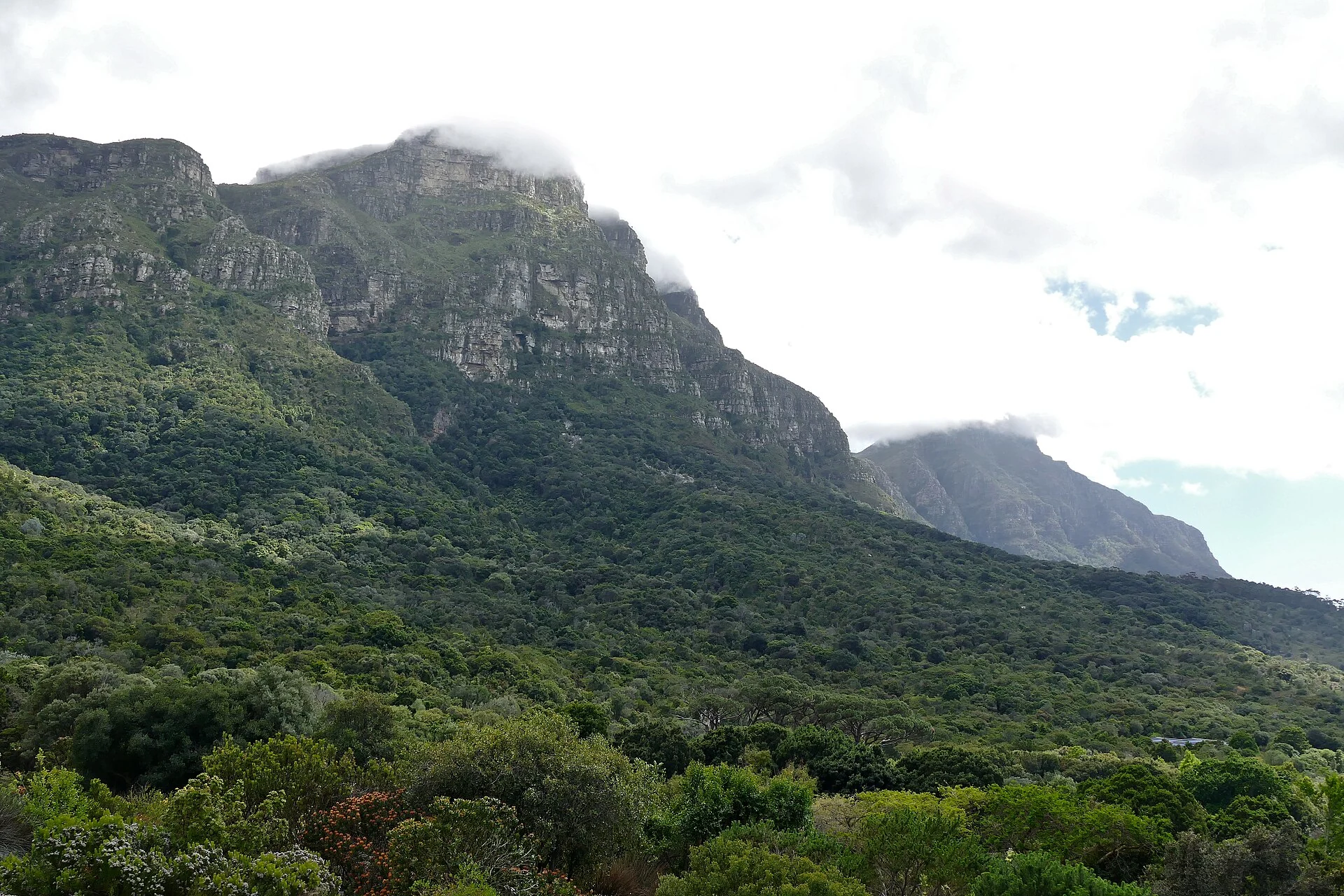
The rock face of Table Mountain's eastern slope and the low shrubland at its foot

Cape Town, South Africa

Kirstenbosch National Botanical GardenThe mountain rising behind the garden

Day breaks early and the folds in the rock face show clearly, the low shrubs in front of the slope reaching right to the foot of the cliff.

South of central Cape Town, a garden laid out along the slope at the foot of the mountain.

PlaceCape Town, South Africa
TypeBotanical garden on the eastern slopes of Table Mountain
SuitsHalf-day hill walkers and anyone wanting Cape native flora with children in the shade

Walking up along the hillside

Cape Town, South Africa — Botanical garden on the eastern slopes of Table Mountain.

First, take in the red-earth path at your feet.

The path is packed red earth, brighter than the leaves beside it. The roadside shrubs grow low, small and hard-leaved, clump against clump, and in the wind they only sound, never move. A signpost stands at the fork, a green board nailed to a wooden post. A few steps in and the canopy closes, cutting the light into patches on the ground. You can see the mountain — it is always there, never changing angle no matter how far you walk, only drawing nearer.

Higher up, the ground turns to gravel and fine-leaved plants you cannot name line both sides. A few tall trees reach their branches into the path, bark peeling in curls. Birds call from the treetops, short and abrupt, unseen on any branch. Rest on a wooden bench and look back to the city and the bay; turn around and it is the whole face of the mountain. Walk the same path twice and the light has already changed.
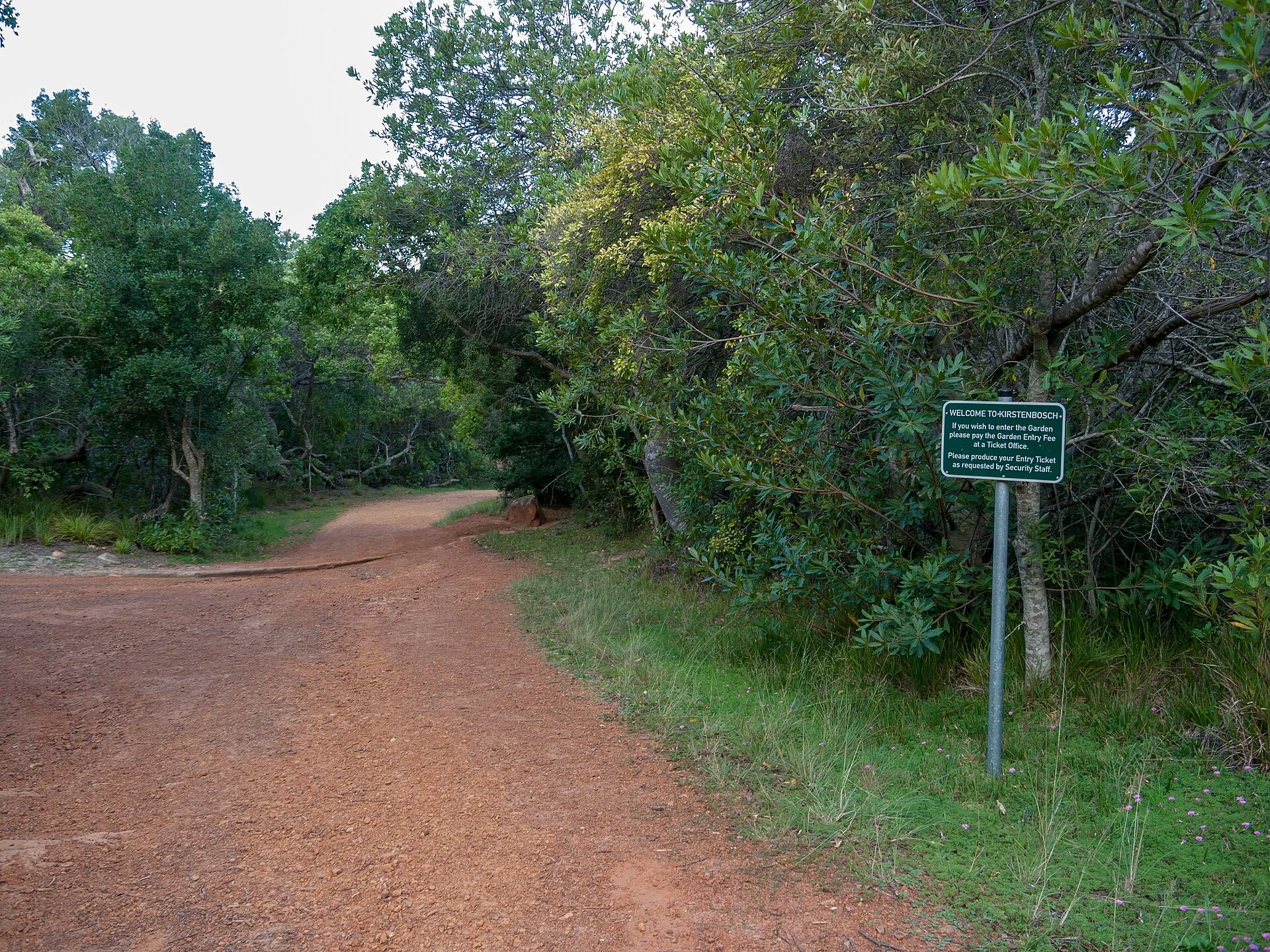
A packed red-earth forest path with a green directional sign
The red-earth path with its green signpost
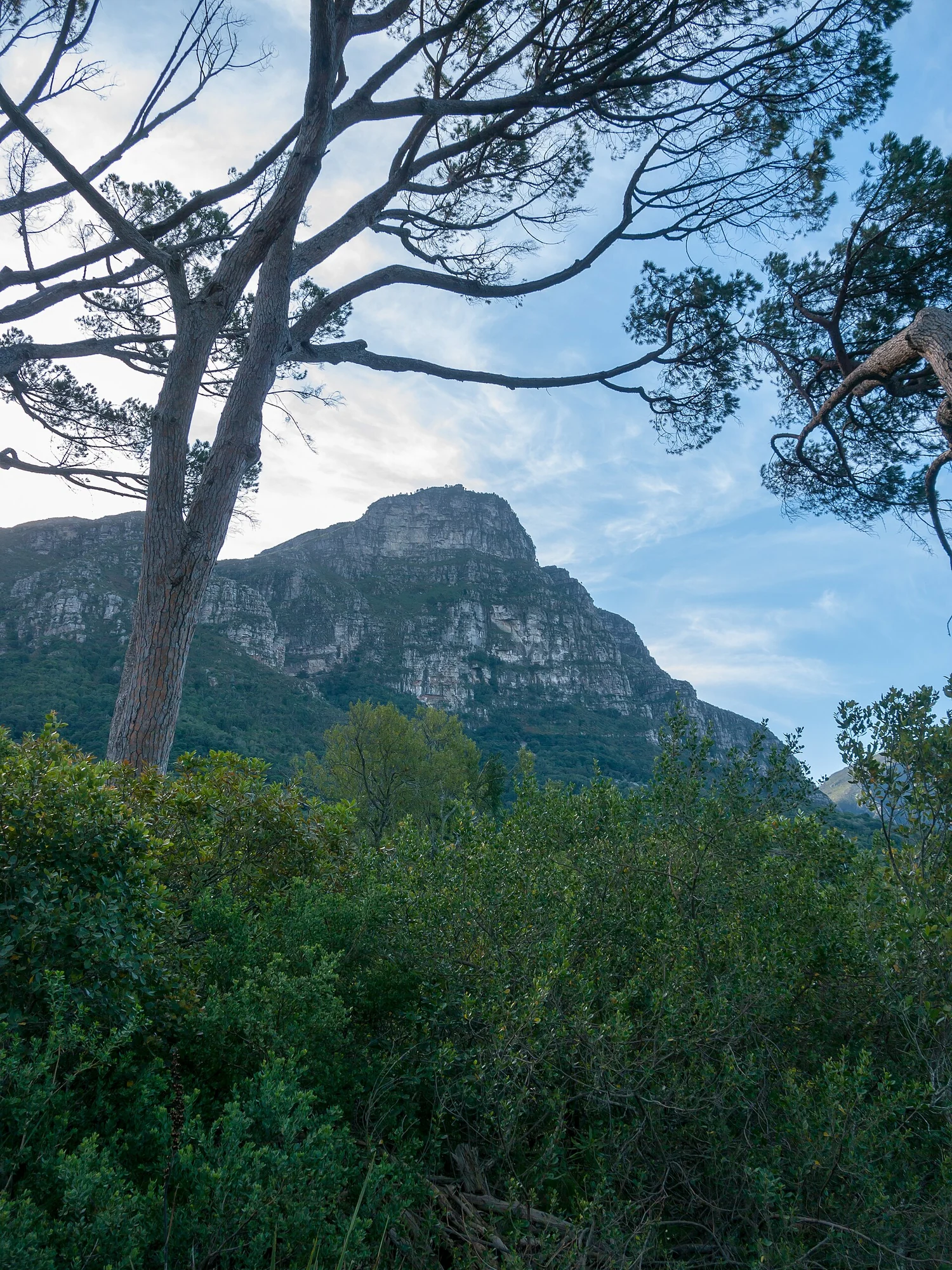
Table Mountain's rock face and shrubs behind a foreground of branches
The mountain seen through the tree shadows
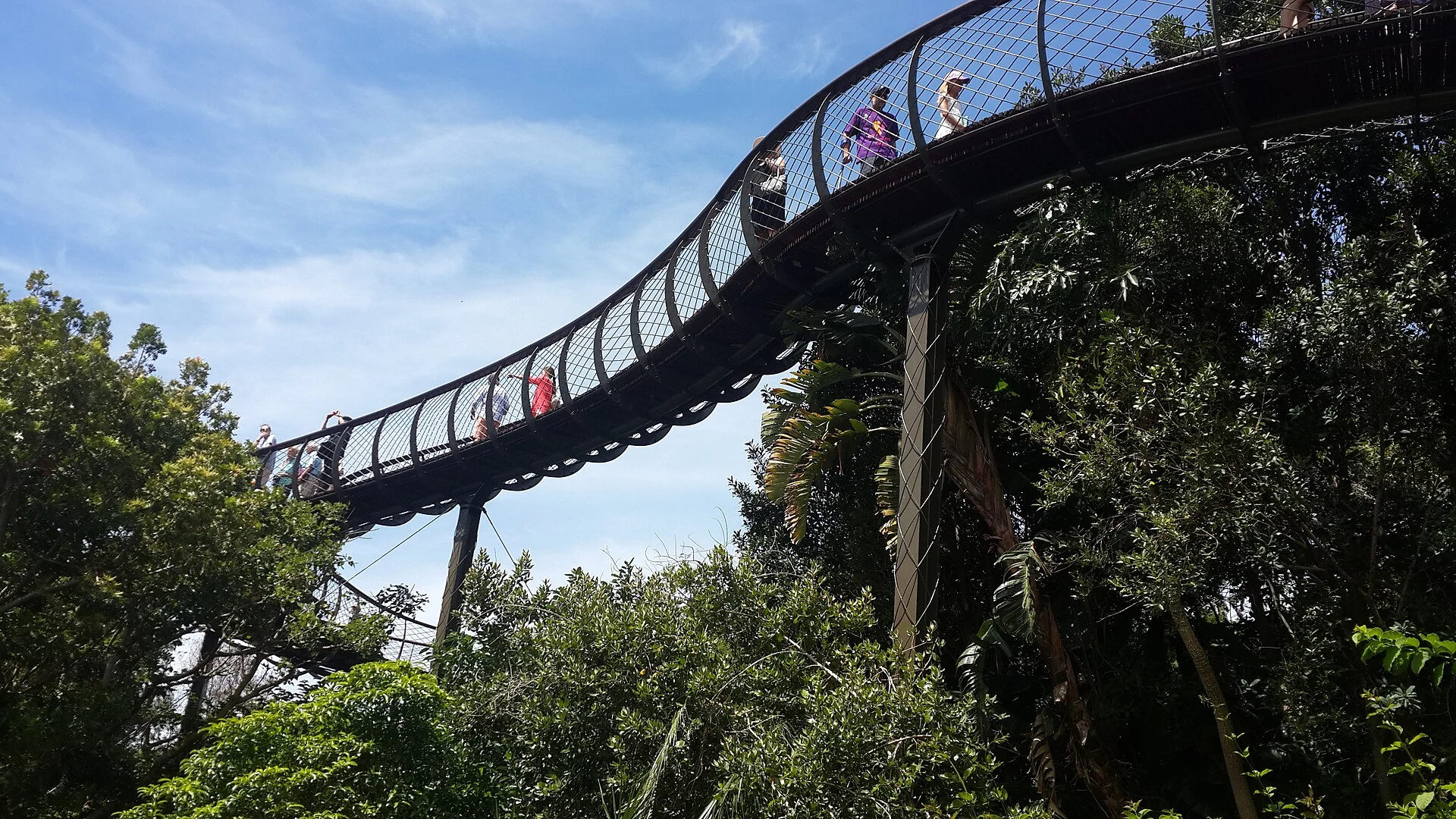
The steel-and-wood arched canopy walkway curving through the treetops

The bridge bends through the treetops

Steel tubes welded into ring after ring of ribs, a fine net stretched outside, a wooden rail climbing the curve. The bridge deck is narrow; a few people abreast must turn sideways. Branches reach through the rail gaps, fallen leaves lie thick underfoot, the mountain above and the forest below.

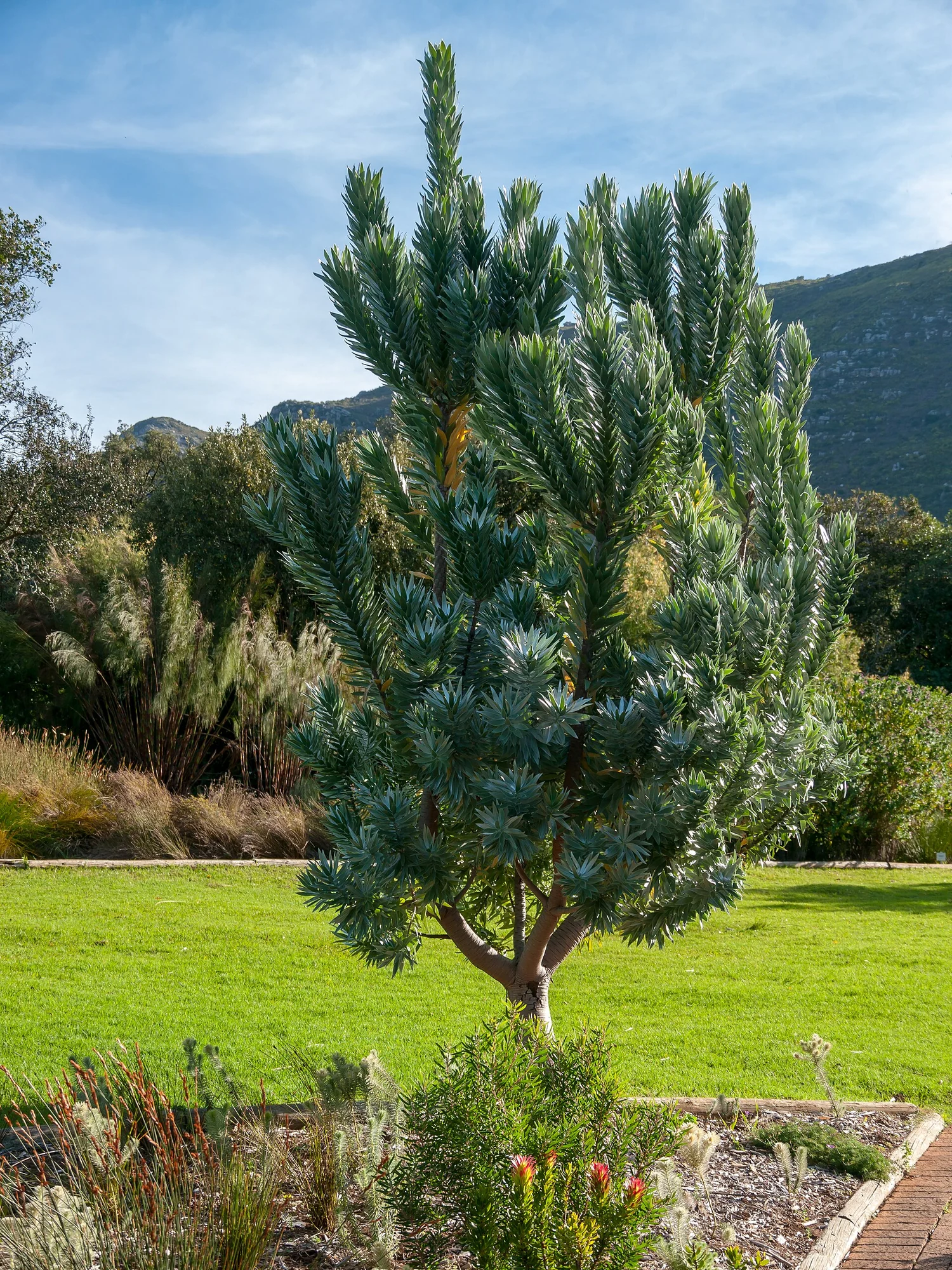
A blue-green spiny plant on the lawn, the hillside behind

The blue-green one on the lawn

A spiny tree stands on the mown grass, its trunk splitting into several upward branches, the colour a greyish blue. The hillside behind presses a layer of deep green; stones rim the flower bed, and a few red small flowers open nearby.

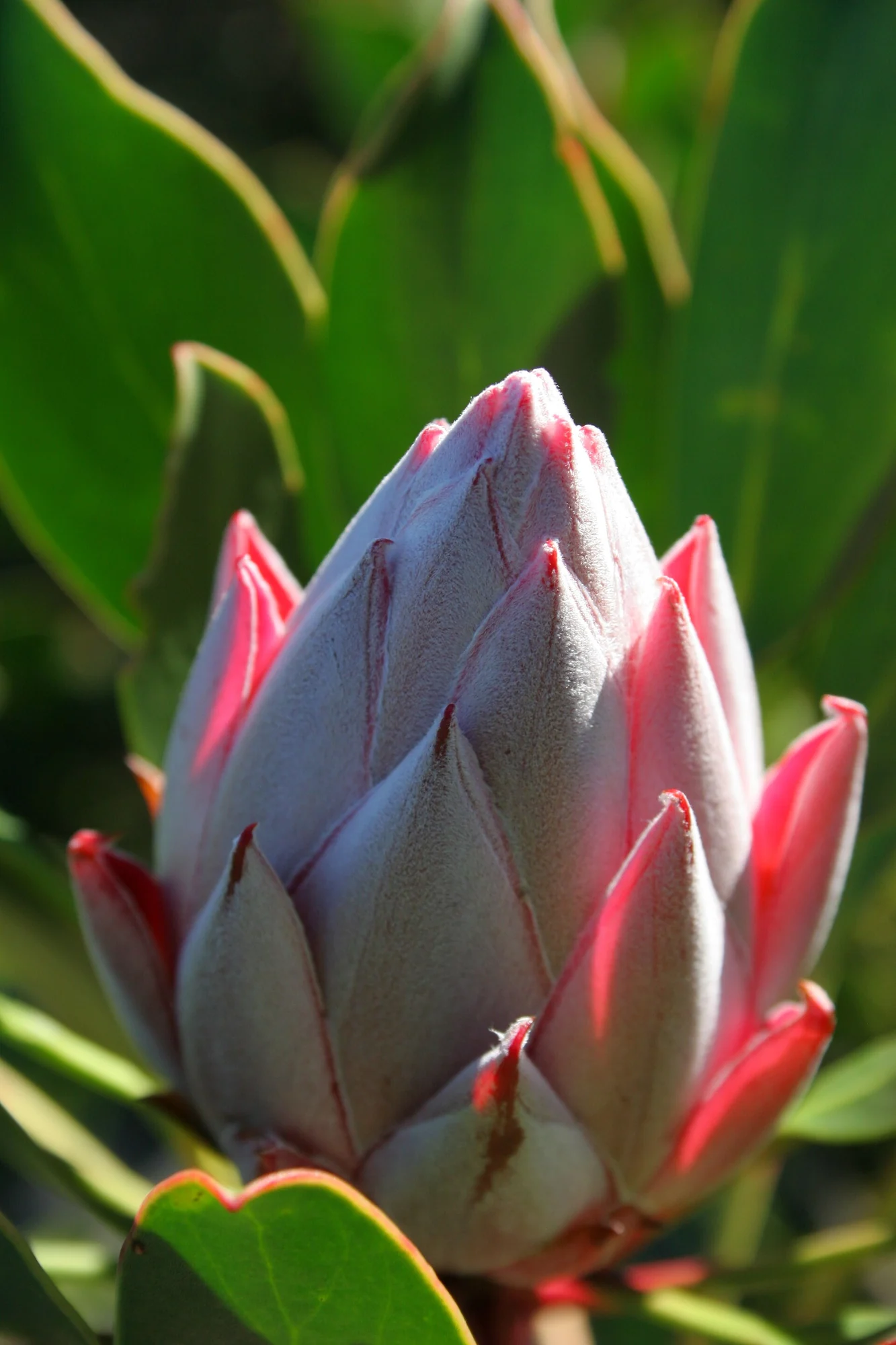
A pale-pink king protea bud with red showing at the bract tips

The bud still closed

Pale-pink bracts layer over layer, a touch of red showing at the tips. The surrounding leaves are broad and thick, yellowing at the edges. Light from the side lets you count the fine hairs on the bracts.

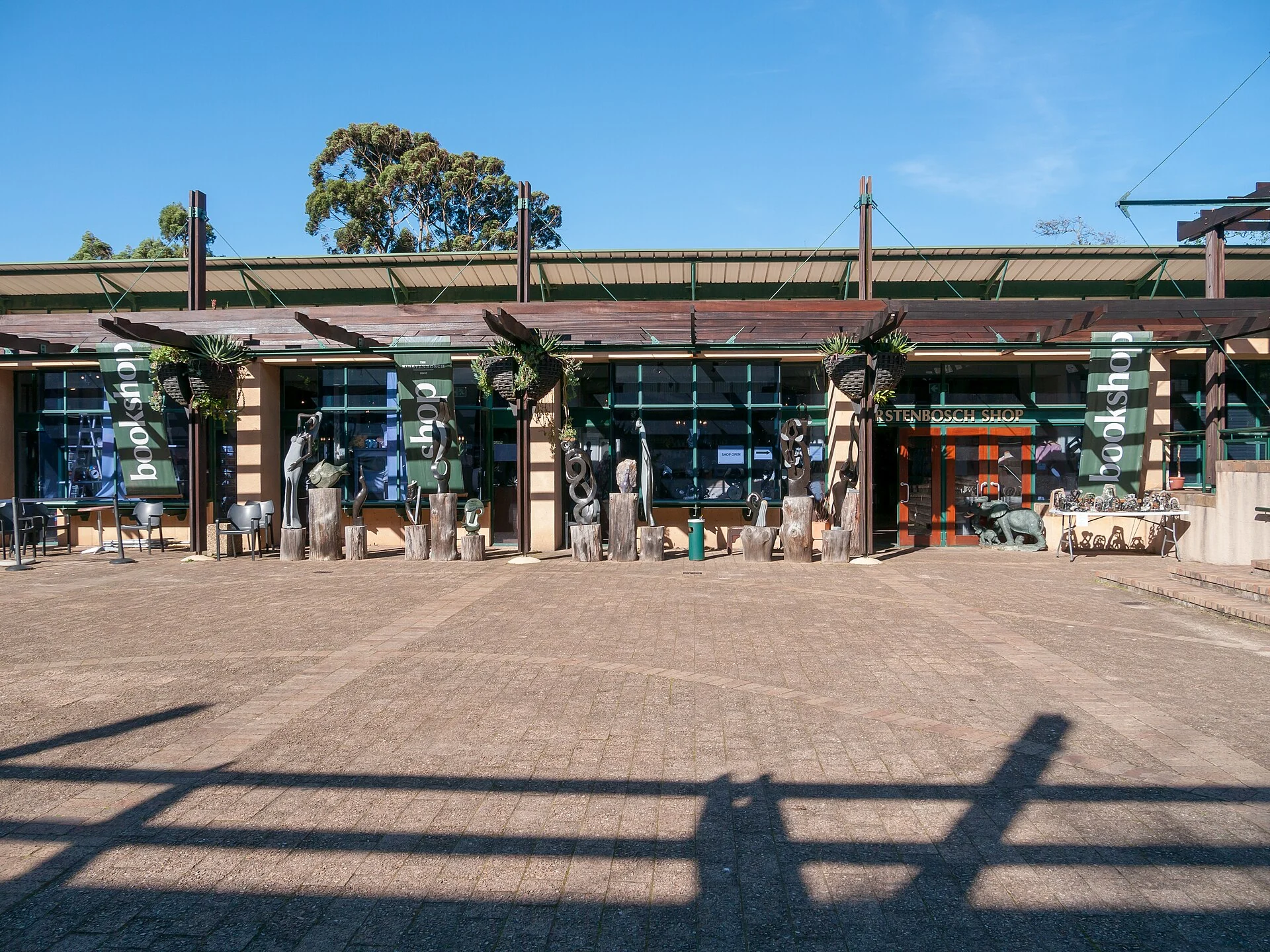
The long colonnade at the garden entrance with long shadows across the plaza
Route

A full day you leave for Cape Town

Do not schedule it for your flight day; stay a night in Cape Town, enter the garden the next morning and still fit another city stretch in the afternoon.

The land set aside in 1913

On 1 July 1913 this land was formally set aside as a botanical garden. It lies against the eastern slope of Table Mountain and covers 528 hectares, of which only a small part is planted as flower beds — most of the rest is native scrub climbing the mountain. The cycad that botanist Henry Harold Pearson planted at The Dell still stands in place, among the garden's oldest residents.

The garden puts its effort into indigenous plants, and outdoors the focus is Cape-native species. The masses of king proteas are the most striking, the hard-leaved fynbos spreading up the slope, and in the wind you hear only leaves brushing together. The mountain part has been left wild, never terraced into neat levels.

The greenhouse is another climate. The Botanical Society Conservatory groups plants by dry biomes such as savanna and karoo, with thick leaves and many spines — quite unlike the moist woodland outside the door.

A snaking bridge

The garden turned a hundred in 2013, and the following 17 May the arboretum's walkway opened to the public. Called the Centenary Tree Canopy Walkway, locals more often name it Boomslang — 'tree snake'. It runs 130 metres, curved like a crescent, highest 12 metres above ground, with two points returning to the earth.

The frame is steel tube welded into ribs, then a fine net stretched over; the rail is treated pine joined along the curve. The design takes the snake's skeleton, the deck narrow and light, barely blocking the view between the trees. The foundations are hand-dug concrete piers about 12 metres apart, only a short stub showing above ground.

The walkway's arboretum sits among several specialised gardens — on one side the king protea and cycad garden, on the other the rock garden, beyond that the concert lawn. You walk first beneath the woods, then are lifted above the canopy, and the surrounding mountain, garden and suburbs suddenly spread out.

Flowers in spring, concerts in summer

In spring the king proteas and other hard-leaved plants on the slope bloom one after another, the low shrubs at their most varied in colour. On summer Sunday evenings the Concert Lawn hosts open-air music, the light behind the mountain fading as the grass fills with more people than usual.

To go higher, the Skeleton Gorge ravine trail starts right in the garden, diving into the woods and climbing with the mountain. In a hillside hollow a natural spring pools, ferns crowding the rock walls — the garden's shadiest stretch. In rain the rocks are slippery, so take care on this part.

The entrance's row of columns links several buildings, long shadows falling across the plaza. The hillside has many forks; decide your path at the gate rather than wander — it saves trouble.

Give Cape Town's half-day to the eastern slope

The garden is south of the city; the entrance is gentle themed beds, and the slope grows obvious further in — cut the route by your strength, not the map.

Dates

Check current notices for open areas and the garden's sections; the zones are rearranged, so do not use old photos for the path.

Duration

The arboretum and several specialised gardens take a morning; add time before and after to take the mountain trail.

Note

The flowering plants in photos change by year; check current bloom times and lawn events against notices.

Talk through my trip idea

If you are planning your Cape Town days, tell me whether you will leave half a day or a full day, and whether there are children with you.

[email protected]

Read this page in Chinese

Discuss this journey