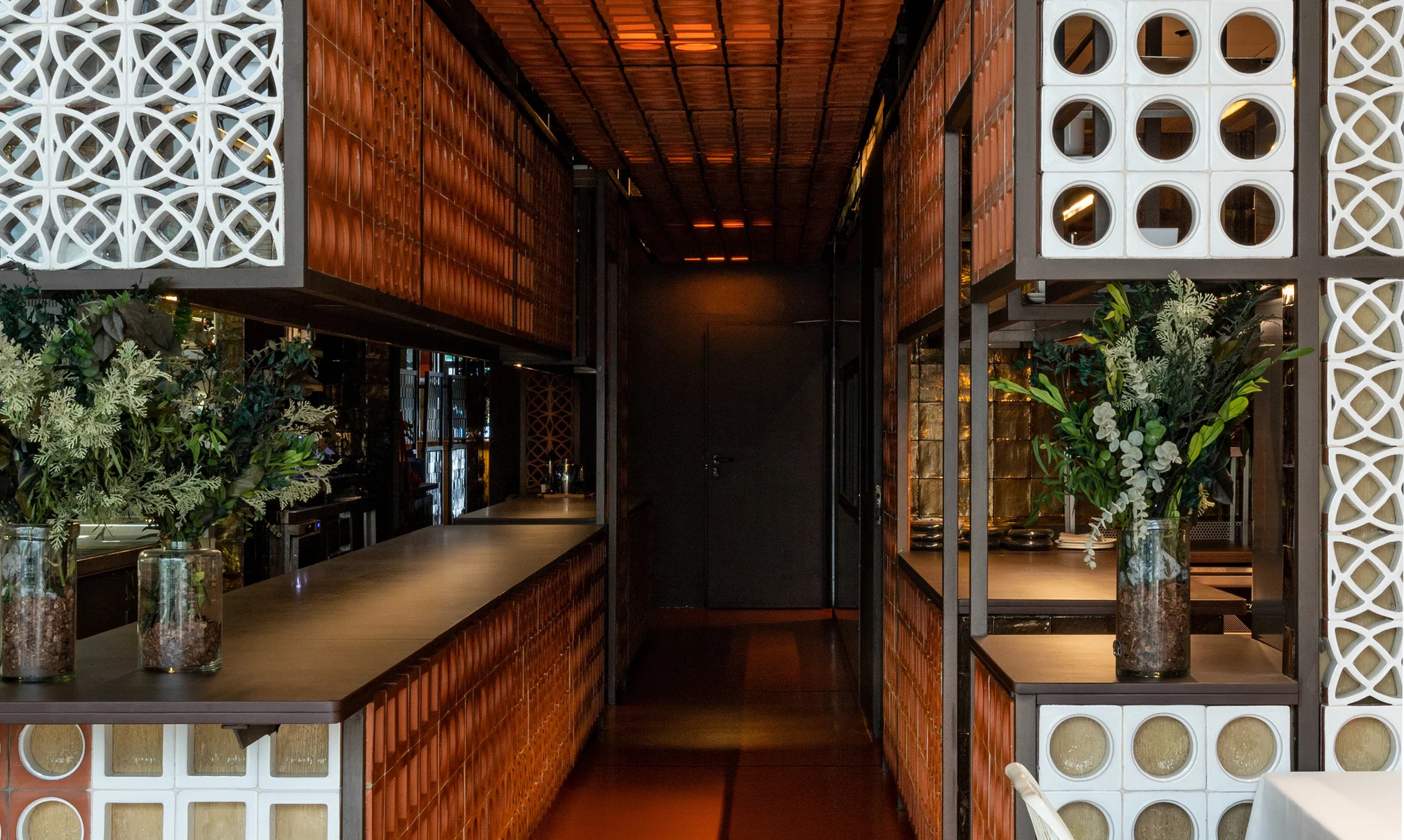
A tiled entrance wall beside the staircase leading up into the restaurant

Eixample, Barcelona, Spain

DisfrutarWhat arrives does not look like what it is

The room is tall, a timber ceiling above and white walls below, pale tables set far apart. Courses come one after another with nothing in between, and the first few only make sense later.

In the Eixample, directly opposite the Ninot market. The grid keeps every block the same size, so a wrong turn costs little time, and the old town lies a little further off.

PlaceEixample, Barcelona
StyleTasting menu only
KitchenCasañas, Castro, Xatruch
MenuClassic or seasonal

A room that makes guests pause

Eixample, Barcelona, Spain — Avant-garde Mediterranean cooking, tasting menu only.

There is no ordering. The tasting menu is the only way through, in a classic or a seasonal version, and from the moment you sit down the meal belongs to the kitchen: its order, its length, its logic.

Courses arrive one after another with no starter or main among them and nothing in between. Somewhere in the middle the earlier plates begin to line up, and by the last one the thread they were following is visible only in hindsight.

In 2024 it took first place on the World's 50 Best Restaurants list. Before that: three suns in the Repsol Guide from 2018, best chef at the National Gastronomy Awards in 2023, and restaurant of the year from the Catalan Academy of Gastronomy in 2015.
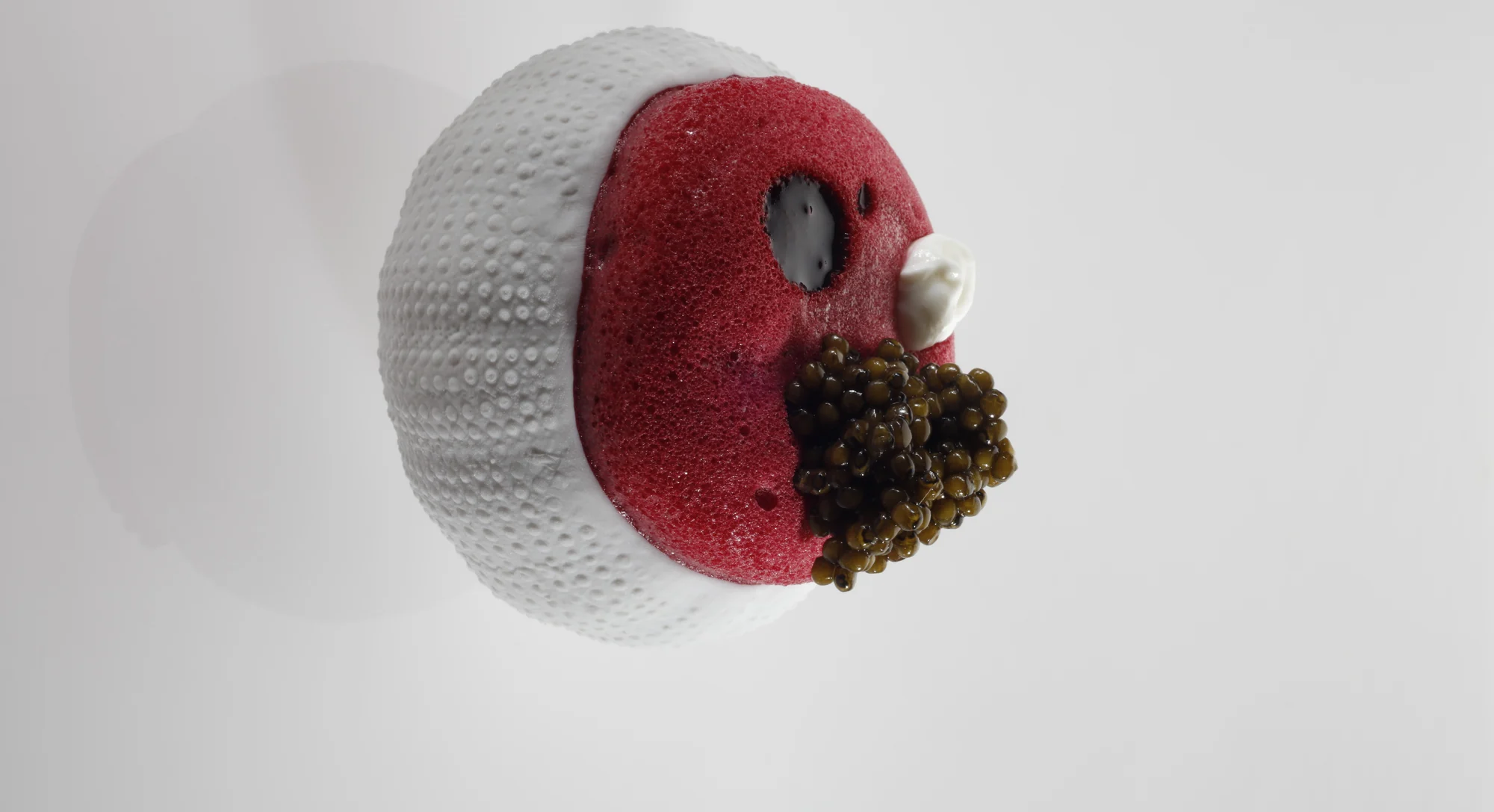
A single red dessert with something dark pressed on top of it
A red dessert under a dark crown
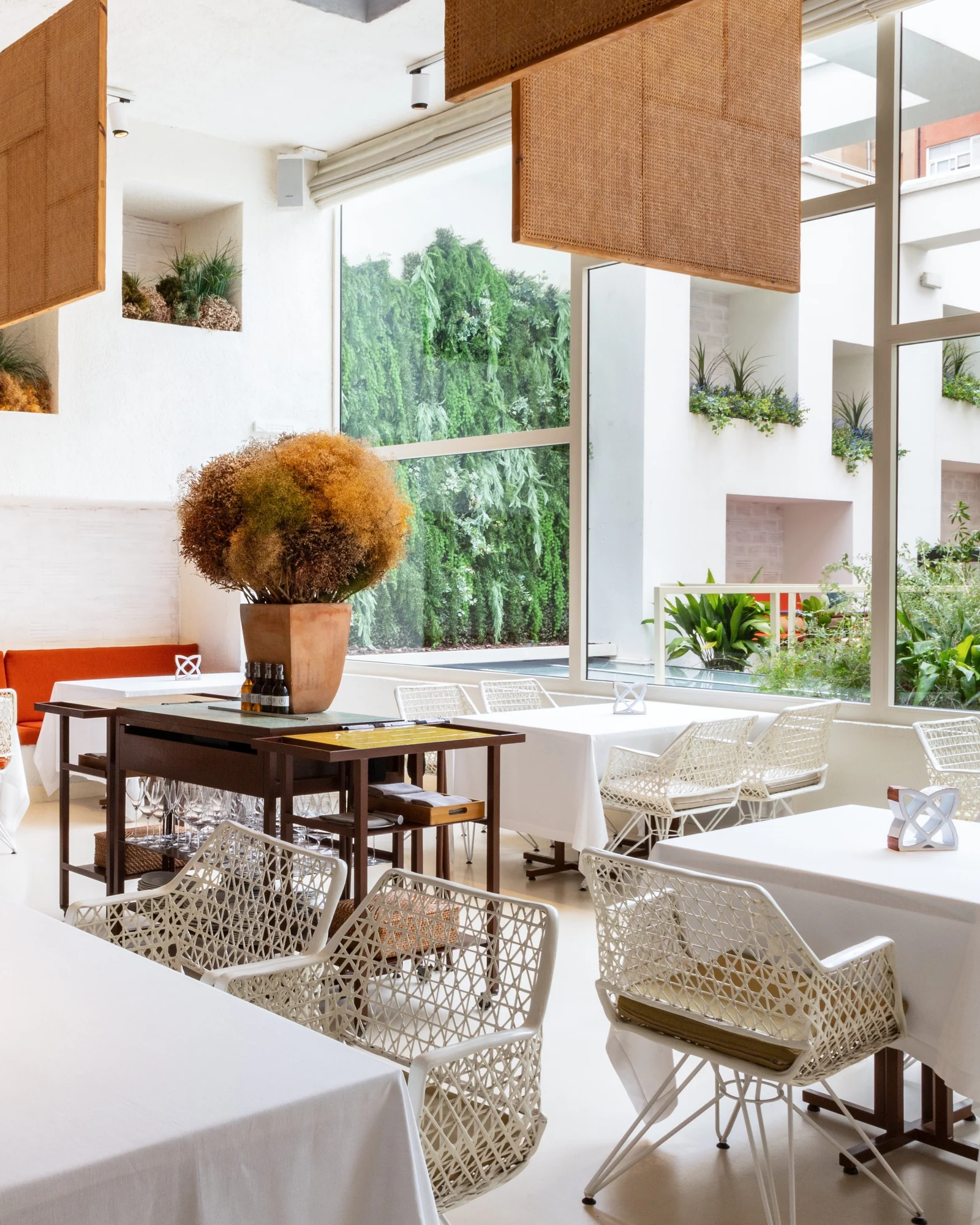
The dining room seen across two levels, with a timber ceiling and plants at the edge
The double-height room and its timber roof
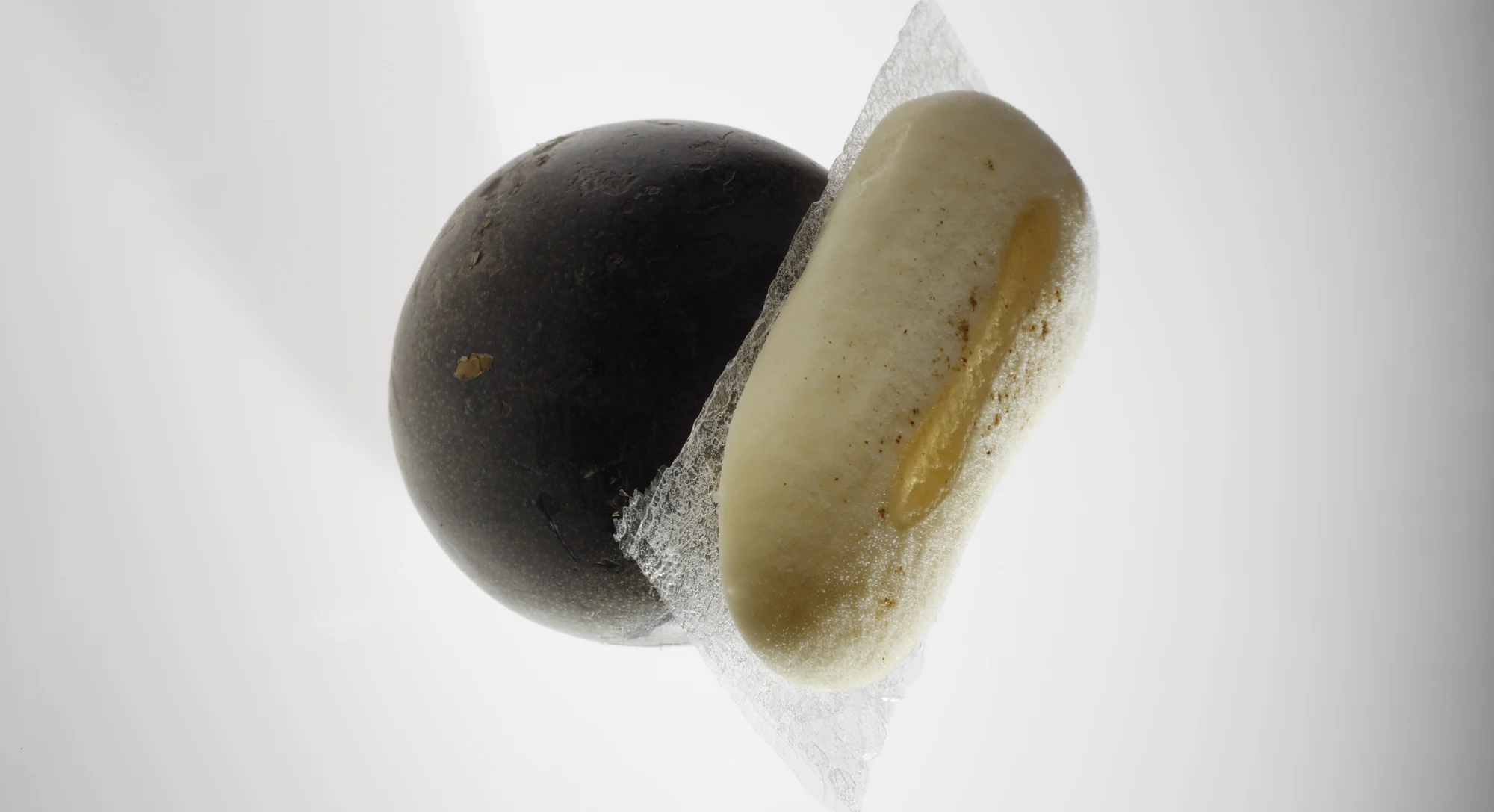
Two pieces on a plate: a near-black sphere and an off-white oval wrapped in thin paper

Two spheres

One plate, two things on it: a near-black ball and an off-white oval wrapped in paper thin enough to see through, with a pale yellow seam between them. Neither gives away what it is made of.

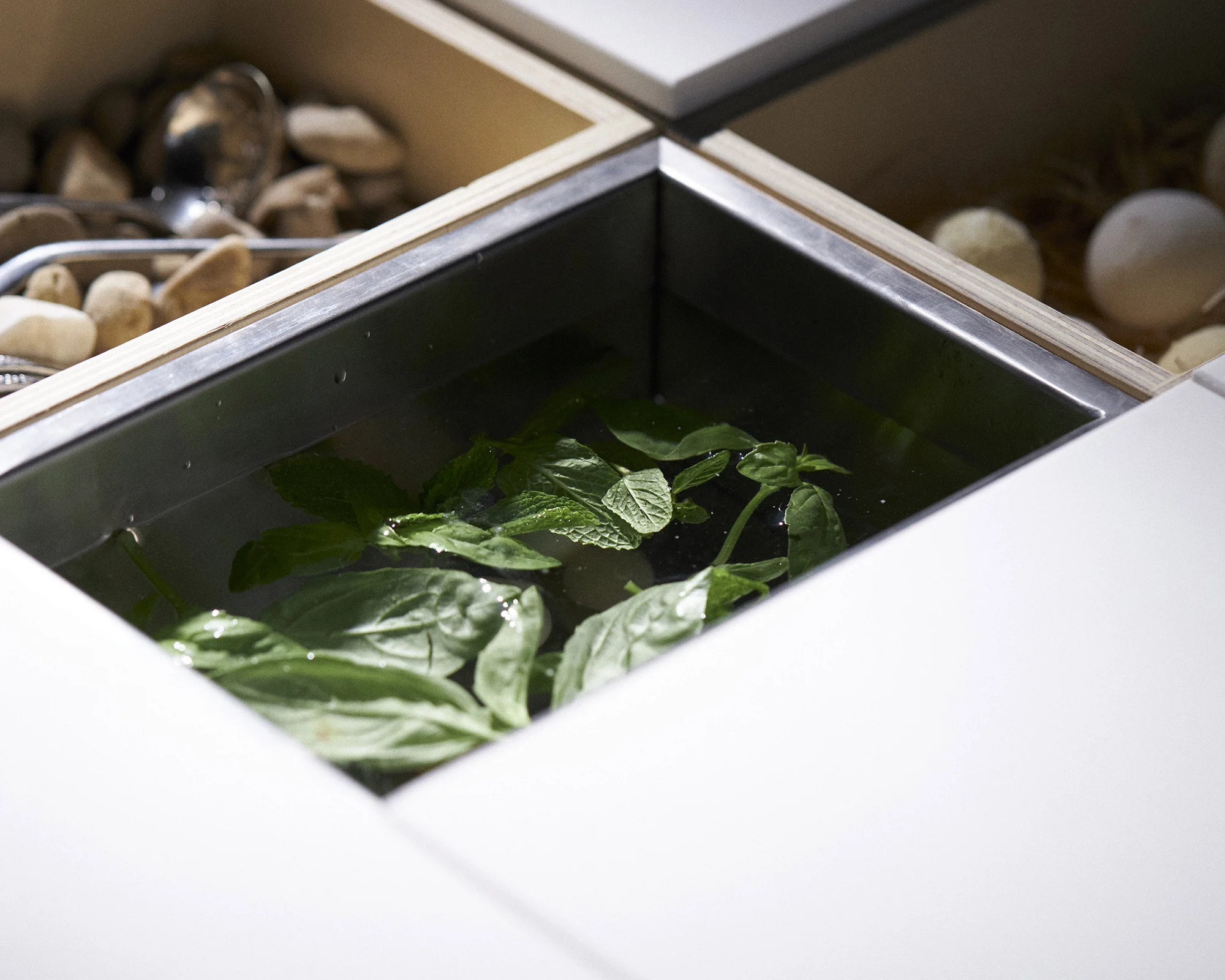
A cold cabinet divided into compartments, each holding leaves of a single kind

Leaves in the drawers

A cold cabinet in the kitchen is divided into compartments, each holding one kind of leaf or petal, laid one over another so the colours stack. The few green pieces that land on a plate come out of those drawers.

A plate covered edge to edge in small green dots, like a layer of moss

A plate of green dots

The whole surface is covered in small green dots, laid layer over layer and packed so tightly that whatever sits underneath cannot be read at all. From a step away the plate looks like a patch of moss.

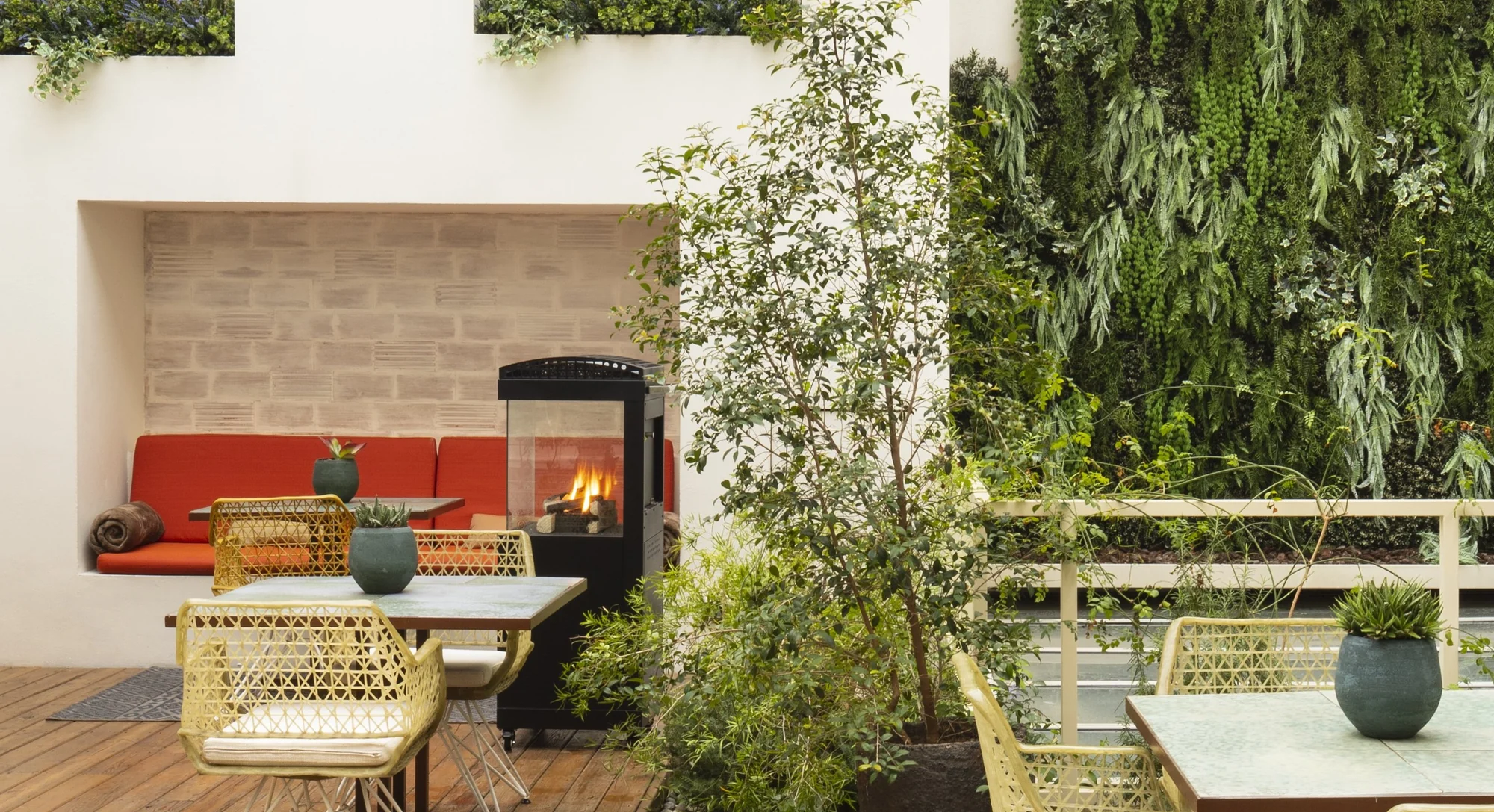
A courtyard terrace with tables and chairs standing in the shade of trees
Route

Leave a whole block of the day

The meal takes an unbroken stretch with nothing packed around it. Lunch still leaves an afternoon; dinner more or less ends at the hotel door. Both run long enough that a museum slot either side is a gamble.

Three people, one kitchen

Mateu Casañas, Oriol Castro and Eduard Xatruch have their names on the site and one kitchen behind them. They met at elBulli and trained there, and what they carried out of that kitchen was a way of building a plate to be looked at before it is understood. The habit of testing an idea before giving it a name came with it.

After elBulli the three went to Cadaqués, where Compartir opened in April 2012. Two years on they came back to Barcelona, and in December 2014 the door in the Eixample opened. Between the two openings the same three people moved town, and the cooking went with them into a room facing a market, with the same three names still on the door.

The way in

The space was designed for this, and ceramics carry it from the street to the table. The entrance is keyed to Miró, the loudest colour in the building; the central corridor changes to the colour and the grain of terracotta; the main hall changes again, to tiles drawn from Mediterranean fishing villages, white and bright, so the room sits lighter than the corridor before it.

The order is deliberate. A guest comes in off the street, passes colour first, then the kitchen, and only then sits down at a table. By the time a napkin is unfolded, the work of the kitchen has already been seen once from the outside, which is a different way into a menu from reading it at the table in front of you.

Also worth knowing

The name, the market across the road, the two menus and the wine.

01

The name means to enjoy

Disfrutar is Spanish for to enjoy, or to play. The name matches the method: the cooking has to be good and carry a little surprise, and the plate is meant to make you stop before you pick anything up.

02

The market opposite

The door faces the Ninot market. Eixample streets run on a grid with blocks of one size, so a wrong turn costs a few minutes at most. The neighbourhood sits at a distance from the old town, with few people on the street and quiet nights.

03

Two menus

The classic menu collects creations that have been made here often enough to become house classics. The seasonal one carries what has been built this season. Both are served complete, not in parts.

04

The pairing

Wine is a separate arrangement: a set chosen for that day's courses by the sommelier team. Anyone who would rather not take the full set can order a bottle instead.

Putting a meal here into the trip

One menu in two versions, one room, and a booking that settles which version you eat.

Cuisine

Tasting menu only, in a classic and a seasonal version. No à la carte, and neither version is split up.

Booking

Book ahead. The version of the menu is chosen when the table is booked, not on the night, so the decision is part of the reservation.

Hours

Two services, lunch and dinner. The times are published for the current period rather than kept as a fixed schedule.

Dress and diet

No dress code is listed on the official site. Dietary requirements are not addressed there and should be confirmed with the restaurant.

Plan this into a journey

Barcelona days fill quickly. This one needs a clear block, and a decision between the two menus made before arrival.

[email protected]

Read this page in Chinese

Discuss this journey