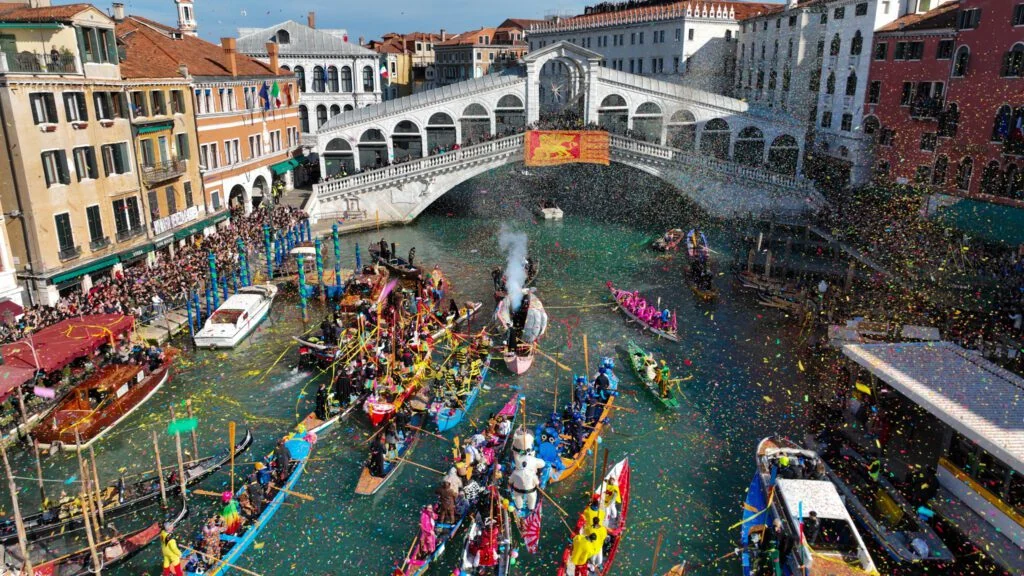
A line of decorated boats in the canal, both banks crowded

Venice, Italy

Carnevale di VeneziaFor a time, the whole city masks up

A line of decorated boats in the canal, crowds pressed along both banks.

The main ground is St Mark's Square and the surrounding lanes; the canal, several old houses and the city's districts also carry programmes.

PlaceVenice, Italy
TypeWinter mask carnival
SuitsThose staying two nights to see the square and side streets separately

A city hides its face

Venice, Italy — Winter mask carnival.

The masks hit the street first.

The official site writes these days as a journey set apart from time — walking the lanes feels like an open-air stage. The canal mirrors costumed figures; in the square people don't rush, they stand to be seen, then drift away. Beneath the clock tower, on bridges, before the colonnades of old houses, you keep meeting such small groups.

Masks once governed identity in Venice. The anti-luxury laws paused for the festival, so dress no longer followed profession or class, and anyone could hide their face and melt into the crowd. Today's tourists hold gilded masks in the old shapes, long since changed in use.
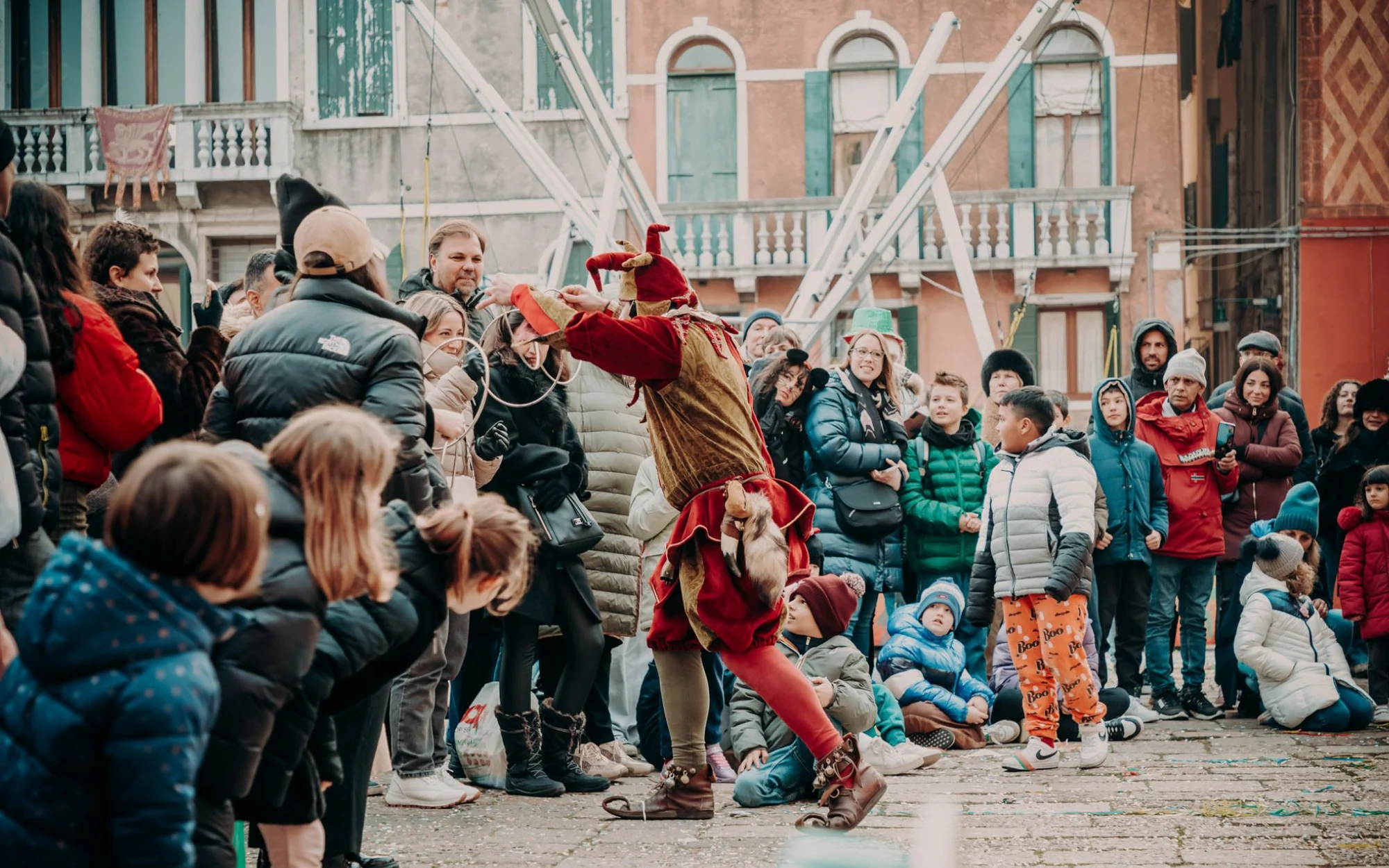
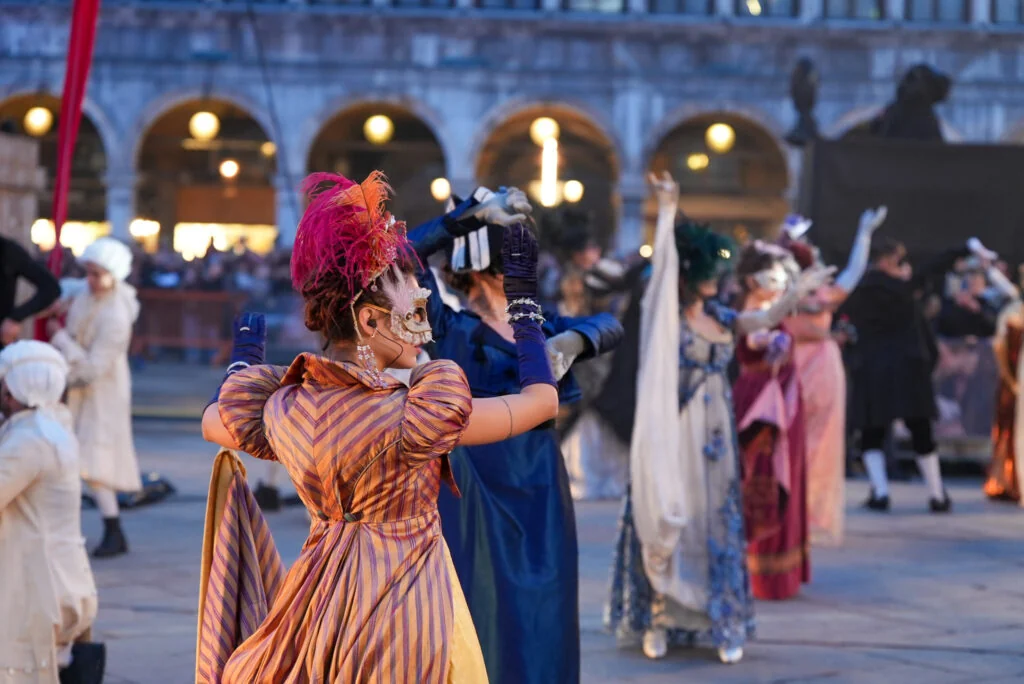
Street costumed figures ringed by onlookers
A costumed figure surrounded by onlookers
A woman in orange-red gown and red hat among the square's crowd
An orange dress and red hat
The square before St Mark's campanile filled with costumed crowds

The square becomes a stage

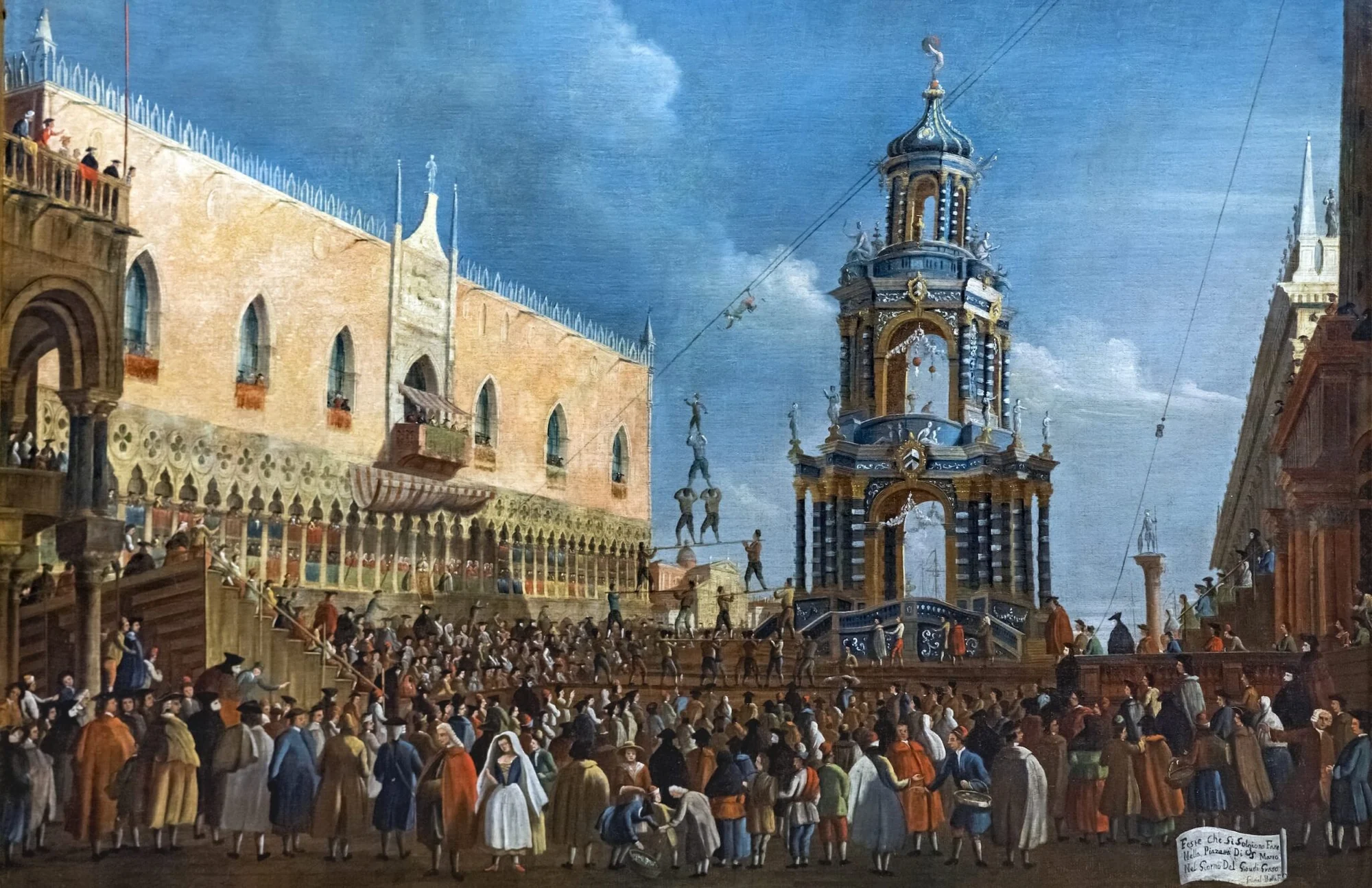
The open ground before St Mark's campanile fills with costumed figures during the festival; viewers ring the outside, photographers seek height for a position. The Flight of the Angel descends on a rope from the tower top, landing before the Doge's Palace colonnade.

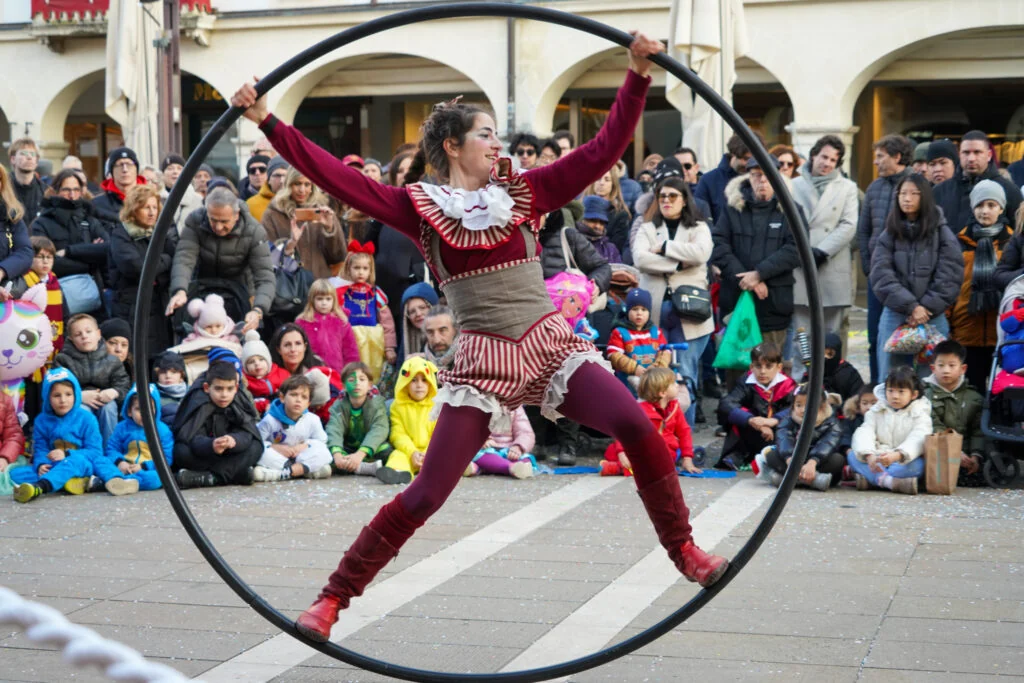
A red-clad acrobat leaping in a ring, spectators around

Circles form at the street corners

Around the square, acrobatics and improv often draw a natural circle, performers tumbling inside. There's also a procession of twelve Venetian women in period dress walking through the crowd — a short line, a different rhythm from the big parade.

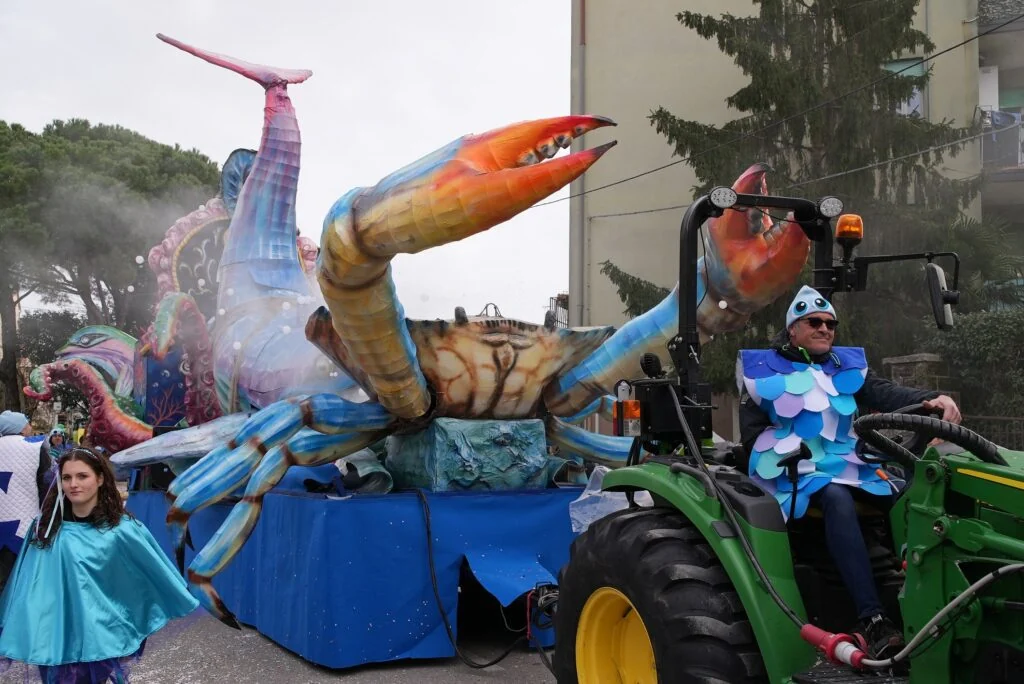
People on a colourful installation float waving to the street

When the stages go up

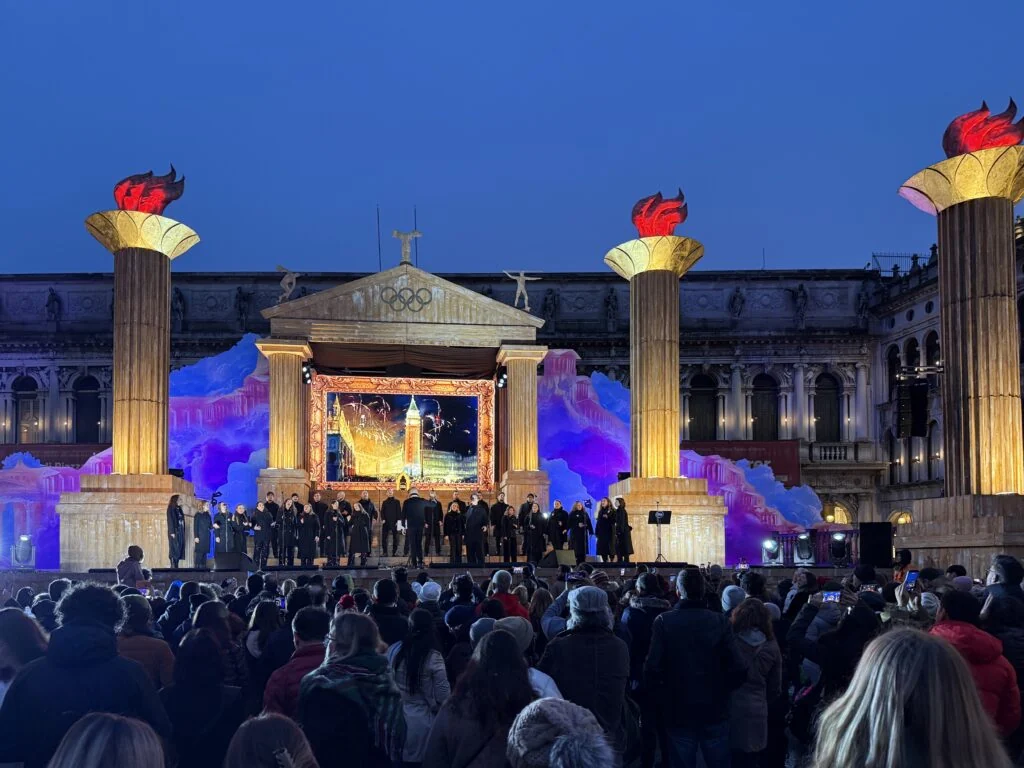
The official programme also has staged shows and night-lit sessions, with floats and installations pushed along the streets. The most-beautiful-mask contest is judged by international costume and fashion designers, who score the whole look rather than a single face.

A night square stage lit blue-purple, crowded before it
Route

Those nights kept for Venice

Keep the morning for outer lanes and old houses, pick one square event from the programme in the afternoon; don't compress the whole programme into a day.

The mask-makers had their own guild

Venice's mask-makers, the mascherari, had their own rules and their own guild, with statutes dated 10 April 1436. They sat at the edge of painters; sign-painters painted faces onto their plaster moulds, with brows and mouth corners drawn finely.

The earliest written mention of Venetians wearing masks reaches the 13th century. The Great Council passed laws specifically for mask-wearers: no throwing perfume-filled eggs, no gambling. In 1339 another rule banned crude disguises and entering monasteries in masks, including painted faces and false beards or wigs.

These laws show masks weren't only for the festival then. By the 18th century the allowed days narrowed to about three months from 26 December; near the Republic's end, daily mask-wearing was tightly controlled.

Three faces, three uses

The bauta is a white full-face mask with a pointed beak-like chin. The shape leaves room for the mouth, so the wearer can speak and eat without removing it, the face never shown. In the 18th century it paired with a black cloak and hood as a state-sanctioned standard dress; some councils required it, so citizens could meet as anonymous equals — and no weapons were allowed.

The moretta is the reverse. A small piece of black velvet covers the face, no mouth; the wearer must bite a button inside to hold it, so cannot speak — hence the name muta. Often veiled, mostly worn by noblewomen.

The long-beaked plague doctor looks most like a carnival mask but began unrelated to the festival. The 17th-century French doctor Charles de Lorme used this gear, the hollow beak packed with flowers and spices to block bad air by the miasma theory. Using it as festival dress came much later, now made ever more elaborate.

A gap of 180 years

Legend places the start in 1162. That year the Republic of Venice won against the Patriarch of Aquileia, and the city gathered at St Mark's to dance, becoming the festival, formal only in the Renaissance. In the 17th and 18th centuries it upheld the city's name and gave people a spell free of rules.

In 1797 the Republic ended and the festival was banned outright, masks forbidden. Through the 19th century it returned only sporadically, mostly at private parties, which became chances for artistic creation. The street bustle stayed absent for a long stretch.

In 1979 the government revived the carnival, wanting to bring Venice's history and culture back to the stage. Local university students first remade the masks, starting with souvenirs for tourists; decades on, the most-beautiful-mask contest judges now include international costume and fashion designers. Today's costumed figures on the square connect to this revival.

Fit these days into Venice

Save St Mark's for the opening and close; spend the other days slowly along the canals and side streets, where each district has its own small programme.

Dates

Every winter, in the period before Lent; exact start and end and the programme follow the official notice

Duration

The whole programme spans over ten days; opening and closing days are most concentrated; session times follow the programme

Tickets

The square, streets, parades and street performances are directly viewable; check with the provider for any sessions needing separate arrangement

Suitability

Mostly outdoor walking across squares, bridges and narrow alleys; St Mark's area is most crowded on opening days. With children or strollers, avoid the midday peak and pick the outer side streets; check current restrictions

Talk through my trip idea

If you're planning a few days in Venice, tell me who's coming and what you'd like to see.

[email protected]

Read this page in Chinese

Discuss this journey