The stone platform raised on the plain
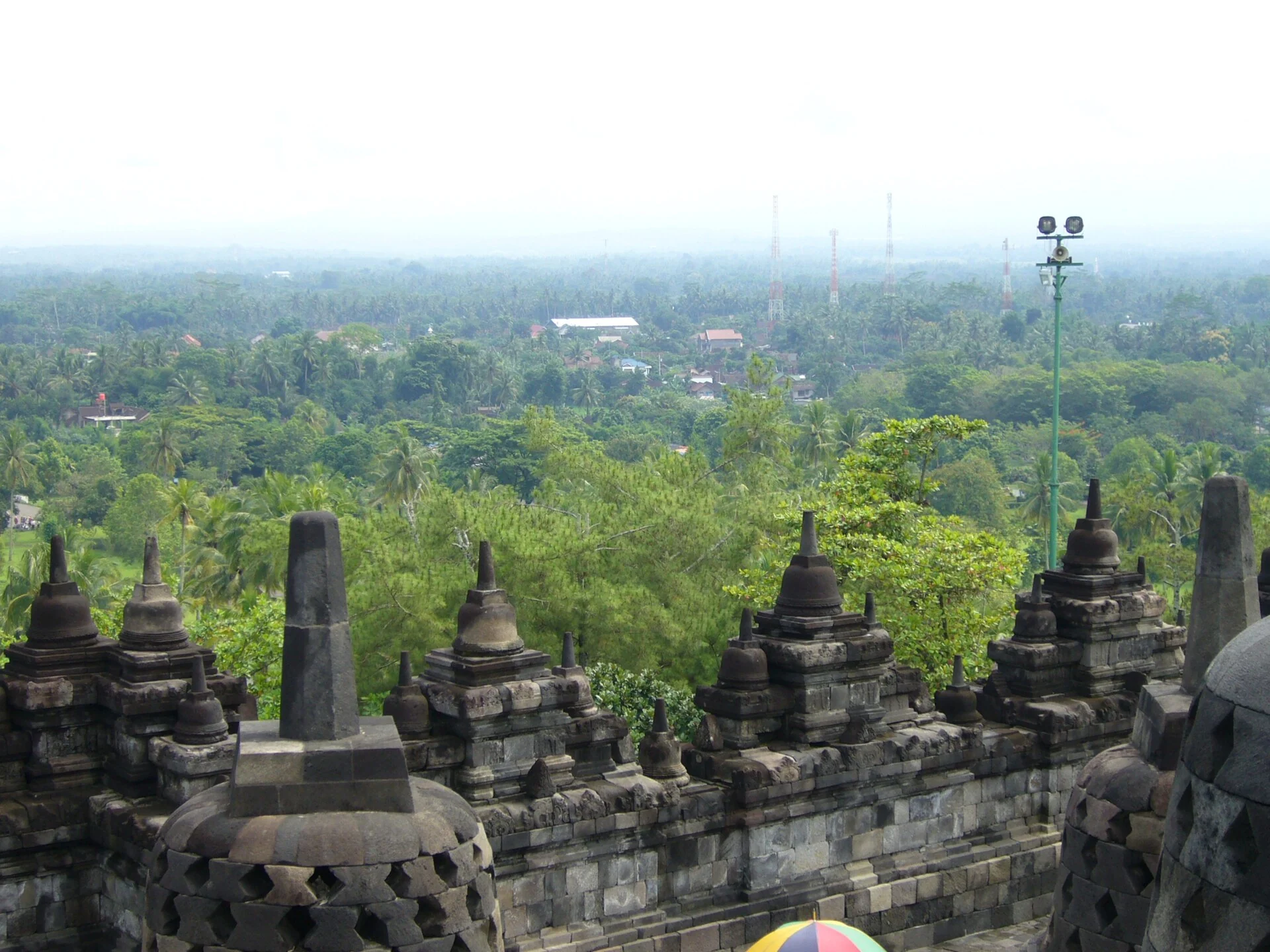
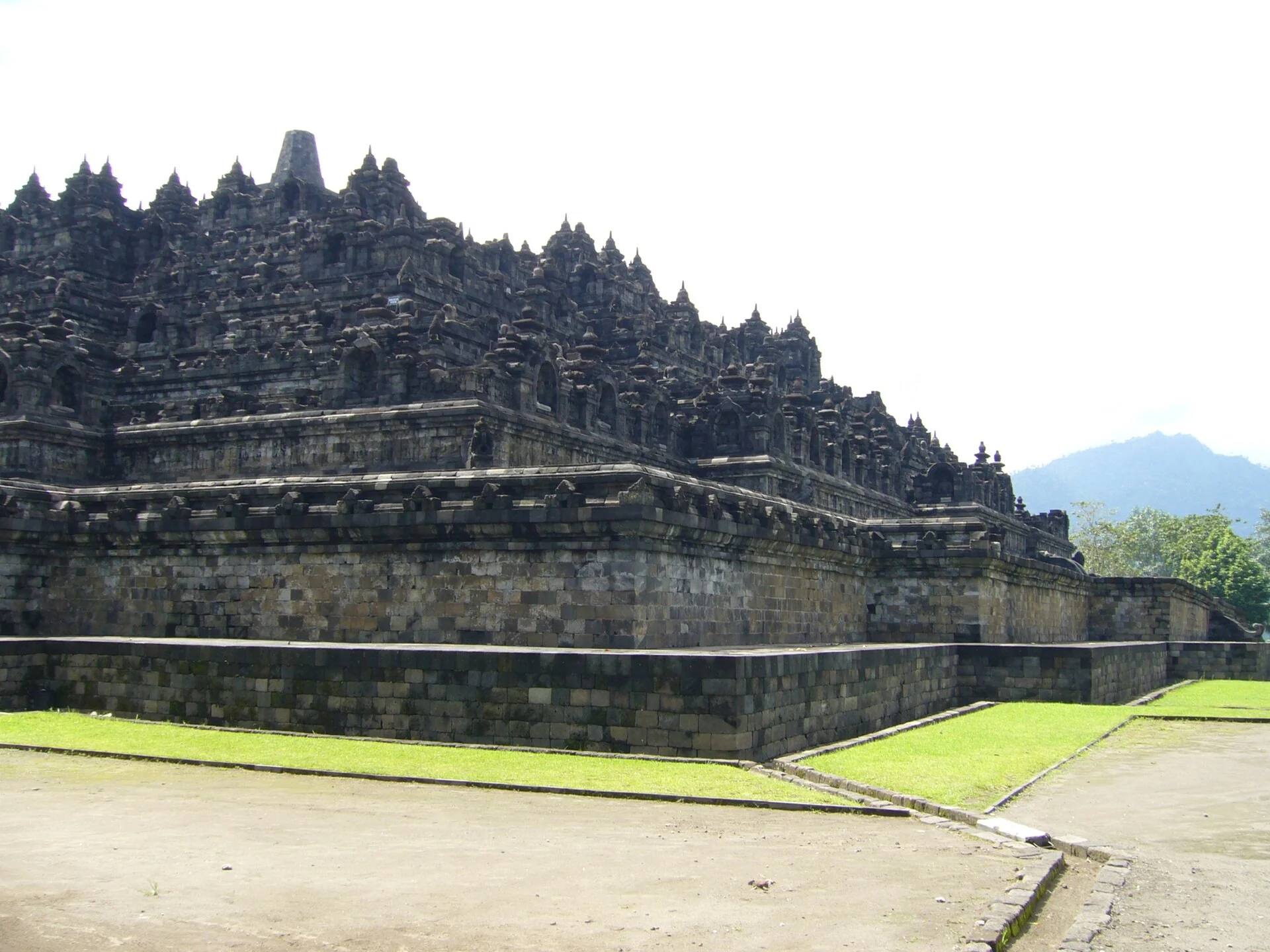
Driving through rice fields, the ruins don't look tall; only close up do you see them step upward in tiers. In 9th-century central Java a Mahayana Buddhist temple was built here, some research pushes the start to the 8th century. It leaves no wide courtyard; everything is compressed into steps and galleries.
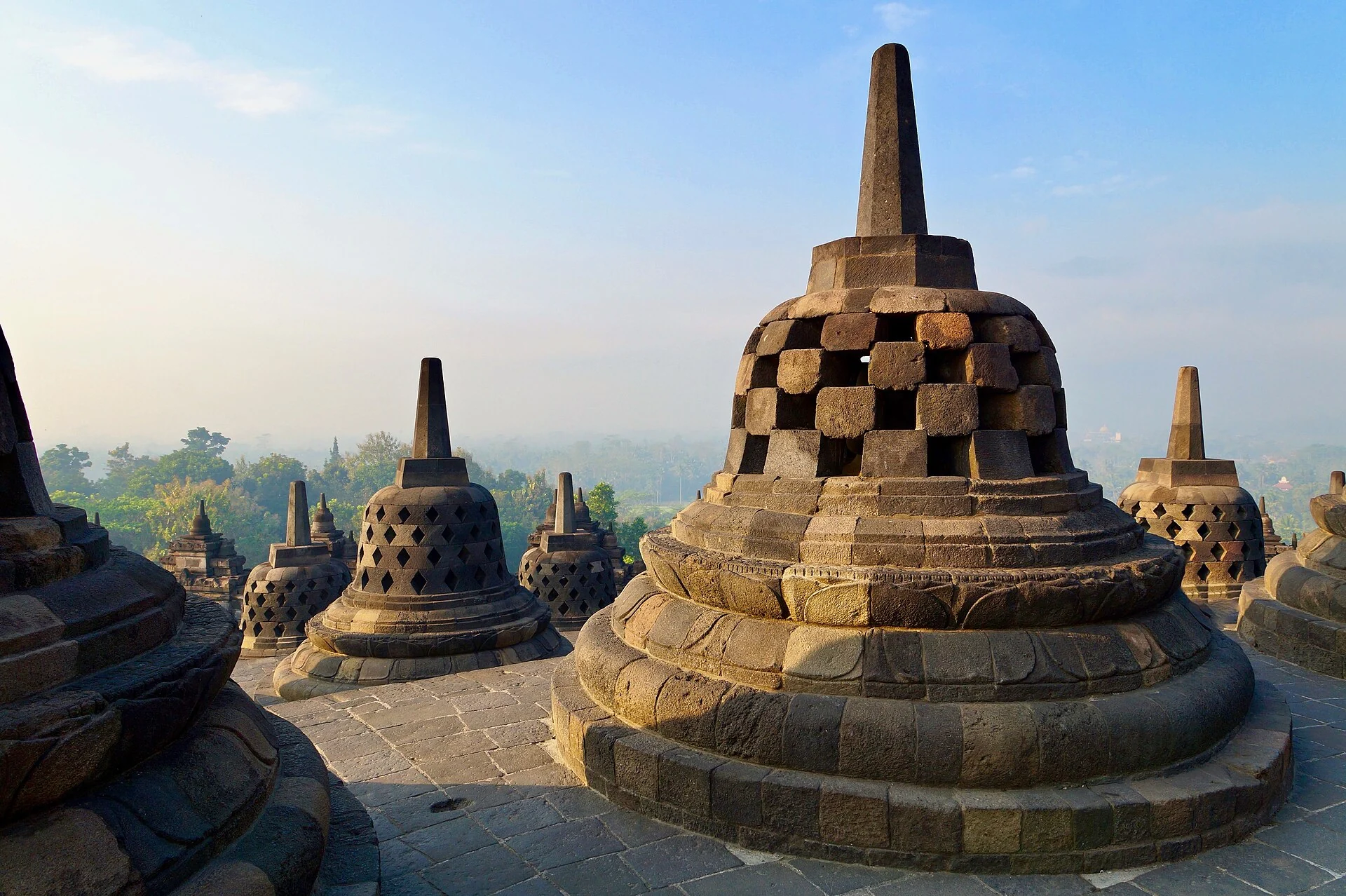
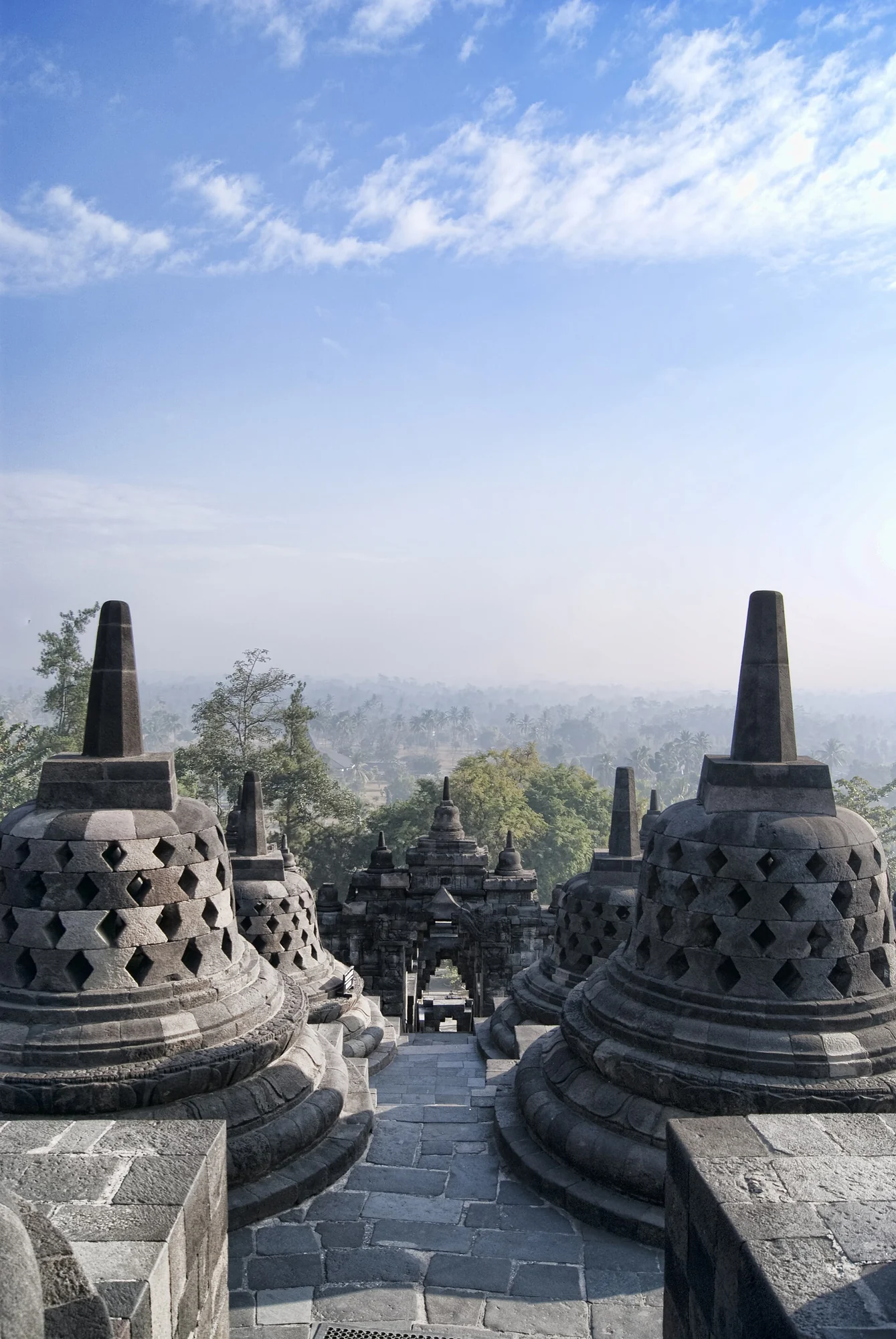
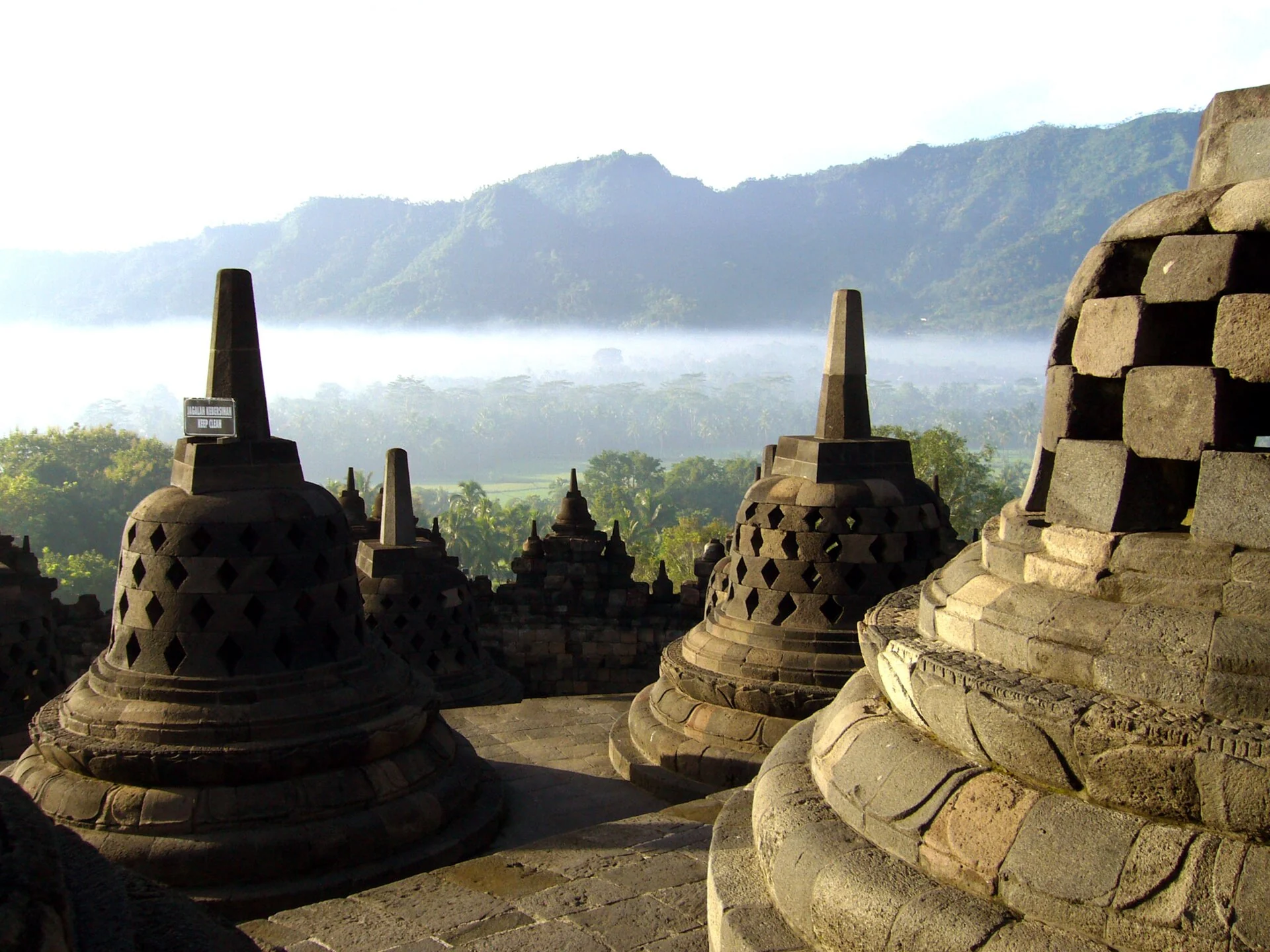
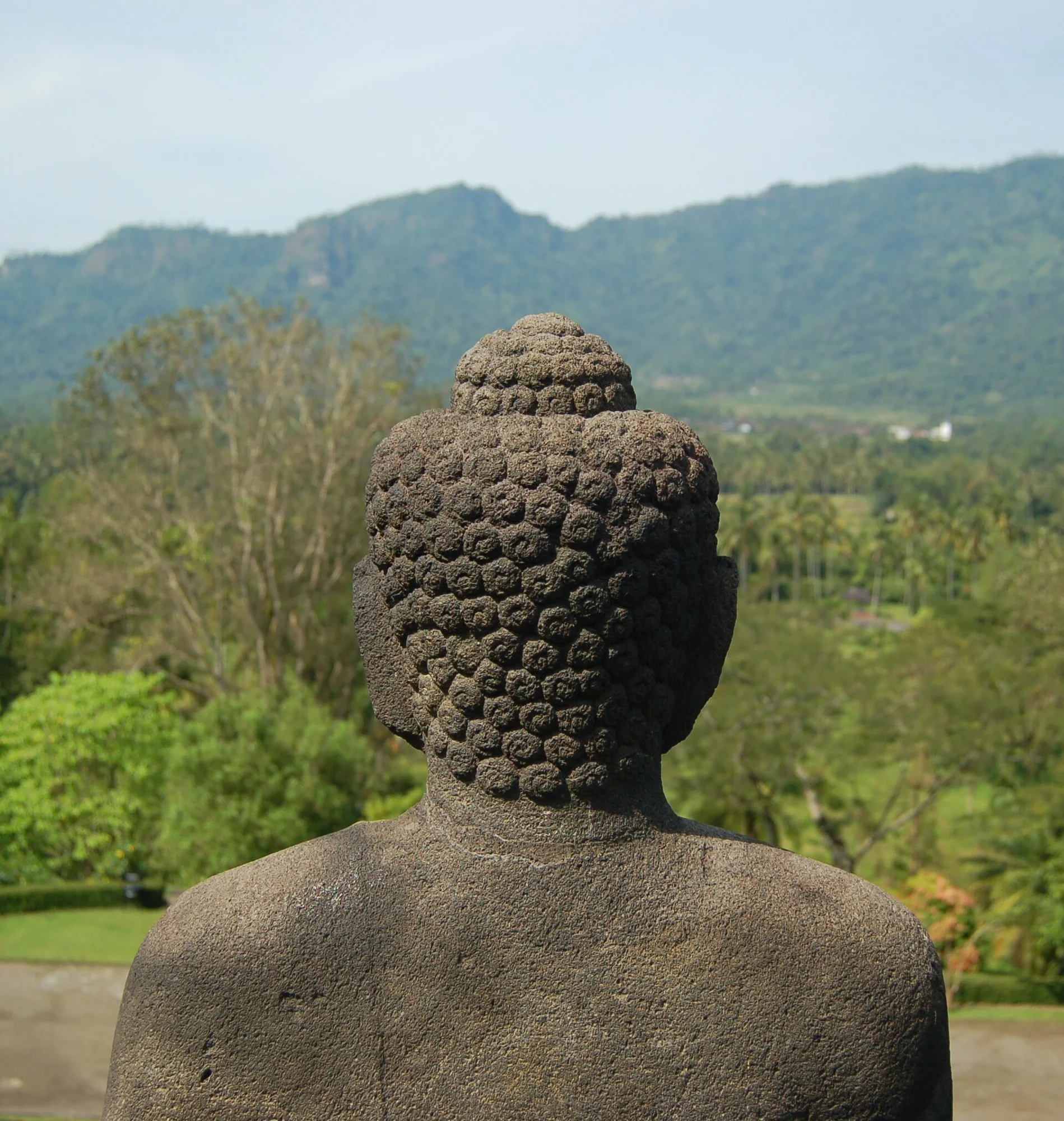
Pilgrims must climb the galleries in the same direction, tier by tier, with no shortcuts. With each rise, what you can see shrinks, until at last only stupas and sky remain.
After the 14th century, Java's Hindu kingdoms declined and the island gradually converted; the place was abandoned and buried by volcanic ash and vegetation for a long time. In 1814, Raffles, then governing Java for the British, recorded its location after a local pointed it out, and after several rounds of restoration it reached its present form.