Growing vegetables the way a grand cru is grown
Rue de Varenne, Paris 7e, France — A tasting menu built only on plants.
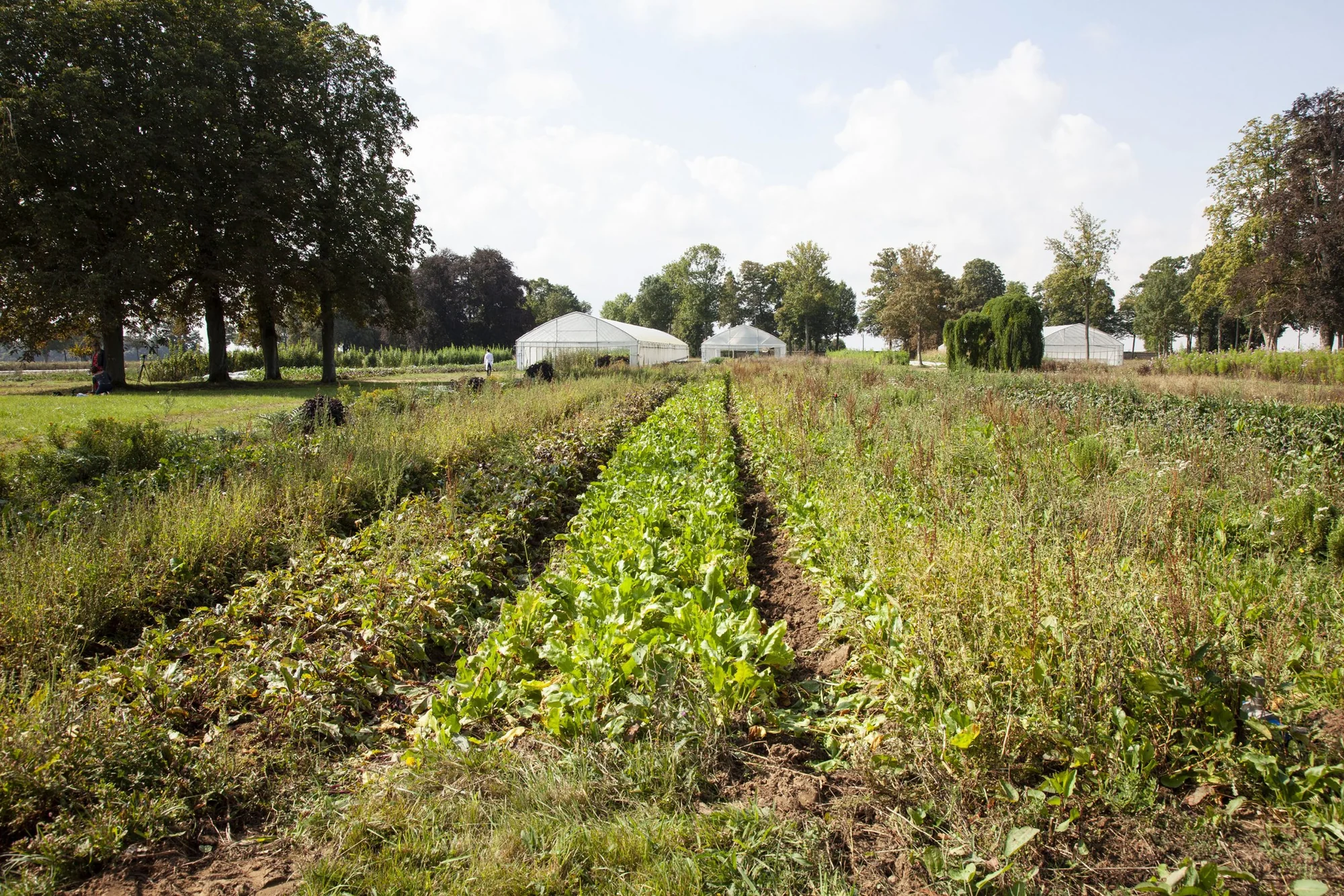
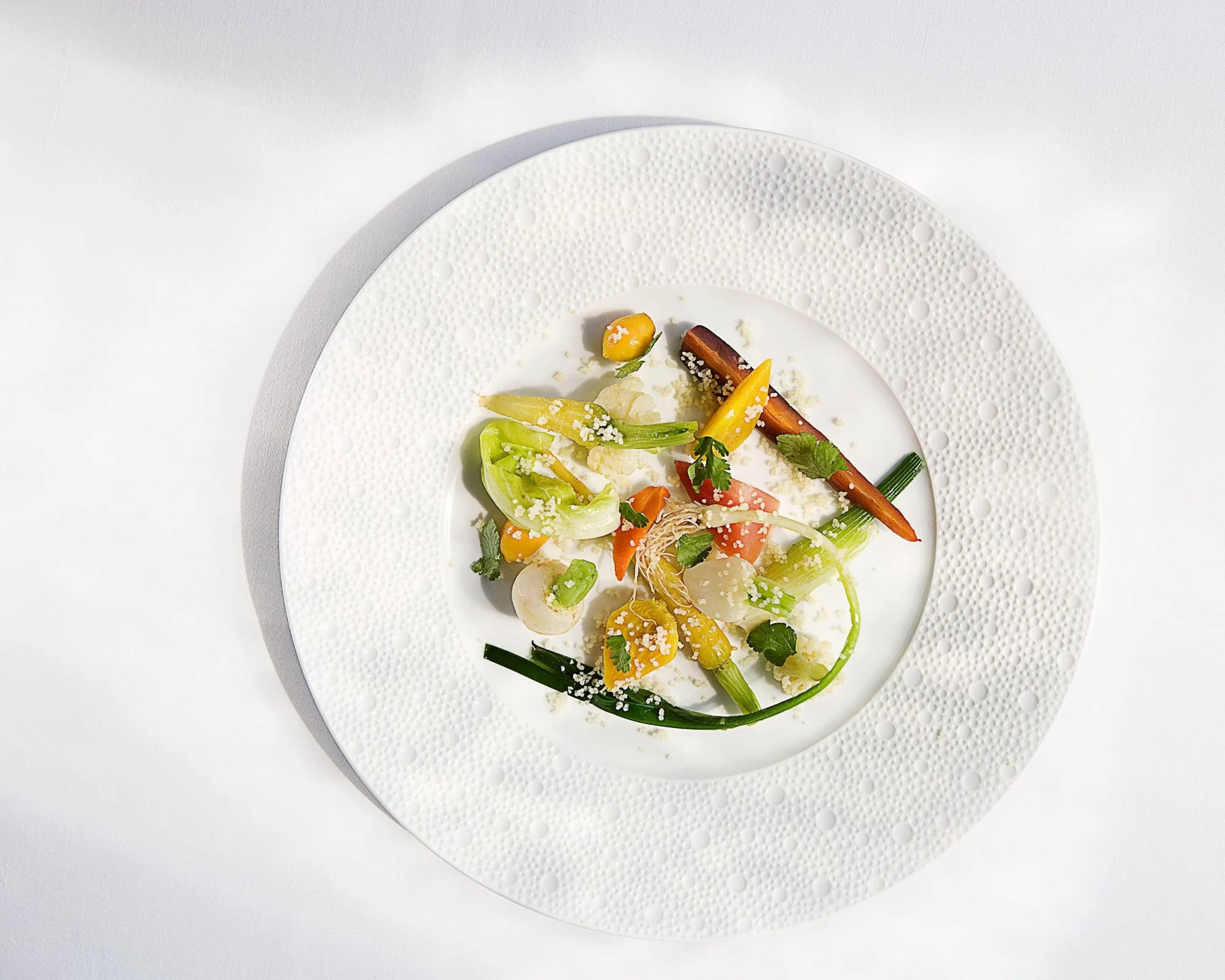
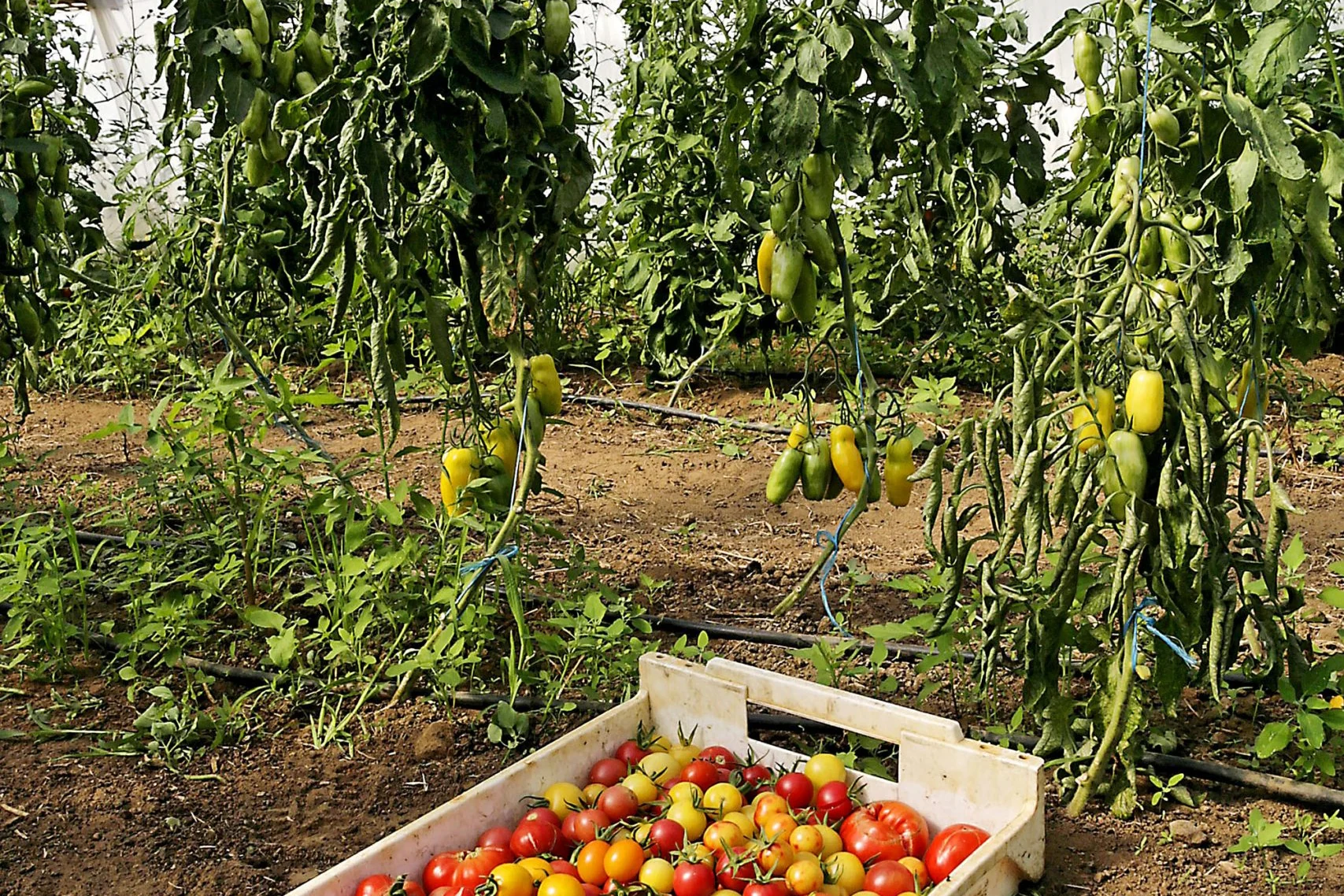
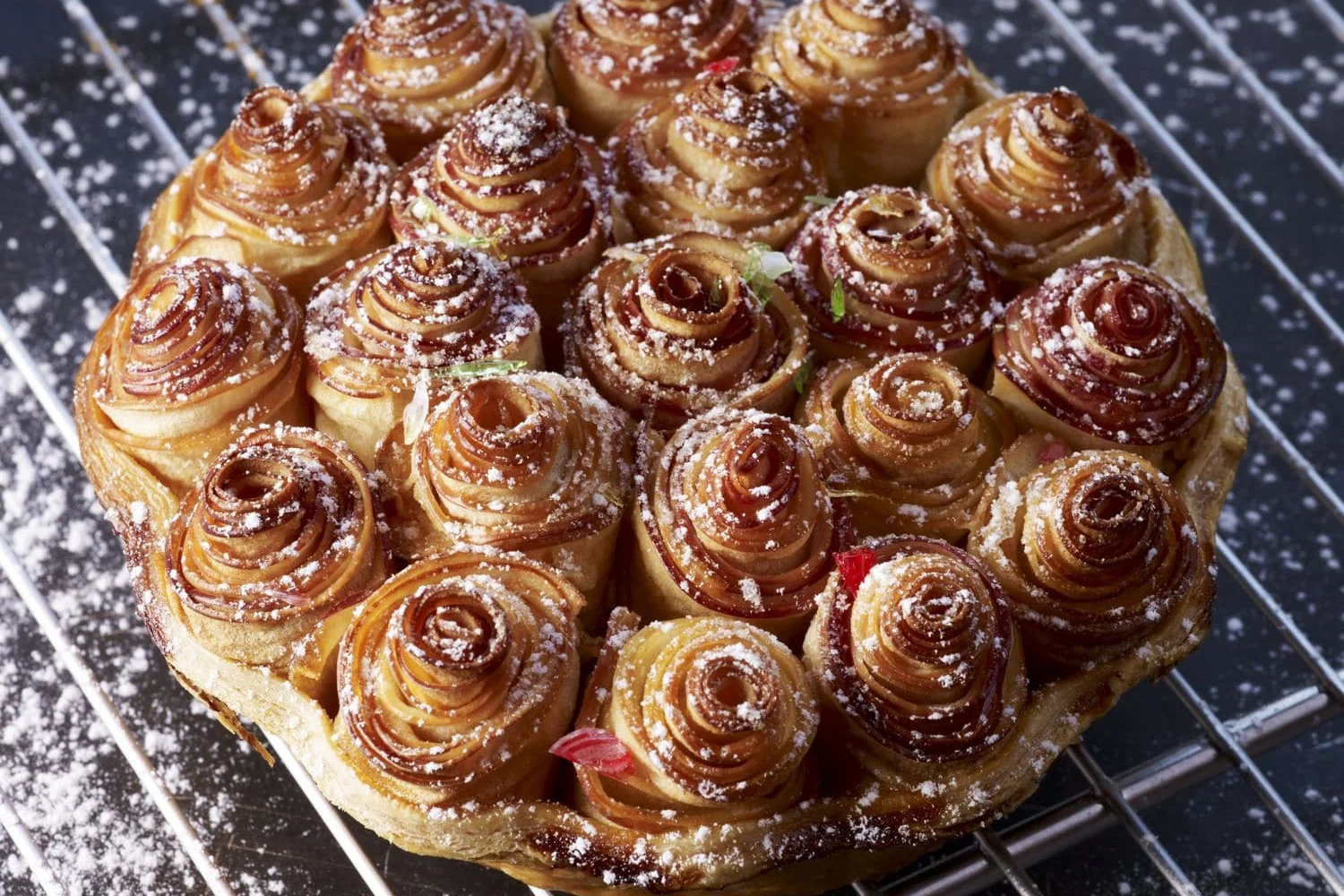
The kitchen cooks plants and nothing else. Vegetables, fruit, herbs and flowers, with honey from the restaurant's own hives, make up the whole skeleton of the menu; there is no meat and no fish. Behind the kitchen are two gardens working with no chemical inputs at all, and the gardener brings the harvest into the city each day, so the menu follows what came in. The chef's line sits at the top of the official site: I want to make vegetables into a grand cru. It explains a great deal, including why a lunch can list nothing but tomato, leek, beetroot and aubergine, and why the same tomato comes to the table in several colours.
The two gardens sit in Normandy and in the Sarthe, one around an old house and one behind a hedge. The soils differ, clay in one and sand in the other, so watering and feeding are calculated separately and each plot keeps its own account of what it can grow.
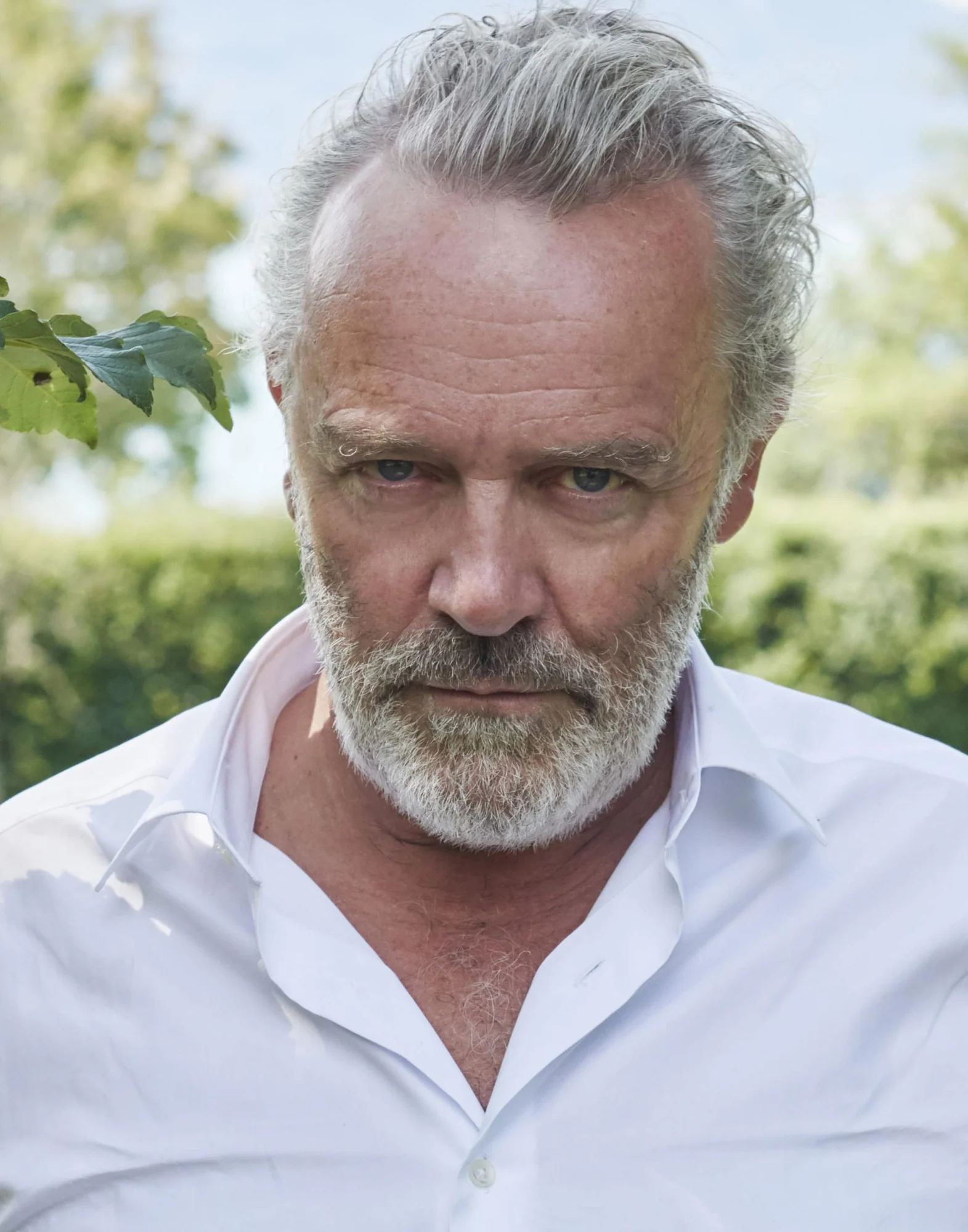
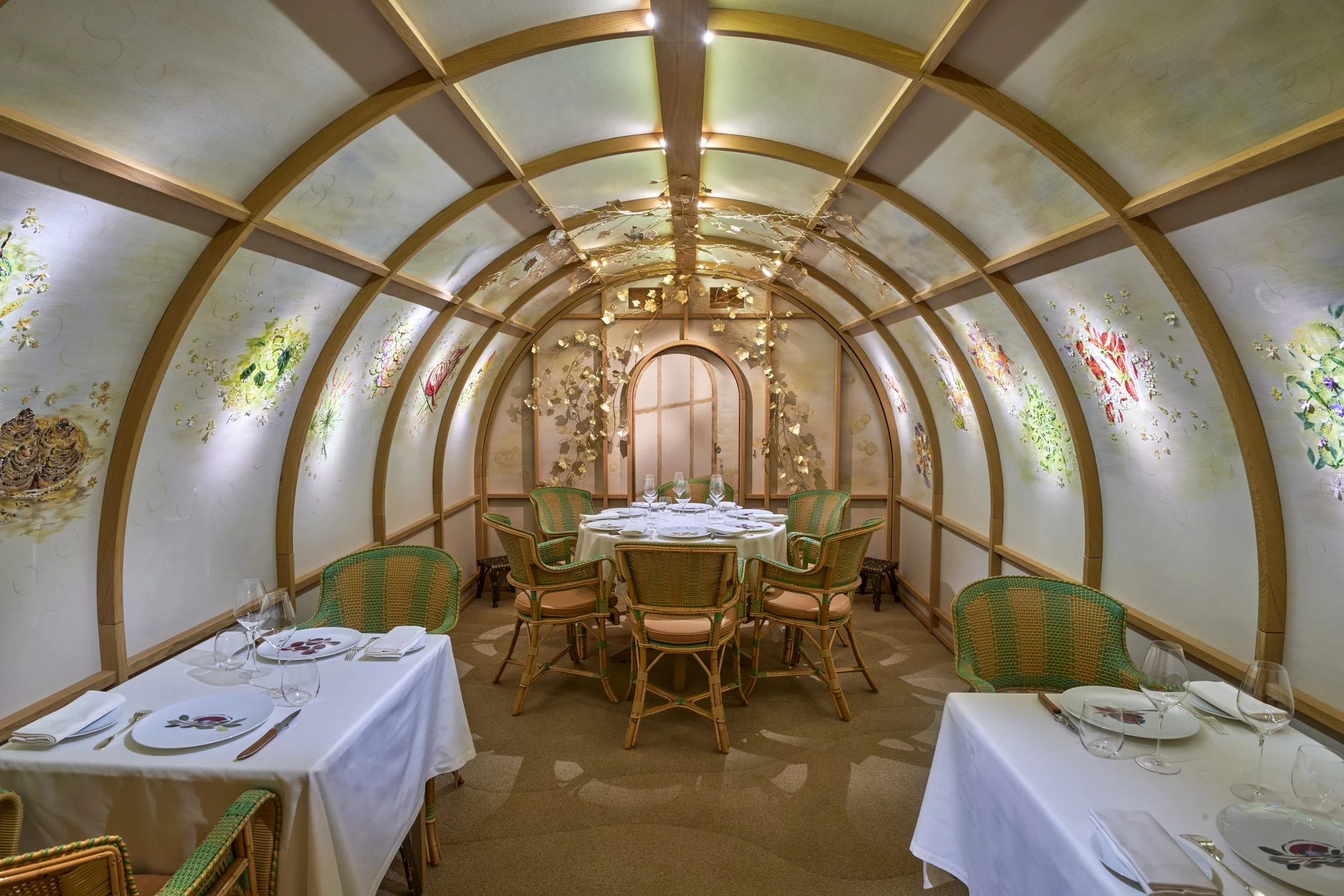
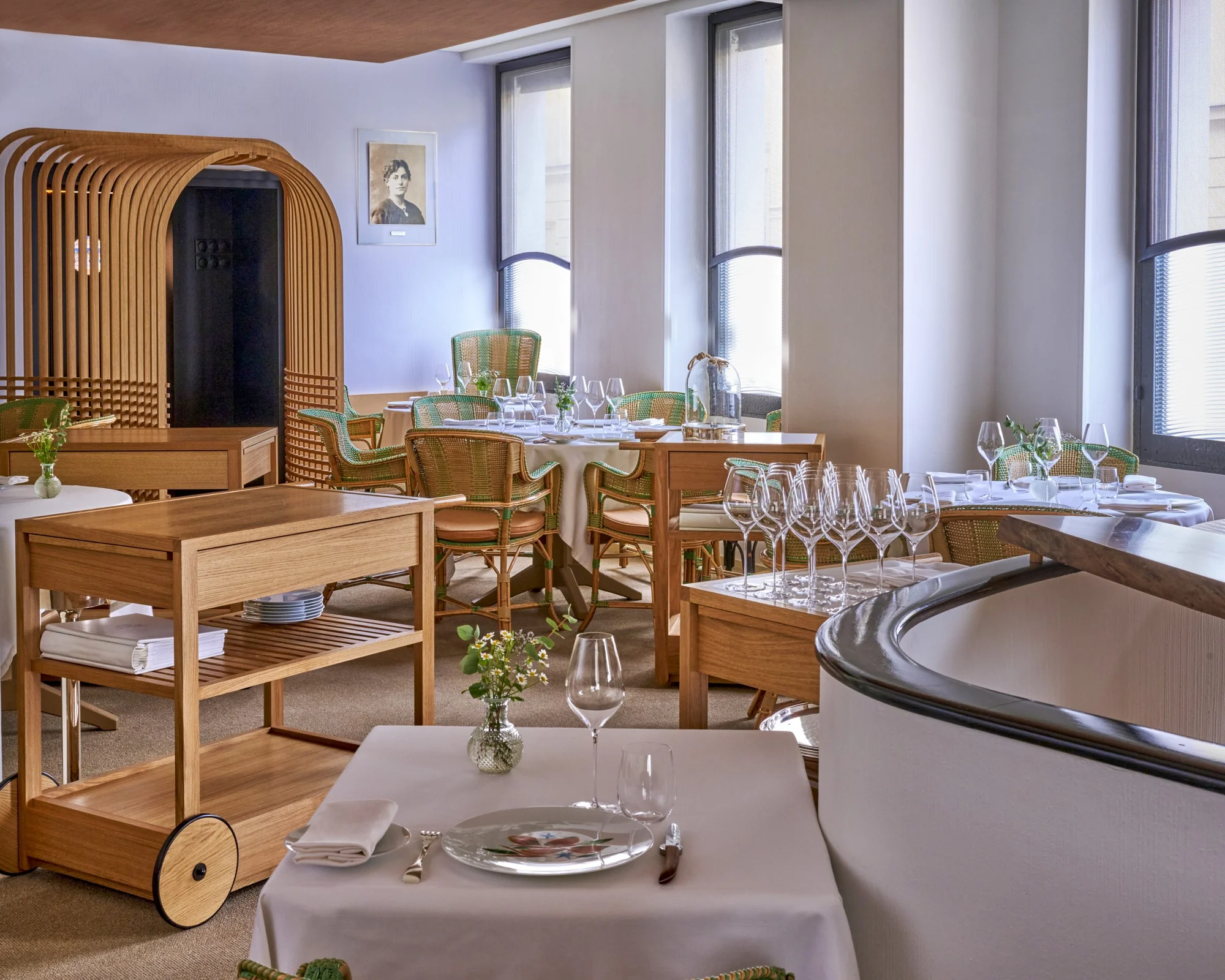
Alain Passard came up through the rotisserie, cooking poultry low and slow for years before moving the kitchen onto vegetables. The room he works in now is on rue de Varenne: pale walls, oak carts, wicker arches, wicker chairs in green and beige, a hand-painted rose at the rim of every plate. Further in there is a small vaulted room, wooden ribs holding a barrel ceiling, the curved walls painted all over with flowers and plants.