Horizontal, cream and orange travertine terraces stepping down, wisps of steam

Wyoming, United States

Yellowstone National ParkGround steaming, colours laid out

One place holds fountains, coloured pools, travertine steps and a deeply cut canyon. Underground heat pushes water up, which leaves minerals along the way, and a few steps changes both colour and sound.

The park is 8,983 square kilometres; Yellowstone Lake sits in the caldera, almost everything else tree-covered.

PlaceWyoming, United States
TypeNational park with volcanic geothermal area
SuitsTravelers who want to know where pool colours come from
Best seasonSummer boardwalks bake; thin-cloud days show mineral texture

Heat, water and stone

Wyoming, United States — National park with volcanic geothermal area.

First understand geysers and coloured pools are not the same thing.

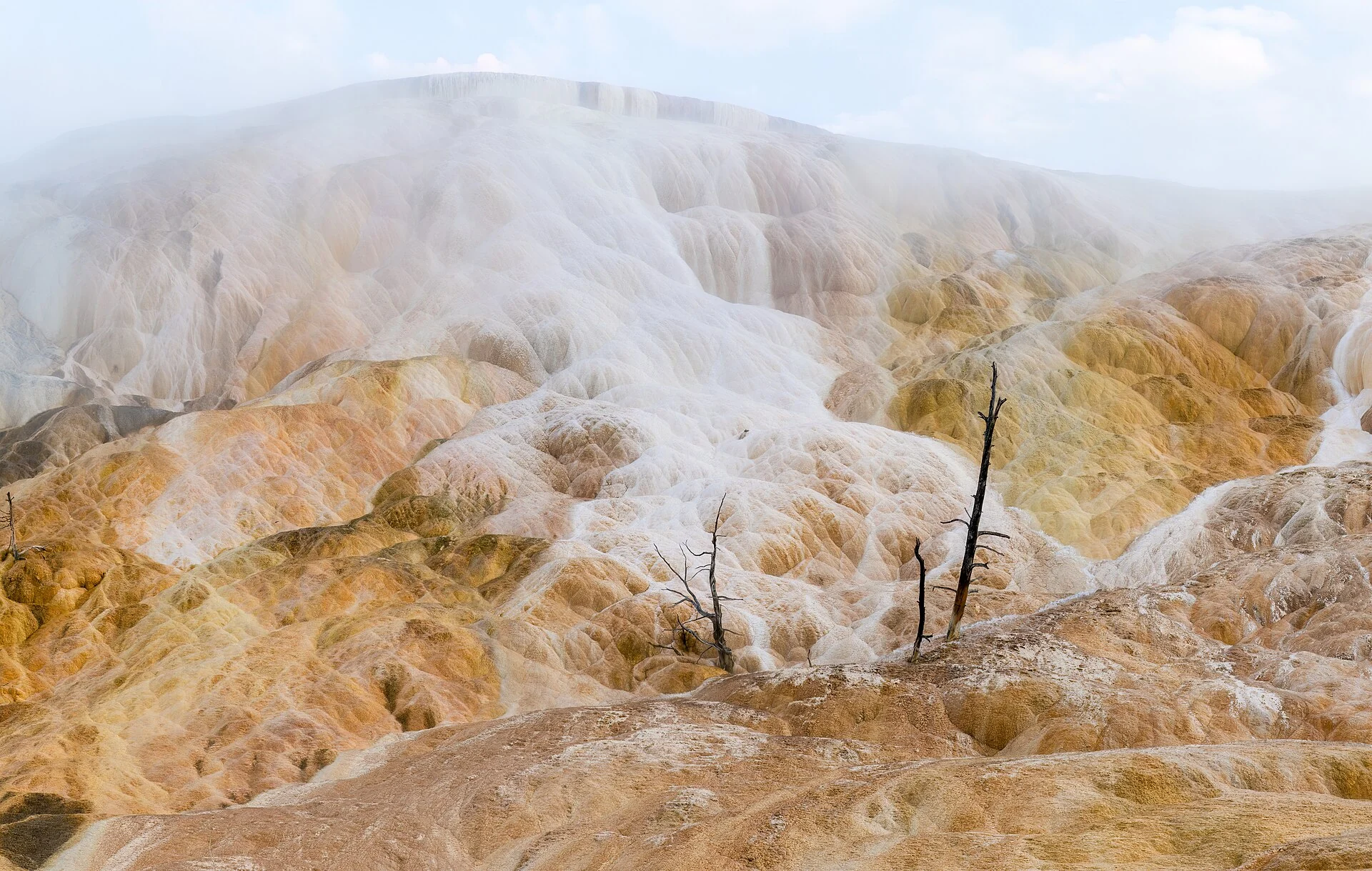
Travertine terraces are built up slowly by water; up close the texture is clearer.

The canyon and thermal area are close; worth seeing separately in one day.

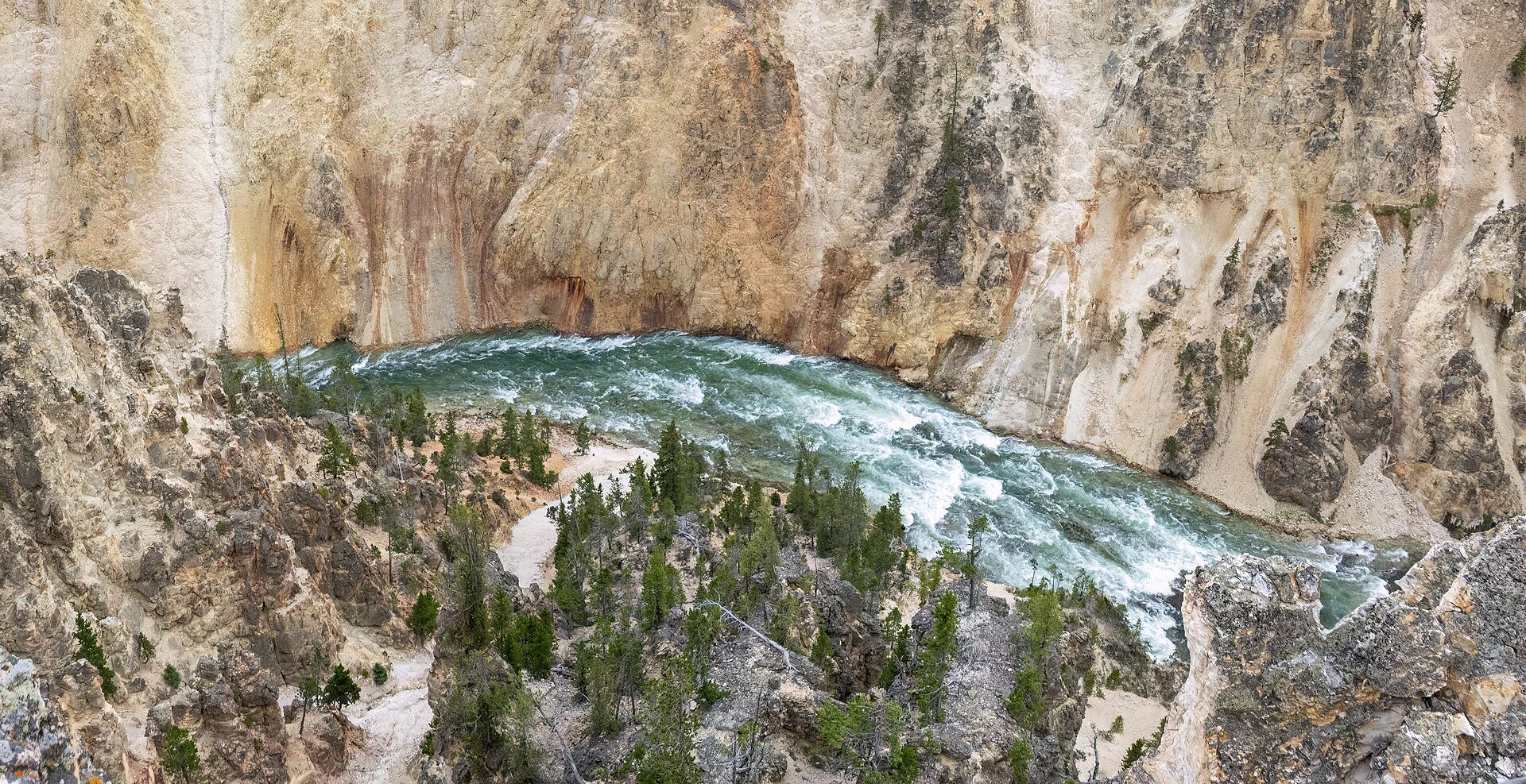
Horizontal, turquoise river cutting through yellow-brown cliff
The river in the canyon
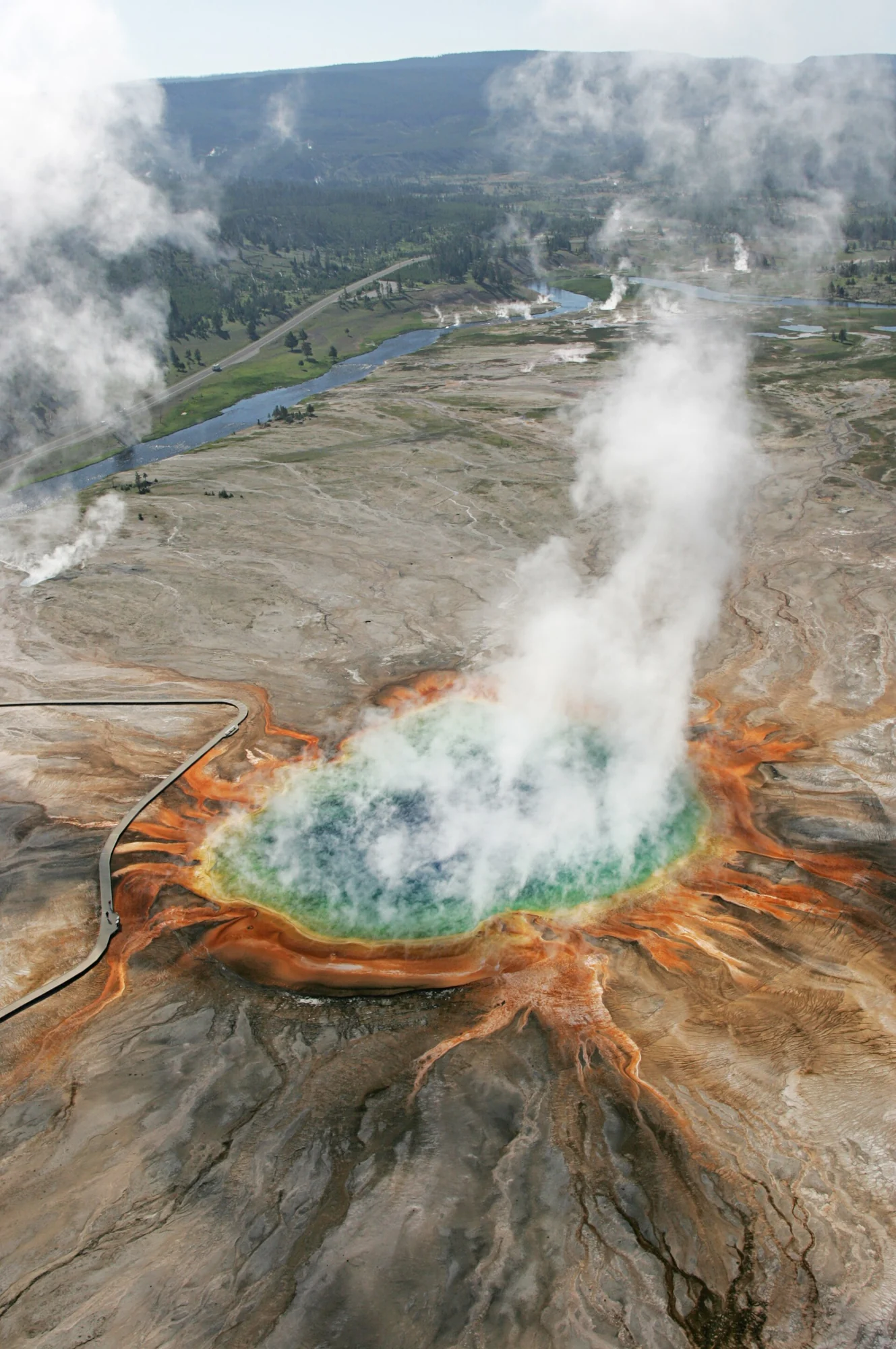
Vertical, looking down into a coloured pool, a steam column rising from the centre, orange rim
Steam column and coloured pool
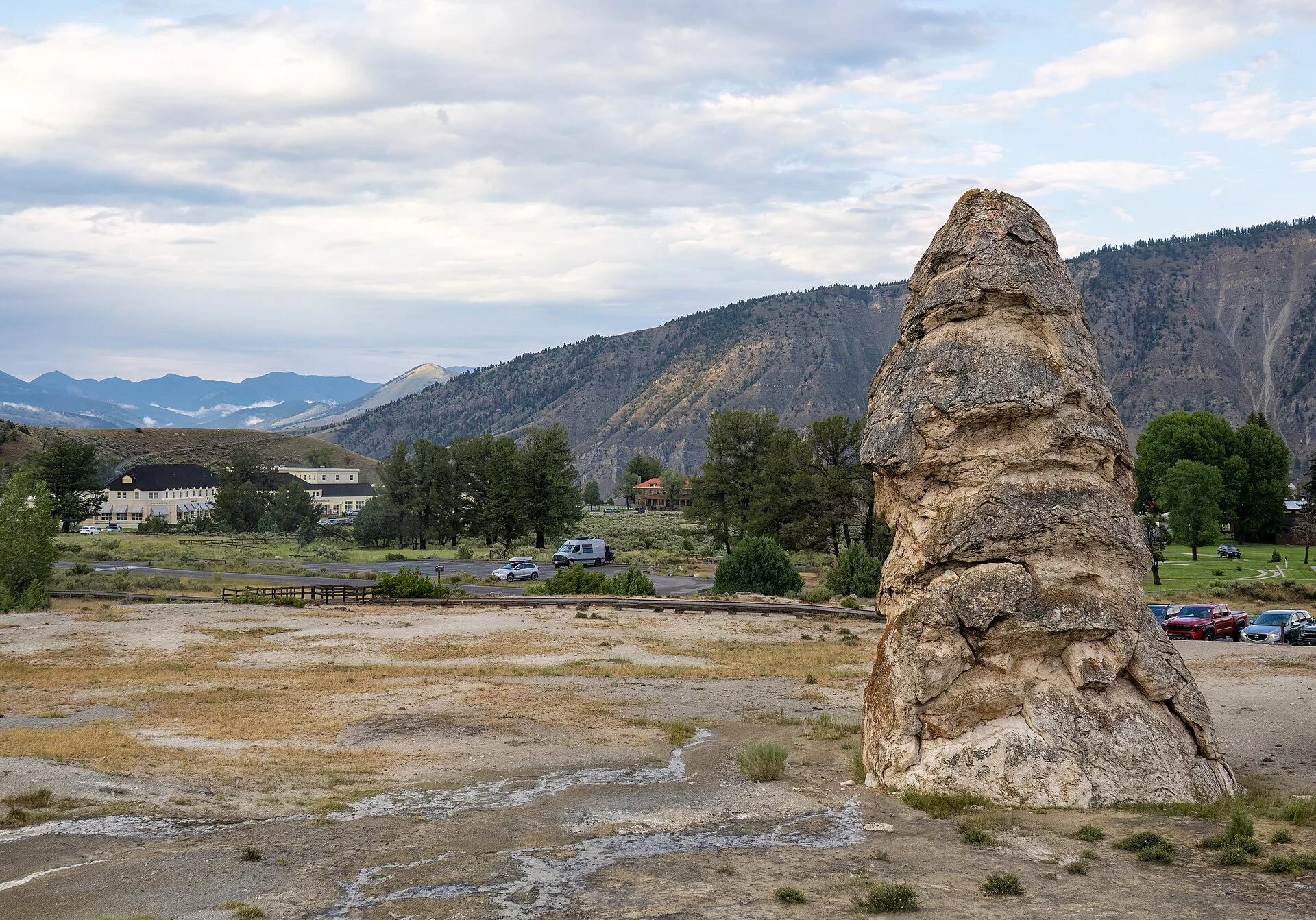
Horizontal, a conical lone rock at the terrace edge, a line of mountains behind

Beyond the thermal area, still forest

The most common vegetation is subalpine coniferous forest, the whole belonging to the South Central Rockies forests ecoregion and the core of the Greater Yellowstone Ecosystem. The thermal area is only a small patch; beyond the boardwalks, forest and grassland stretch on all sides.

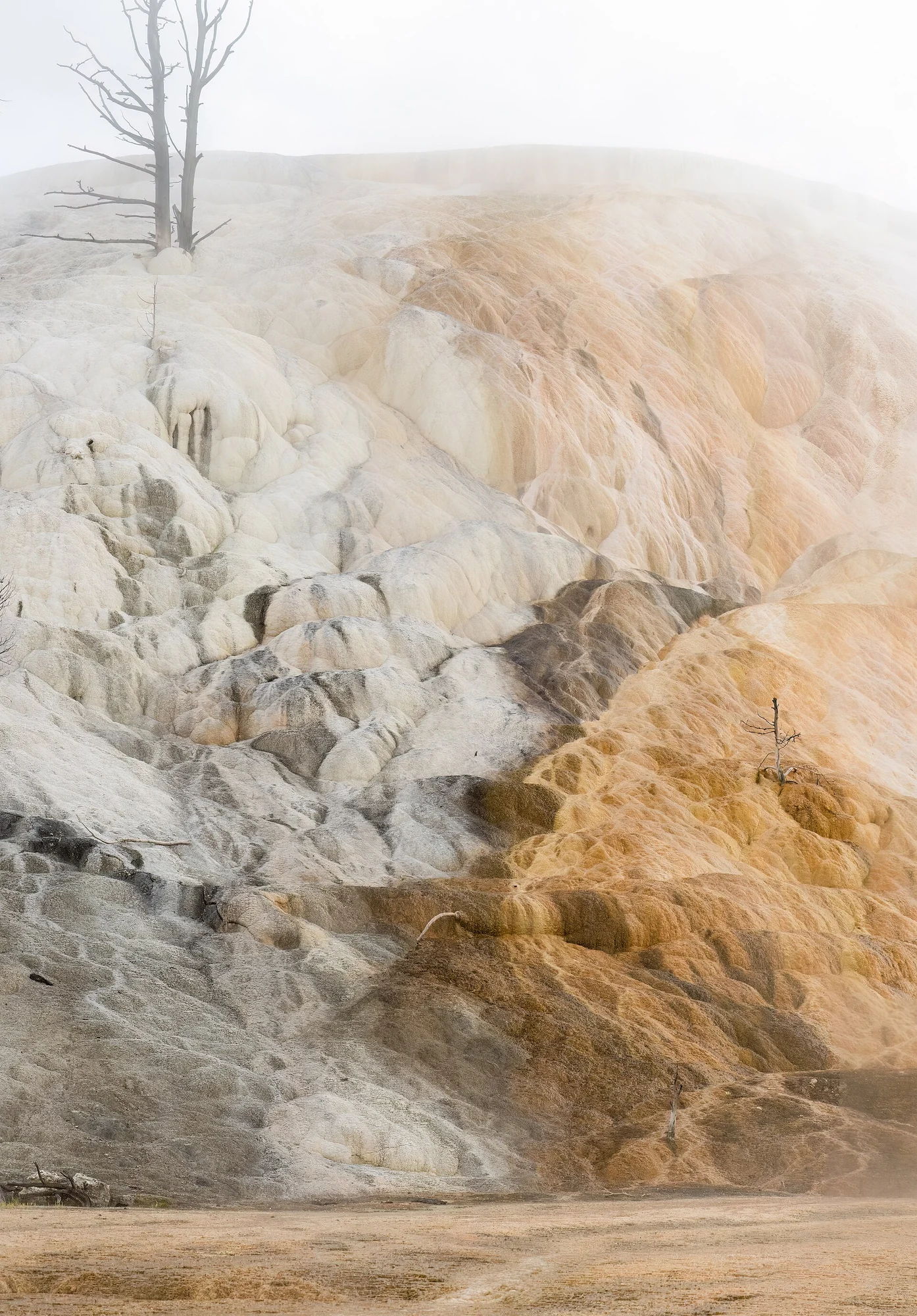
Vertical, a dead tree and pale travertine terrace surface, layers pressing down

The name predates the park

The name Yellowstone comes from the Hidatsa name for the Yellowstone River; in 1797 the Canadian explorer David Thompson's party translated it as Yellow Stone. Earlier, 1807 to 1808, John Colter crossed the park's northeast corner and described a sulfurous place as 'hell'; Washington Irving later gave it the name 'Colter's Hell', still used.

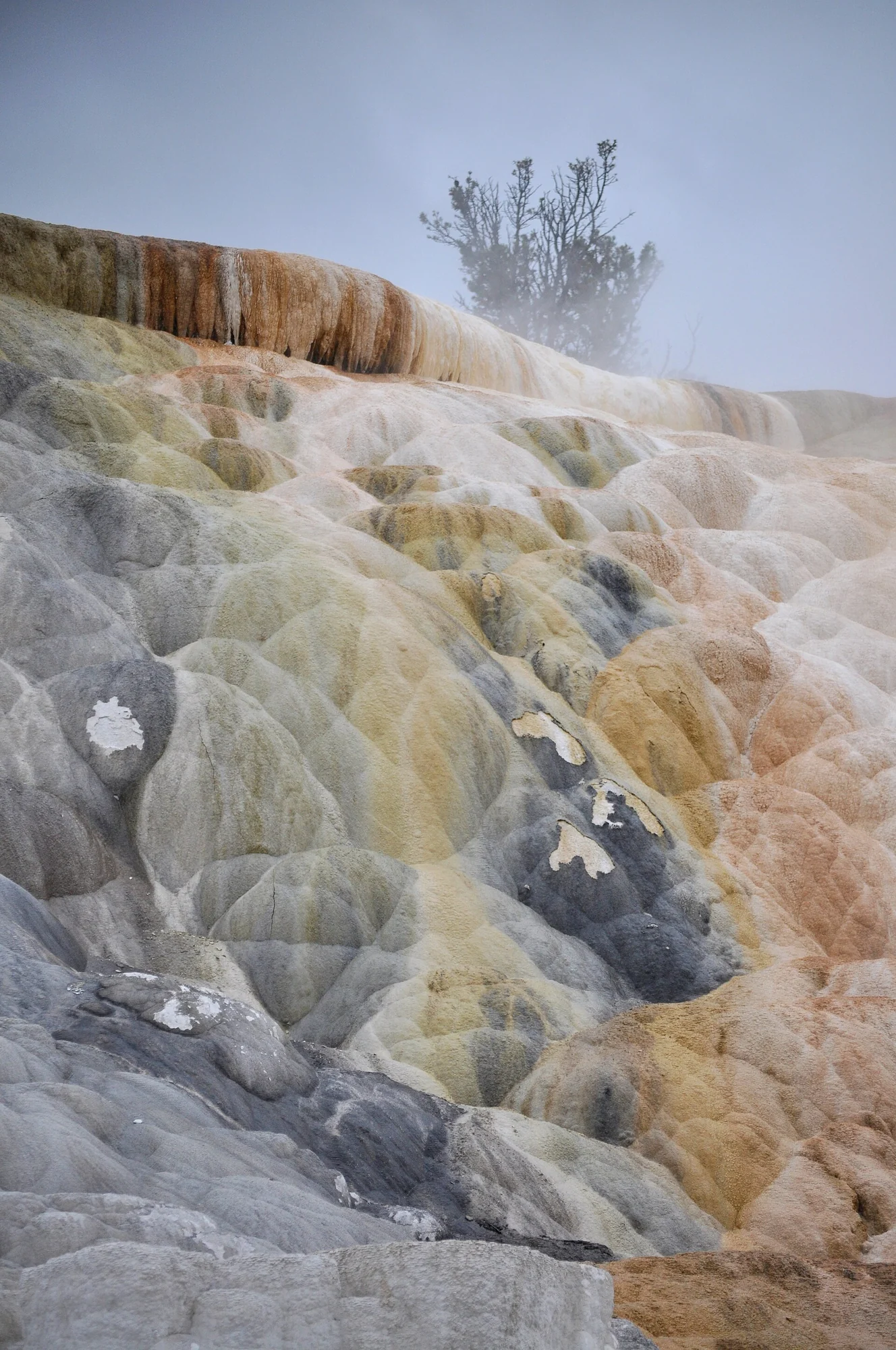
Vertical, close view of grey-white and pale-yellow mineral texture, shallow pools in the hollows

The first national park

On 1 March 1872 President Grant signed the act establishing Yellowstone, both the first US national park and generally considered the world's first. From 1886 to 1916 the US Army managed it for thirty years, handing it in 1917 to the National Park Service, founded the year before.

Horizontal, orange microbial mats spreading along the coloured pool's edge
Route

A morning on the terraces

Don't slot it on a travel day. Stay near a park entrance the night before, enter the thermal area in the morning, add the canyon in the afternoon, and no driving in the dark on the way back.

Where the heat comes from

Standing on the terrace, the ground is hard but the air keeps moving. Water heated underground is pushed up, carrying minerals to the surface, which deposit as it cools, building tiers over time. The geothermal landscape here is not isolated points but a whole still-active process.

Yellowstone Lake is one of North America's largest high-altitude lakes, sitting on part of the caldera. The volcano is considered dormant; in the last two million years it had two enormous eruptions; lava and eruption deposits cover most of the park, explaining why heat remains.

More than half the world's geysers and geothermal features concentrate here. Old Faithful is famous, but coloured pools, mud pots and hot-spring terraces each have their shape; seeing them as stages of one process beats hunting names one by one.

The shapes water leaves

Travertine terraces bear the closest look. The surfaces are worn into fine grain, shallow water pools in the hollows, the edges darker than the centre. Mineral deposition is slow; every layer you see took a long time, and the boardwalk hugs it precisely so you don't step on it.

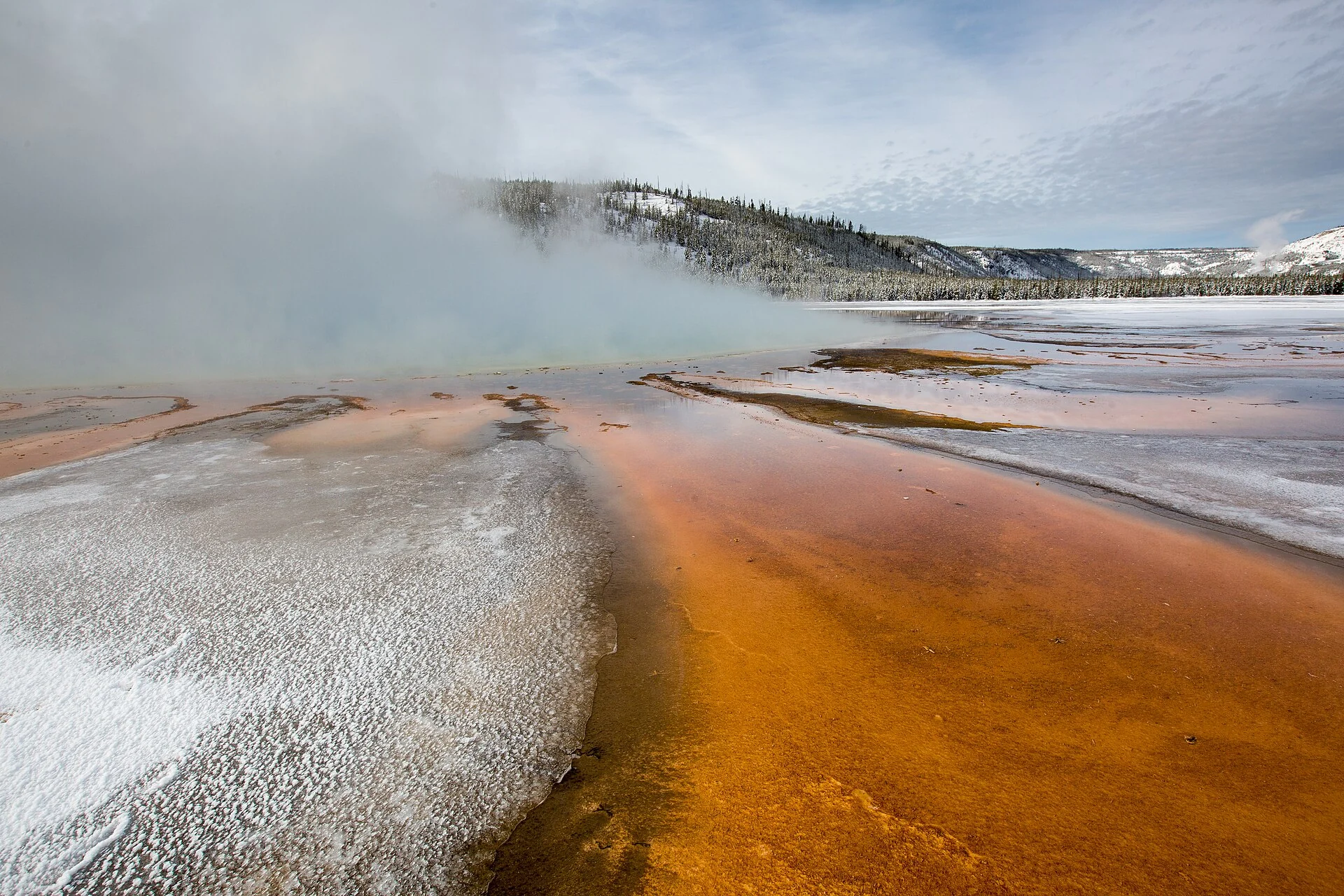
The pool's colour has two layers: the centre is the water itself, the ring near shore is orange-yellow from microbes that live in hot water. Temperature falls from centre outward, and so does what can live, making the colour boundary a temperature line. Walk the pool edge slowly rather than stand and shoot.

Go to the canyon and the style suddenly changes. The river cuts into yellow-brown rock, revealing a turquoise stretch, wholly different from the terrace's slowly seeping water. The two are close yet one depends on deposition, the other on downcutting, seen on the same day, the contrast appears.
The first land set aside

Indigenous people lived here at least 11,000 years. Mid-19th-century mountain men passed sporadically; organized non-Indigenous exploration came only in the late 1860s. Archaeological records show obsidian use and following bison herds, and a practice of burning to bring new grass.

What brought this land to Congress was three expeditions. In 1869 Cook, Folsom and Peterson walked from the Yellowstone River to Yellowstone Lake, leaving a diary; the next year the Washburn party brought a surveyor and a troop of soldiers, spending a month collecting specimens and notes. In 1871 Hayden led a government-funded party; companion William Henry Jackson took large-format photos and Thomas Moran painted colour studies, and this report persuaded Congress to stop auctioning the land.

Inscribed as a World Heritage Site in 1978. Today the park holds grizzly bears, cougars, wolves, and free-ranging bison and elk; the bison herd is the oldest and largest public herd in the US. Geothermal is one layer; forest and beasts another.

A day of terraces and canyon

First read the deposited shape on the terraces, walk the boardwalk past the pools, leave time midway for the steam columns, then turn to the canyon for another water.

Time needed

A full day for the thermal area plus canyon; allow extra for lake or wildlife.

Opening

Which boardwalks, overlooks and road sections are open changes by period; thermal areas close locally by activity and weather.

Access

Boardwalks are flat but looping; steam wets the path and midday has no shade. Slow movers keep to two or three terraces.

Best light

Summer boardwalks bake and steam hits the face; thin-cloud days show mineral texture. Some roads close in winter.

Talk through my trip idea

If you're planning those days at Yellowstone, tell me whether you'll keep one day or two, and whether anyone dislikes damp or moves slowly.

[email protected]

Read this page in Chinese

Discuss this journey