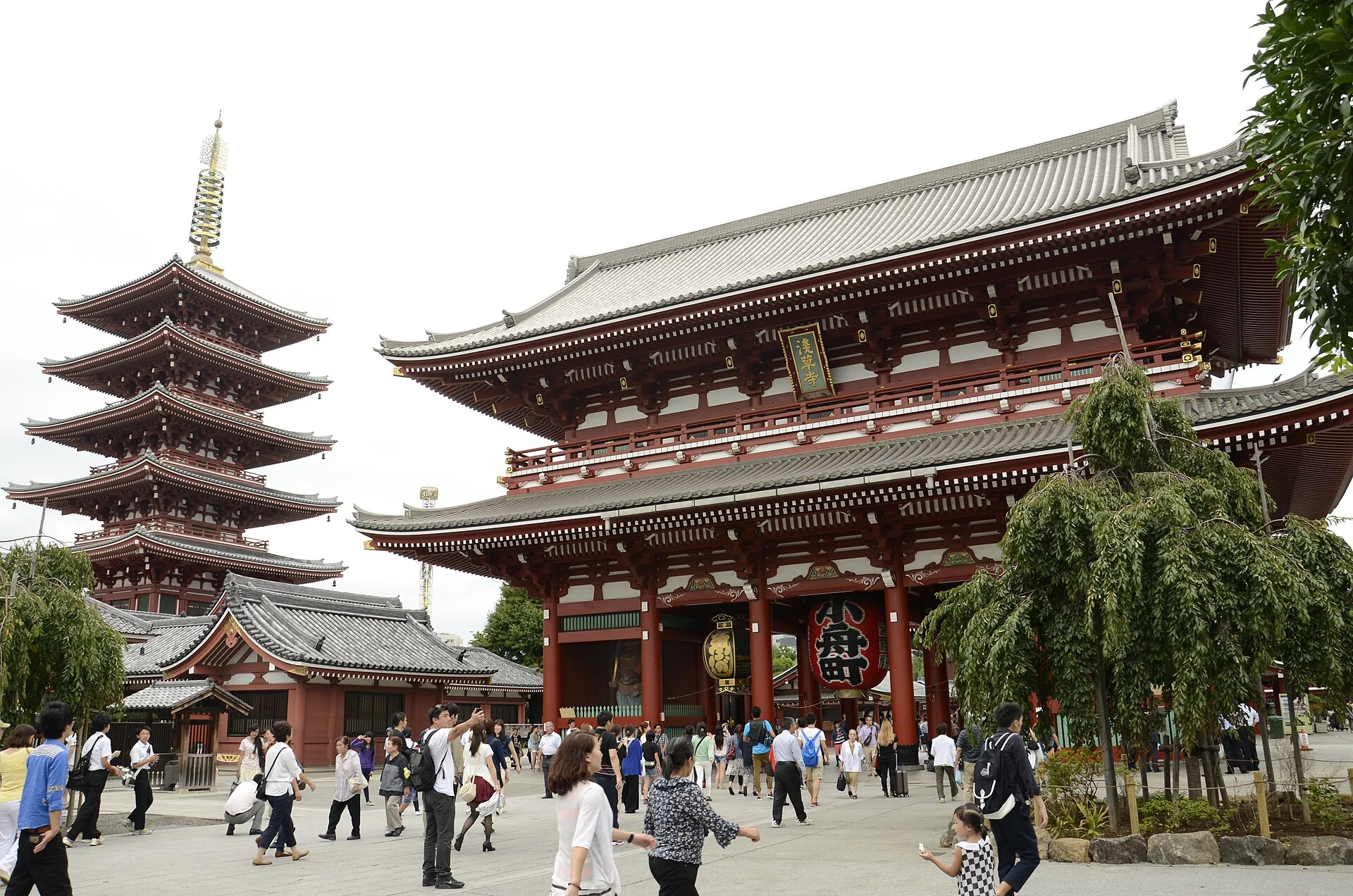
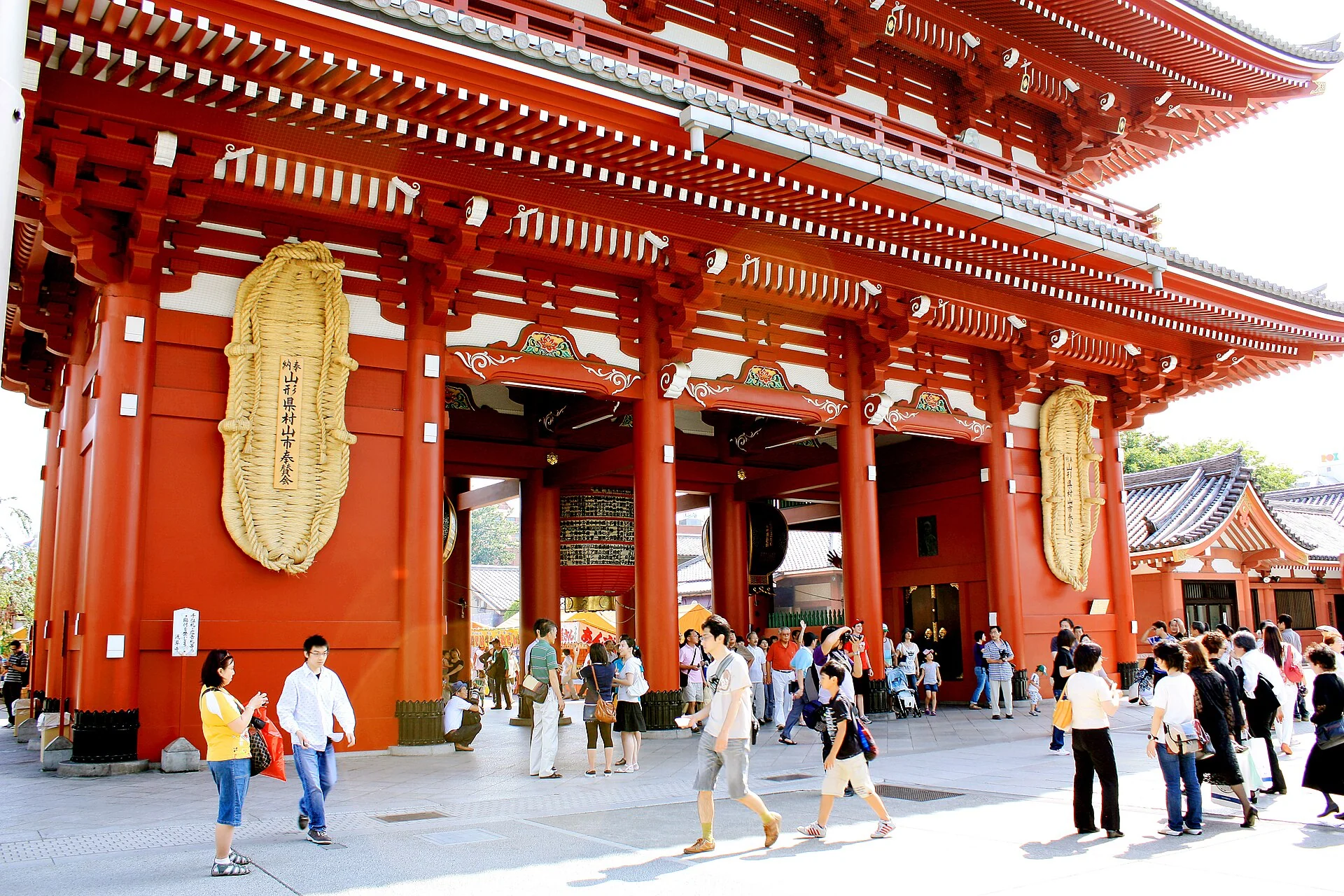
Close view of the red gate, a large lantern hanging centre, people passing

Asakusa, Tokyo, Japan

Sensō-jiA giant lantern at the gate

Through Kaminarimon, the view is narrowed by two rows of shops into a thin lane, the main hall only at the end. Incense rises in the grounds, the eaves hang low, and looking up the five-story pagoda stands to the side.

Asakusa on the west bank of the Sumida River, the temple sits among dense blocks; step out the gate and you meet streetcars and shops.

PlaceAsakusa, Tokyo, Japan
TypeBuddhist temple
SuitsTravelers curious why the approach is so busy and what each building is
Best seasonMidday summer glare is hard; rainy days soften the wood

Gate, street and main hall

Asakusa, Tokyo, Japan — Buddhist temple.

First stand outside Kaminarimon and see how gate, approach and hall line up.

The shops along Nakamise-dori each have their years; don't treat it as just a passage.

The grounds hold more than one building; the main hall, pagoda and eastern shrine must be seen separately.

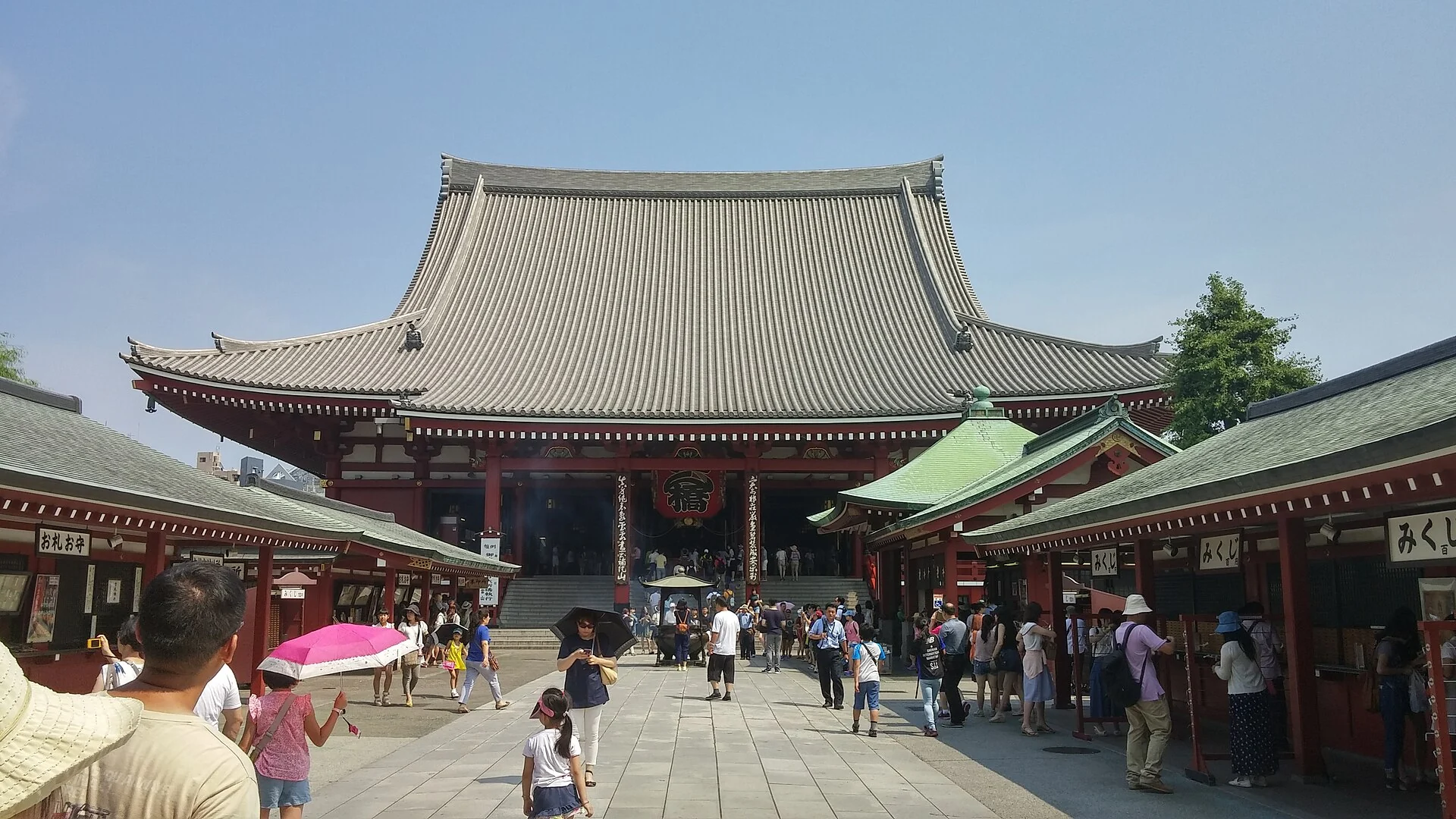
Front of the main hall, broad eaves and a crowd scattered before the steps
The broad eaves of the main hall
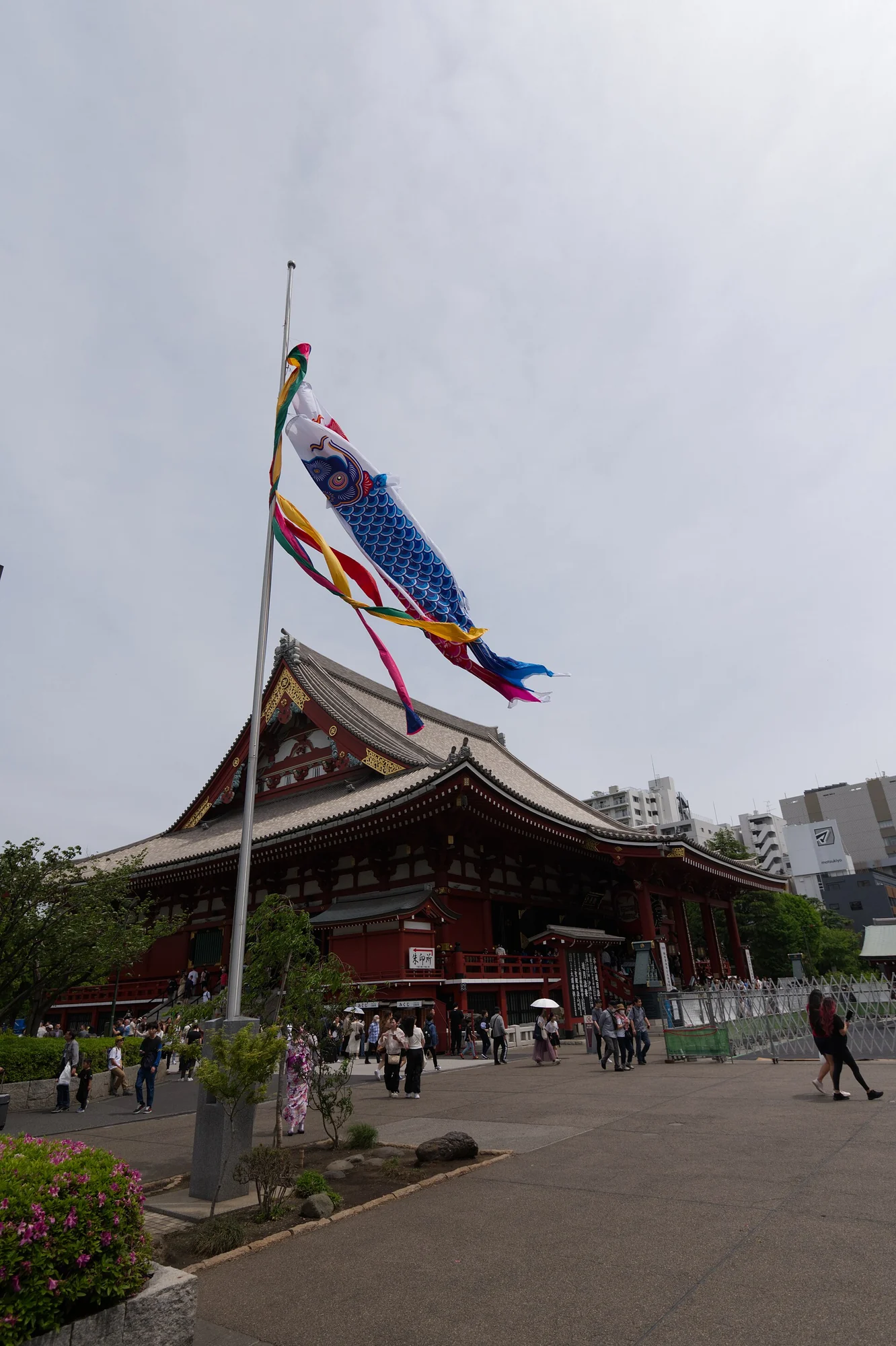
Vertical, a tall flagpole in the square, dark eaves and banners beside
The flagpole in the square
Pagoda and main hall side by side, the tower stepping up, people in the grounds

A statue pulled from the river

The temple's origin is recorded in the Asakusa-dera Engi: in the year of the Suiko era, the brothers Hinokuma Hamanari and Takenari, fishing in the Sumida River, hauled up a Kannon statue in their net, and worship began. The enshrined deity is Kannon, the Bodhisattva of Compassion; the formal name is Kinryuzan Senso-ji, with Asakusa Kannon the common name.

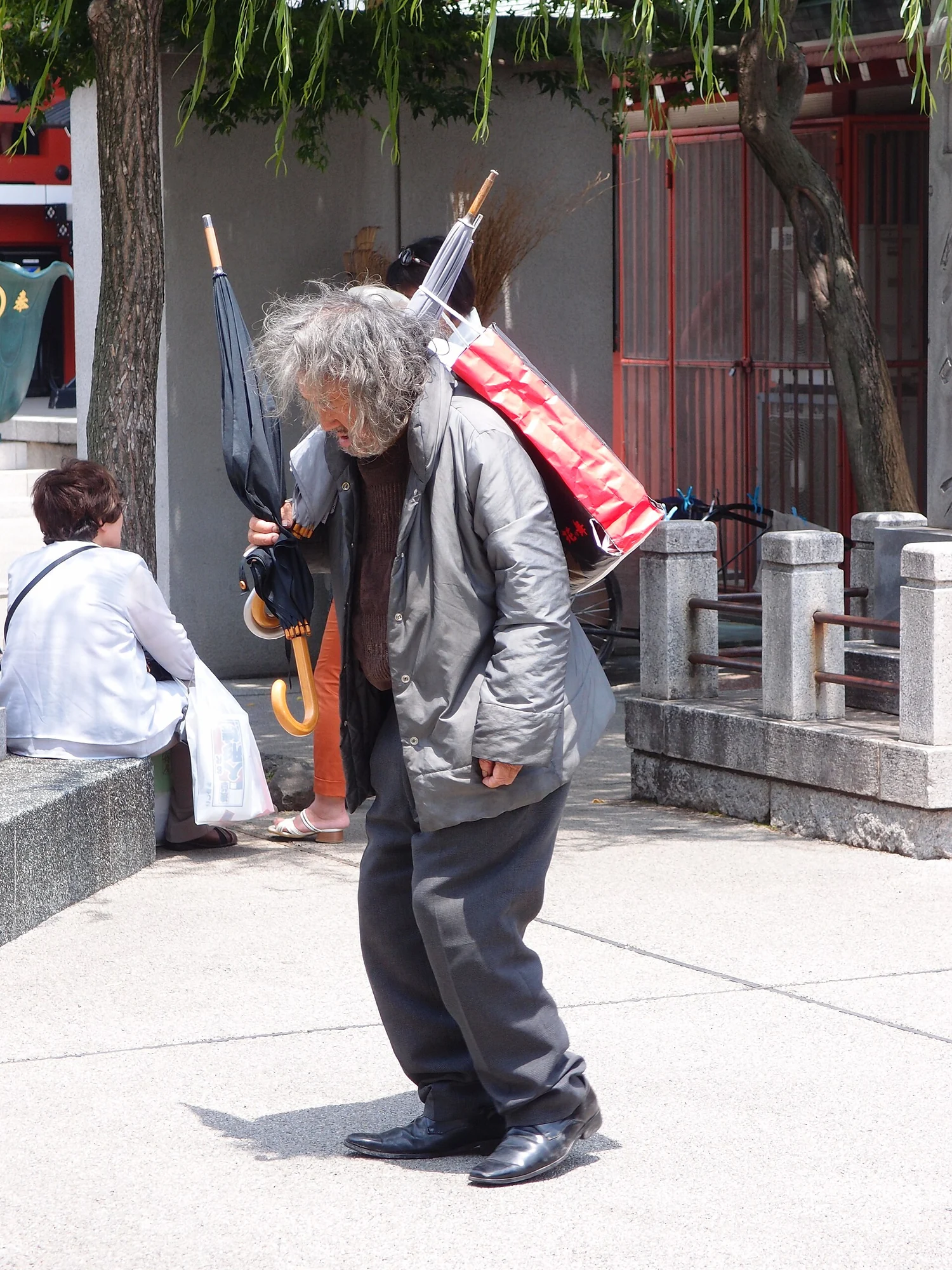
Vertical, an old man carrying a long red-wrapped pole past the gate

A street leading to the main hall

Beyond Kaminarimon is Nakamise-dori, lined with shops selling traditional goods, leading to the grounds. Besides the main hall, the complex holds a five-story pagoda and several gates; to the east stands a separate Asakusa Shrine of Shinto, standing beside the Buddhist temple. Several things crowd one district, and a few steps change the provenance.

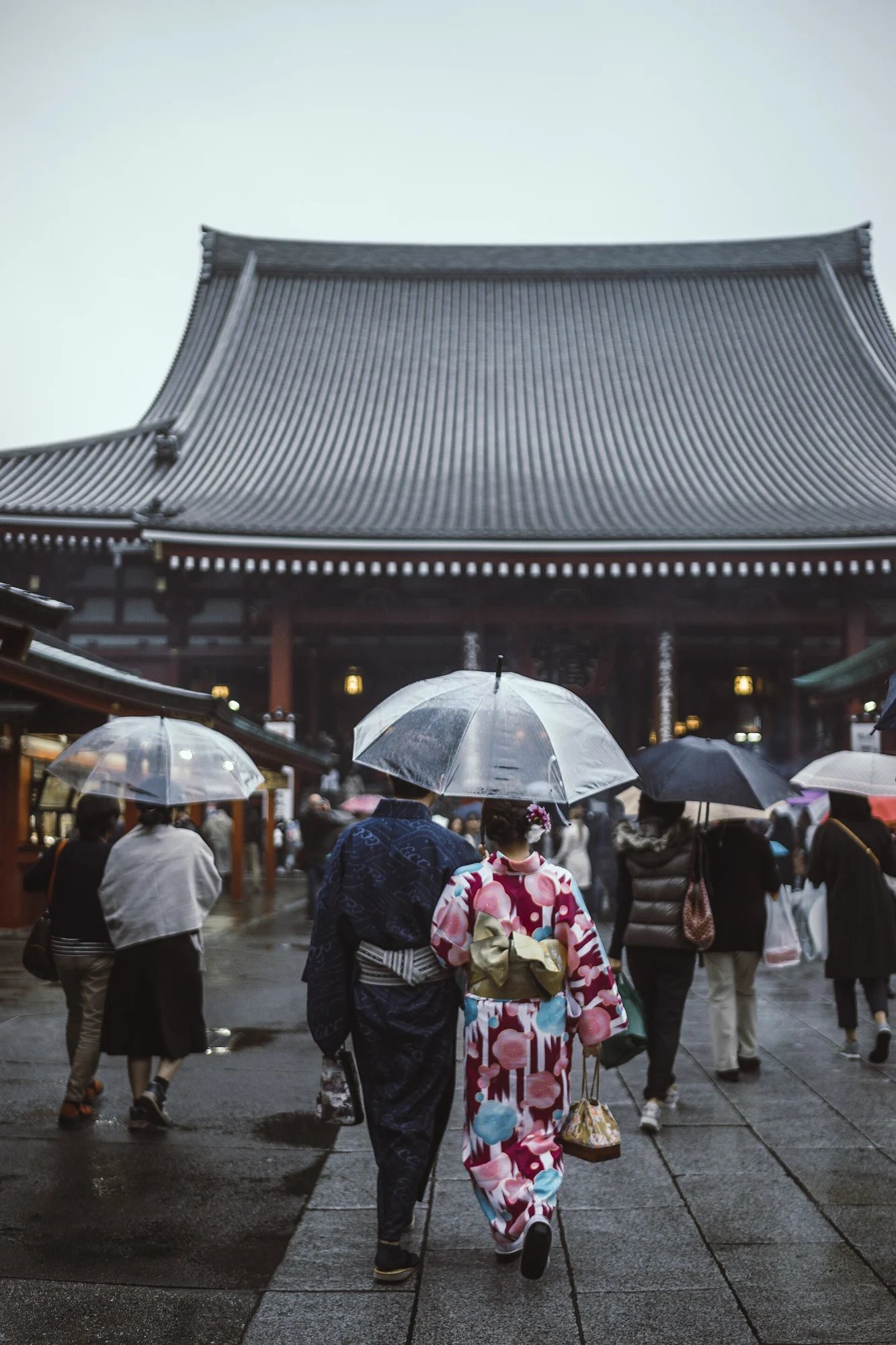
Vertical, rainy day in the grounds, a few umbrella-clad kimono figures with backs to camera

Rebuilt after the fire

In the mid-9th century, Ennin made a front-standing Kannon for worship, leaving the original secret image behind. In 942, a Taira official appointed as Musashi governor restored the seven-hall garan, and Kaminarimon and Nionmon were raised in that round.

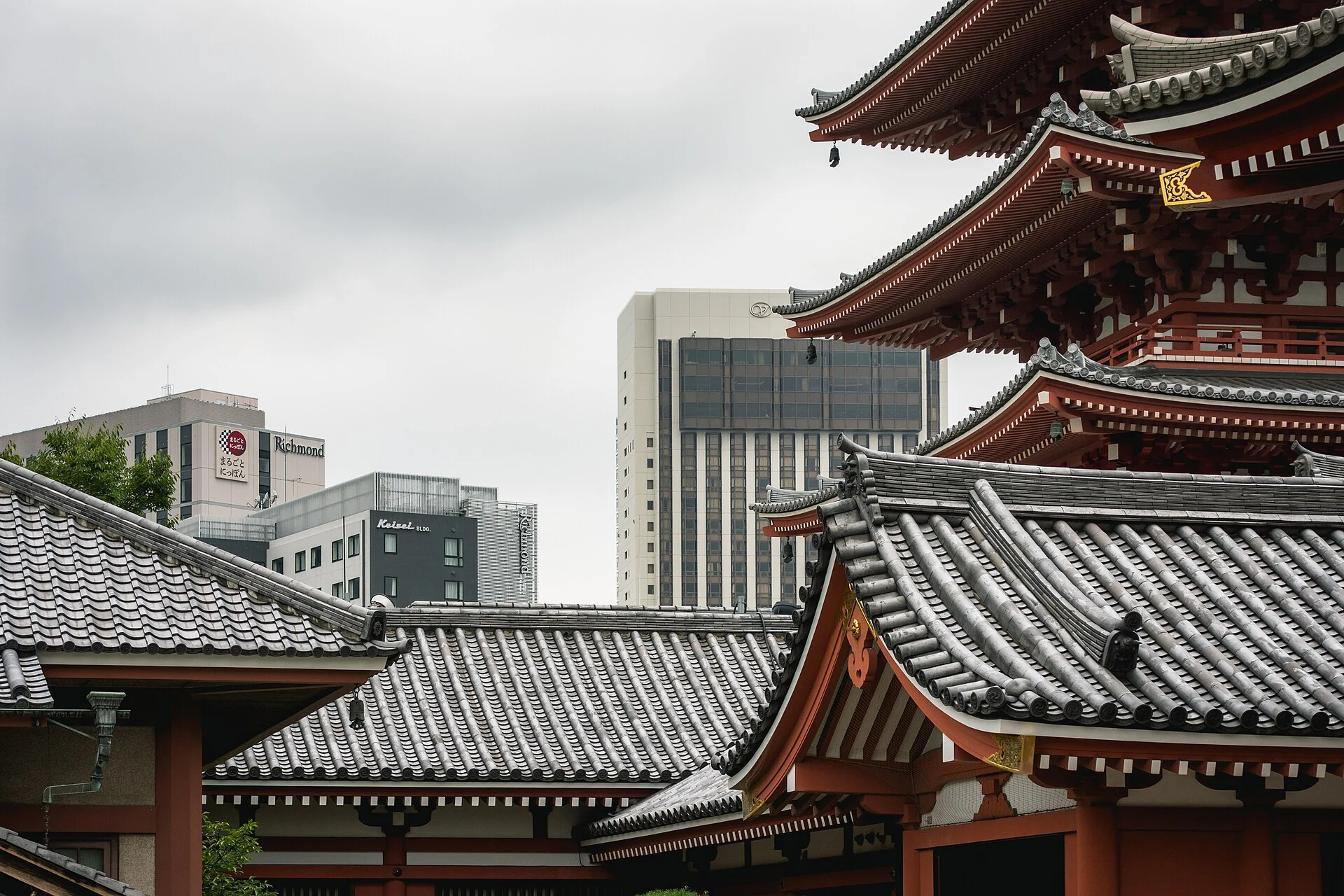
Close view of layered eaves, a modern high-rise behind the grey tiles
Route

A morning in Asakusa

Don't slot it on a travel day. Early morning is quiet; walk the grounds first, then return to the approach at midday when the shops are all open.

From river to gate

In 1590, Tokugawa Ieyasu designated this as the shogunate's prayer temple and granted 500 koku of temple lands. With that tie, the temple in Edo was more than a roadside shrine. Today it's wrapped in dense blocks; a few steps from the gate meet streetcars and shops. Other famous temples lean on mountains; this one leans on a street.

Mid-Edo, the temple's west rear garden became a place for commoners' entertainments, and around 1843 three Edo theatres moved into Asakusa. The bustle is not recent; incense and trade grew on the same ground long ago.

After the Tokugawa, the wooden structures burned several times, in 1631 and 1642; under the third shogun Iemitsu the five-story pagoda was rebuilt in 1648 and the main hall a year later. The neat ridgelines mostly date from that round.

The shape left after the fire

On 10 March 1945 Tokyo was air-raided and the temple destroyed by fire. Today's main hall and pagoda were rebuilt after the war, with fresh wood and even ridgelines, yet in photos still look old. Knowing this makes the beams under the eaves more interesting.

Not everything in the grounds is Buddhist. To the east stands a separate Shinto shrine with its own torii and hall; one side incense and Kannon, the other Shinto rites, a few steps apart. This juxtaposition is common in Tokyo's old districts.

The five-story pagoda stands at the side of the grounds, stepping upward, the most recognizable outline besides the main hall. It does not sit at the same height as Kaminarimon and the main hall; walking half a circle of the grounds reveals their front-back relationship.

Along the approach

The great lantern at Kaminarimon is the start of the line. The gate is wide; passing through, two rows of shops narrow the path, selling traditional goods and sweets; at the end, the main hall suddenly appears in the open courtyard.

Entering, don't rush to queue. The incense burner draws crowds; step left and the pagoda stands behind the eaves; walk east a few steps to the Asakusa Shrine entrance. On rainy days umbrellas crowd umbrellas, the stone reflects light, the eaves press lower.

The return follows the same street, reversed, the shop signs on the other face. Looking back from Kaminarimon, the lantern, shops and hall realign into one line; the separate buildings you studied now recombine into one place.
A morning for Asakusa

First read the axis outside Kaminarimon, walk the approach to the hall, circle to the pagoda and eastern shrine, then return the same way.

Time needed

A morning from Kaminarimon to the hall, around the pagoda and back; allow extra time for Asakusa sights.

Opening

Which halls and towers are open and how the grounds flow during festivals changes by period; the approach jams during big matsuri.

Access

The approach is flat but crowded; some grounds steps. Strollers and slow movers avoid midday and festivals.

Best light

Summer midday glare on stone is hard; rainy-day umbrellas and wood in thin cloud are easier on the eye.

Talk through my trip idea

If you're planning those days in Tokyo, tell me whether you'll keep a morning or a half day, and whether anyone dislikes crowds or moves slowly.

[email protected]

Read this page in Chinese

Discuss this journey