A train with a raised glass dome car at the head of the consist, running on a single track with mountains behind

Canadian Rockies and the US Southwest

Rocky MountaineerNo sleeper on board; the glass roof does the work

Rocky Mountaineer runs sightseeing trains by day only. In Canada the routes link Vancouver with Banff, Lake Louise and Jasper; in the United States, Denver with Moab. You watch gorges, rivers and passes through large windows, then leave the train each evening for a hotel, with no berth on board. GoldLeaf and SilverLeaf differ in how you sit and where you eat, so the two are worth comparing before you pick a route.

The Canadian lines connect Vancouver with Banff, Lake Louise and Jasper. The American line runs between Denver and Moab. Both are built around hotels at either end, and neither has overnight accommodation on the train.

PlaceCanada and US Southwest
TypeDaylight train
SuitsRockies without driving
Stay2–3 days, 6–9 nights

The valleys pass in daylight; the bed stays on land

Canadian Rockies and the US Southwest — Daylight sightseeing train.

Long-distance movement happens in daylight here. Canyons, rivers and mountain passes come past the window while staff talk about the railway's history and the country it crosses. Nobody in the party has to drive that stretch, watch the road and miss the view. That is the trade.

There are no sleepers. Each evening the train stops and you go to a hotel, then pick up again the next morning. It suits people who want the scenery by day and a real bed, a bath and a quiet room at night rather than a berth.

It fits an interest in the Rockies, photography, and relaxed viewing without long drives. Bags move to the hotel each night on your behalf, and wildfires, rail dispatch and weather can change how a day runs, so build slack into both ends. Neither end should be rushed.
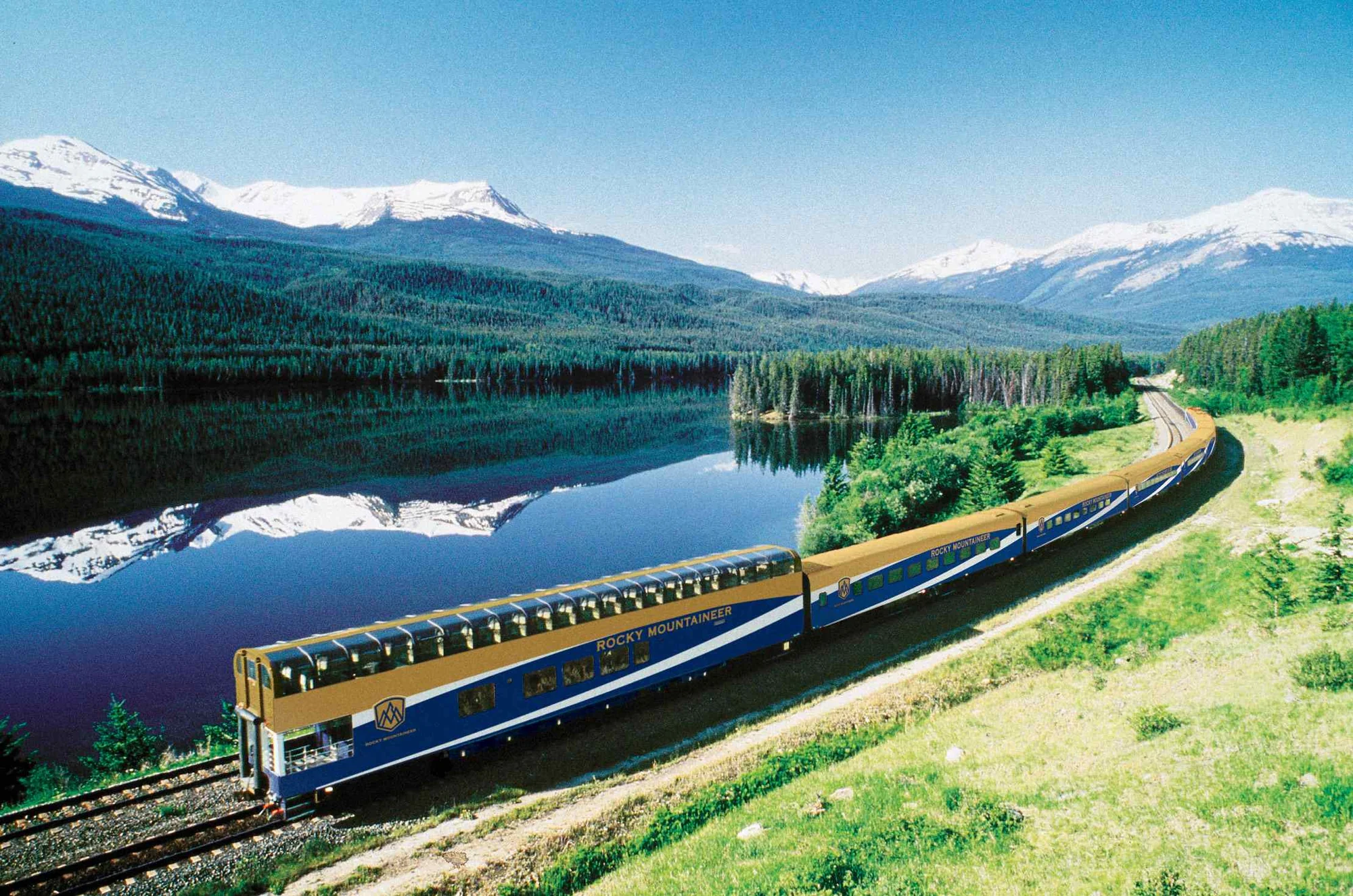
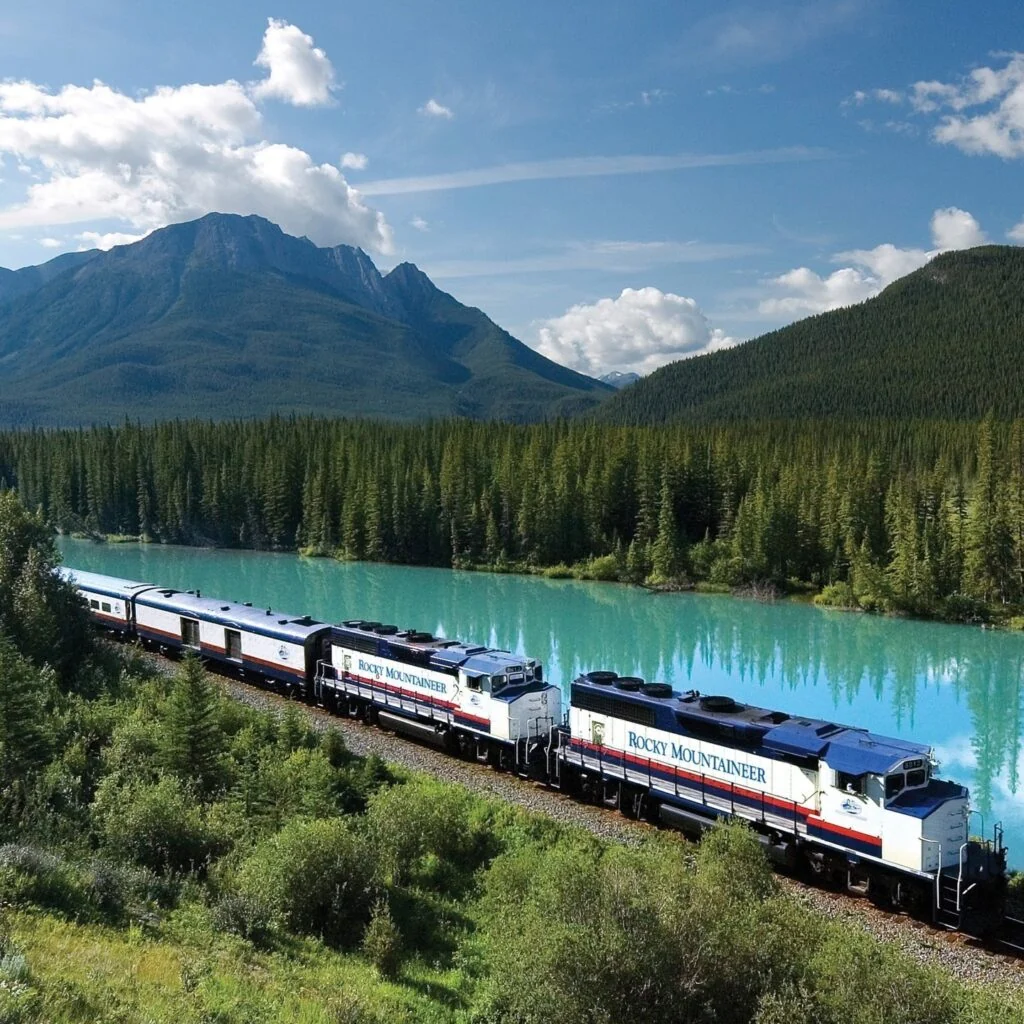
A blue and gold train curving along a lakeshore, dense conifer forest on one side and still water on the other
The train running beside a lake and forest
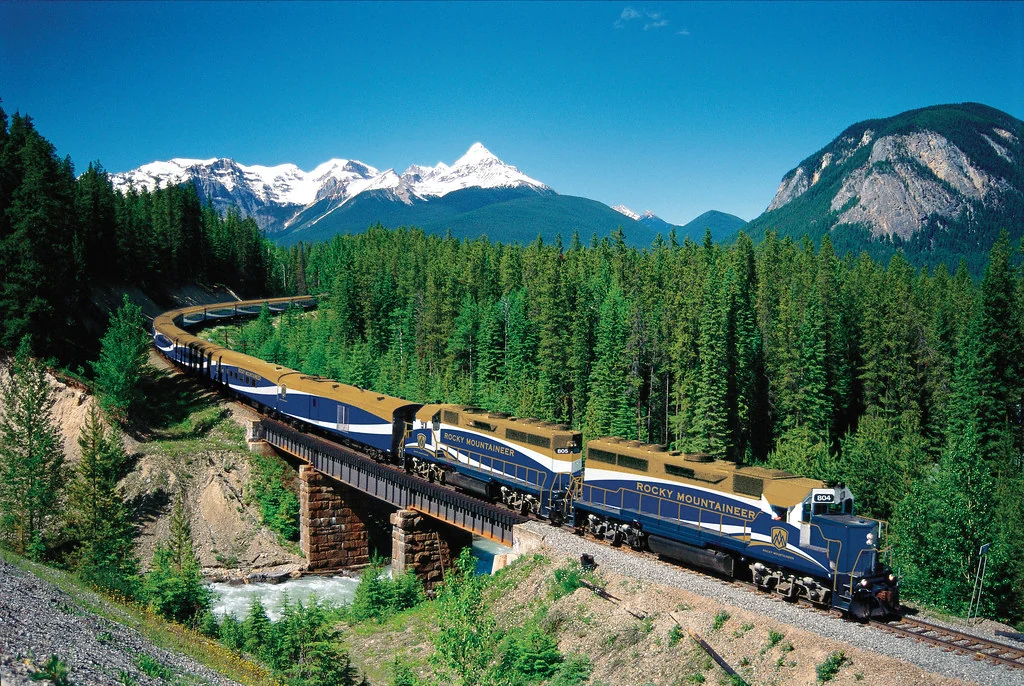
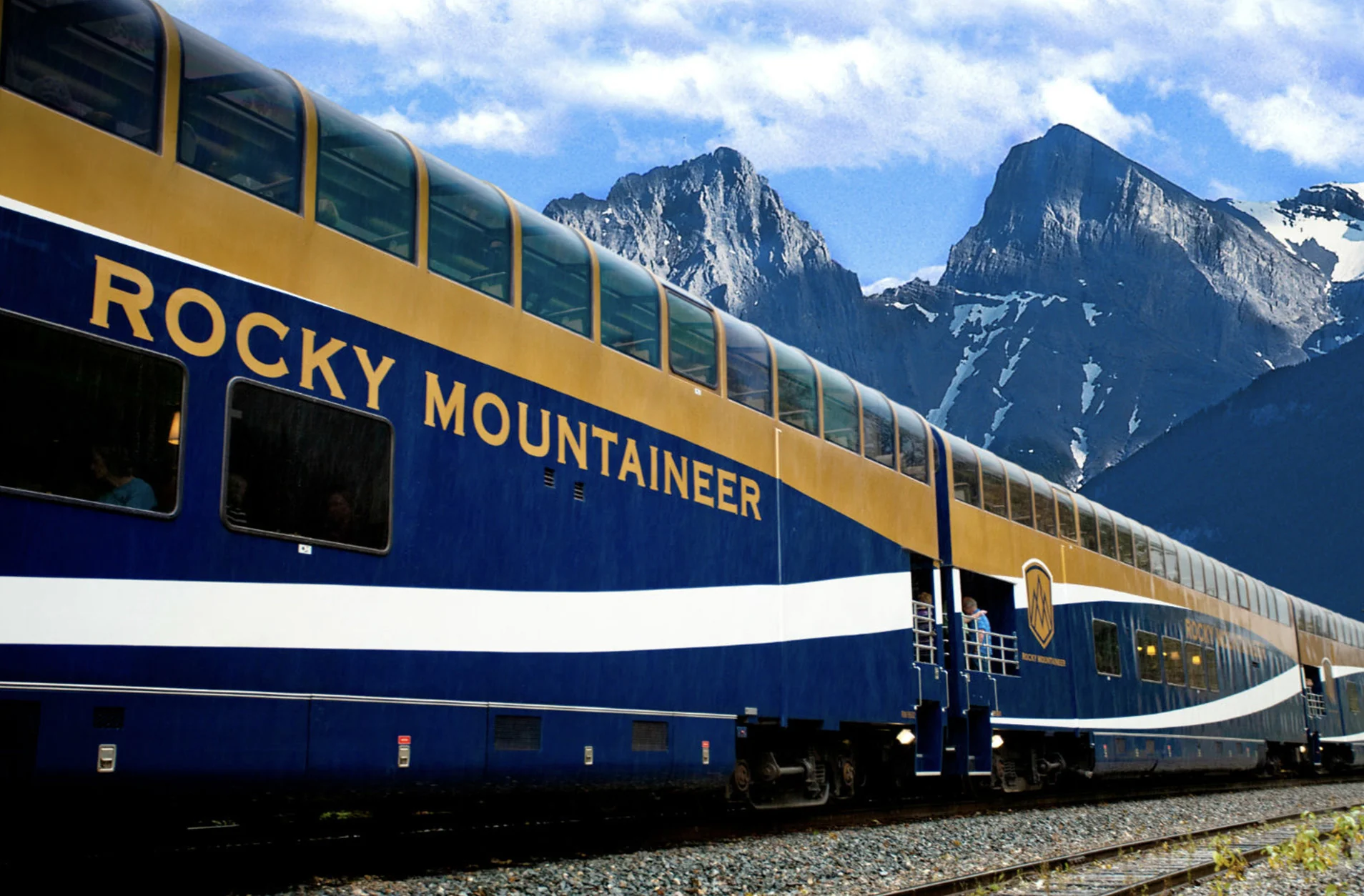
A sightseeing train stopped on the track with a wall of snow-streaked peaks filling the background above the roofline
The train halted below the high peaks
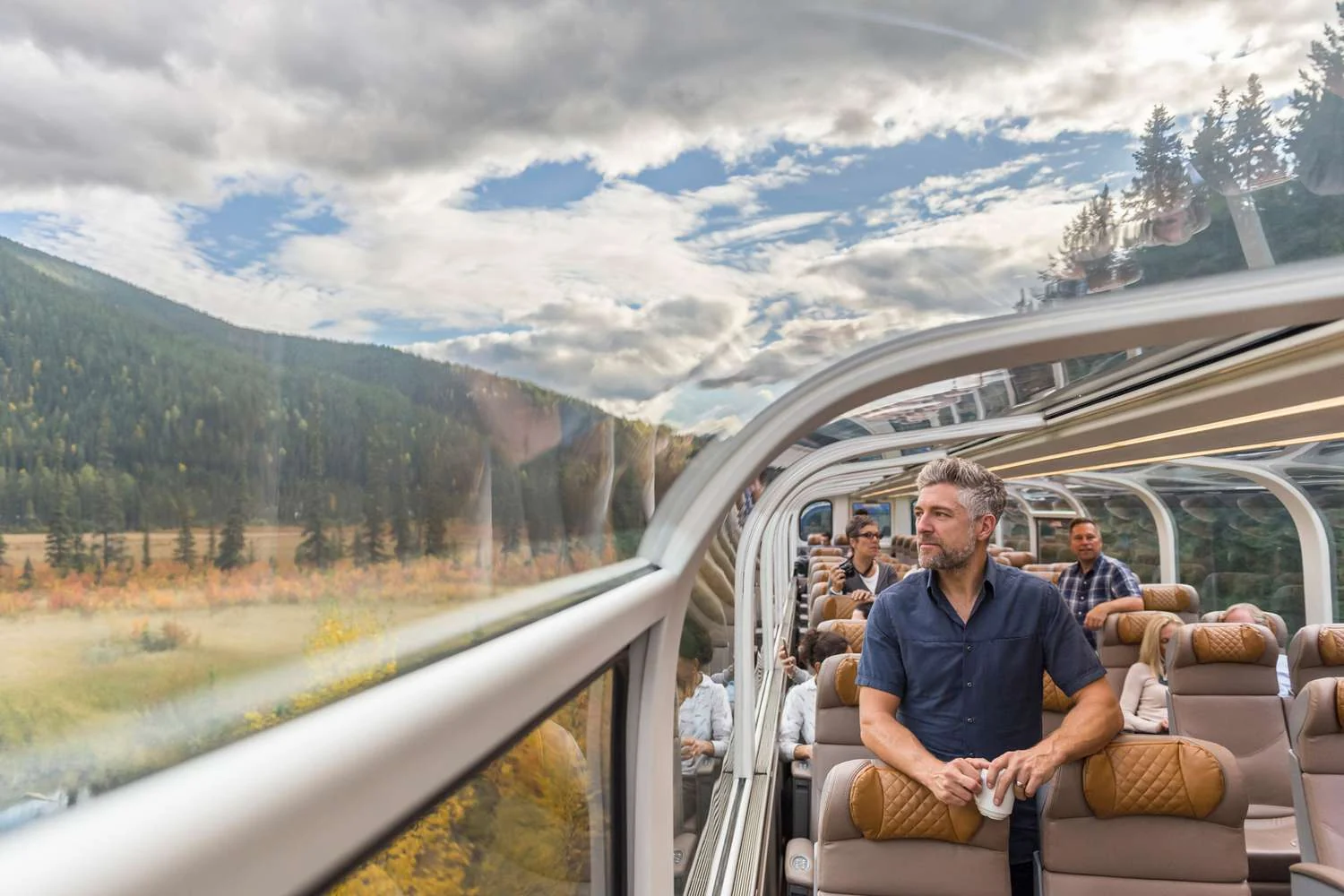
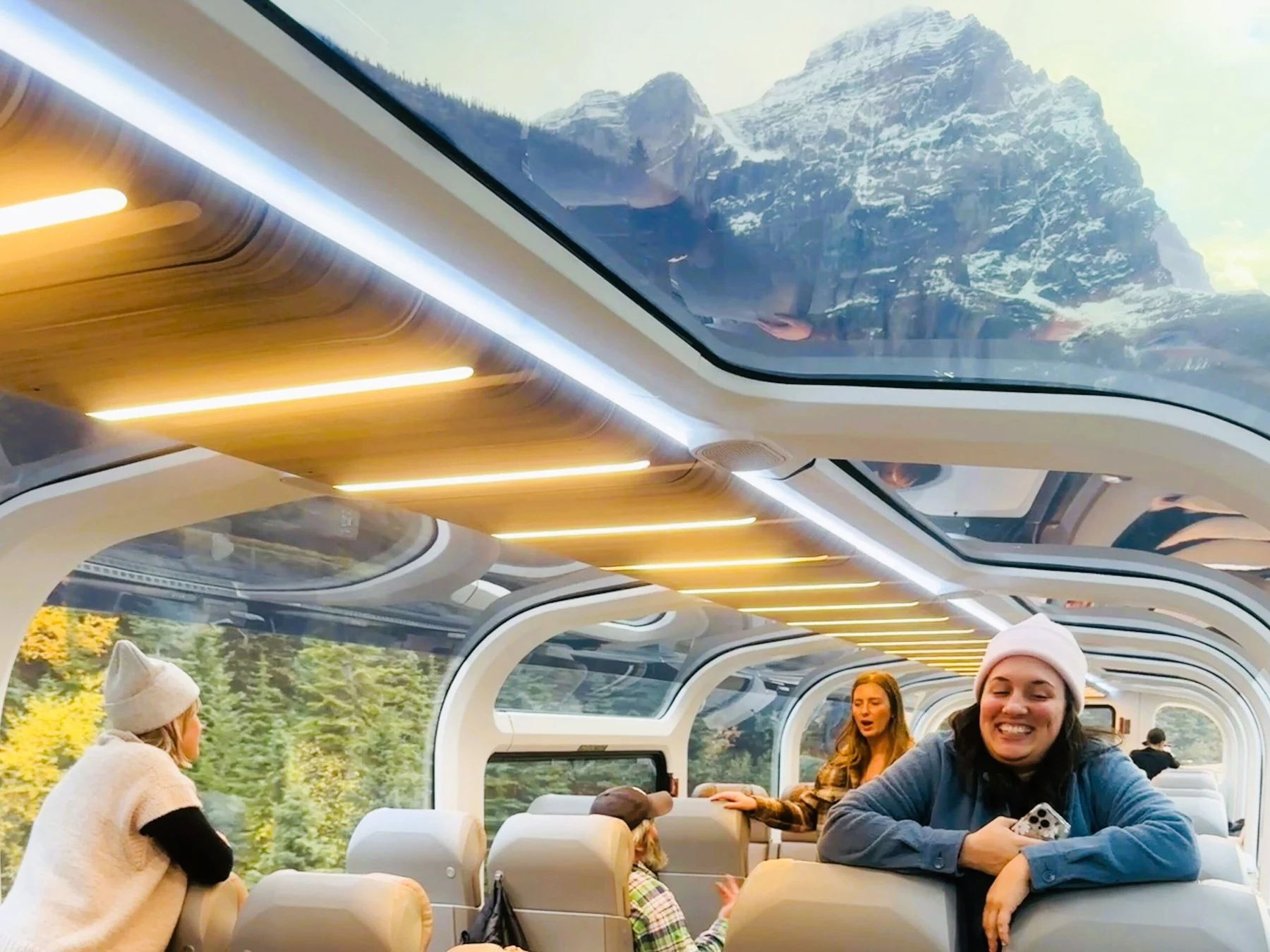
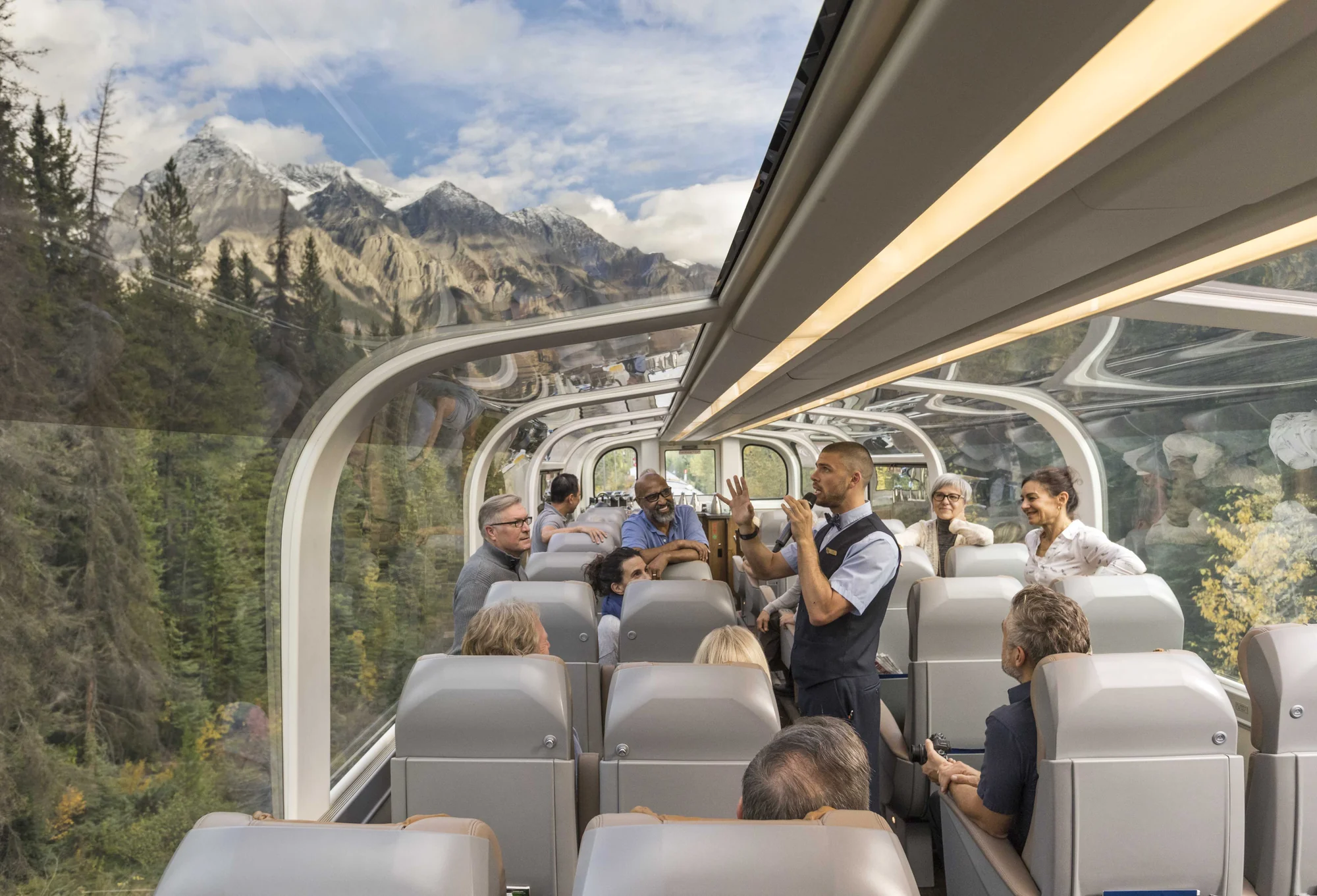
Passengers in the upper dome looking out at snow-covered mountains, their reflections faint in the curved glass

Under the glass dome

The dome and the oversized windows keep peaks, river valleys and bridges in the frame. Because the train only runs in daylight, the best hours of light are the hours you are moving. On GoldLeaf cars the roof sits two levels up, with dining in a separate space.

A train crossing a wooden trestle bridge above a forest of tall conifers, a river visible far below the span

A hotel bed every night

There is no berth on this train. It stops each day, you check into the night's hotel, and your luggage is moved separately. Beds and bathrooms happen on land, which matters over several days and to anyone who sleeps badly on trains. It is a simple arrangement, and it works.

Red and blue carriages running close to a bright green lake, low hills and cloud on the far shore

Joining the national parks

A night at either end of the rail segment is enough to attach Banff or Jasper, and the park days around them, to the same trip. The train becomes the spine of a western Canada route rather than a standalone outing. Allow extra nights for the parks.

Passengers seated in facing pairs under a glass roof, heads turned toward the windows on both sides
Route

A rail spine for a western Canada trip

The core rail segment runs two to three days, and it works as the spine of an eight to twelve night western Canada itinerary. Put Vancouver and the Banff park days at the ends, so the train sits inside the trip. The American line links Denver with the Utah parks instead.

Two or three rail days inside a longer loop

The train covers the middle. The nights at either end, and the park days around them, decide the length of the trip.

Stay

The core rail segment usually takes two to three days. With hotels and park days, plan six to nine nights for the whole thing.

Getting there

You gather at a named downtown hotel or station, and both ends of the line usually need a night. Do not schedule an international flight for the day the train arrives.

Season

The Canadian routes run mainly from spring to autumn, and the US Southwest line also opens by season. Check your dates against the route, not just the month.

Watch out

There are no sleepers, and luggage is transferred to a hotel every night. Wildfires, rail dispatch and weather can all affect how a day runs.

Plan this into a journey

The train fixes two or three days in the middle. The hotels at each end and the park days around them are what give the trip its length.

[email protected]

Read this page in Chinese

Discuss this journey