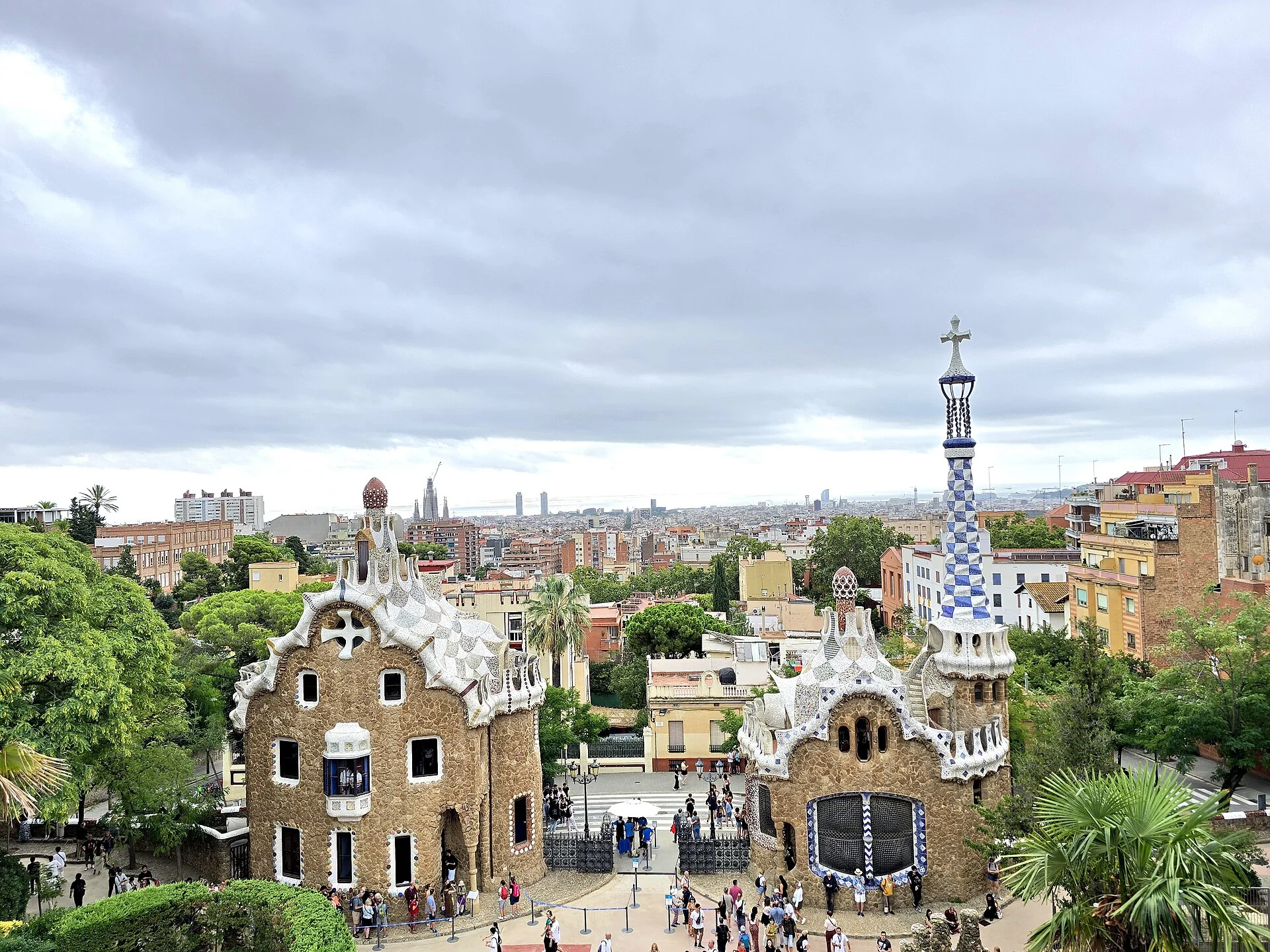
Two candy-coloured gatehouses at the entrance with undulating roofs, Barcelona beyond

Barcelona, Spain

Park GüellTwo cottages guard the entrance

At the entrance two candy-coloured cottages tilt their eaves, their walls inlaid with broken tile; above is a flight of steps that suddenly opens out, with the city in view.

Up from the Gràcia district, on the south slope of Carmel Hill, the hillside facing the city.

PlaceBarcelona, Spain
TypeHillside garden
SuitsThose interested in how planting and terrain meet, happy to climb a slope slowly

The terrace at the top of the steps

Barcelona, Spain — Hillside garden.

Enter and first see how the two gatehouses press their roofs askew, then look up to find where the steps end.

This place was meant to be a housing estate; the paths and terraces were all laid out for that original plan.

From the hilltop you can see the city, and the path up is itself part of the design.

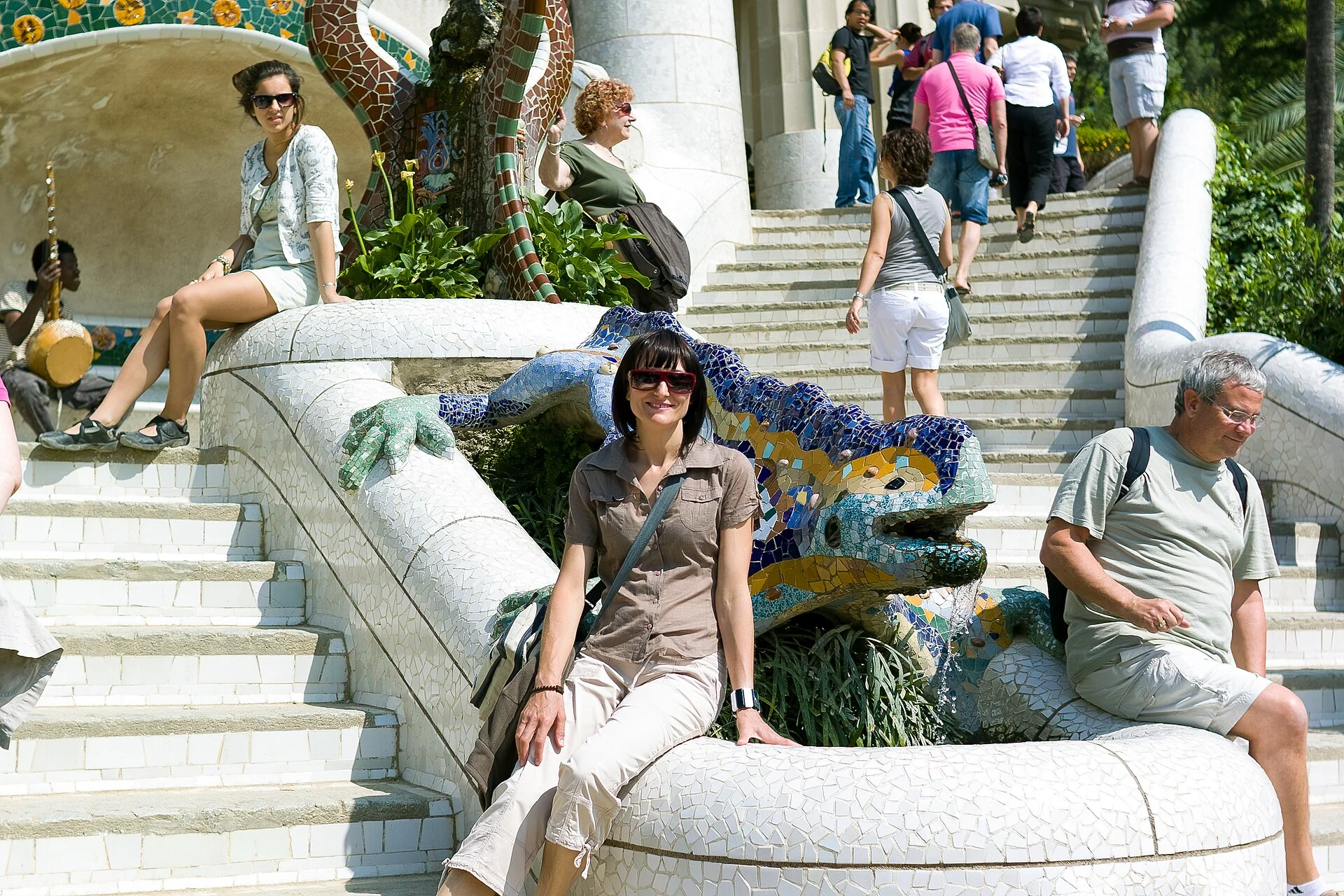
Mosaic lizard fountain on the steps, visitors sitting by the curved low wall
The lizard midway on the steps
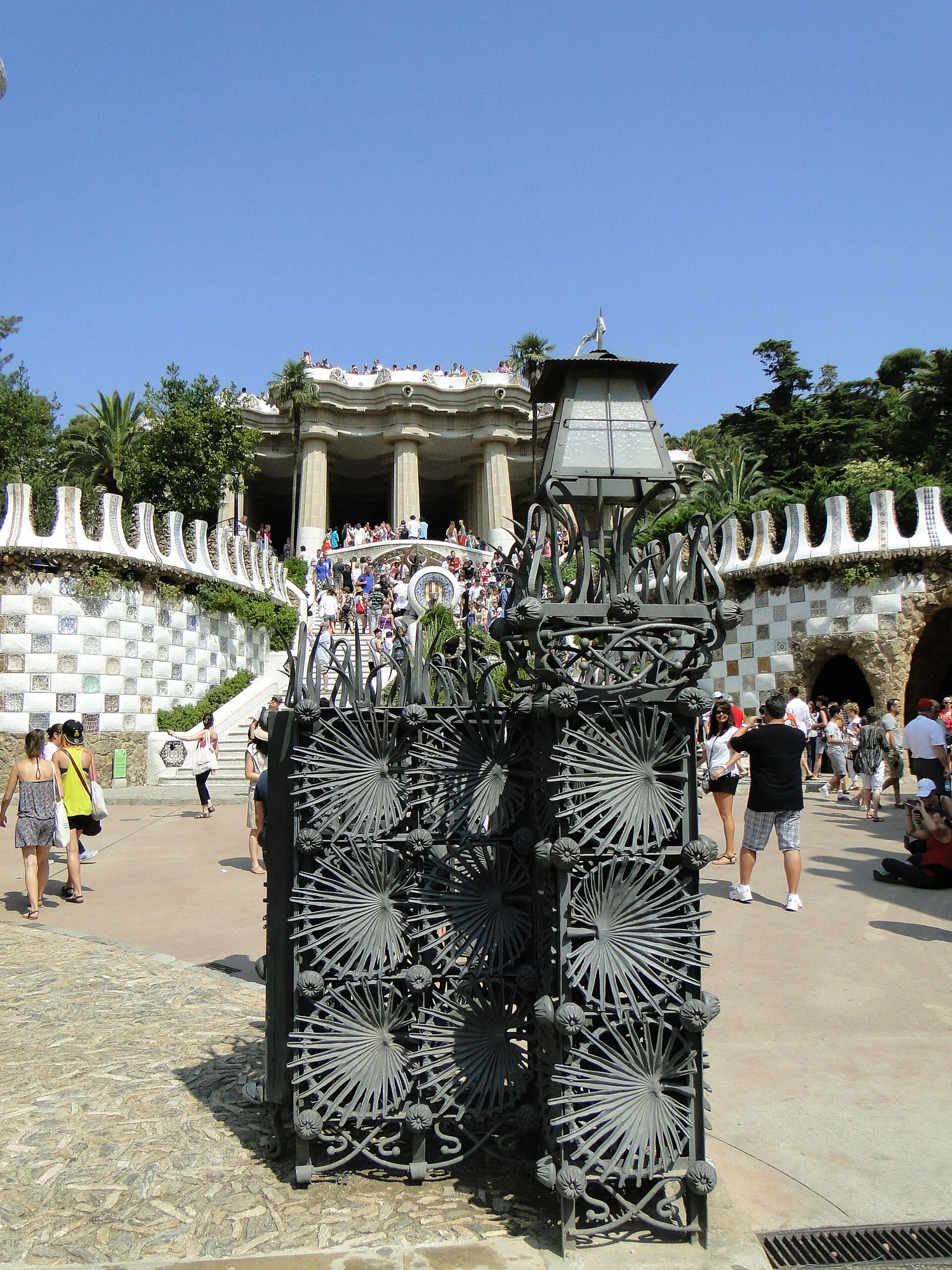
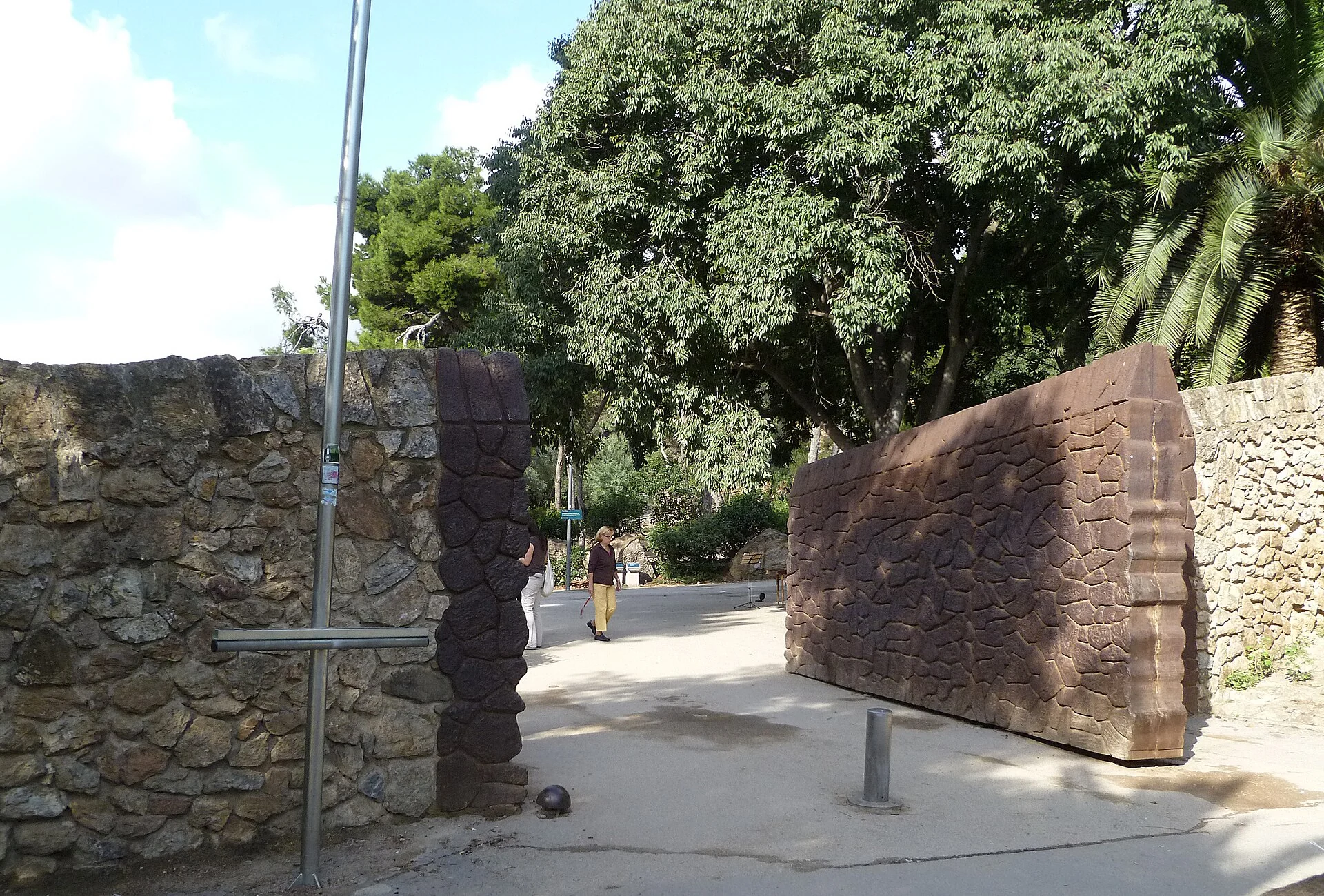
Black wrought-iron gate with a row of rough stone colonnade behind
The colonnade behind the iron gate
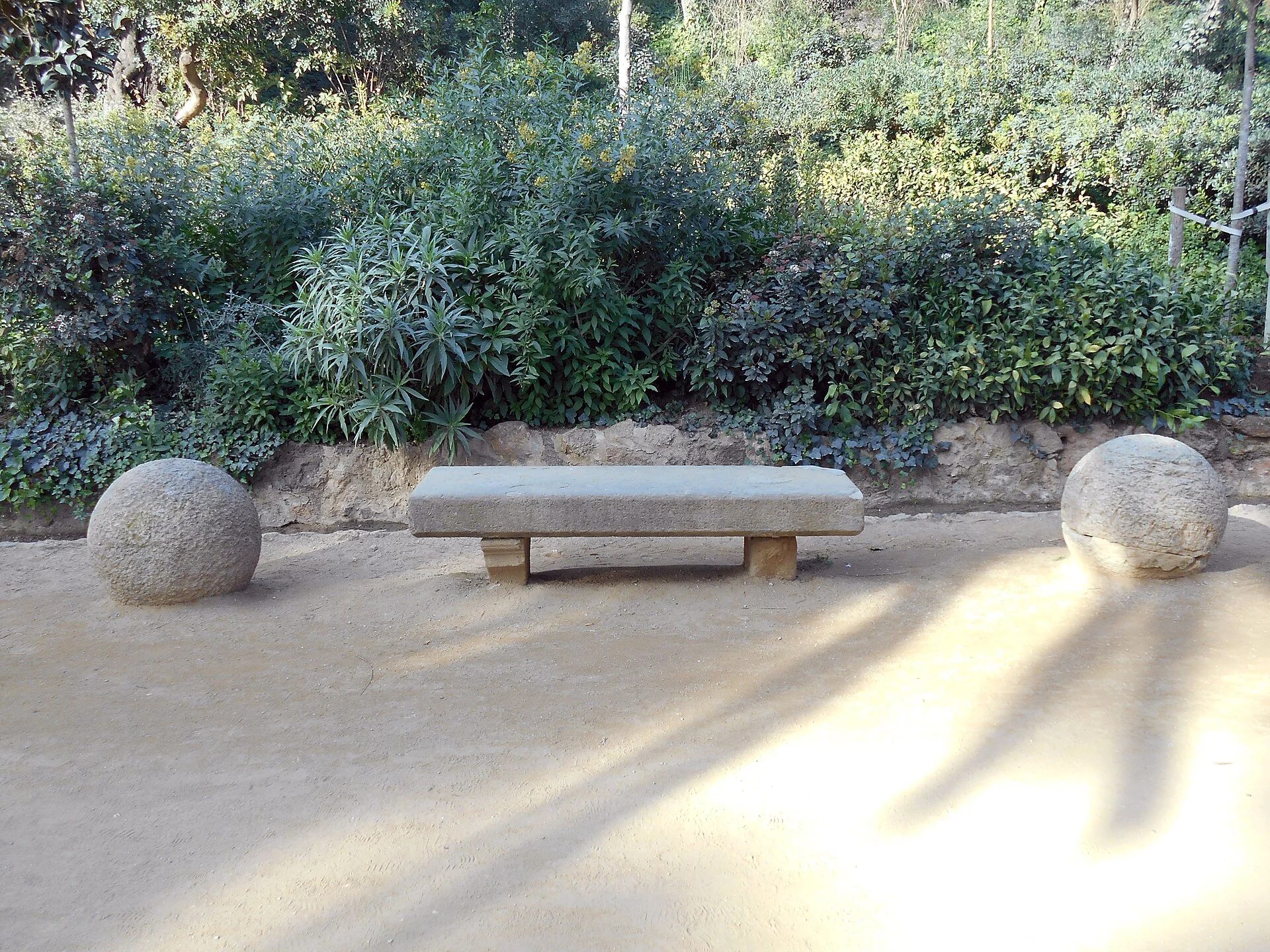
Pale stone bench against shrubs, long shadows on the ground

The bench that curves into one long line

The row of seats at the edge of the upper terrace has not a straight section; it follows the curve of the terrace, faced with broken tile, colour running piece to piece. Sit and you find the backrest angle changing too, the body gently held. This approach was pushed further in the Sagrada Família; here it is its earlier form.

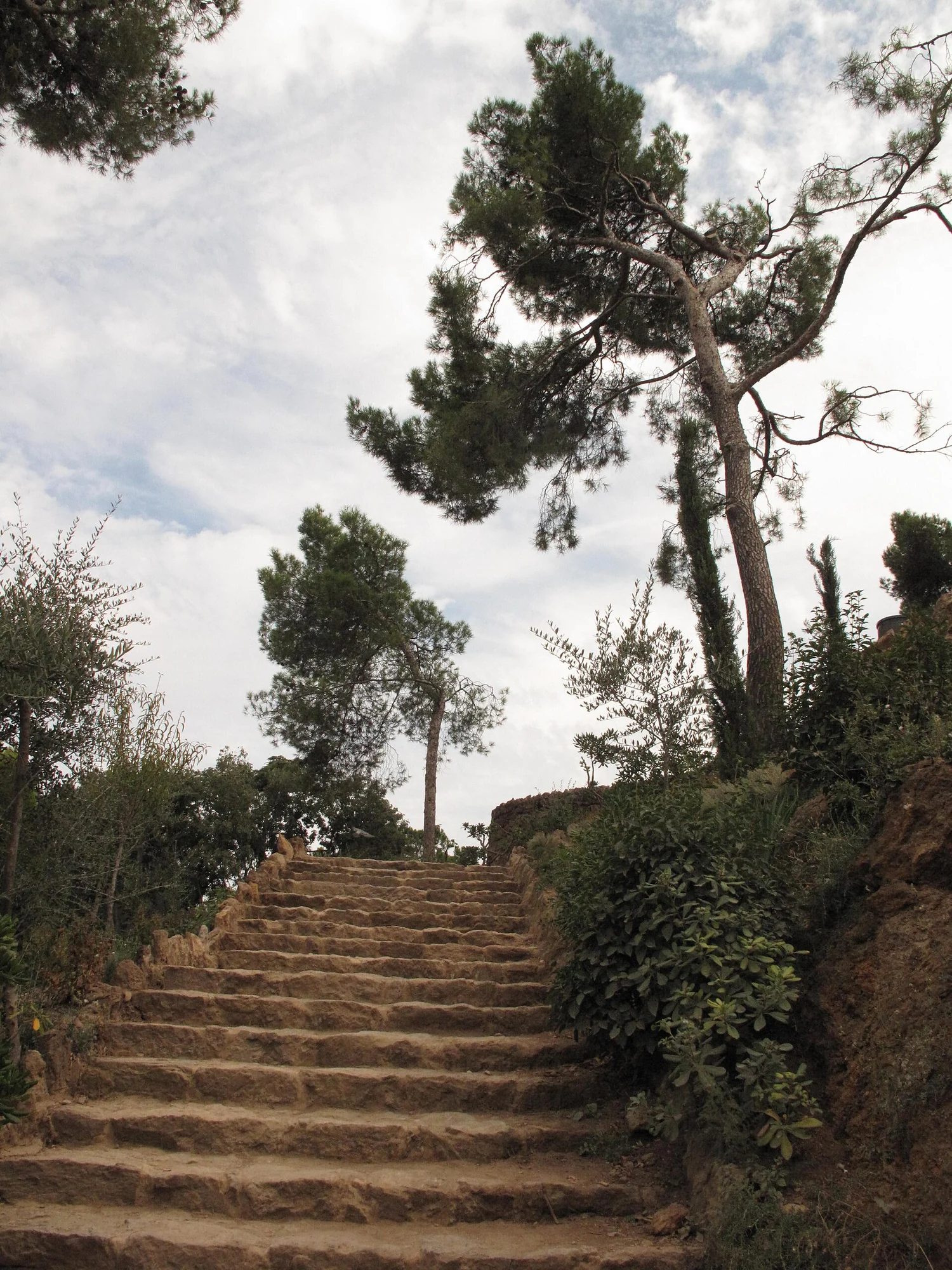
Stone steps bending up the slope, pines and shrubs pressing the walls

The two cottages with crooked roofs

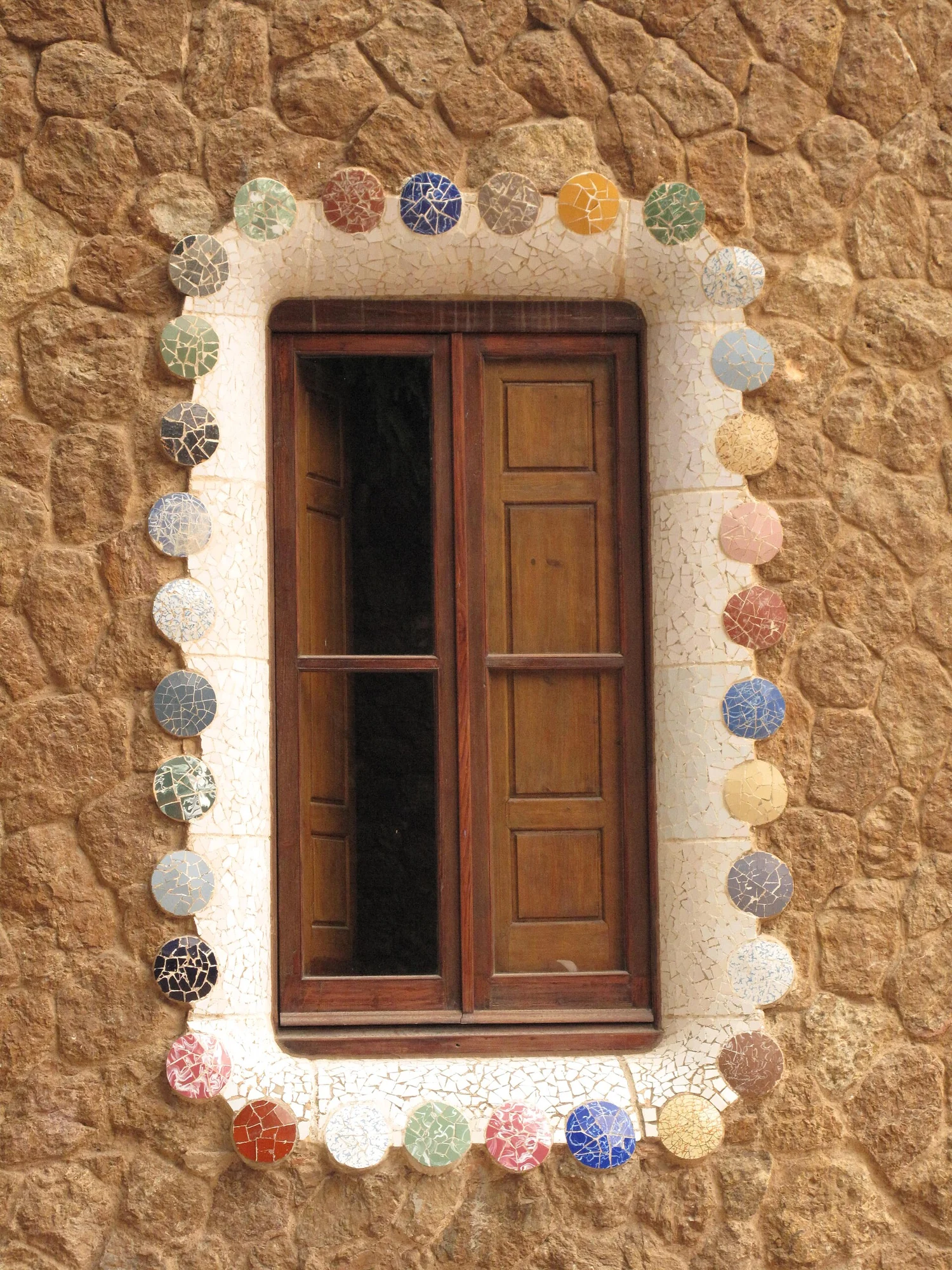
The two gatehouses left and right of the entrance press their roofs very low, the outline undulating and leaning to one side, the walls inlaid with coloured tile. The window frames are ringed by irregular ceramic plates, as if outlining the opening. Small in scale, they set the tone of the whole entrance.

A small wooden-framed window in a rough stone wall, rimmed with colourful ceramic plates

The steps and two stone walls

The uphill stair bends several times, with rough stone retaining walls on both sides, shrubs and pines growing from the joints. Midway stands the famous mosaic lizard, water running from its mouth into the pool below. Climbing, the city is always behind you; only turning round do you see it.

A garden path against a rough stone wall, grass slope and tree shadow on the surface
Route

A morning on Carmel Hill's south slope

Don't put it on a day you're catching a train. Stay in the city the night before, climb the hill the next morning, and you'll still have energy for another part of the city in the afternoon.

A garden that didn't grow as planned

From the late nineteenth to early twentieth century, Barcelona was expanding beyond its walls. Industrialist Eusebi Güell asked Gaudí to make a garden on this city-facing slope — conceived as a luxury residential district with modern amenities, houses sold one by one, with shared steps, terraces and gardens for residents.

Work began in 1900 and ran to 1914; the residential half never spread as imagined, leaving mainly the public parts. In 1926 it officially opened to the public. In 1984 it was listed as a World Heritage Site as part of 'Works of Antoni Gaudí'. Walking the slope today, what you see is a plan only partly completed.

Other intentions were buried in the design. The entrance steps carry references to Catalonia, and the structure up the slope originally imagined as a small chapel carried a religious meaning. These meanings aren't written on the wall and need the panels to read; not reading them doesn't stop you finishing the circuit.

Methods thought up from the terrain

Gaudí was then exploring shapes in nature, trying to find load-bearing geometry in organic forms. The slope is uneven, so he let columns, retaining walls and terraces lean with the land rather than flatten the hill to build. The row of rough stone columns under the colonnade is set at an angle for this reason.

Materials were used as found. Local stone for walls, broken tile for surfaces, colours laid piece by piece without pursuit of neatness. The edge bench shows this best: the curve follows the terrace, the backrest angle changes with it, and the broken tile connects across the surface, uneven to the touch.

These curved benches are later seen as a prelude to the language of the Sagrada Família. Here they still carry a tentative feel — the shapes are let loose, yet the structure honestly holds the slope. When the sun slants, the shadow on the stone bench traces that curve again.
How to walk the climb

Go in between the two gatehouses and don't rush the steps. The undulating roofline, the tile inlaid in the walls, and the small wooden window rimmed with ceramic plates are things seen clearly only up close. Step back and you can gather them with the city behind into one frame.

The steps bend several times; the famous mosaic lizard midway draws the most people, water running from its mouth to the pool below, always a crowd beside it. The rough stone retaining walls on either side let pine branches press in, cutting the light into segments. Go slowly and you'll notice each landing at the end of a bend is a different width.

Reach the upper terrace and the bench curves along the edge, the city suddenly opening below. Find an empty stretch and sit a while — it's worth more than pushing higher. Descend by a different wall-hugging path back to the entrance; tree shadow on the surface shows you something else from the way up.

A morning for the south slope

Enter by the gatehouses in the morning, climb the steps bend by bend to the terrace, sit long enough on the bench, then descend by the wall-hugging path.

Time needed

A morning to cover the entrance, the steps and the upper terrace; allow extra time to continue along the ridge

Getting around

The grounds are mostly steps and ramps with clear changes in level; with children or slow walkers, shorten the route and rest once on the terrace. Check current notes for step-free access

Best light

Mediterranean sun is harsh; at noon the stone bench pales with short shadows. Morning or evening better shows the curve of the bench — check current conditions

What's open

Several terraces on the slope close in rotation for upkeep; confirm how far you can walk in the current period

Talk through my trip idea

If you're planning your Barcelona days, tell me whether you mean to spend half a day or a full day, and whether anyone in your group walks slowly.

[email protected]

Read this page in Chinese

Discuss this journey