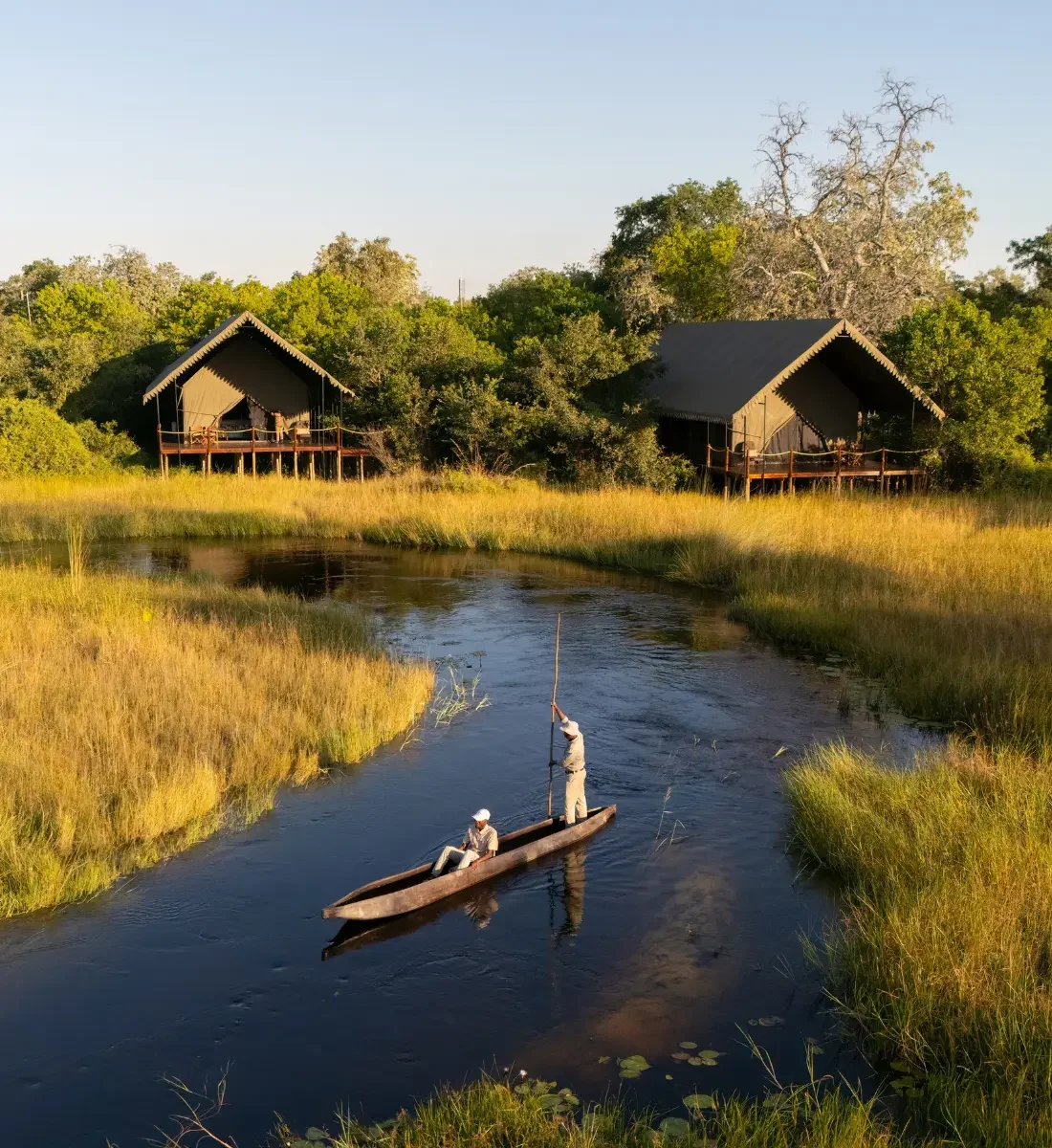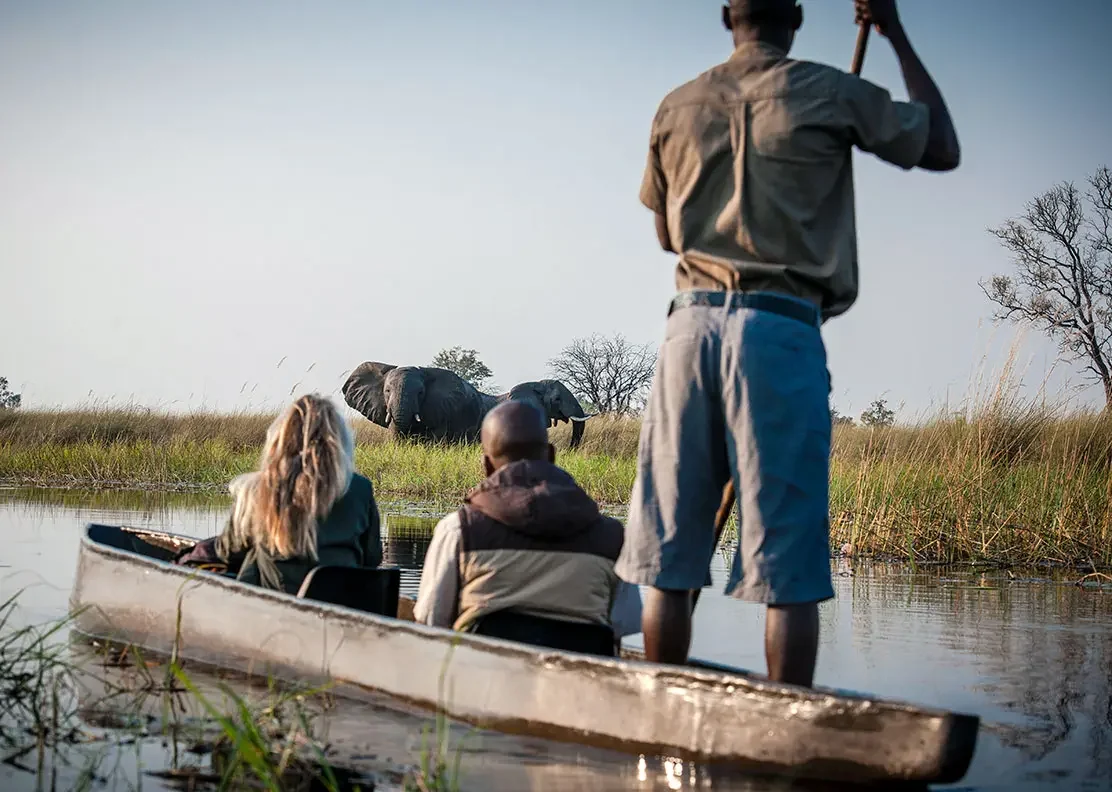
A poler standing at the stern of a mokoro with two passengers seated low, reeds and open water on both sides

Botswana, Namibia, South Africa

Natural SelectionFour landscapes, three or four small camps

The camps sit in the delta, on the salt pans, in the desert and on the coast. Where a camp stands changes the accommodation, the way you arrive and what you do all day, which is why one trip through several of them shows more of southern Africa than a week in one reserve ever could.

Small camps operate in Botswana, Namibia and South Africa, covering the Okavango, the Makgadikgadi, the Skeleton Coast and desert reserves. Access is by light aircraft or four-wheel drive from the gateway cities.

PlaceBotswana, Namibia, coast
TypeSmall safari camps
SuitsWildlife and conservation
Stay9-14 nights

From Okavango channels to coastal dunes

Botswana, Namibia, South Africa — Small conservation-led camps.

The camps run in Botswana, Namibia and South Africa. When choosing a set of them, the first question is what environment each one sits in, not how the rooms are decorated. Four camps in four landscapes is a different trip from four camps in similar bush, even at the same level of comfort.

Water activities, salt pan observation and coastal exploration each keep their own seasonal conditions. Working within one network makes combining them easier, but every camp still needs its own look: how you get in, what the days contain, and whether that suits the month you are travelling.

It suits travellers who want to see several southern African ecologies rather than one, and who care about small camps and conservation practice. It is less about a single lodge with a long list of amenities and more about what each location can show you.
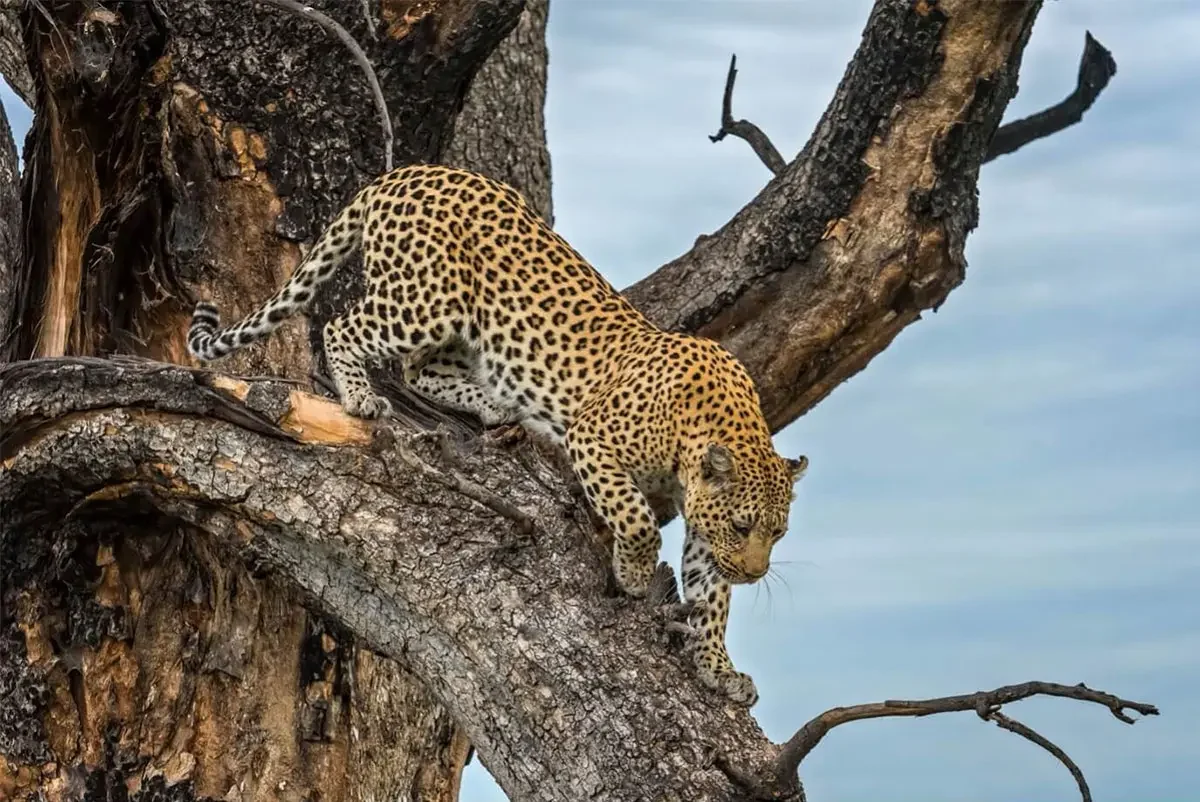
A leopard stretched along a pale branch in warm light, tail hanging, leaves around it
A leopard resting along a high branch
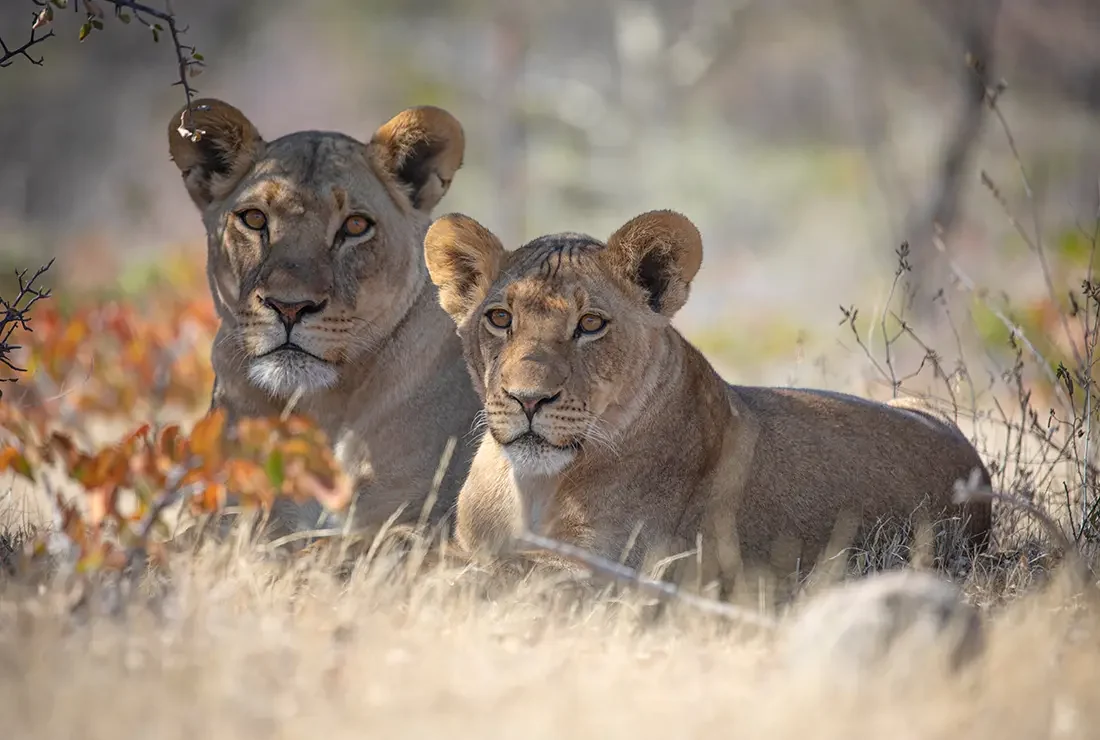
Two lionesses standing side by side in dry golden grass, heads turned toward the left
Two lionesses standing in tall grass
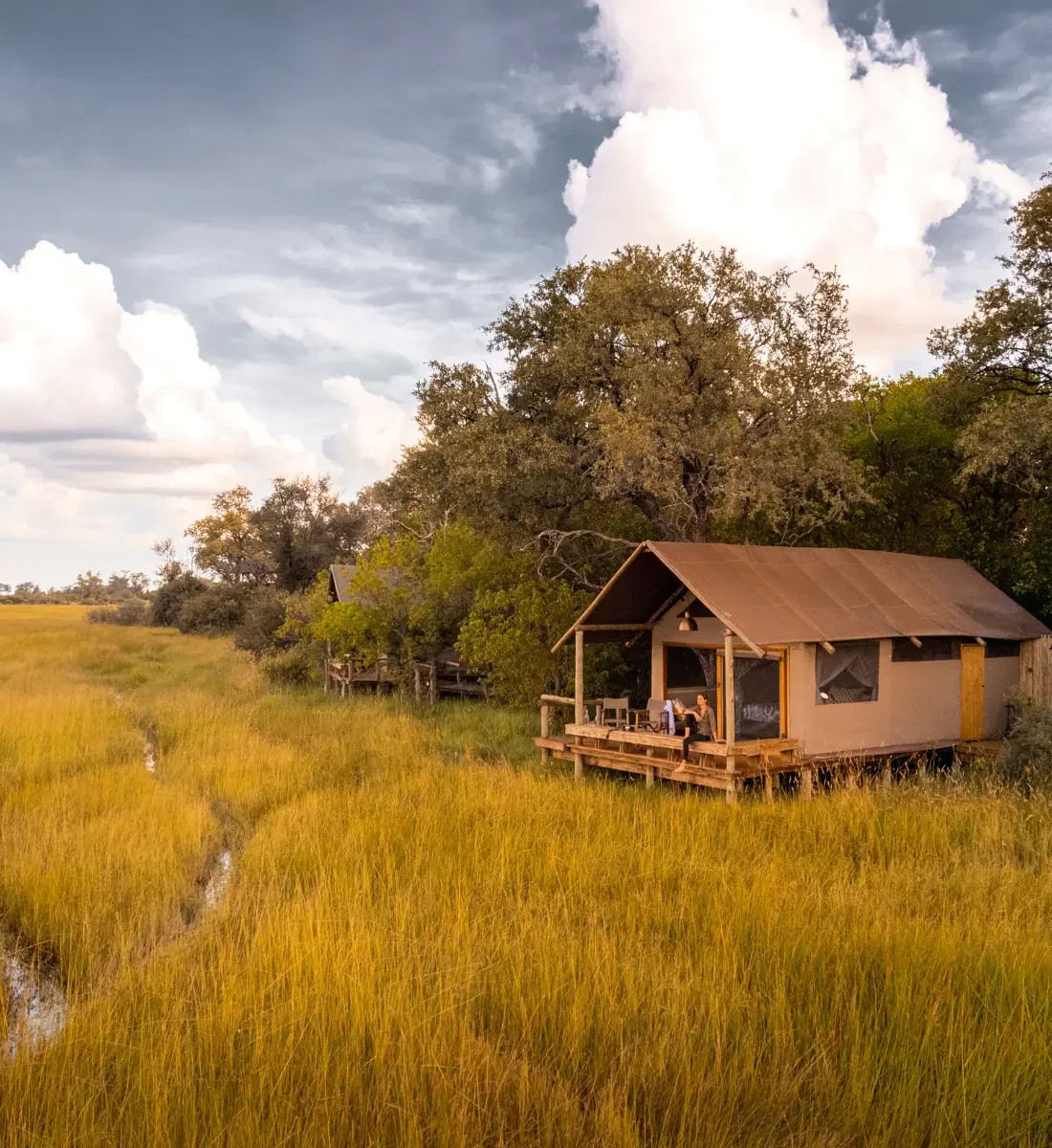
A cluster of canvas tents on grass at the edge of water, two dugout canoes pulled up nearby

Delta channels to coastal desert

The network covers some of the most different ground in southern Africa, from the water channels of the Okavango to the fog and dunes of the Skeleton Coast. Moving between them in one trip is what a shared operator makes practical: fewer handovers, and a luggage rule that stays the same.

A single thatched-roof room standing on its own in tall golden grass, no other building in frame

Small camps, low room counts

The camps keep their room numbers low, which is what holds the pace of a day and the quiet of the setting. Fewer vehicles out at once means less waiting at a sighting and a better chance of watching behaviour rather than a cluster of bonnets.

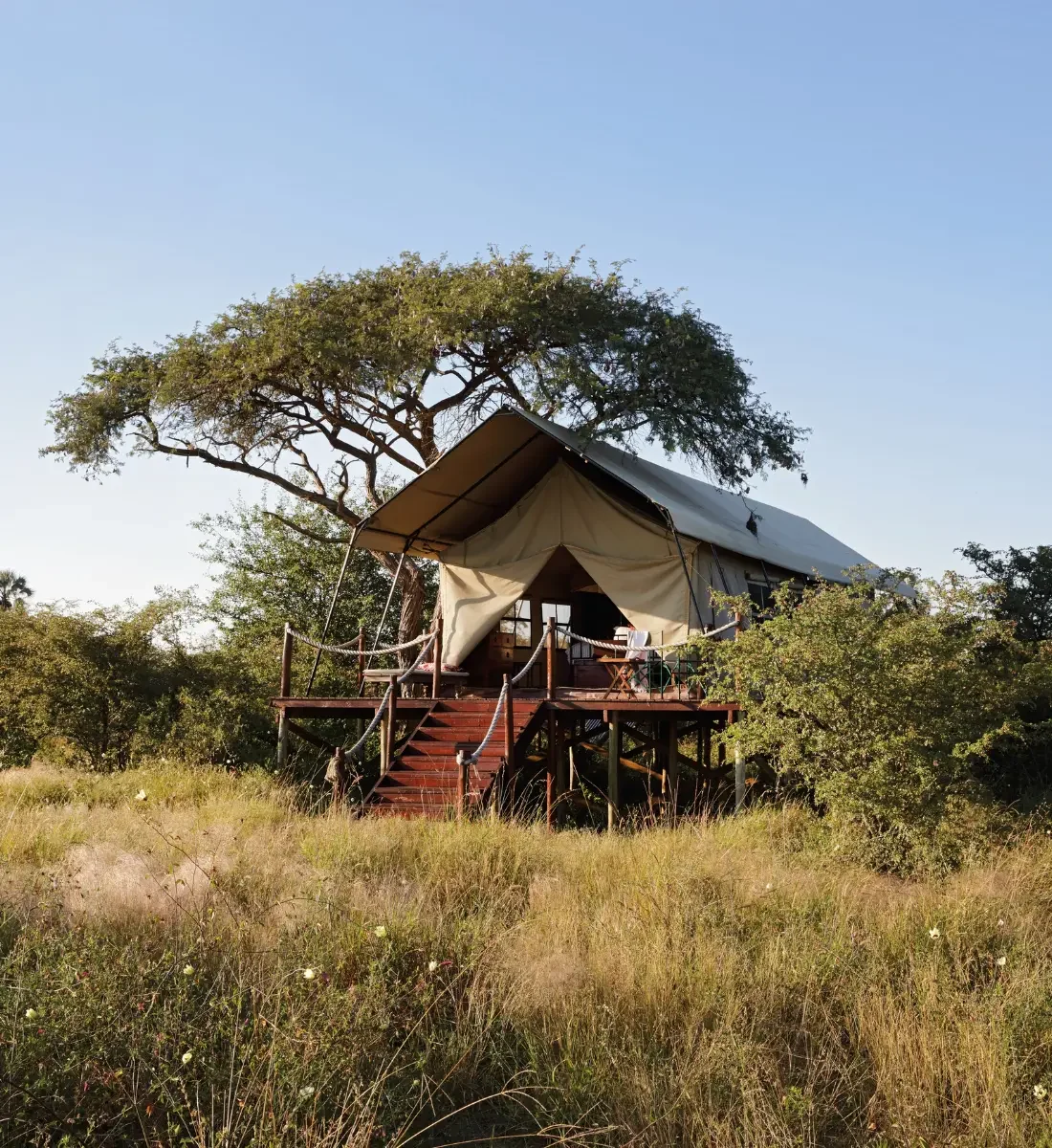
A low camp structure with a thatched roof built beneath the spread of a large shade tree

Conservation explained on the ground

Guides talk through the wildlife, the neighbouring communities and the habitat work that the camps are involved in. It is part of understanding where you are, not a separate presentation. How far you can take part depends on the individual camp and its current projects.

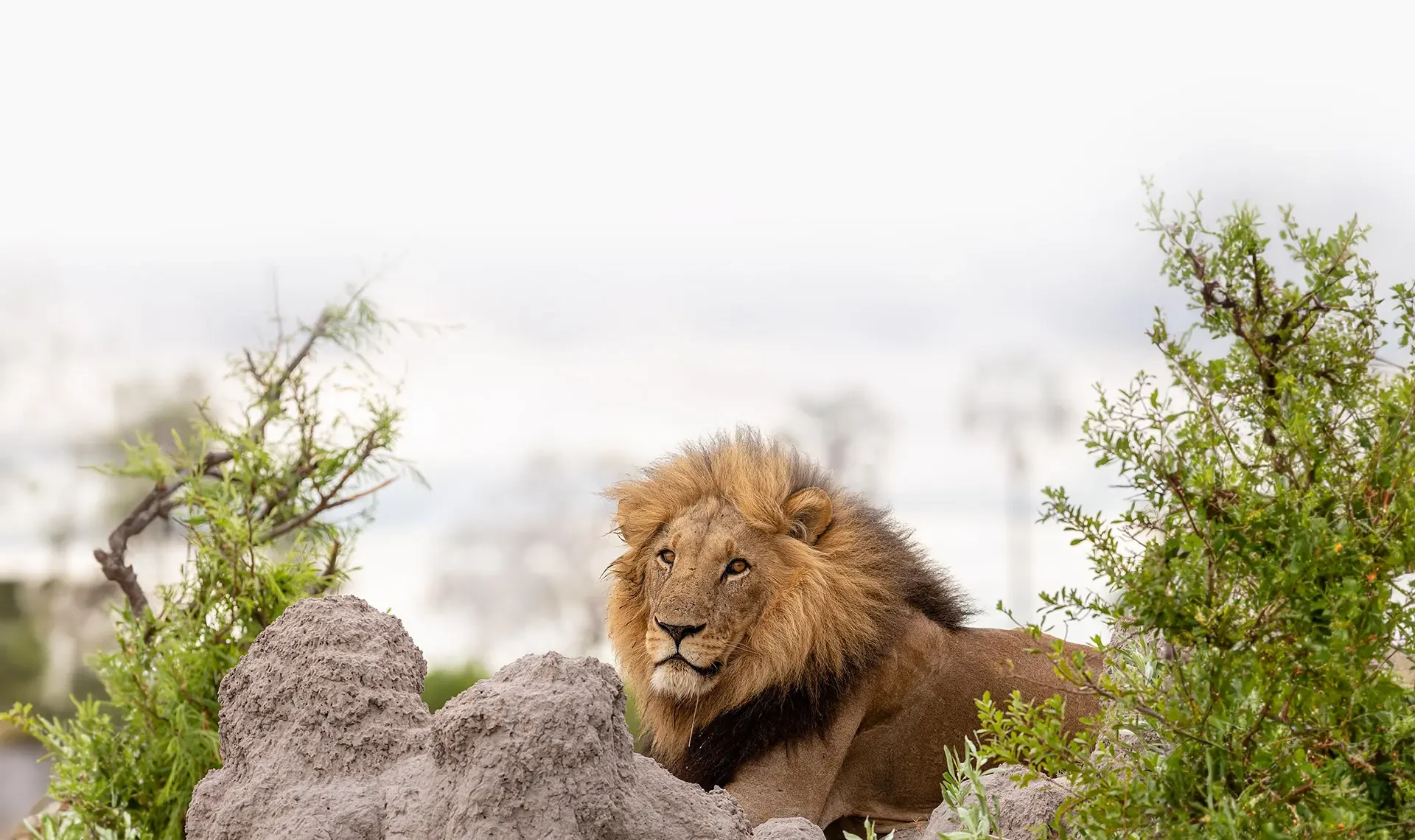
A male lion standing beside a low rock, mane dark, dry scrub and pale ground around it
Route

Three or four camps, nine to fourteen nights

Three or four camps make a nine to fourteen night route, and keeping to one network removes most of the handover problems between operators. Budget three nights per camp. Where the landscapes differ sharply, ten nights or more gives each one a full day rather than an arrival and a departure.

Stringing three or four camps together

Three nights per camp, and one luggage rule for the whole route.

Stay

Three nights per camp is the recommendation. Where the landscapes differ a great deal, plan on ten nights or more in total.

Getting there

Light aircraft or four-wheel drive from the main gateway cities. Luggage rules differ between the delta, desert and coast sections.

Season

Water levels, migration and rainfall change what each camp can offer, so the same route behaves differently by month, and a camp that is excellent in one season can be ordinary in another.

Watch out

Camps vary widely in standard and in how you reach them. Understand each one separately rather than treating the network as uniform.

Plan this into a journey

Pick the landscapes first. Each camp is then judged by how you reach it and what the season allows.

[email protected]

Read this page in Chinese

Discuss this journey