Before and after the door
Porto, Portugal — Historic bookshop.
Spend a moment outside the door first.
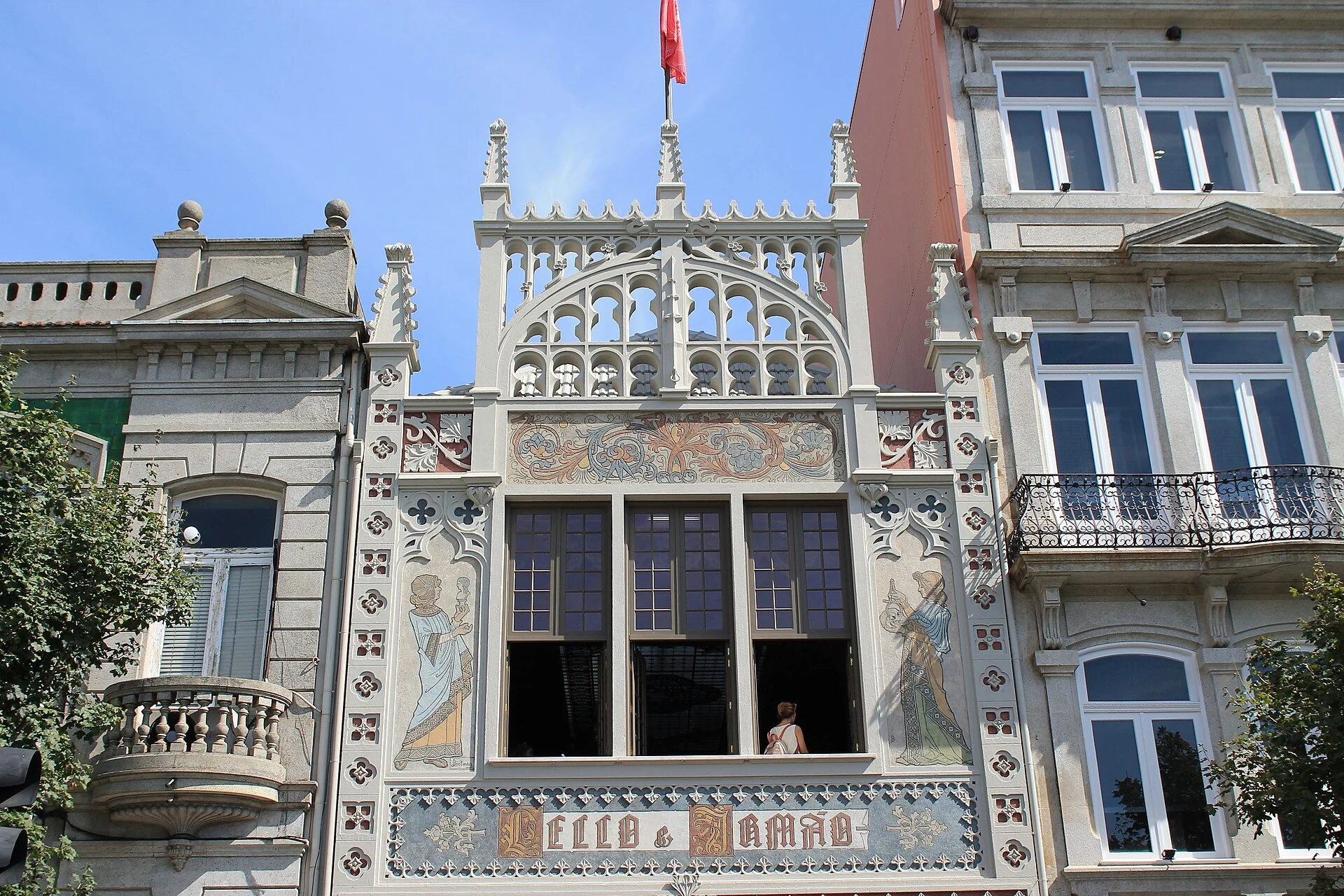
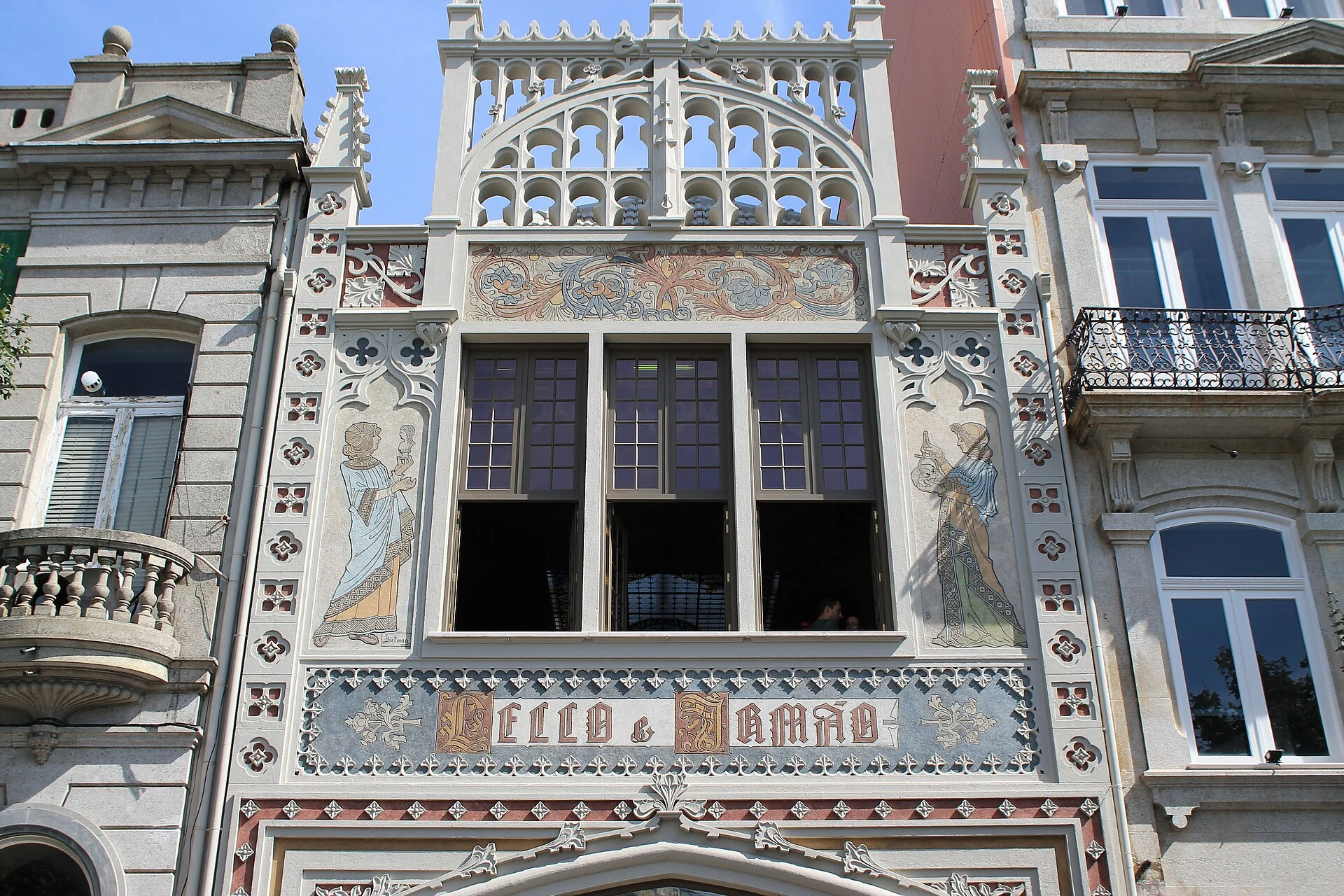
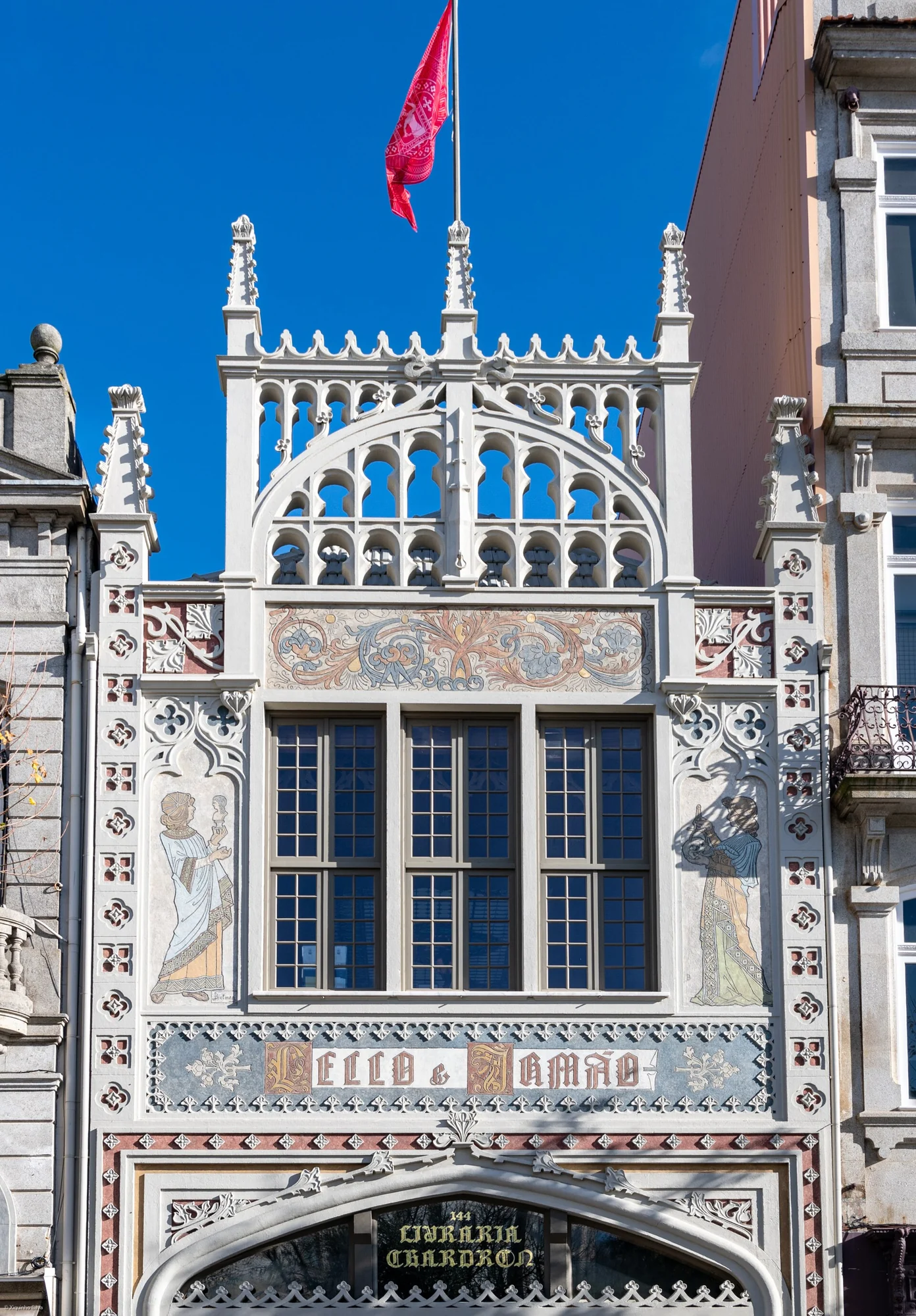
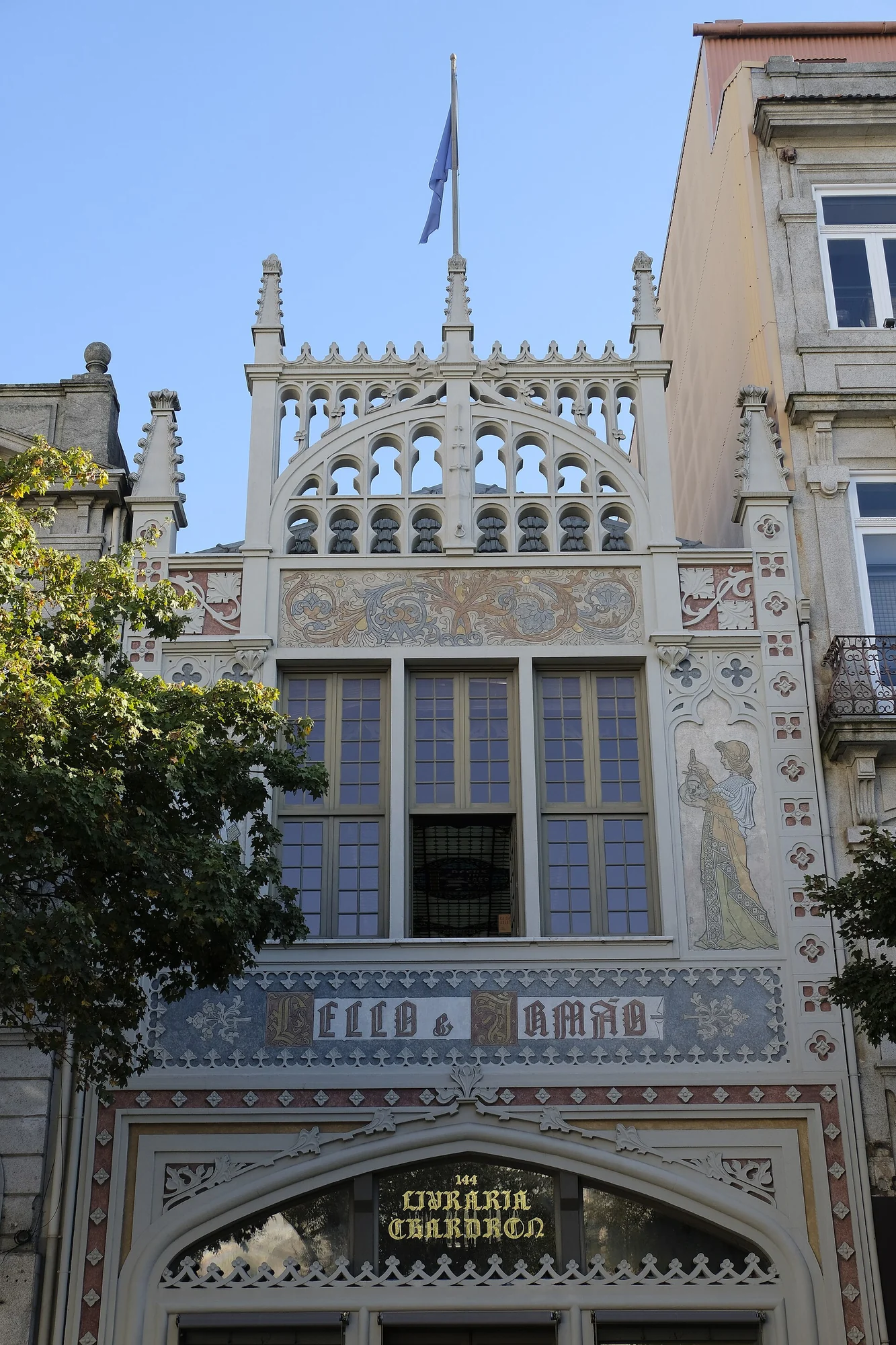
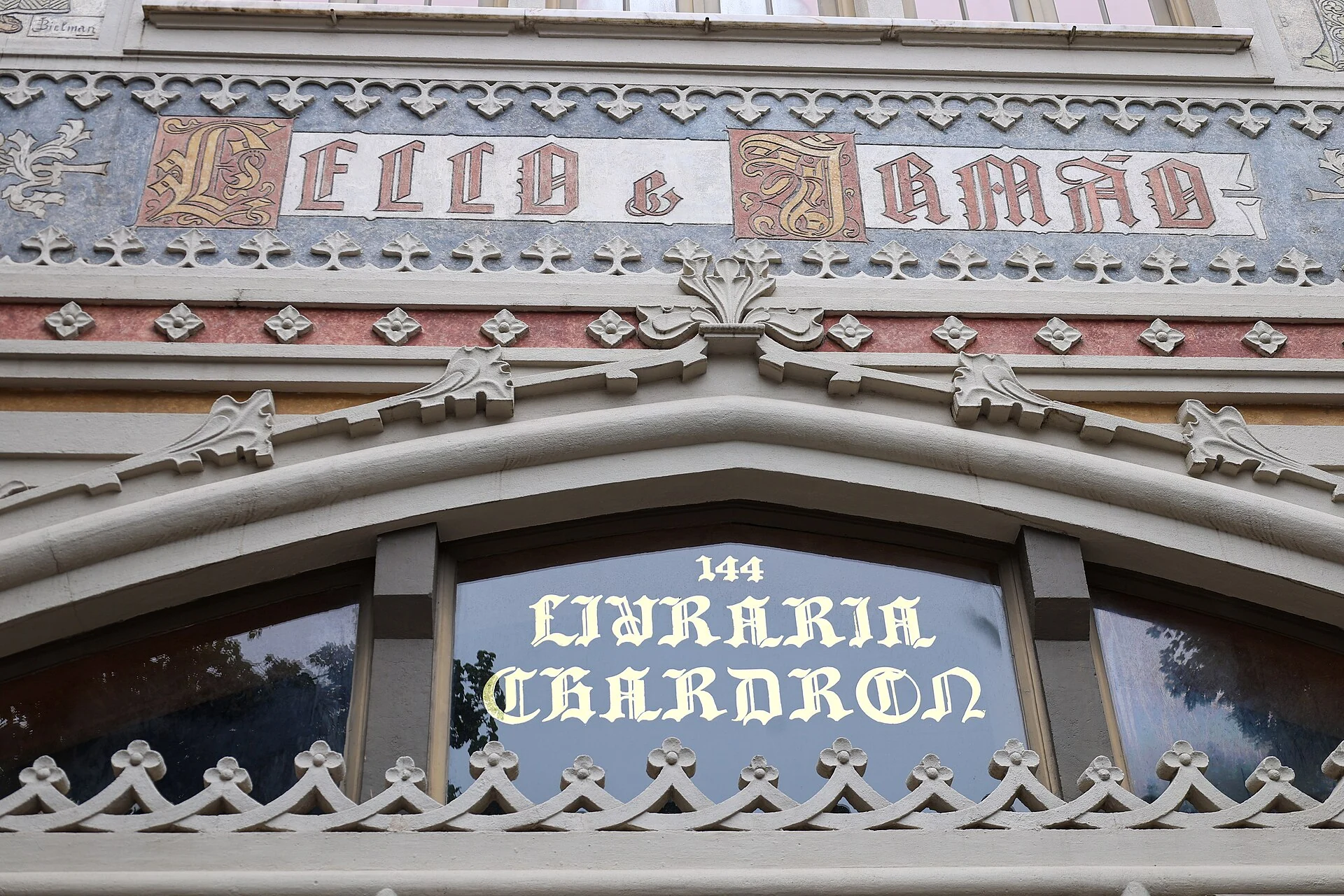
The façade is pale-grey stone, with window frames stepping outward in rings and tiny ornaments on the pinnacle, a red flag hung at the top. The stone seams carry darker patches left by moisture, cleaner the higher you look. Two lines of lettering are carved on the lintel in an old-style font whose spelling differs from the shop's name today. The lane is narrow, so to frame the whole you step back against the opposite wall, and often stand sideways waiting for someone to move. Through the glass door you catch a warm glow, but can't tell how deep it goes.
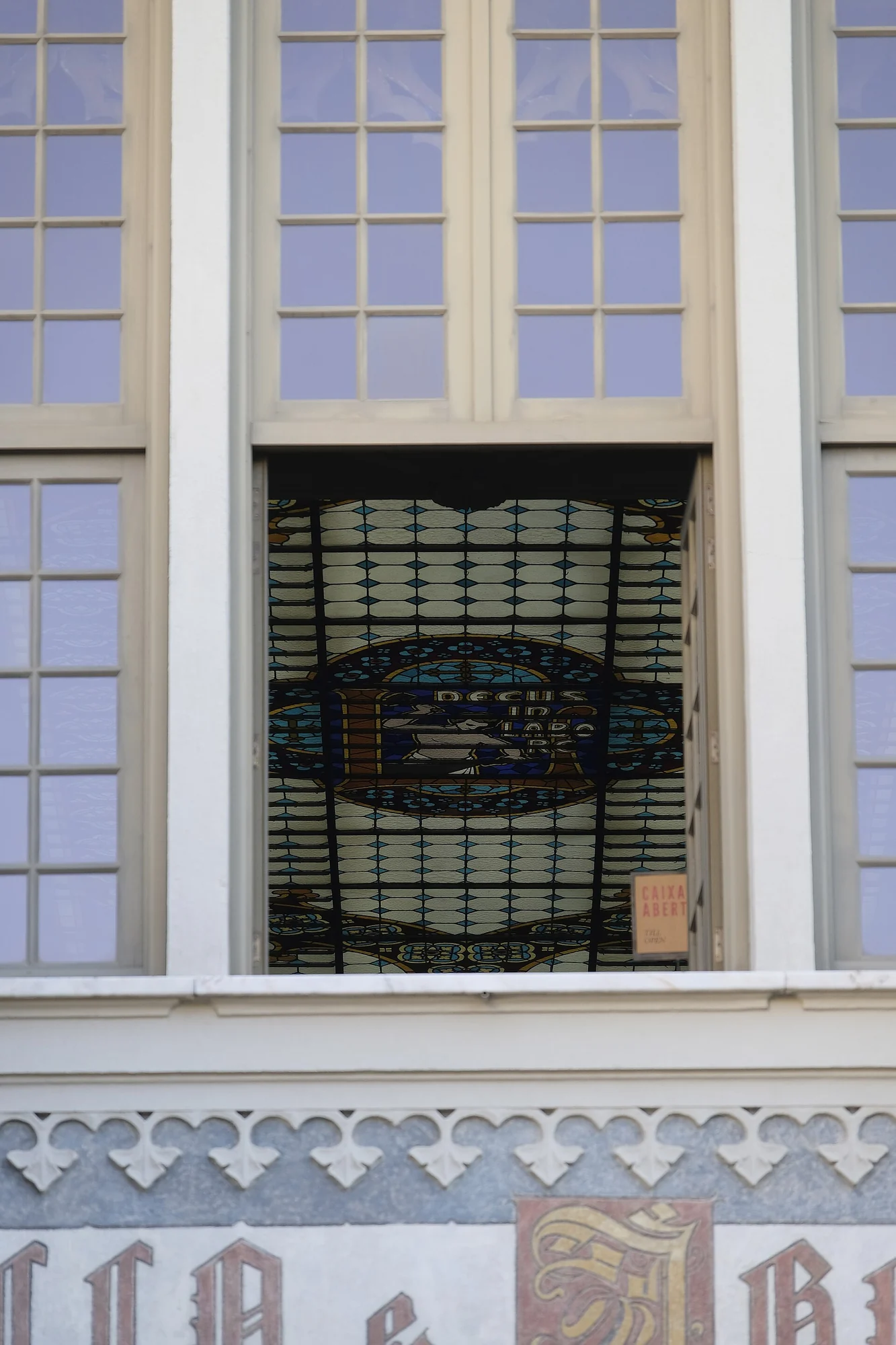
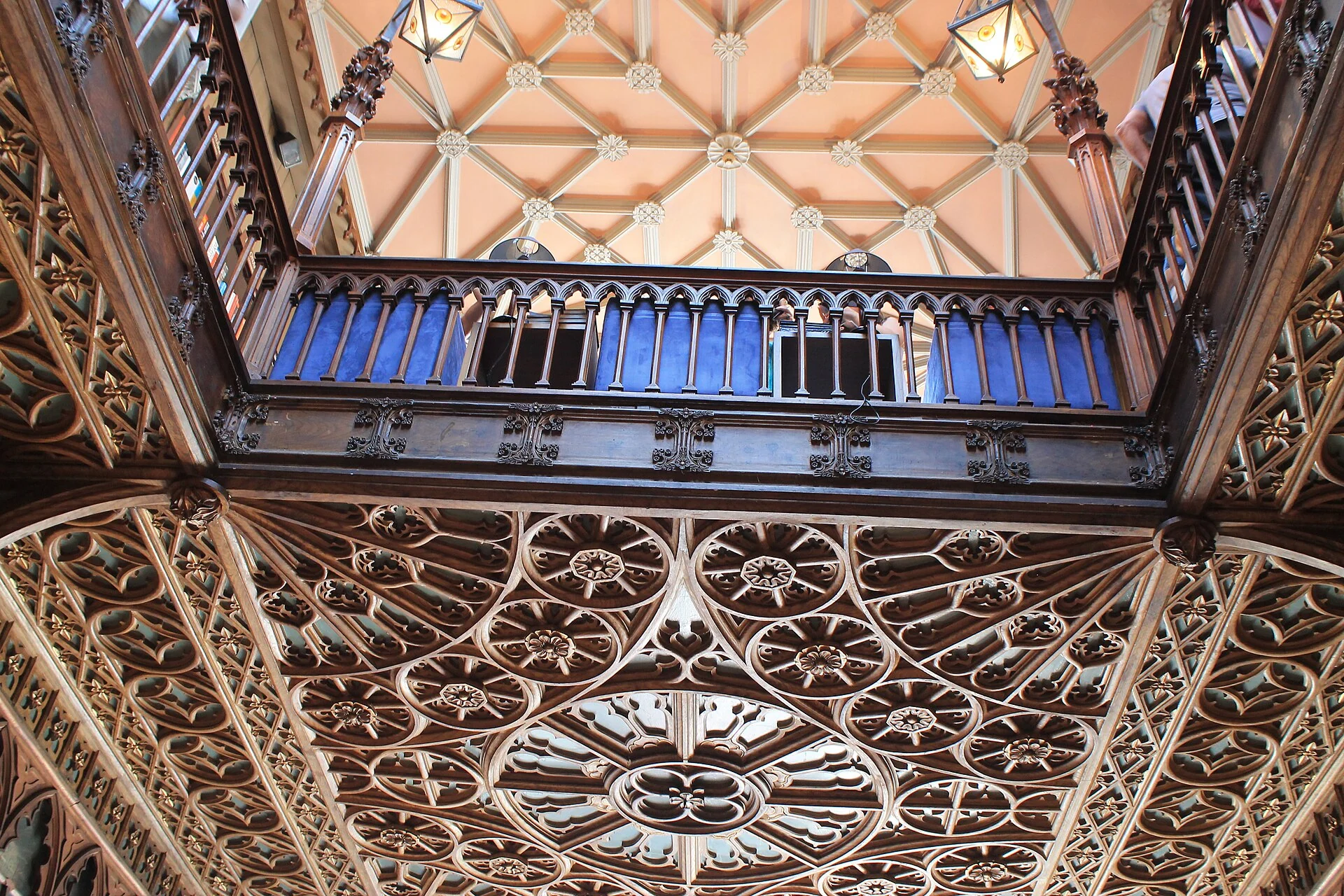
Push the door and the smell of wood arrives first. The shelves reach from floor to ceiling, a ladder leaning nearby, the aisle so narrow two people must turn sideways to pass. Overhead, a stained-glass panel filters daylight into blocks of colour that fall on the rail and banister. The upper railing curves around the atrium, and looking up from below the wooden curve closes into a circle in mid-air. Voices are kept low; the sound of pages turning stands out clearly.