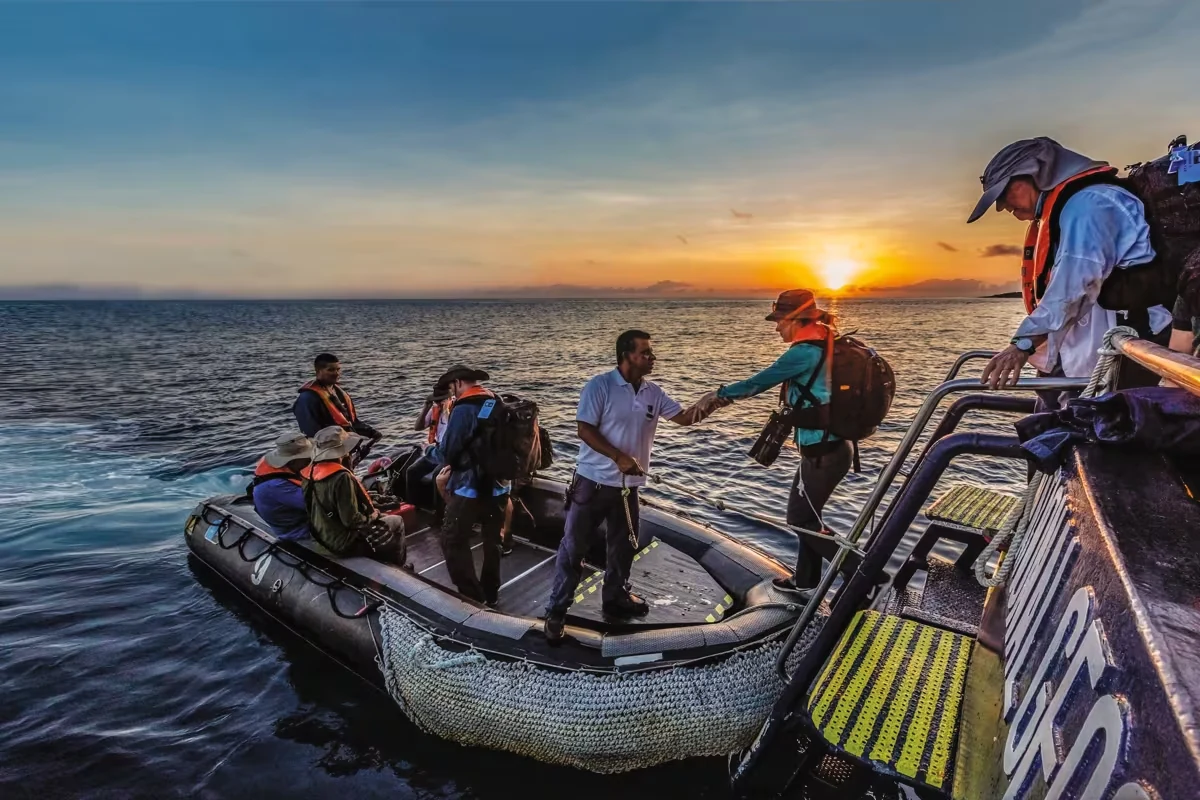
A rubber landing boat pulled up at the water's edge after sunset, several passengers in life jackets climbing in.

Galapagos, Ecuador

Lindblad Expeditions GalápagosWalks, snorkel, kayaks and a glass-bottom boat in one week

Lindblad Expeditions runs Galapagos voyages with National Geographic, built around learning as much as looking. Each day brings a landing on a different island, then snorkelling, kayaking or a glass-bottom boat to see the same coast from the water. Naturalists explain the species on shore and on board, and photographers help with the pictures.

You fly from Quito or Guayaquil to the archipelago and board there. The route rotates between islands according to national park permits, so the island list is set by the permit rather than chosen freely.

PlaceGalapagos, Ecuador
TypeNaturalist cruise
SuitsWildlife and family travellers
Stay7-10 nights

A landing every day, then the other half from underwater

Galapagos, Ecuador — Naturalist expedition cruise.

These voyages are run with National Geographic and treat learning as the point. Naturalists talk you through what is in front of you, on the landing and again on board, so the species of one island connect to the species of the next. You come away with a picture of how the archipelago works, and the photographs are only part of it.

Choose the departure by who is travelling. Families, photographers and travellers chasing pure ecology each want something different, and the ship, the specialists aboard and the youth programme vary by product. Read those three together with the route, because a good route on the wrong departure is still the wrong trip.

This is for wildlife travellers, families, photographers, and anyone drawn to natural history or Darwin. Be honest about fitness: snorkelling intensity, wet landings and the size of the vessel need to match the people in your party. Park rules and sea conditions can change the schedule once you are there.
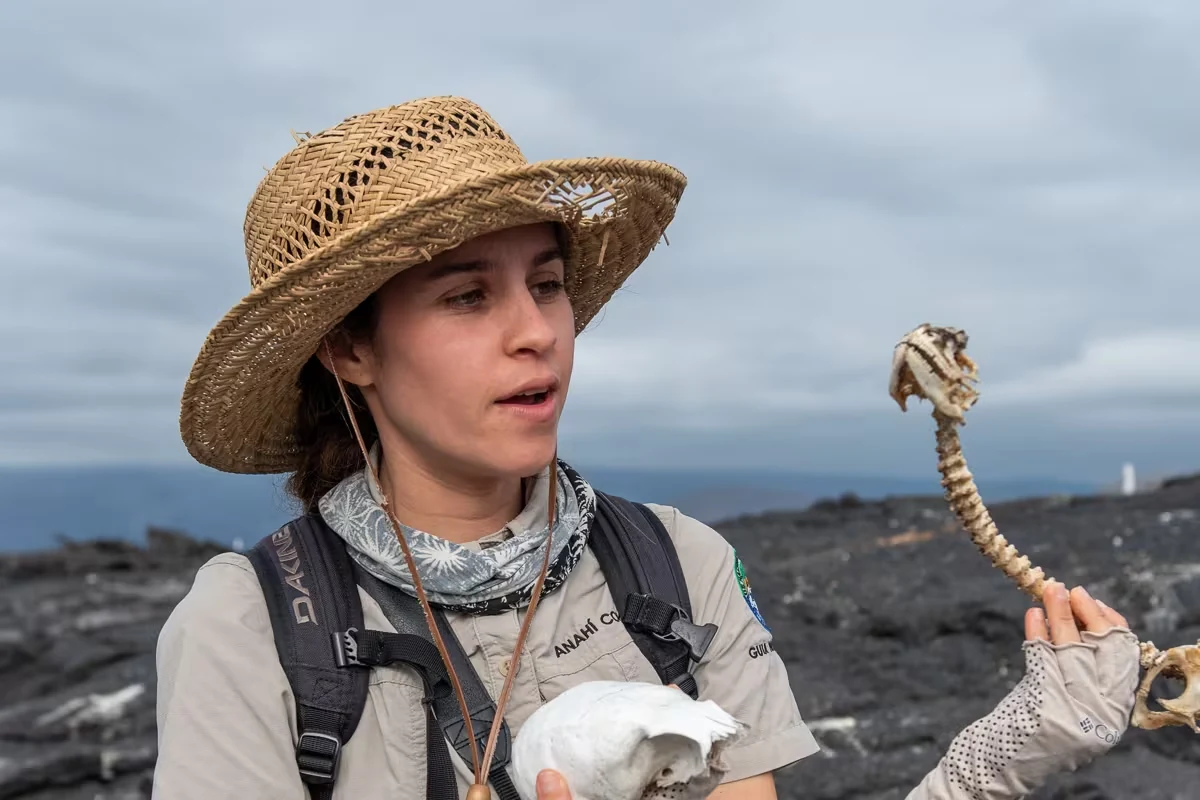
A guide in a wide straw hat crouching on the shore, holding a small sea creature out in one palm.
A naturalist in a straw hat holding something small
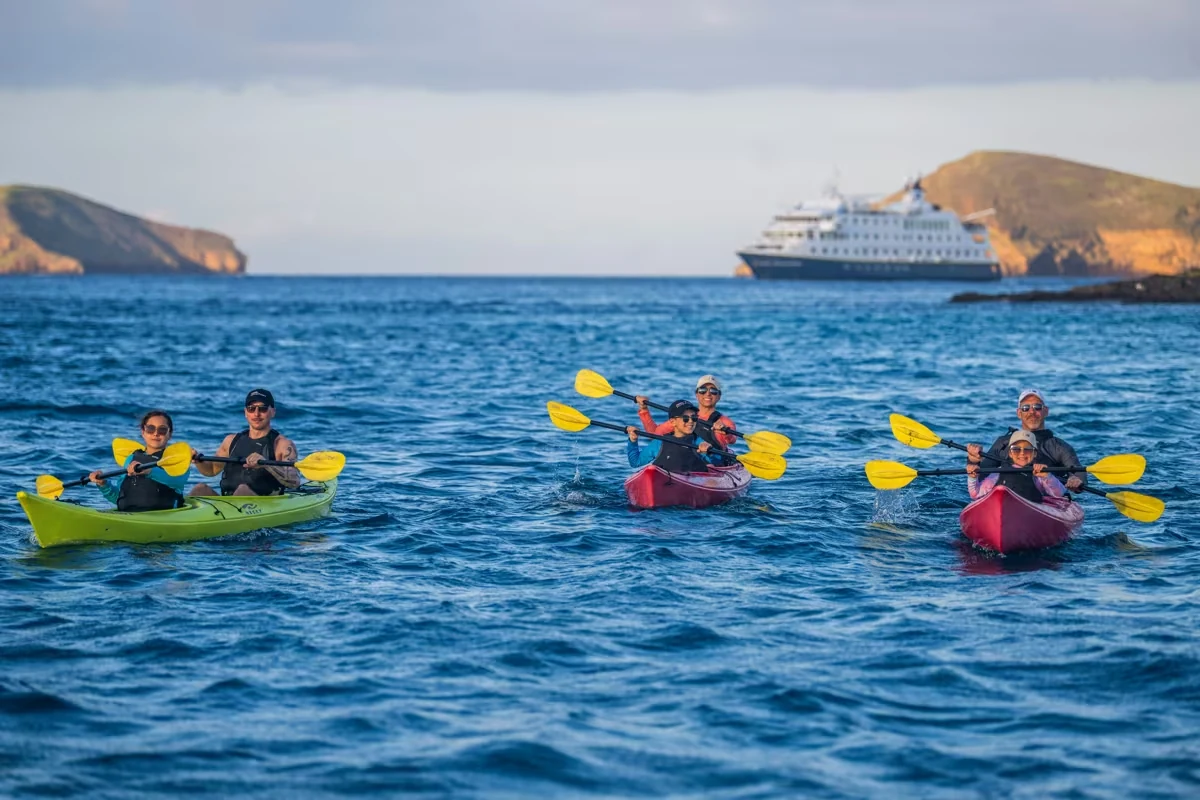
Two kayakers paddling across a still green bay, an expedition ship anchored far behind them.
Kayaks crossing a bay with the ship at anchor
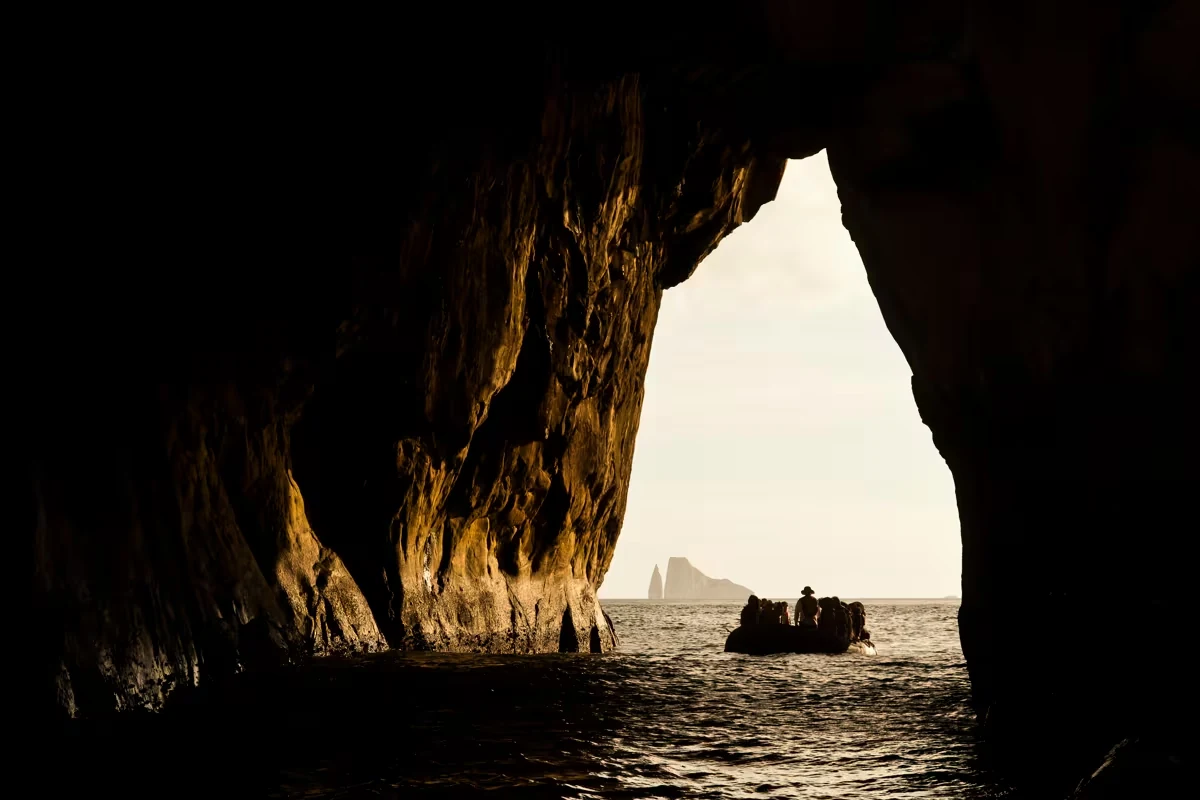
Dark rock walls of a sea cave framing bright water and a small boat outside the opening.

A different island on every landing

Each island holds its own cast: marine iguanas on black rock, blue-footed boobies at the nest, giant tortoises in the highlands, sea lions on the sand. Because a guide walks with you, the sighting comes with an explanation of the habitat behind it, and of why you meet that animal here rather than two islands over.

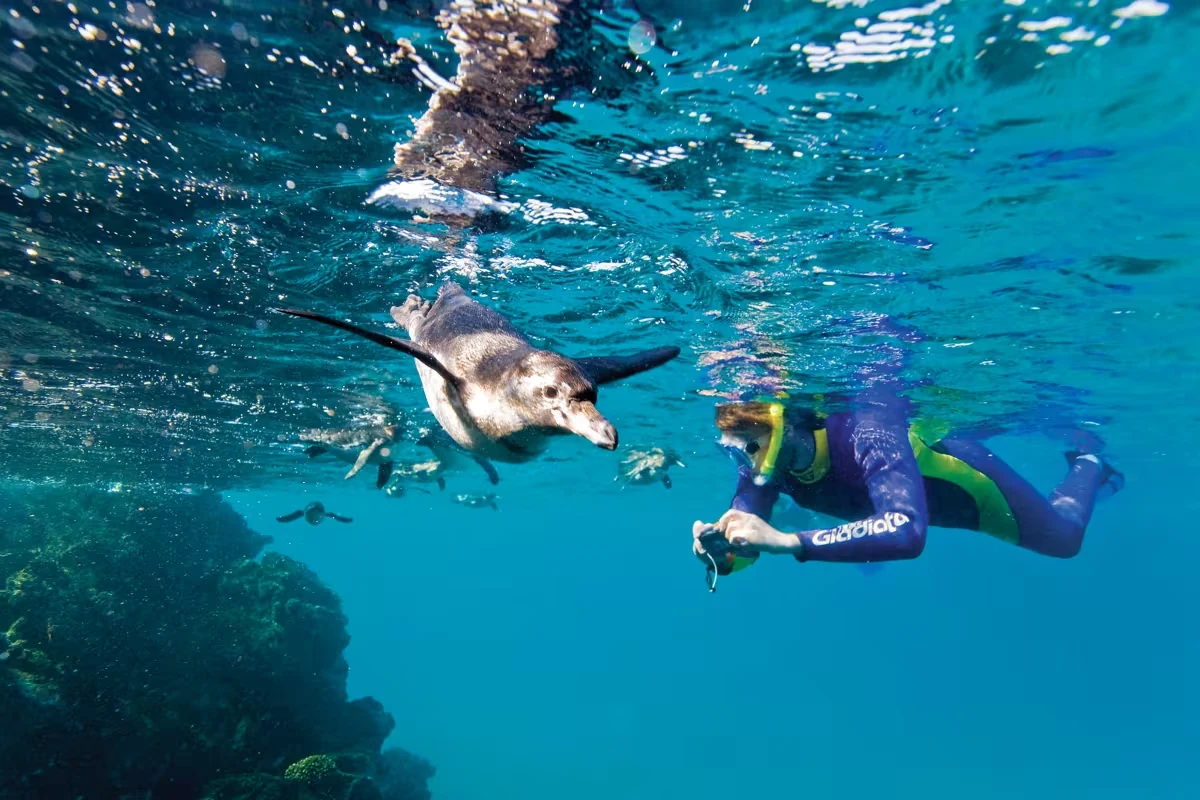
A snorkeller floating just above a sea turtle in shallow, sunlit turquoise water.

Snorkel and kayak the same coast

From the water the archipelago reads differently. Penguins, turtles, rays and sea lions turn up on snorkel and kayak outings, and a glass-bottom boat gives the same view to anyone who would rather stay dry. Participation levels differ between the three, so weigh wet landings, swimming and walking against what your group can manage.

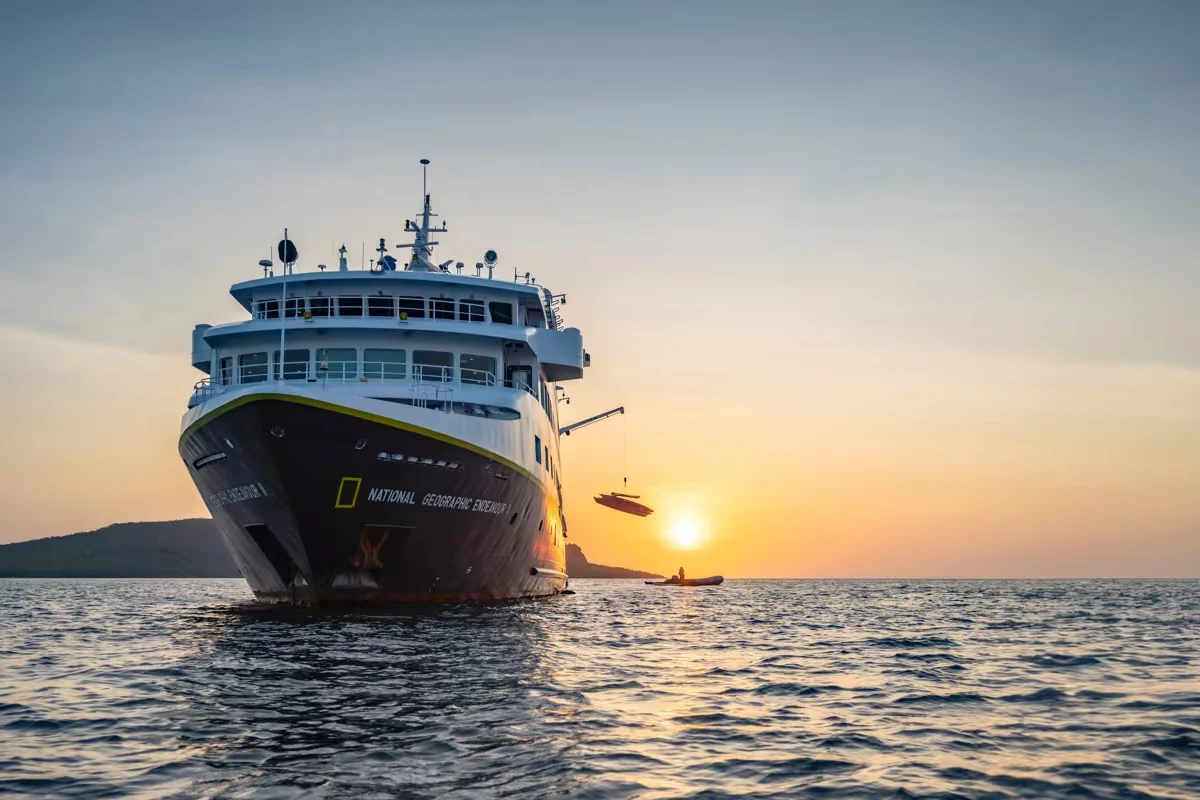
An expedition ship photographed head-on from the water, bow cutting toward the camera at dusk.

Photography coaching while the subject is there

A photographer sails on the departures that include the programme, working on animal movement, light and framing while the subject is still in front of you. It is coaching on the spot rather than a talk afterwards. The specialist line-up changes by date, and you can raise questions about your own kit in advance.

Inside the bridge of the National Geographic Endeavour II, an officer leaning over a chart while three children look on.
Route

Two nights in Quito, then a week at sea

Build two nights in Quito before the flight out, then give the islands seven to ten days. A night on each side of the archipelago flight covers connections and baggage inspection. From there the trip extends easily into the Amazon or on to Peru, and both are worth deciding before you fix the return date.

Fitting the archipelago into an Ecuador trip

The islands sit at the end of a domestic flight, so the nights in Quito and Guayaquil matter as much as the sailing itself.

Stay

Common voyages run seven to ten days, with a night in Quito or Guayaquil on each side to connect the island flights and clear baggage inspection.

Getting there

You fly from Quito or Guayaquil to Baltra or San Cristobal and board there, so the mainland leg is part of the itinerary rather than an add-on.

Season

The islands are visitable all year, but sea temperature, currents, breeding activity and underwater visibility shift from month to month.

Watch out

Park rules and sea conditions affect the schedule. Snorkelling intensity, wet landings and vessel size need to match your fitness, and family activities or bridge visits should be confirmed for your departure.

Plan this into a journey

Tell us who is travelling and how much time the group wants in the water. We will point you to the departure that matches.

[email protected]

Read this page in Chinese

Discuss this journey