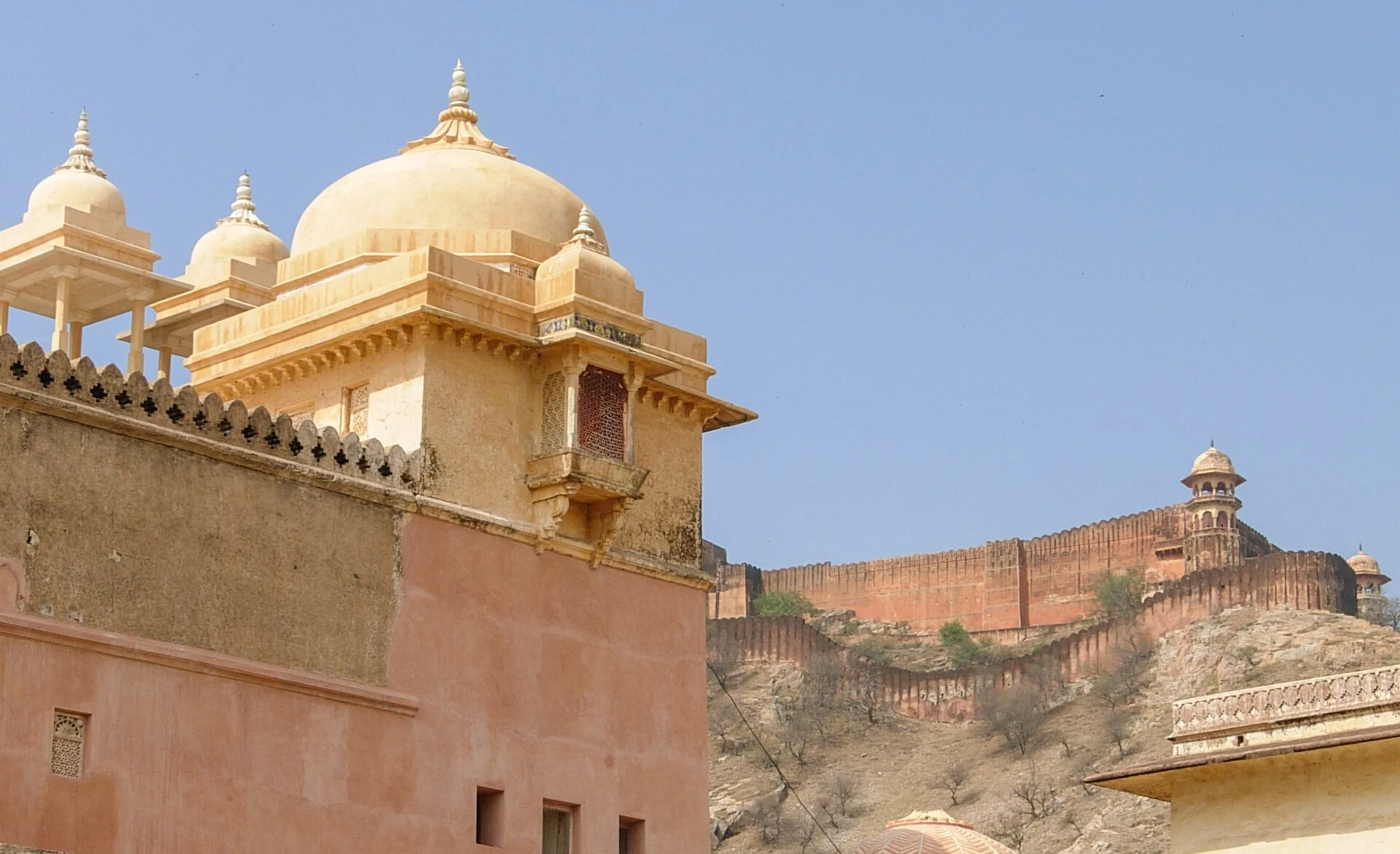
Palace front with a row of pale arches, a pool reflecting the columns before it

Amer, Jaipur, India

Amber FortFour tiers of courtyards on a hillside

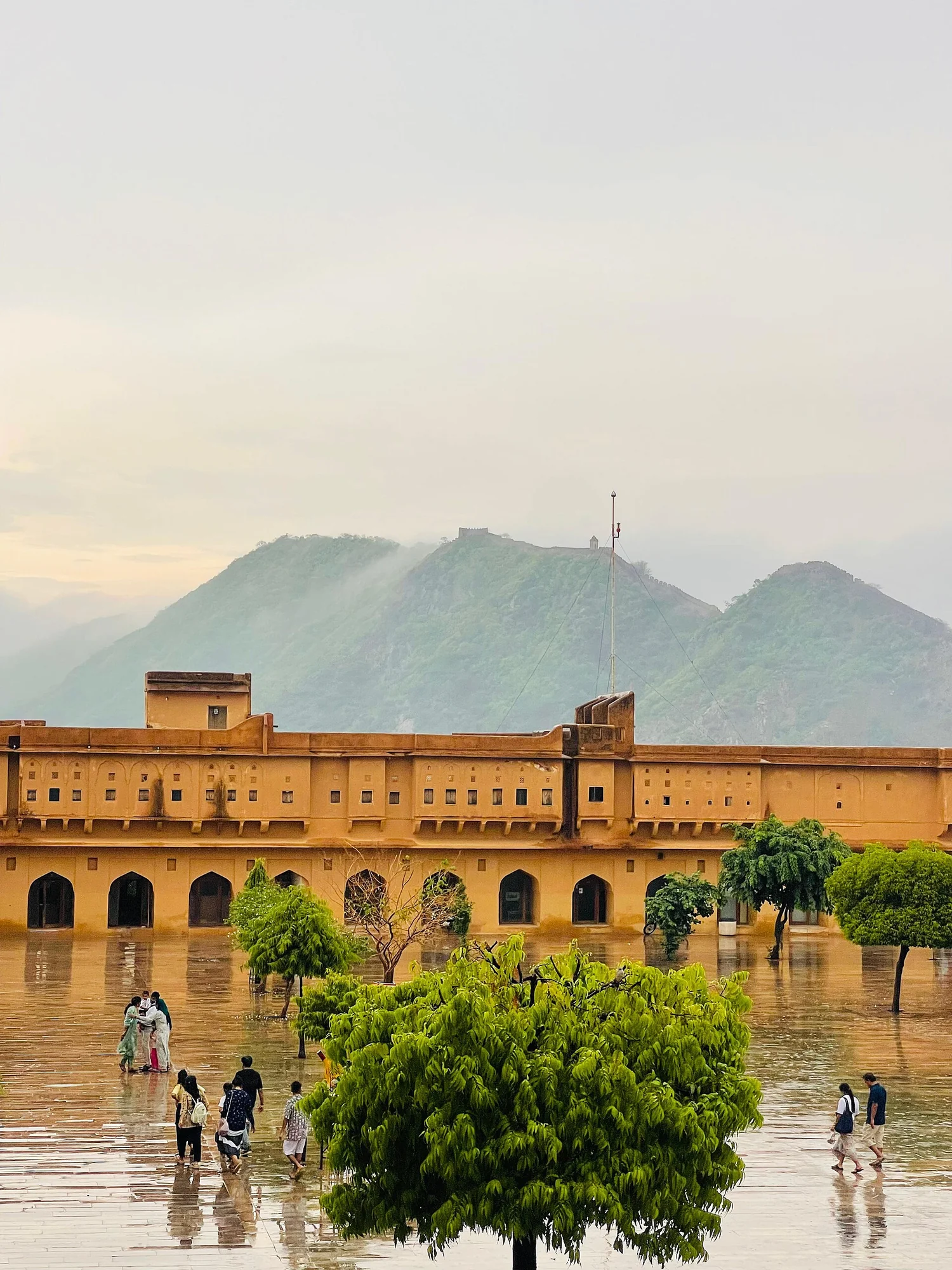
Seen from below, the walls are earth-yellow and gate follows gate; inside you find four tiered courtyards, each paved flat — nothing like the slope outside.

Once you leave the city the road slowly climbs, the hill always on your left.

PlaceAmer, Jaipur, India
TypeHilltop palace-fort
SuitsTravellers who want to read how a hilltop palace is layered, not just find a viewpoint
Best seasonCooler months; the ramps have little shade from Rajasthan's fierce afternoon sun

Count the gates first

Amer, Jaipur, India — Hilltop palace-fort.

The way in passes through several gates; walk slowly to read the order of the courtyards.

The Sheesh Mahal's walls and vaulted ceiling are inlaid with tiny mirrors that scatter any sliver of light.

Look down to Maota Lake; the water and the ridge make the fort's perch perfectly clear.

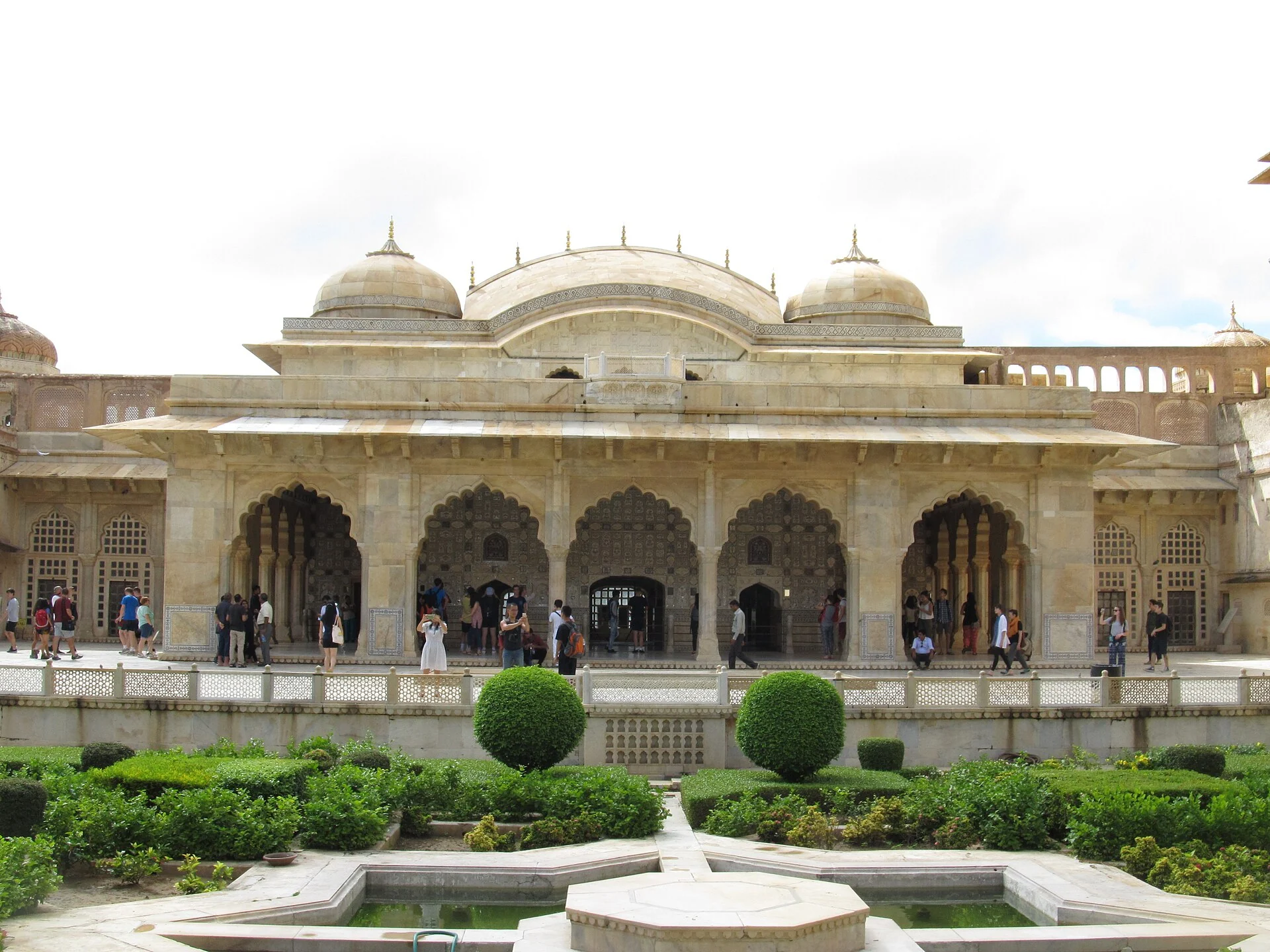
Stone pool divided into geometric cells, a row of arches standing behind it
The gridded pool
A green tree in the courtyard, a distant ridge pressing above the palace wall
The ridge beyond the wall
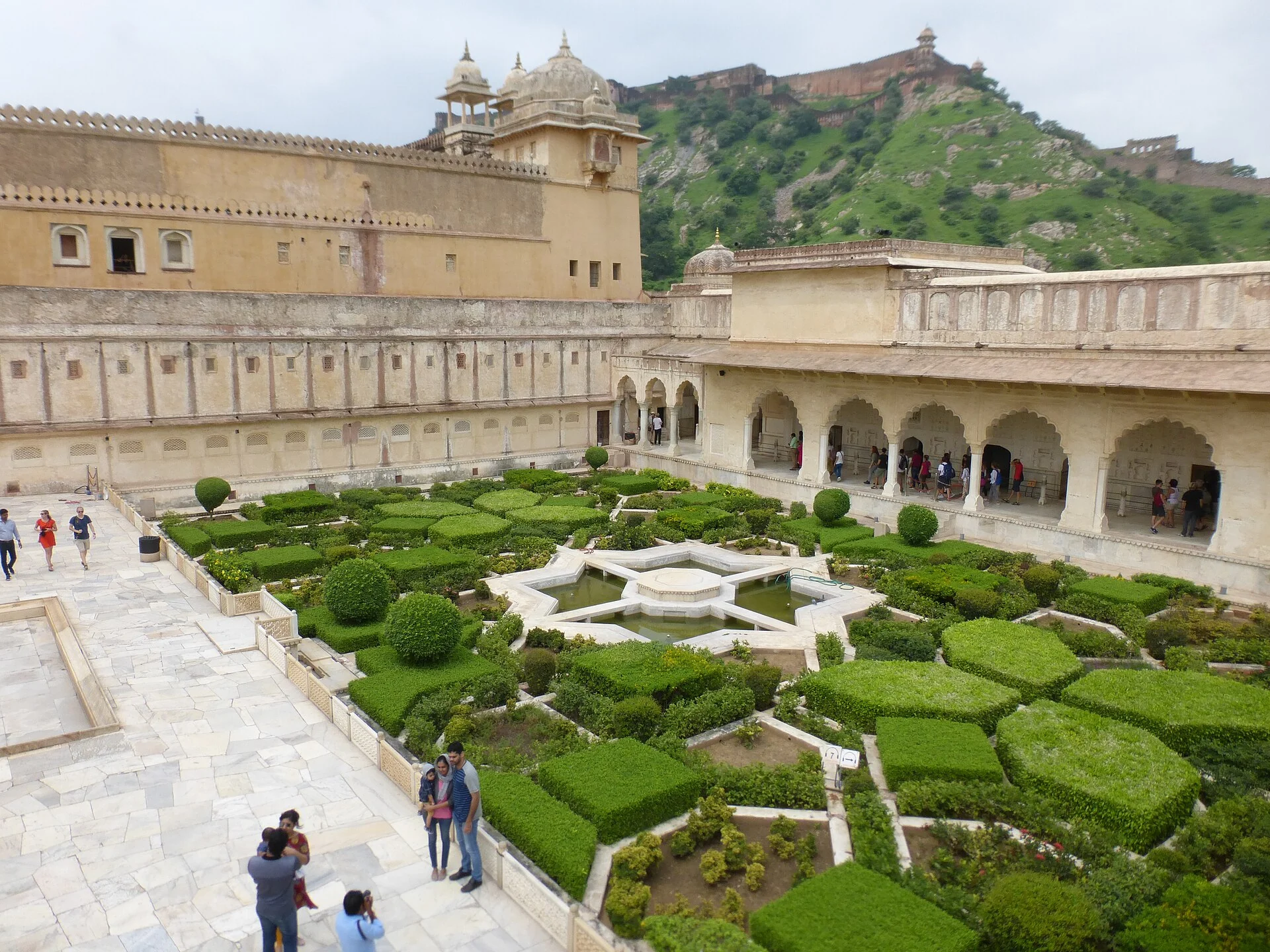
Geometric flowerbeds seen from above, hedges cutting the ground into squares

Courtyards behind the gates

The approach climbs the hillside through several gates before a stretch of cobbled ramp. Between gate and gate there is open ground, and only at the very end does a great courtyard open out. The fort rises in four tiers, each with its own court; moving from one tier to the next, the floor stays level underfoot.

Stone ramp descending at an angle, cattle resting beside the steps

Light in the Mirror Palace

The Sheesh Mahal's walls and vault are set with countless tiny mirrors, and by day the window light alone scatters into a fine spray of points inside. The same complex holds the public audience hall and a room called Sukh Niwas, where air drawn across a water screen cools the room — none of it relying on thick walls against the heat.

White marble interior arch, light falling from the window at the far end

The lake from the window

The fort looks down on Maota Lake below, the palace's old source of water. Stand at a high window and the lake, the far slope and the distant ridge recede in turn; only from here do the geometric flowerbeds read as something laid out by symmetry.

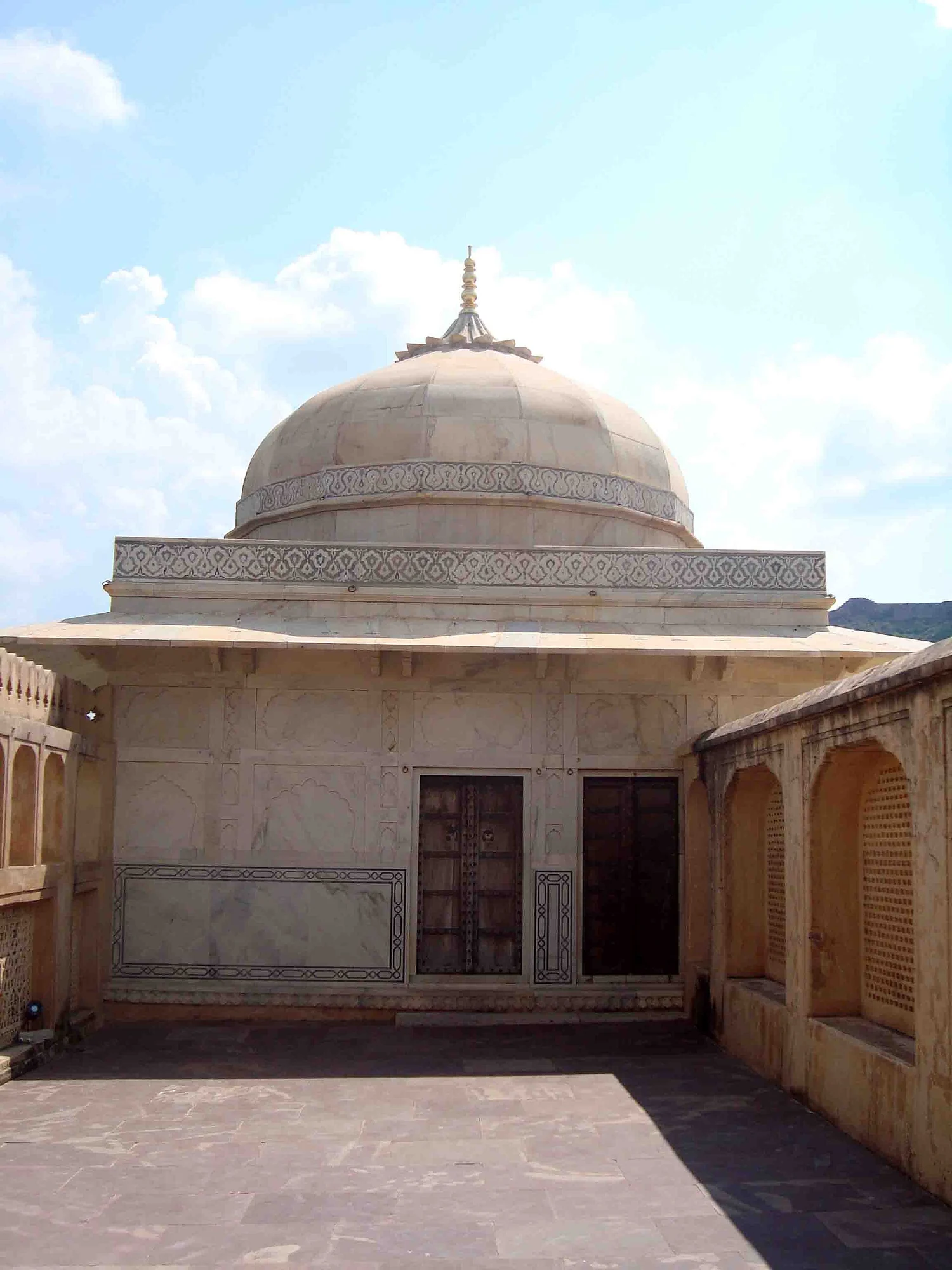
Golden dome and earth-yellow ramparts, blue sky pressing on the wall crest
Route

A morning outside Jaipur

Don't schedule it on your flight day. Stay in Jaipur the night before, leave the city in the morning, and you can still return downtown in the afternoon.

Four tiers on a hilltop

Amber Fort stands in the town of Amer, eleven kilometres east of Jaipur, atop a rise in the Aravalli range. Fort walls, several gates and a cobbled ramp climb with the land, overlooking Maota Lake below, which once supplied the palace with water.

Built of red sandstone and marble, it rises from bottom to top in four tiers, each with its own courtyard. The public audience hall, the private council hall, the mirrored Sheesh Mahal and the water-cooled rooms all sit within these four levels. Rajput methods underpin it, with Mughal touches visible in a few details.

The fort and the Jaigarh Fort above count as one; a covered passage between them let the royal family retreat to the safer side in wartime. In 2013 it was inscribed as a World Heritage Site together with five other forts of Rajasthan.
Those who lived here

This was once home to a Rajput ruling family. In the late 16th and early 17th centuries, Maharaja Man Singh installed an image of the goddess Hira near the Ganesh Pol; the image is said to have been brought back after his victory over the king of Jessore in 1604.

The queens left their mark too: Man Singh had twelve queens and built twelve rooms, each with its own stair to the maharaja's quarters, yet the queens did not climb up. Later, Jai Singh had only one queen and built a single room as large as three of the former ones.

Today these arrangements can only be guessed from the size and connection of the rooms. The rooms stand empty, but the mirrors and stone carving remain; how people moved through them must be slowly imagined from the positions of the doorways.

From the ramp to the window

First take in the whole wall from below: gate after gate, the ramp angling upward, the wall's colour almost the same as the mountain. This stretch best explains why the fort was placed here.

Inside, don't rush to the Mirror Palace. Follow the cobbled ramp past open spaces, and the courtyards unfold tier by tier; with each level the stone underfoot changes its paving. The public hall has the widest arcade; the Sheesh Mahal gathers light into a small room.

At the end, reach the lake-facing window. Maota Lake spreads below, and the symmetrically laid flowerbeds fall right into view. The wall you looked up at from the ramp is now a low railing at your feet.

A good half-day for Amer

Go up the ramp in the morning, walk the gates and four courtyards in order, and pause at the lake-facing window at the end; the mirror rooms are best earlier, when the midday light is hardest.

Time needed

A good half-day for the ramps, four courtyards and lake-facing windows; add more for Amer town

On the day

Some courtyards and interior rooms rotate closures; check notices for what's open

Getting around

Cobbled ramps and stairs dominate; a few climbs use narrow ladders — split the route if needed

Season

Rajasthan's afternoon sun is fiercest and the ramps have little shade; check the weather first

Talk through my trip idea

If you're planning your Jaipur days, tell me whether you want half a day or a full one here, and whether anyone in your group moves slowly.

[email protected]

Read this page in Chinese

Discuss this journey