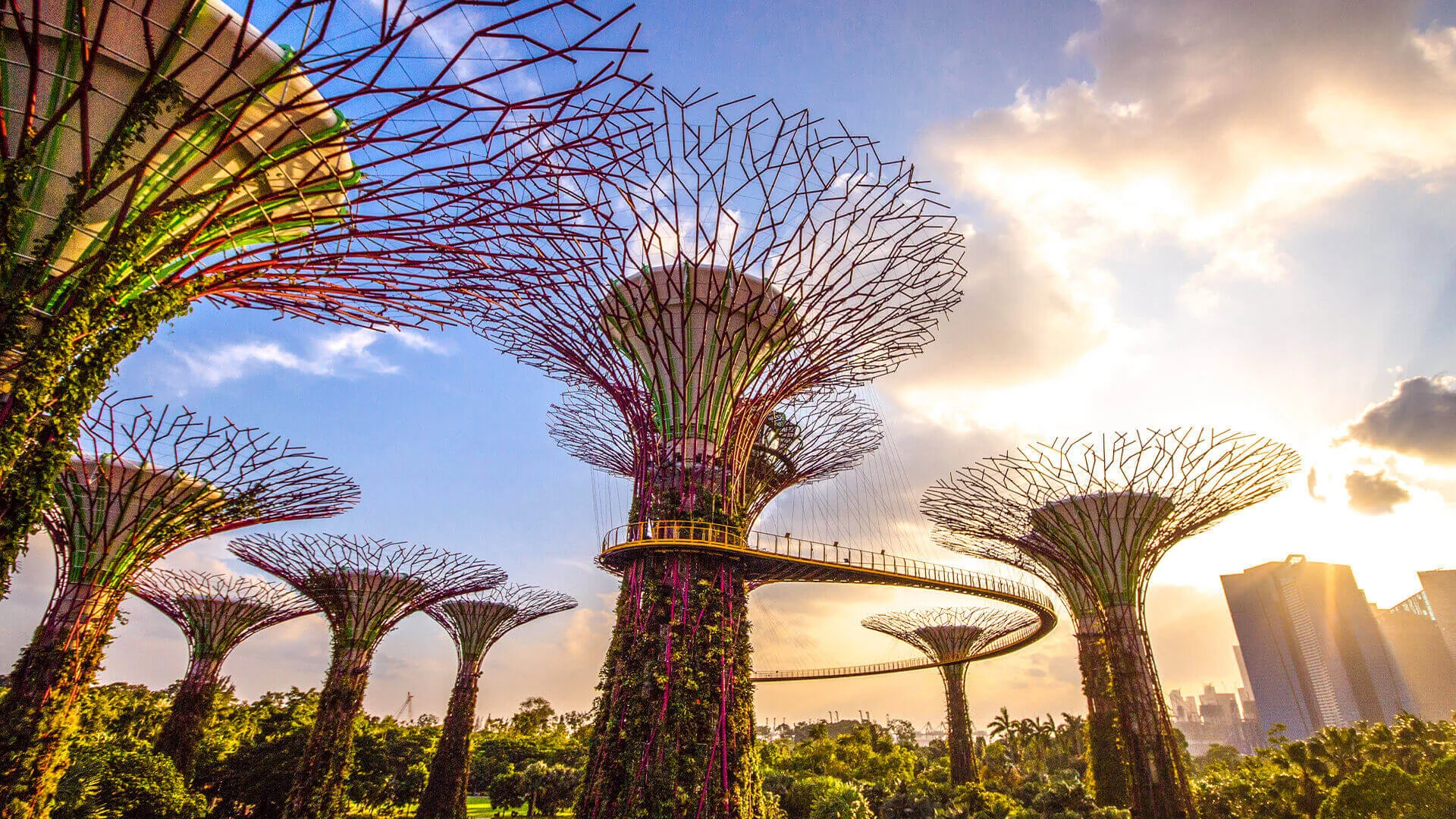
Several Supertrees beside the flower beds at sunset, the aerial walkway curving between them

Marina Bay, Singapore

Gardens by the BayTrees taller than people, light through steel

The evening sun drops behind the steel branches of the great trees; the walkway arcing overhead bends away and the water catches all that yellow.

Reclaimed land by the sea at the heart of Singapore, where three waterfront gardens meet a reservoir.

PlaceMarina Bay, Singapore
TypeHorticultural gardens by a water reservoir
SuitsCity visitors wanting green space, and families needing shade and shelter from rain

Trees as the skeleton of the garden

Marina Bay, Singapore — Horticultural gardens by a water reservoir.

Look up and it is all steel branches.

The garden comes in two versions — open air and under glass. The outdoor part runs along the water, with great trees standing among the flower beds, their steel branches tapering up in layers so the people walking beneath look tiny. The walkway arcs between two trees, and from up there you see the flower-bed patterns join into one whole. A loop of the paths leaves grass-water on your shoes.

Inside the glass houses the weather changes. Flower fields run right to the glass walls with only a narrow path between, and you have to turn sideways to pass; the other house piles up a mountain of ferns, moisture hanging on the leaves as light slants down through the glass roof. Back out in the sun, the cool from your clothes takes a while to leave.
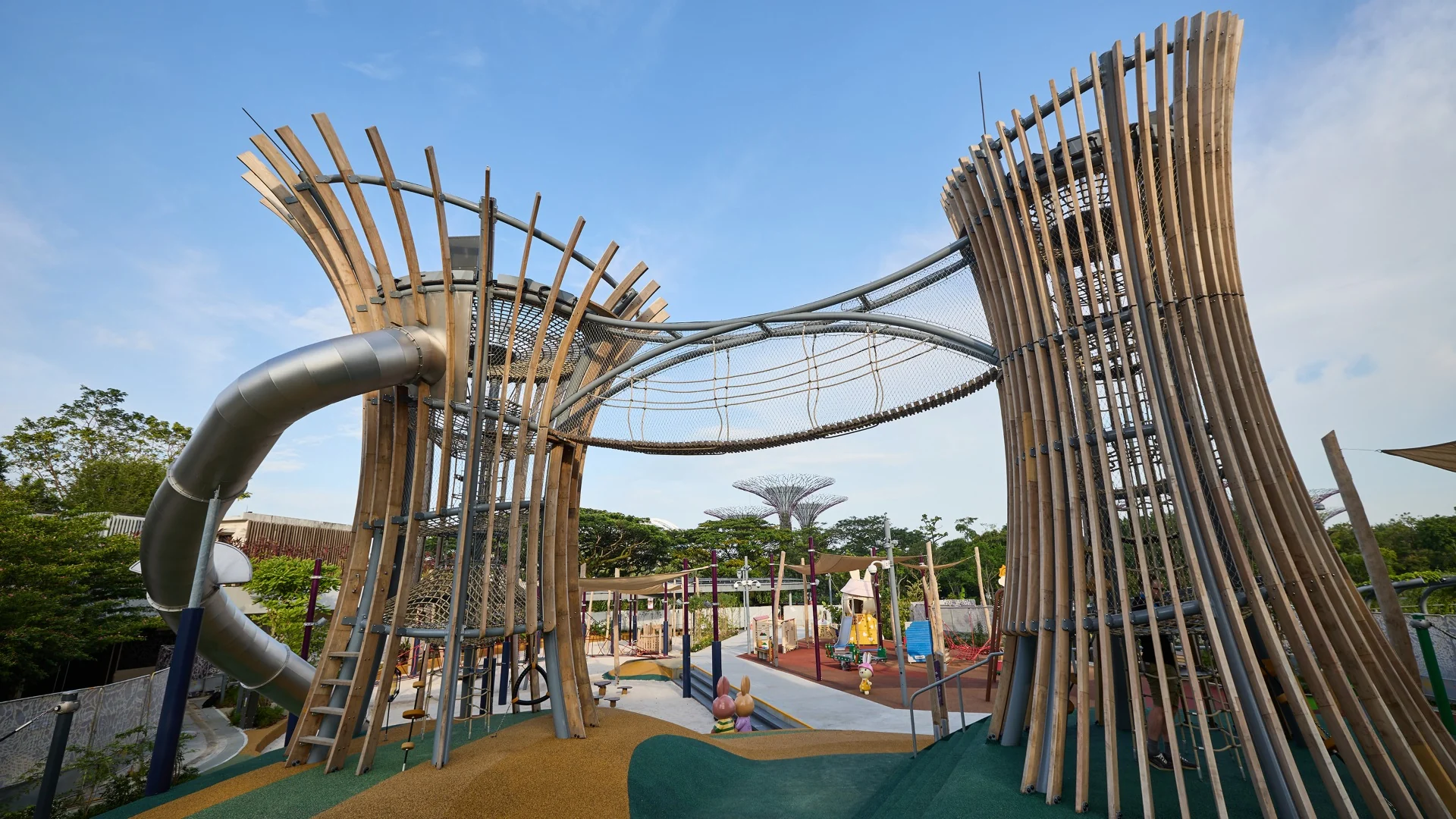
Daytime Supertrees with the arched aerial walkway overhead and visitors walking beneath
The aerial walkway threading between the trees with visitors below
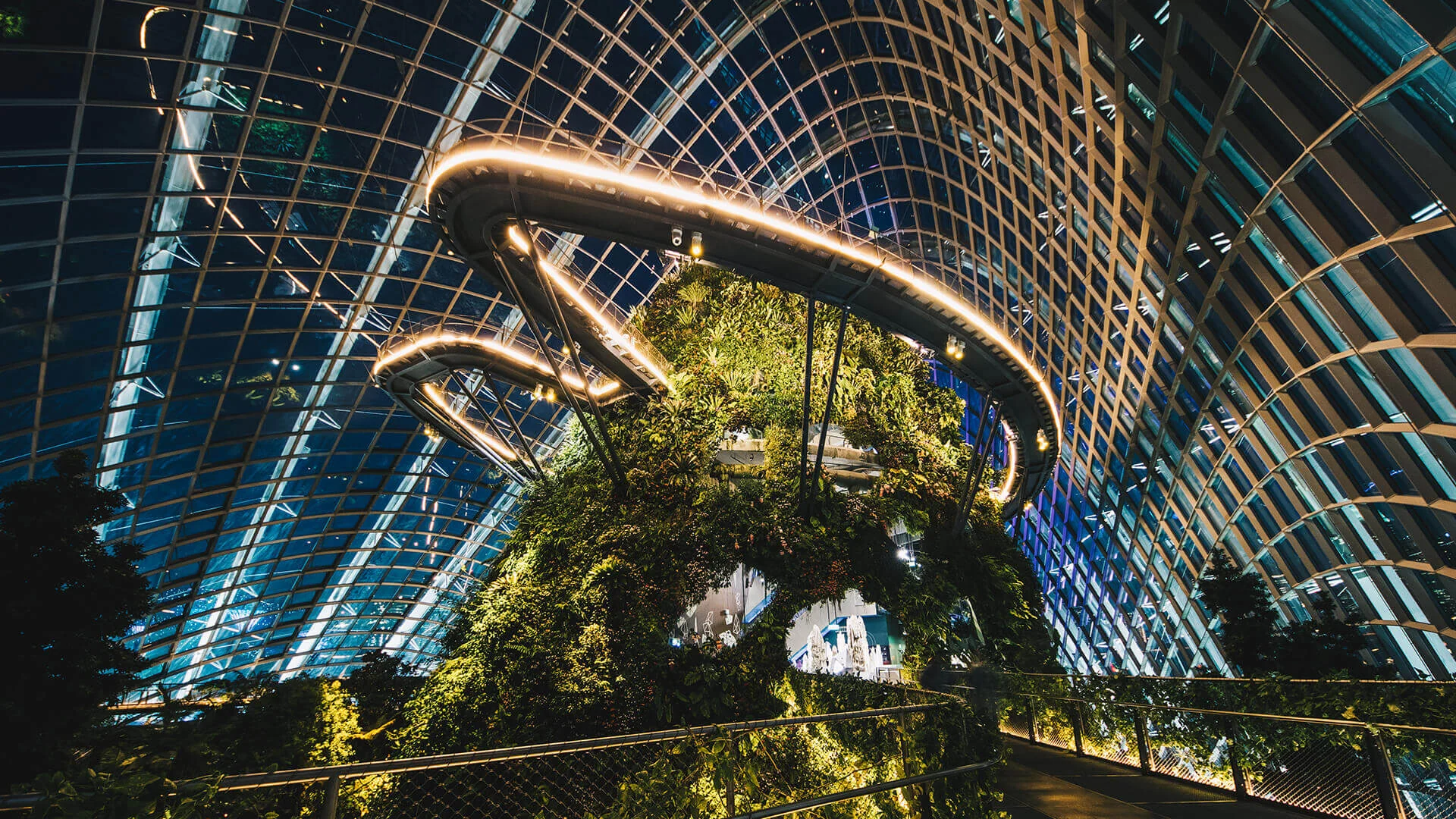
Looking up at the glass dome's steel ribs, lights running along the curves
The steel ribs of the glass dome traced with light
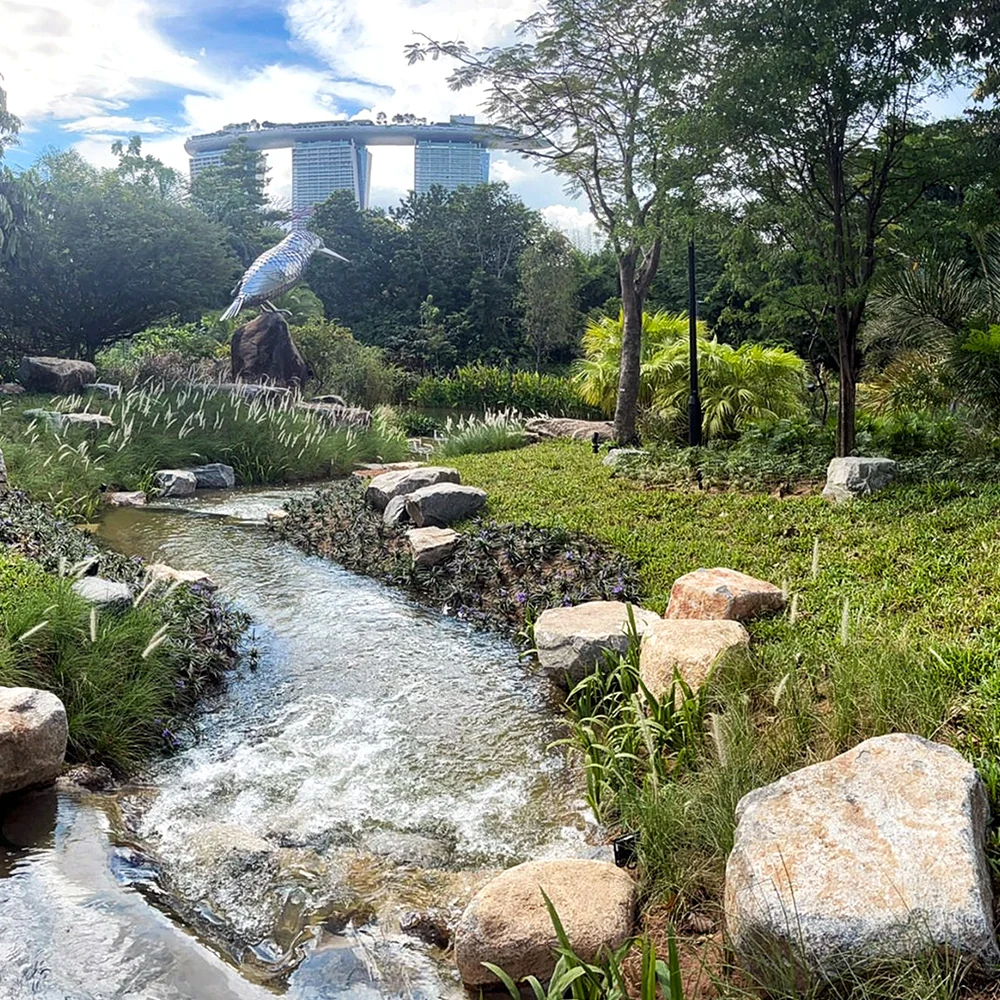
A stream in the Cloud Forest flowing along a stone path, ferns and plants on both sides

Water runs past the stone steps

A narrow stream follows the stone path downhill, breaking over a few grey stones, the plants on both sides kept low. A bridge lies across in the distance, and light leaking through the leaves falls on the water. Every few steps you round an obstructing rock, the soles of your shoes picking up the damp.

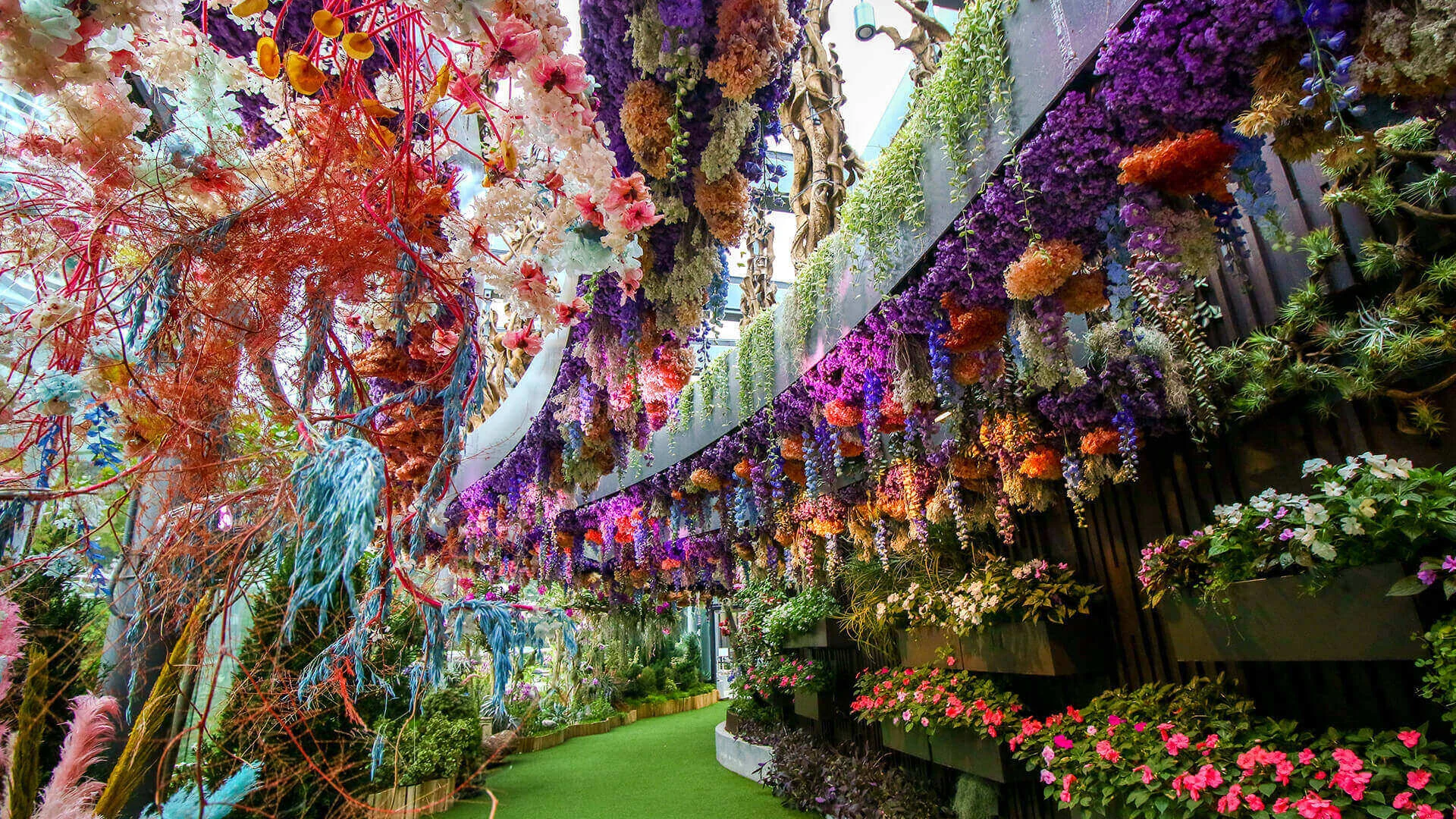
Tiers of red, purple and blue blooms in the Flower Dome with a path through the middle

Flowers packed into a wall

Reds, purples and blues of varying depth are piled together, a few slender green stems threaded through, with a narrow walkable path left at the bottom. The planting is so dense you cannot see the pots; colour layers over colour, and a person standing beside it becomes the backdrop.

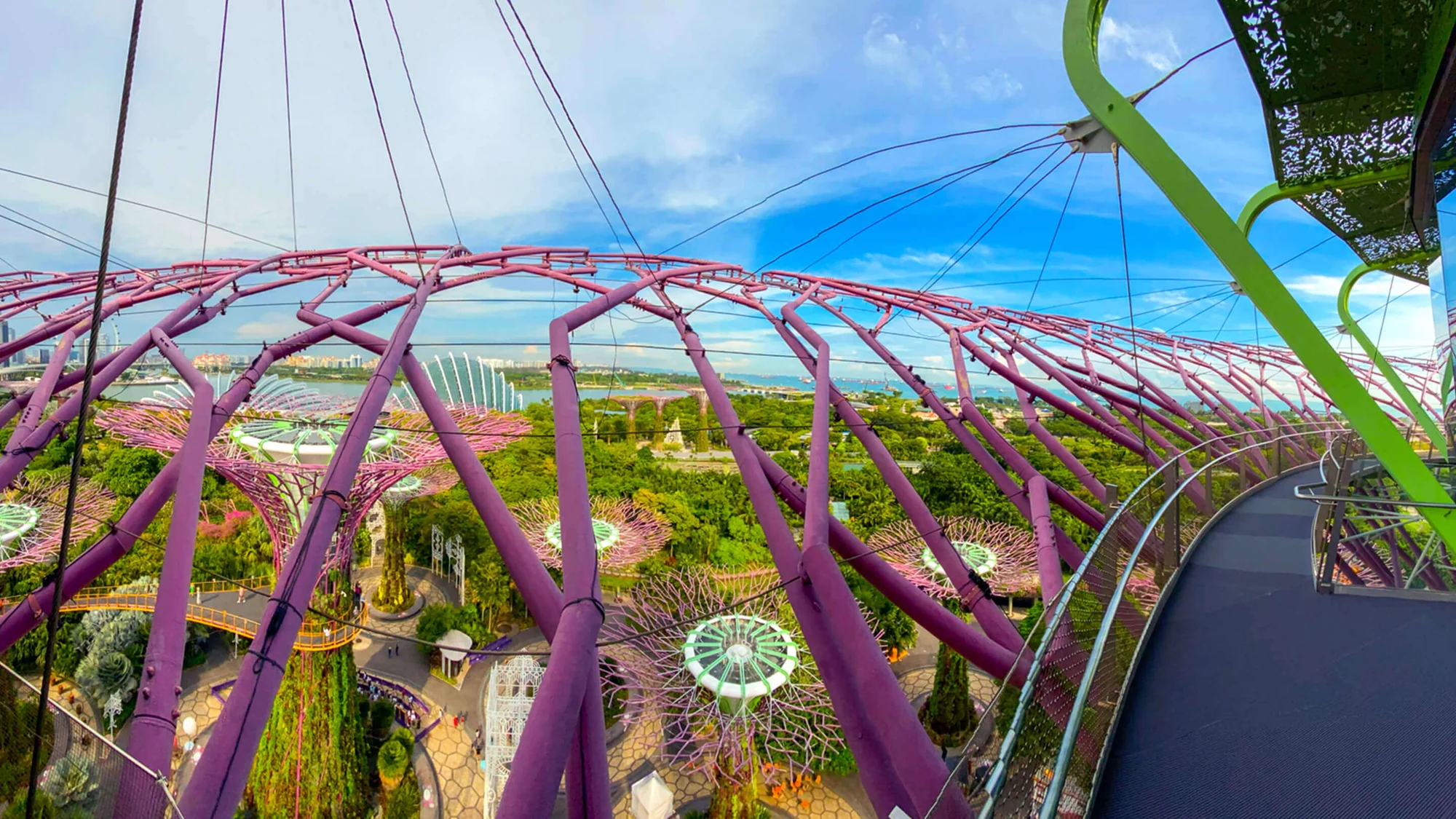
Purple arched tubes overlapping in mid-air in the Flower Dome, daylight through the glass roof

Purple tubes curving overhead

Purple arched tubes rise from the ground and overlap in mid-air, leaving a strip of blue sky between. Taller than a person, they bend the path beneath to follow their curve, while the glass roof gathers the light evenly. As you walk through, the arcs keep shifting, like threading between several tubes.

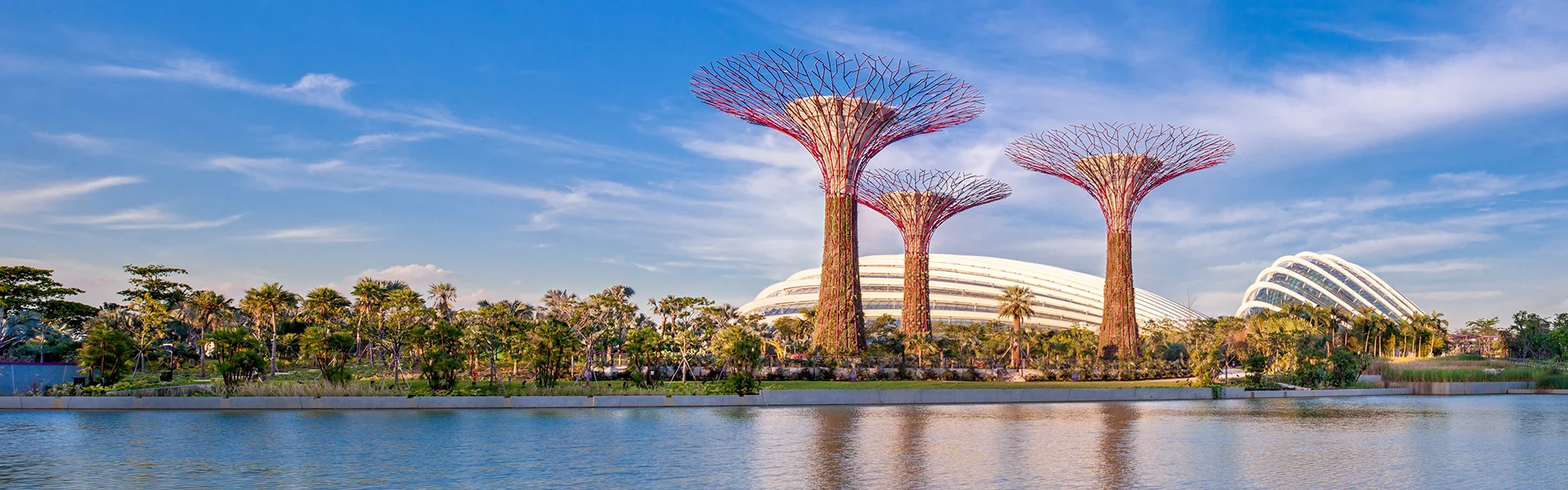
A distant view across water of the Supertrees, with the conservatories' curved roofs behind
Route

A full day you leave for Singapore

Do not put the two conservatories at the hottest noon; see the trees along the water first, then go into the glass houses once it warms up.

An orchid spread into a master plan

In 2006 the gardens held an international design competition, receiving more than seventy entries from 170 firms in 24 countries. The South Garden went to Britain's Grant Associates and the East Garden to Gustafson Porter. The master plan borrows the shape of an orchid, with the designers taking Singapore's national flower, Vanda 'Miss Joaquim', and breaking it into parts: the two waterfront conservatories are the roots, the rolling landforms the leaves, the paths the shoots, and the themed gardens and Supertrees the flowers blooming at the intersections.

Eighteen Supertrees stand in the garden, 25 to 50 metres tall, their crowns steel lattices with ferns and climbing plants tucked into the gaps. The tallest, at 50 metres, opened an observation deck inside on 27 December 2019. They are not sculptures — things genuinely grow on the trunks, and up close you can see the layers of green clinging between the steel ribs.

The official site says the garden holds more than 1.5 million plants, sourced from every continent except Antarctica. The number sounds vast, but walking it you still see it plot by plot; a sign by the path governs the bed in front of you, a wholly different climate from the one metres away.

Two glass houses, two kinds of weather

The Flower Dome covers 1.2 hectares and was listed by Guinness in 2015 as the world's largest greenhouse, kept at the dry cool of a Mediterranean climate. It has no columns at all, the glass resting directly on the ring of steel ribs, so the flower fields can run right to the edge. The garden changes its themed flower shows six to eight times a year, and each change recolours the aisles.

The Cloud Forest is smaller at 0.8 hectares but taller than the Flower Dome. Inside rises a 42-metre Cloud Mountain simulating the cold, wet forests at 1,000 to 3,000 metres. A lift takes you to the top and you walk down a circular path, passing several times beneath a 35-metre waterfall. The mountain's surface is clad in orchids, ferns and bromeliads, moisture always on the leaves.

Beside the Flower Dome, the 1,500-square-metre Floral Fantasy packs four floral displays into one room, blooms stacked by colour with only a narrow path at your feet. This is the opposite of the open flower fields — you must turn sideways to pass, looking up at the hanging branches.

The trees do work for the garden

The Supertrees' steel frames embed photovoltaic cells whose power lights part of the garden; the trunks also collect rainwater for irrigation and fountains. The conservatories' cooling systems push hot air out through these trunks, and draw intake air the same way. From afar they are just big trees; up close you learn the branches carry pipes.

Looking back from the water, the whole row of trees stands on the shore with the conservatories' curved roofs behind, the water stretching their height a little further. This angle suits the end of the day: as the sun lowers, the steel branches' shadows fall on the grass while the glass roofs still glow.

The gardens sit against the city centre; half a day covers the outdoor part, but the two indoor areas differ sharply in temperature from outside, so allow time on the way in and out. The flower shows change each season — do not use old photos to identify the current blooms.

Leave half a day for the Marina Bay gardens

The outdoor part links to the waterside path and the glass houses sit together; bridge the temperature gap between the two ends yourself.

Dates

The gardens are open year-round; check notices for current opening hours and the season's flower shows — do not use old photos for the layout.

Duration

The Supertree area plus the two cool conservatories takes half a day; add a full day to see the themed gardens one by one.

Season

The gardens sit in the tropics and are sunny all year; the conservatories stay cool. Which month to visit depends on the current flower show — check before you go.

Talk through my trip idea

If you are planning your Singapore days, tell me whether you will leave half a day or a full day, and whether there are children with you.

[email protected]

Read this page in Chinese

Discuss this journey