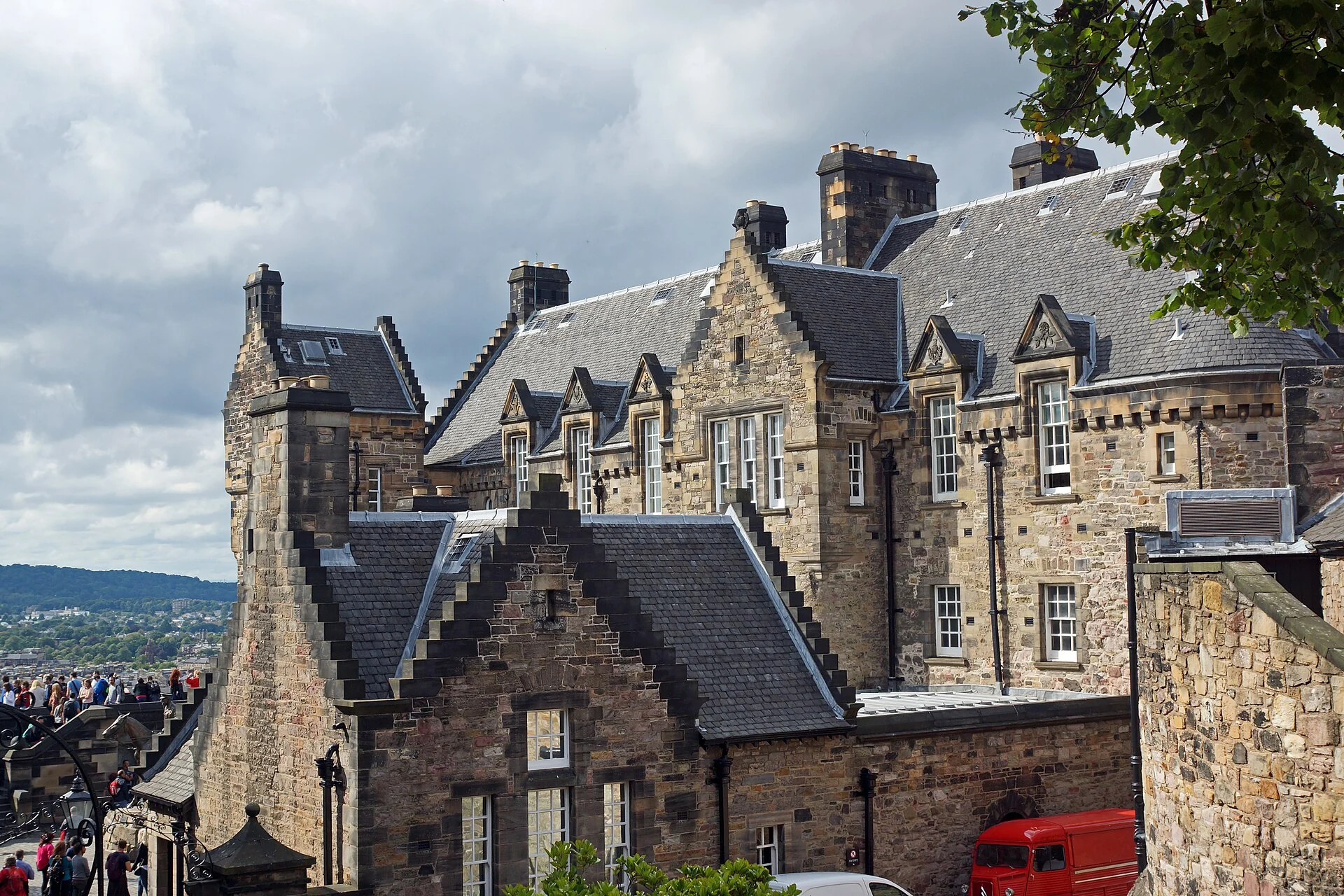
Castle square, pale stone houses enclosing flat ground, a flagpole in the middle

Edinburgh, United Kingdom

Edinburgh CastleStone on one solid rock

Walk west along the Royal Mile and at the end the road suddenly reveals a rock face, with buildings pressed onto its top. Once inside the grounds you lose the sense of height; the square is so flat you forget the stone beneath your feet.

At the west end of the Old Town, Castle Rock rises straight from the street, with cliffs on three sides.

PlaceEdinburgh, United Kingdom
TypeCastle complex
SuitsThose who'll climb the ramp slowly and trace how one site served crown and garrison

The seam between rock and wall

Edinburgh, United Kingdom — Castle complex.

First read the seam between the rock face and the wall from below the city, then go up the slope.

The buildings in the grounds belong to different eras; walk the circuit and you can tell which were added later.

This was both a royal residence and a long-standing garrison, and the traces of the two uses sit side by side.

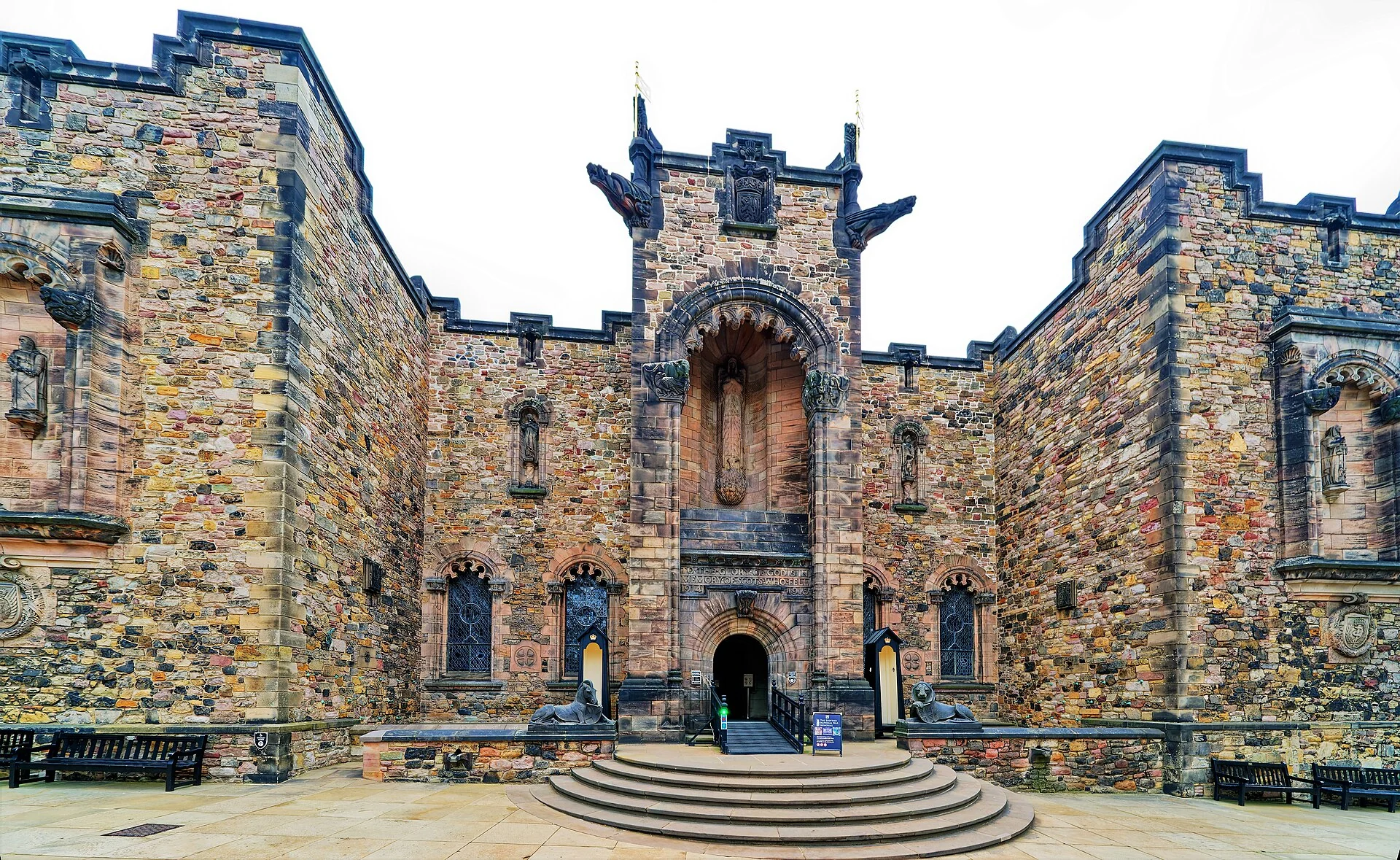
Stone gate, a row of crenellations above the arch
The arch beneath the toothed wall
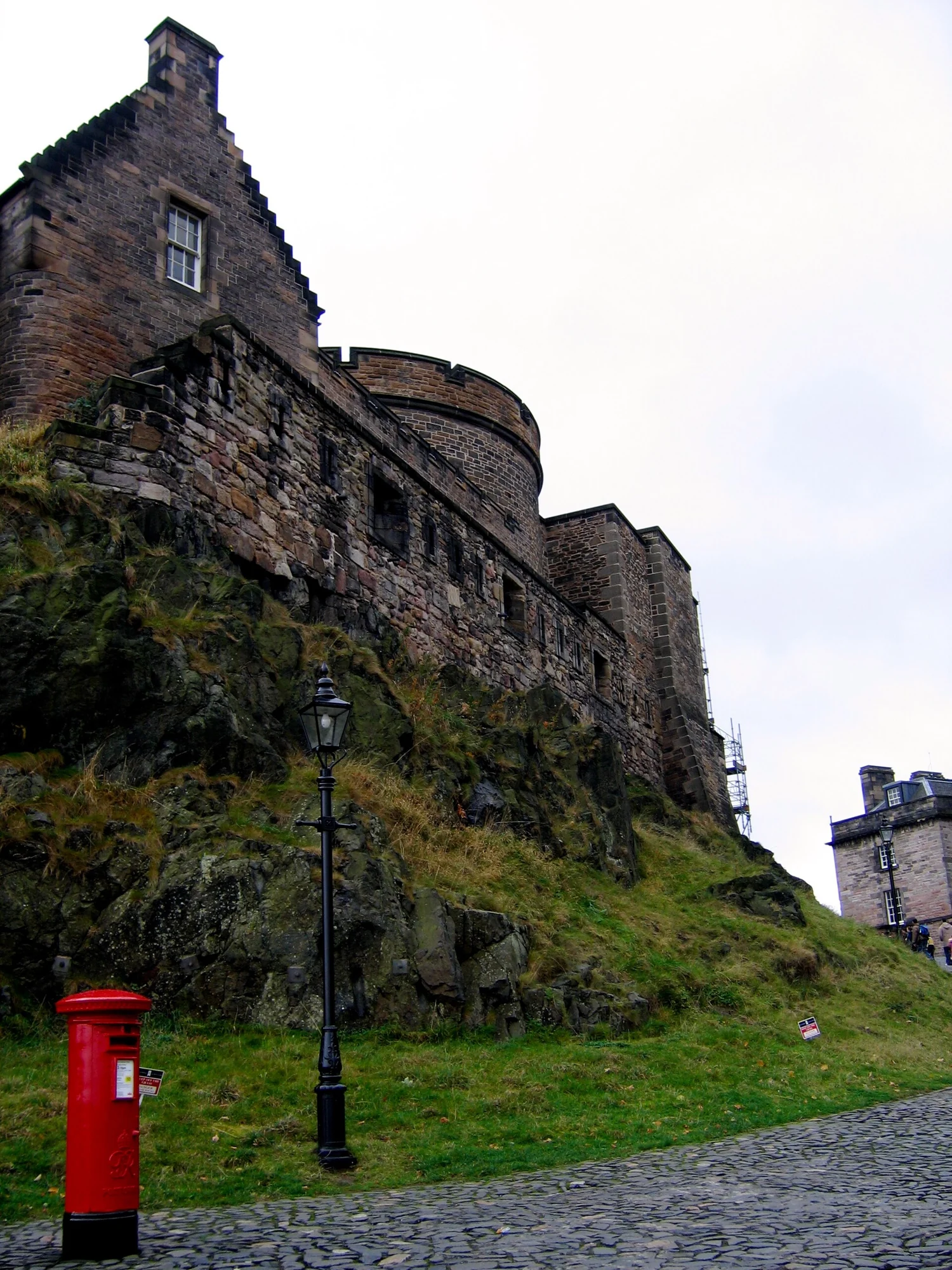
Castle Rock cliff and grass slope, a red post box at its foot
The red post box below the rock
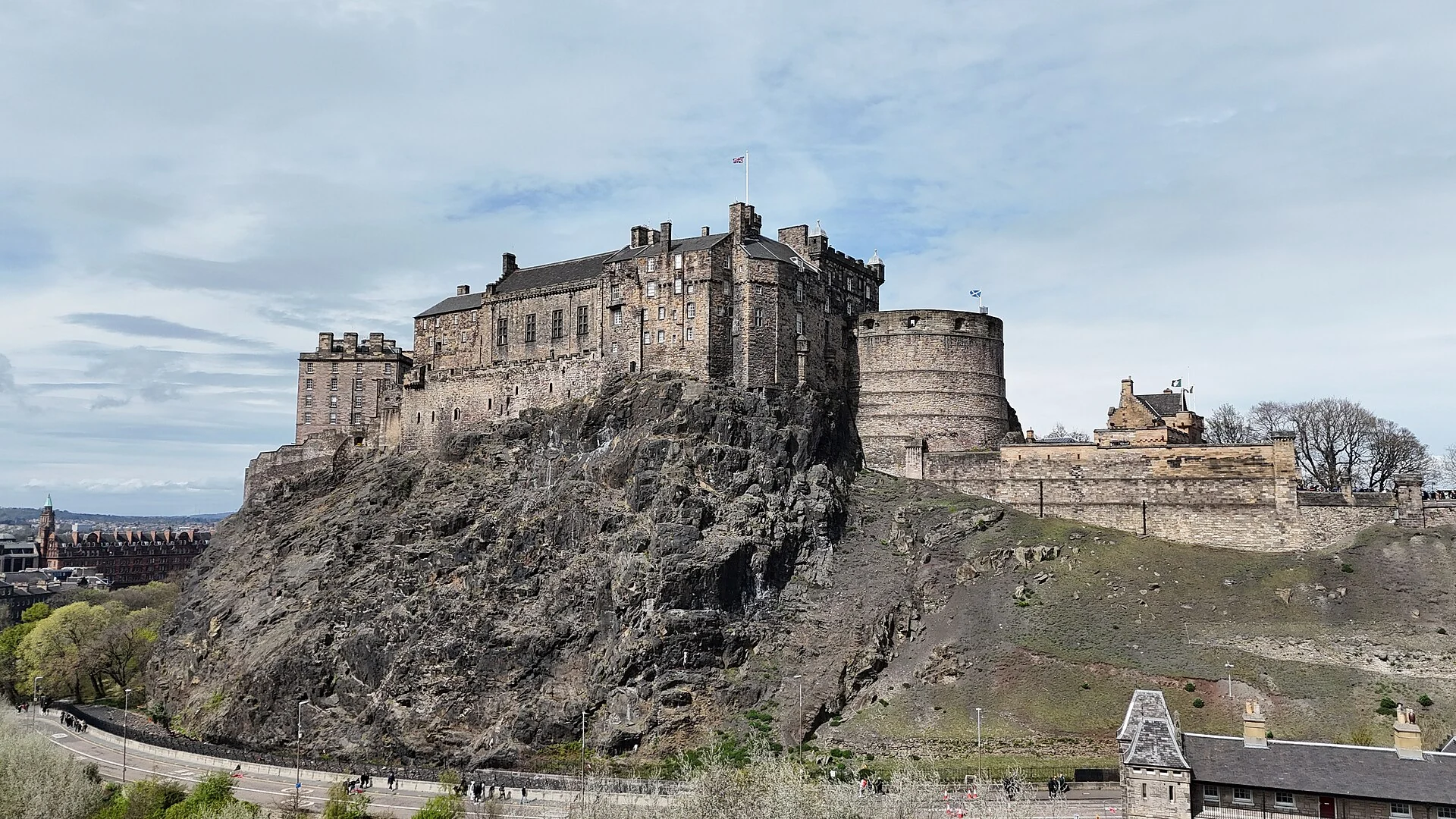
Castle Rock seen across a grass slope, a row of houses along the cliff top

One rock holding up the whole castle

Castle Rock falls on three sides as cliffs, with only the Old Town side offering a join to the road. The buildings spread along the rock top, their outer walls running along the cliff edge, so from the street the wall and rock read as one line. The ramp up was cut into the one gentle face, which is why there is only one way in.

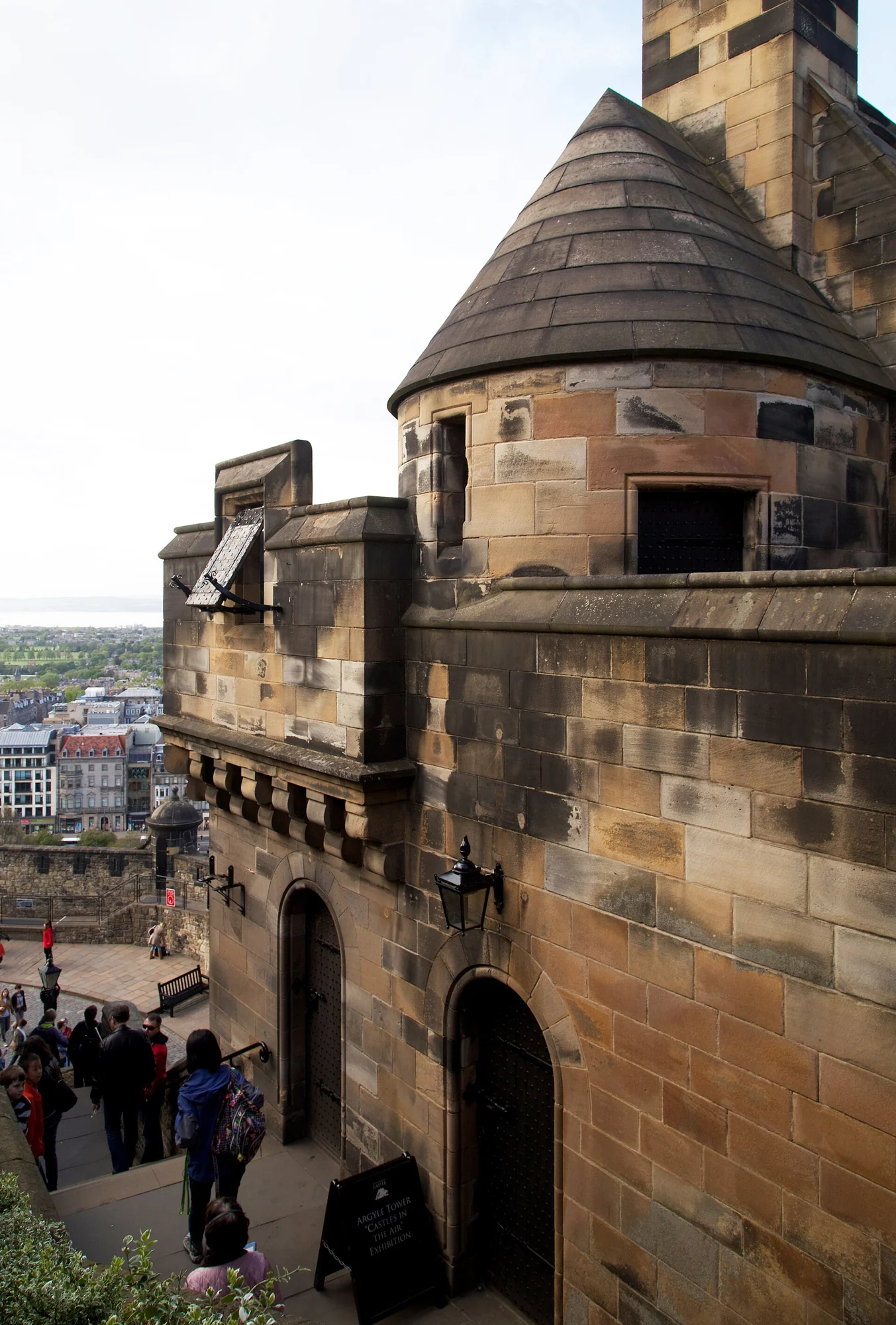
A round tower with a conical roof, people walking below the stone wall

The row of pale houses on the square

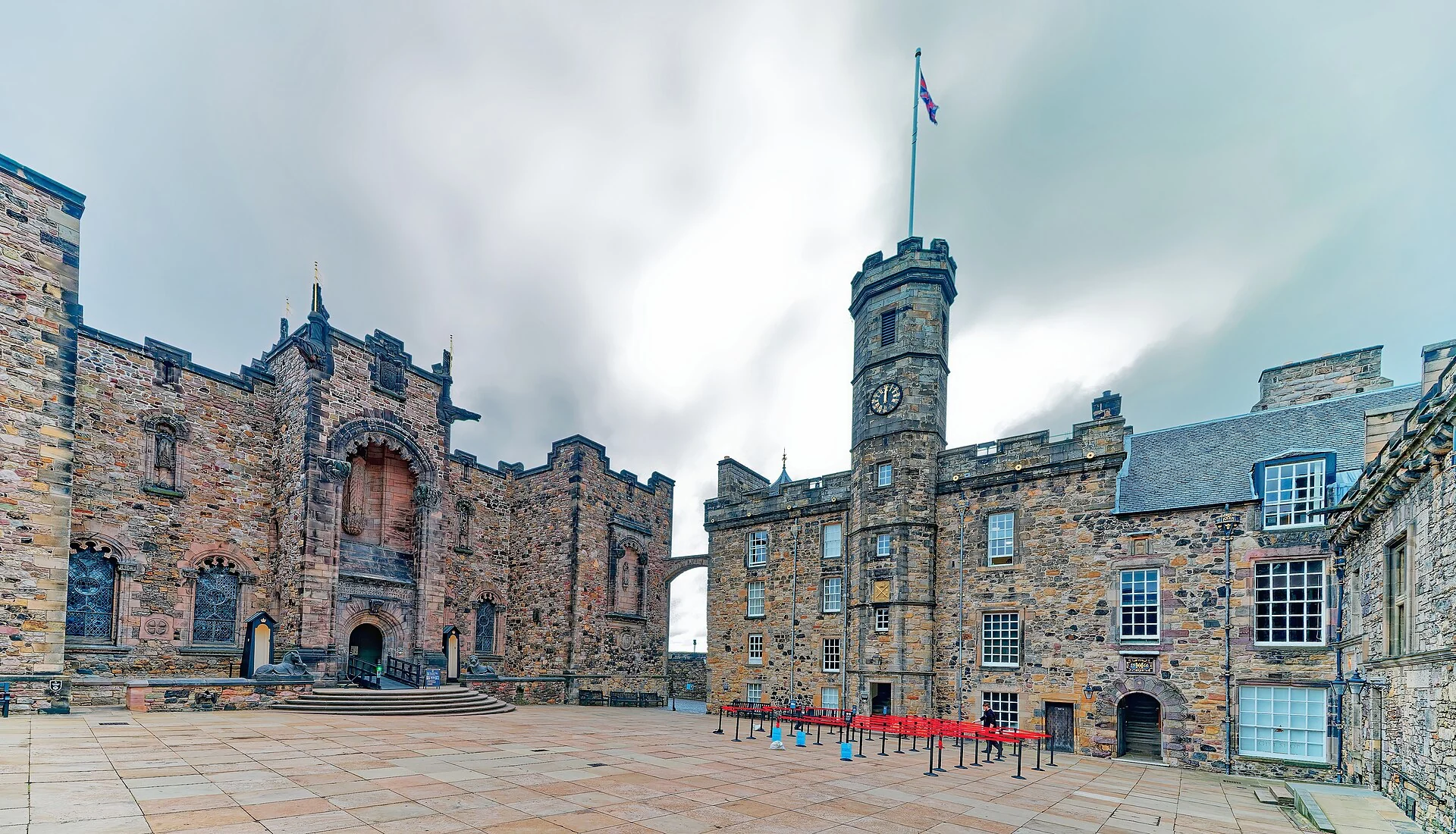
At the highest point inside is a flat square, ringed by pale stone houses, with the flagpole and clock tower in this area. These were built in several batches: the royal residence, the audience hall, and later the barracks, each taking a stretch. The window heights and stone ages only show their difference up close.

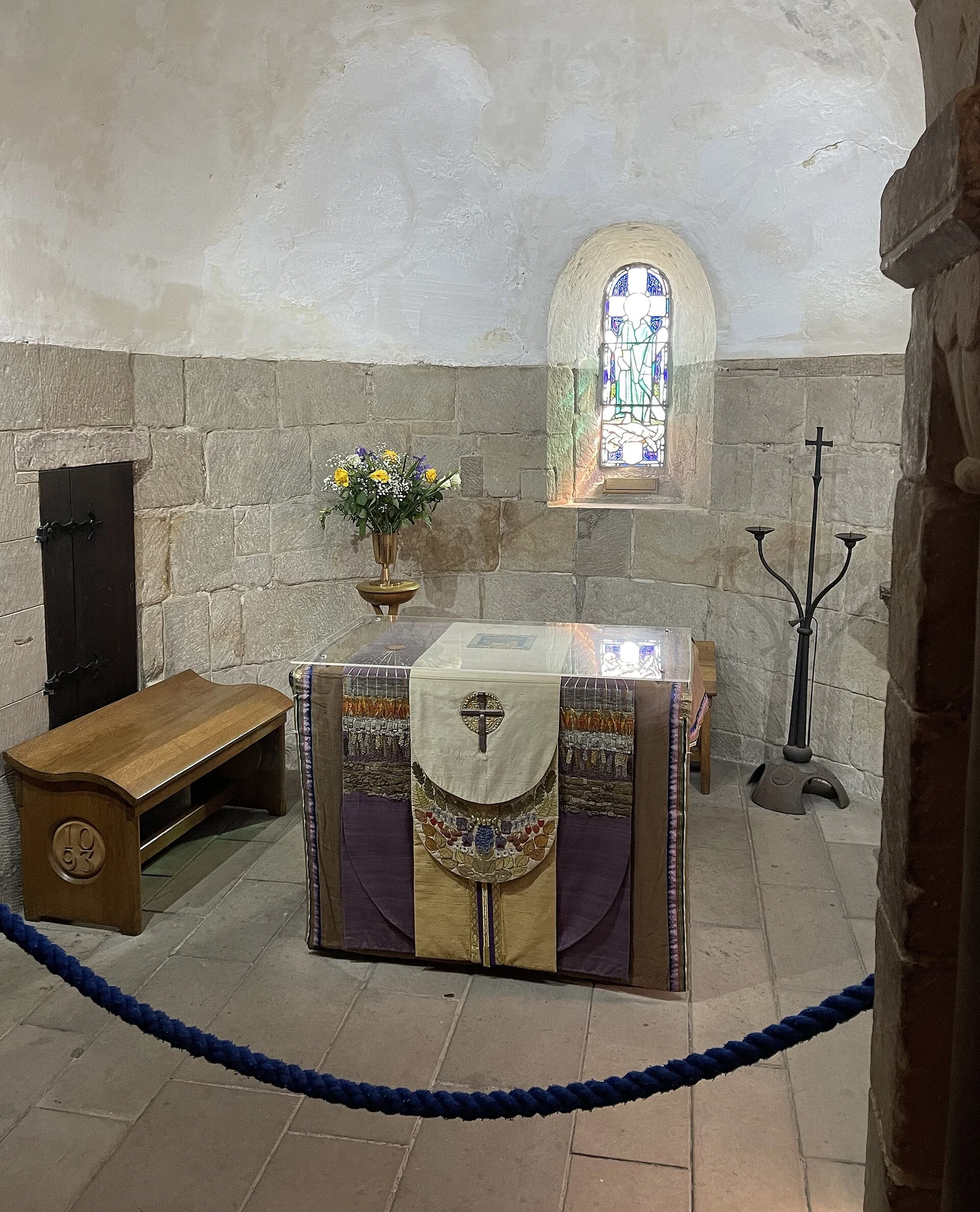
Chapel interior, a stained window on a white wall with flowers before it

The narrow window of the chapel

St Margaret's Chapel is among the few buildings in the grounds to survive the sixteenth-century bombardment; its walls are very thick with a single small window, inside a bench and a stone altar. Its scale is so small it seems unlike part of a castle — more a little old room enclosed by the later large buildings.

A spread of grey-stone roofs in the grounds, ridges at uneven heights, a red bus in the street
Route

A morning at the west end of the Old Town

Don't put it on a day you're catching a train. Stay in the Old Town the night before, walk the west end the next morning, and you'll still have energy to stroll back along the Royal Mile in the afternoon.

The houses pressed onto the rock top

Only the east side of this stone connects to the Old Town's streets; the other three drop straight down. People lived on this rock in the Iron Age, and by the eleventh century, under Malcolm III, there was already a royal castle on it. For more than five hundred years after, it remained a royal residence.

The entrance ramp was cut into the gentle side; everywhere else is cliff, with no other path. Once inside you don't feel the height — the grounds open into a flat square, pale stone houses around it, the outermost wall right at the cliff edge. Only looking up from below do you read the seam between rock and wall.

Most of what you see today is no earlier than the sixteenth-century siege. The cannon fire then destroyed the medieval defences almost entirely, and the houses rebuilt later were arranged for their new uses.

The residence becomes barracks

After the fifteenth century the royals came less. By the seventeenth it was mainly a garrison; arms, the treasury and records were also kept here at times, and it served as mint and prison. The Scottish crown jewels were kept in the grounds — the most often mentioned of these uses.

When the use changed, the buildings changed with it. The audience hall, royal apartments and barracks each took a stretch, with windows at different heights and stone of different ages. Someone counted in 2014 that in eleven hundred years the castle was besieged twenty-six times.

From the nineteenth century it was increasingly seen as a national relic and restored several times. Today the Scottish National War Memorial still stands in the grounds, and the British Army manages part of it, mostly ceremonial and administrative.

From the foot of the ramp to the square

Spend a moment below the city first, taking in the rock face, the row of houses on the cliff top and the wall running along the cliff. This stretch best explains why the castle was sited here, and why the ascent has only one route.

Climb the ramp and the stone arch and steps are before you. Above the arch is a row of crenellations, the stone washed to uneven shades by rain. Inside, don't rush to the hall; to the right, the small chapel is tiny, with a narrow window in its wall — among the oldest buildings in the city.

Higher still, the square opens flat. Flagpole, clock tower and a ring of pale stone houses enclose the space; looking back, the rooftops press down to the city in uneven ridges. The seam you saw from the foot of the ramp, you now stand above it.
A morning for the west end of the Old Town

Read the rock face from below first, climb the ramp, step into the chapel on entering, and end on the square taking in the whole roofscape.

Time needed

A full half-morning to cover the ramp, the square and the chapel; allow extra time for the Royal Mile area beyond

Getting around

The grounds are mostly stone paths and ramps, with narrow stairs in places; slow walkers should split the route in two. Check current notes for step-free access

Best light

Scottish daylight fades fast; the panorama from below reads better under thin cloud — check current conditions for the light you want

What's open

Individual interior areas close in rotation; confirm which rooms are open in the current period

Talk through my trip idea

If you're planning your Edinburgh days, tell me whether you mean to spend half a day or a full day, and whether anyone in your group walks slowly.

[email protected]

Read this page in Chinese

Discuss this journey