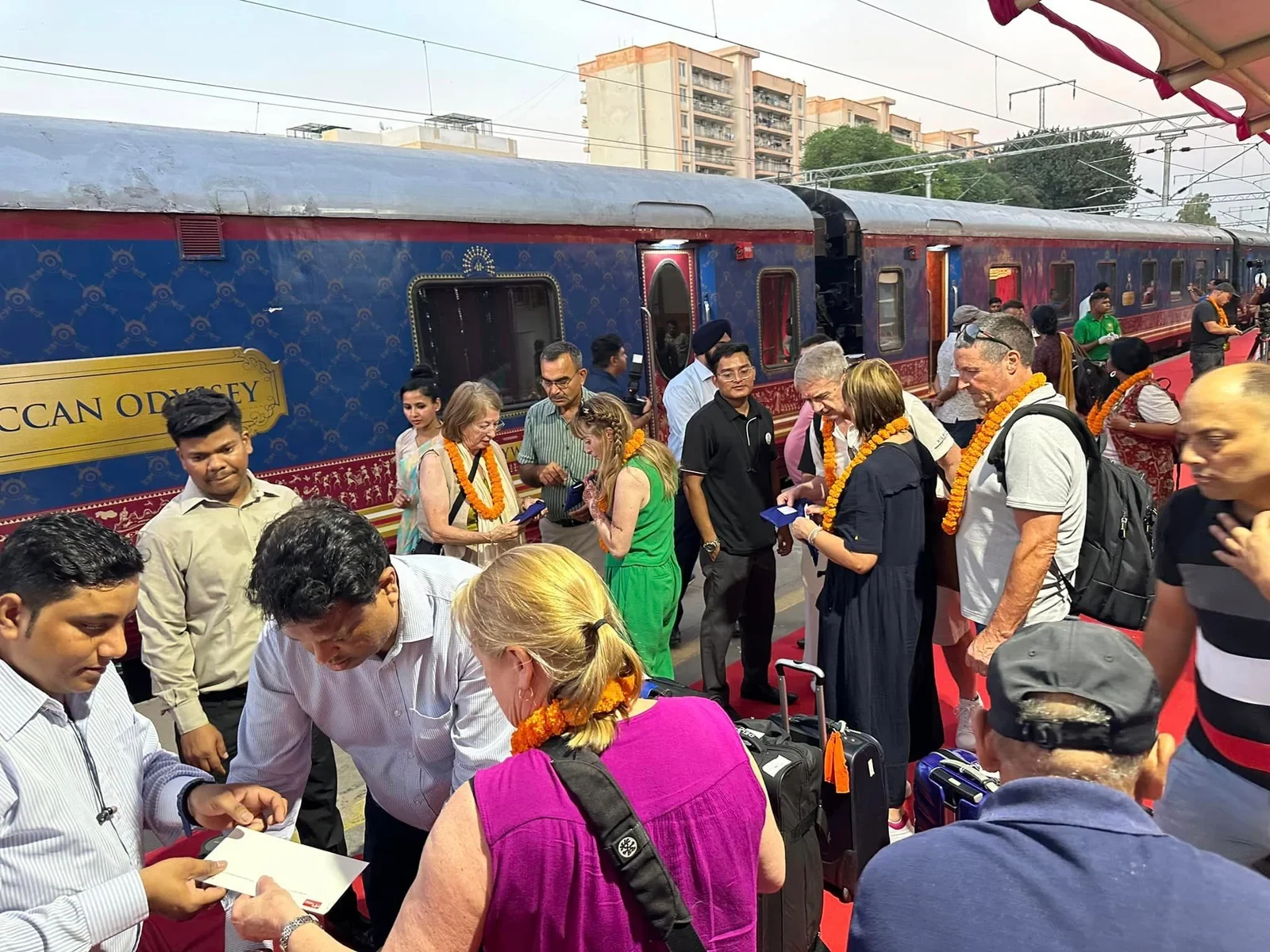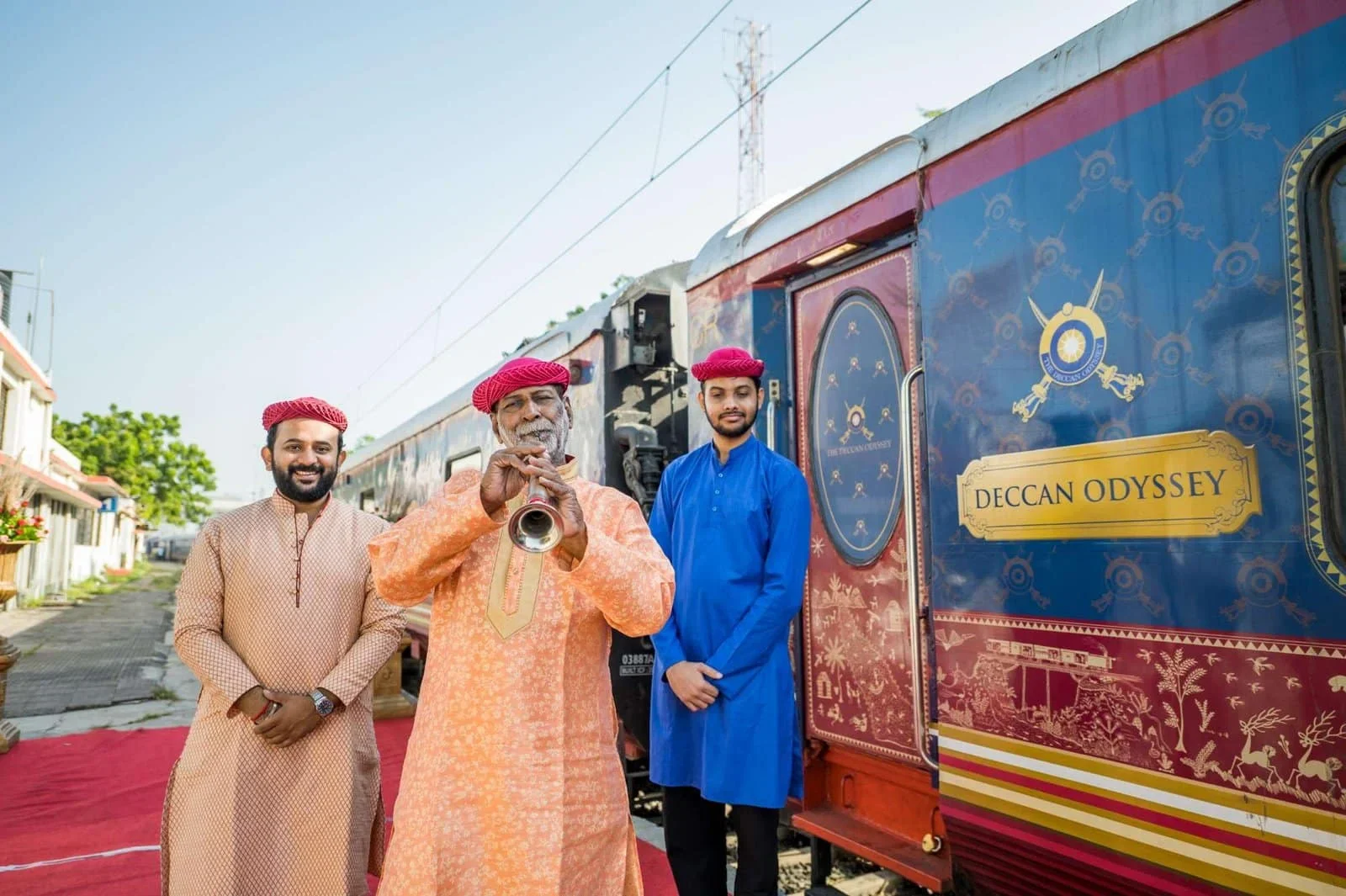
A group of passengers stands on a station platform beside a long blue train with red trim, one holding up a camera

Maharashtra and Rajasthan, India

Deccan OdysseyLong transfers happen overnight; daylight belongs to the sites

Deccan Odyssey is a blue sleeper train that carries its passengers between western India's cave temples, old cities and forts. It runs at night and stops by day, so the long distances pass while you sleep. Routes leave from Mumbai or Delhi and change what you see; Ajanta, Ellora, Goa and Rajasthan sit on different itineraries.

Routes begin in Mumbai or Delhi and head out into western India, the Deccan plateau or Rajasthan, depending on the theme. Stops vary sharply from one product to the next, so the map in front of you belongs to a single itinerary.

PlaceWestern and central India
TypeSleeper train
SuitsHeritage sites by rail
Stay7 nights, 8 days

Caves, old cities and coast, route by route

Maharashtra and Rajasthan, India — Luxury sleeper train.

The train folds lodging, meals and transport between cities into one continuous product. Blue carriages run several routes and they do not overlap much: Ajanta and Ellora on one, Goa on another, the Rajasthan forts on a third. Which sites you reach depends entirely on the itinerary you book.

It rewards travellers who can live with a fixed timetable. You unpack once, sleep through the long legs and wake near the next site. If you would rather stay put in one city, put land days before or after the train rather than inside it.

It draws people who want Indian rail itself, World Heritage listings and long multi-city lines, and anyone keen to cut road transfers. Several agencies sell the product, so confirm the operating dates, the train's current status and what the package covers. Ask for each of those in writing.
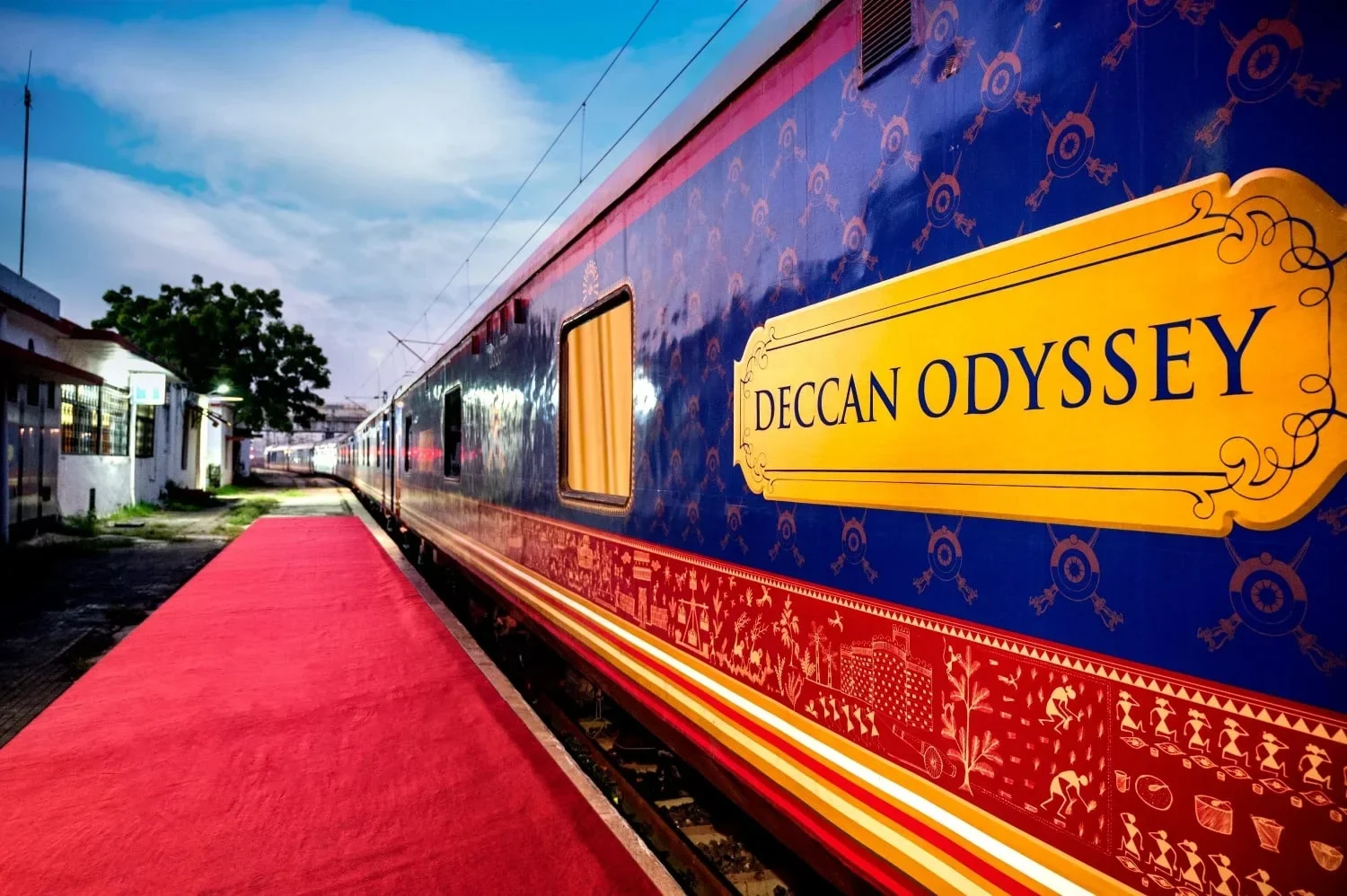
A station platform covered end to end with red carpet, running toward open carriage doors with staff at the entrance
Red carpet laid along the platform before departure
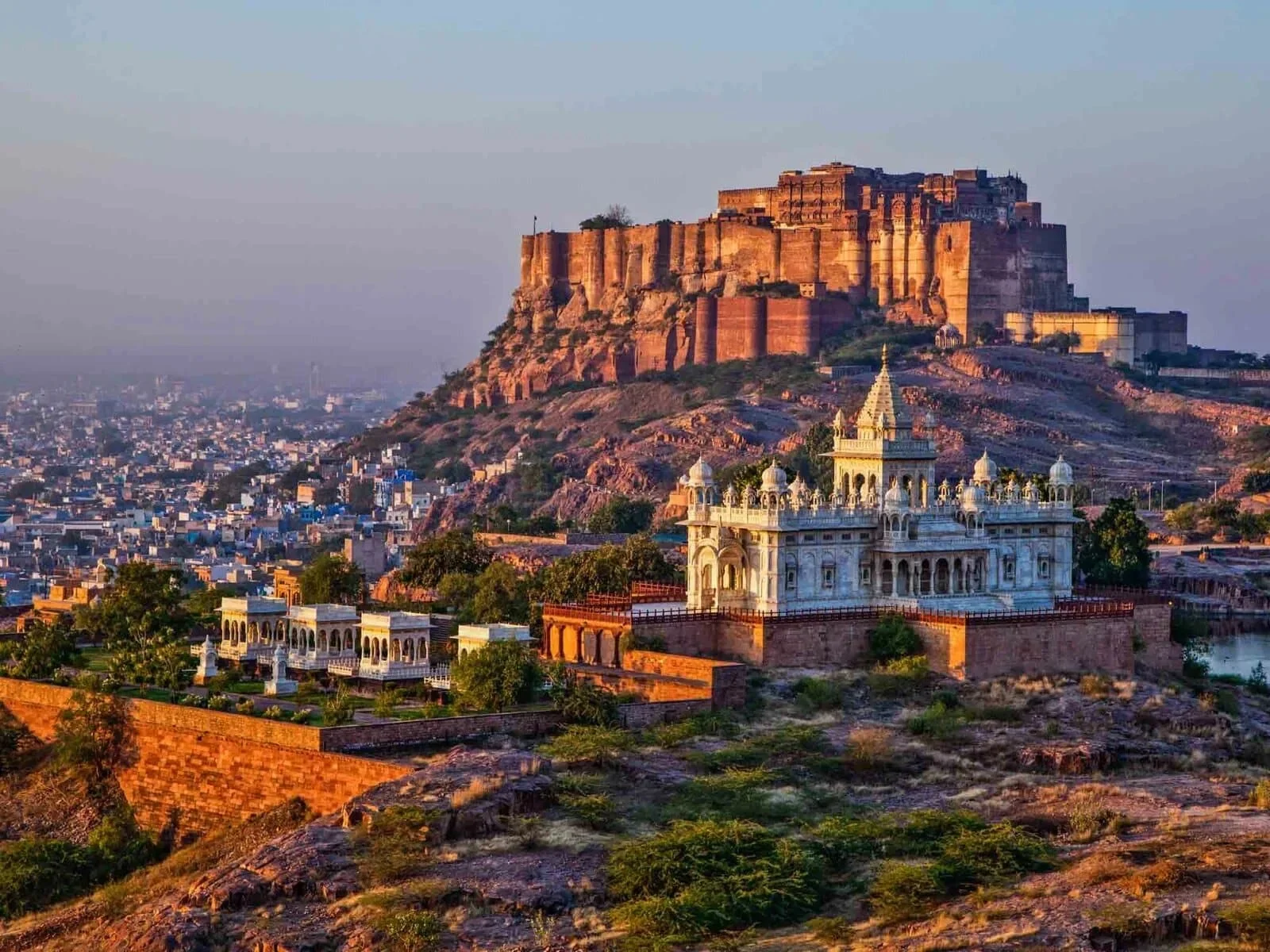
A hilltop fort of pale stone above a dense town, seen from a higher vantage in soft afternoon light
A hill fort looking down over the town
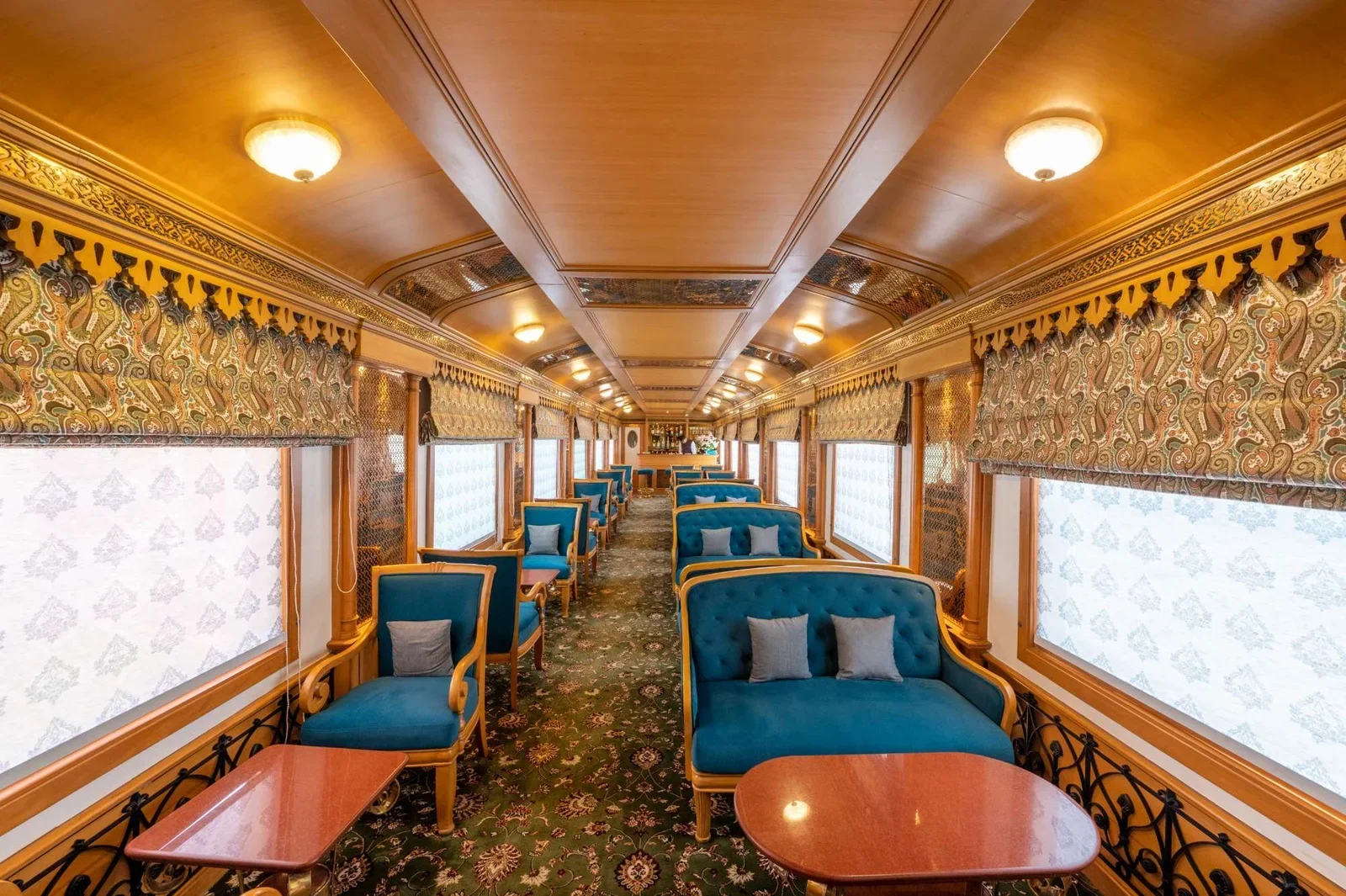
Interior of a carriage with deep blue upholstered seats, gold trim on the wall panels and warm lamps overhead

Long legs pass while you sleep

Transfers between regions are scheduled for the hours you would be asleep. You go to bed in one landscape and step off in another, and the daylight goes to cave temples, walled cities and hill forts rather than to a highway. That is the whole logic of the timetable.

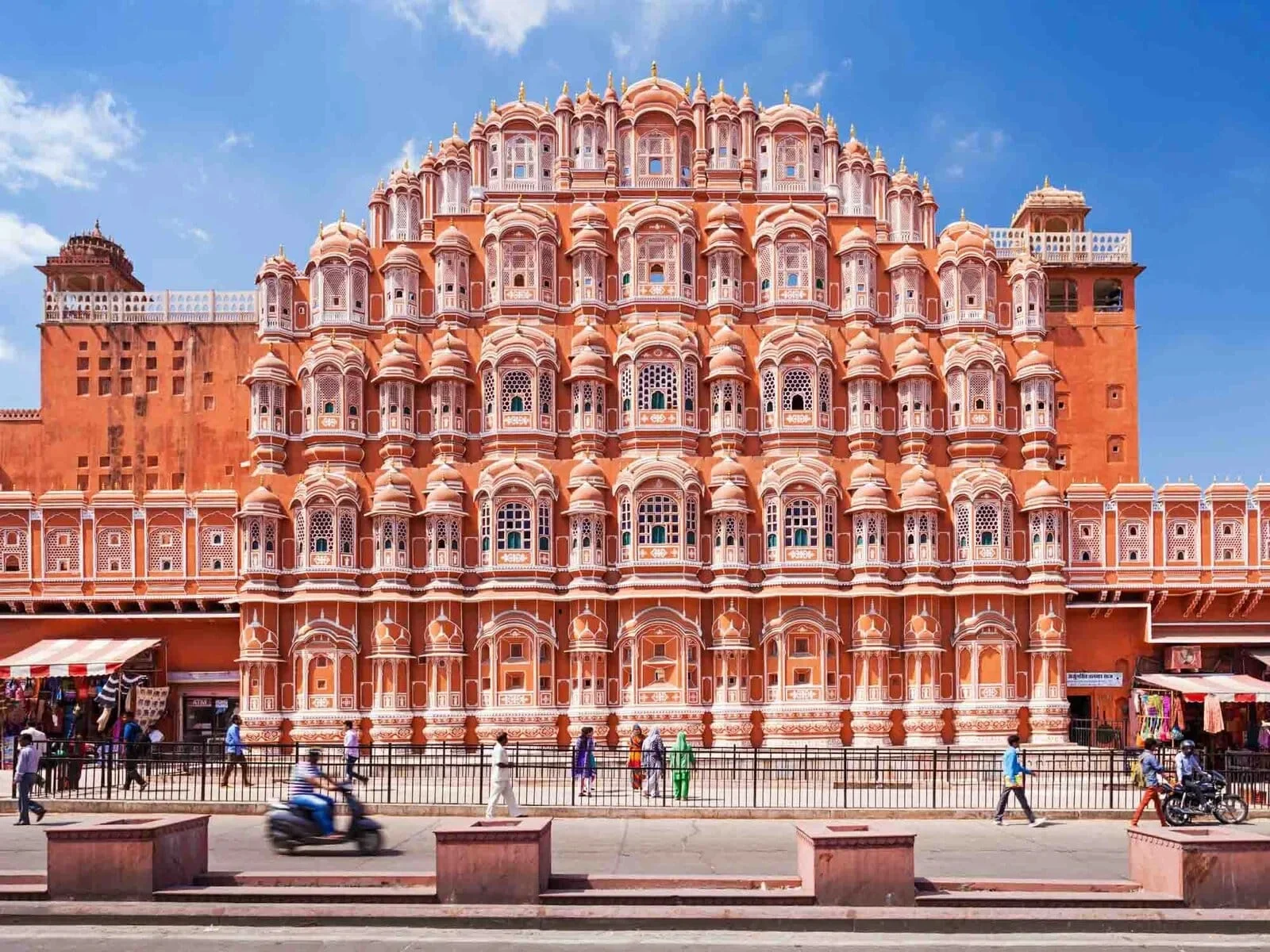
The pink stone facade of a palace rising above a street, pedestrians and shopfronts at ground level

Mumbai out to the Deccan and west

Depending on the route, the train reaches the painted caves at Ajanta, the rock-cut halls at Ellora, the Goa coast or the Gujarat side of western India. These regions differ in climate, food and architecture, so no single list of stops stands in for the others.

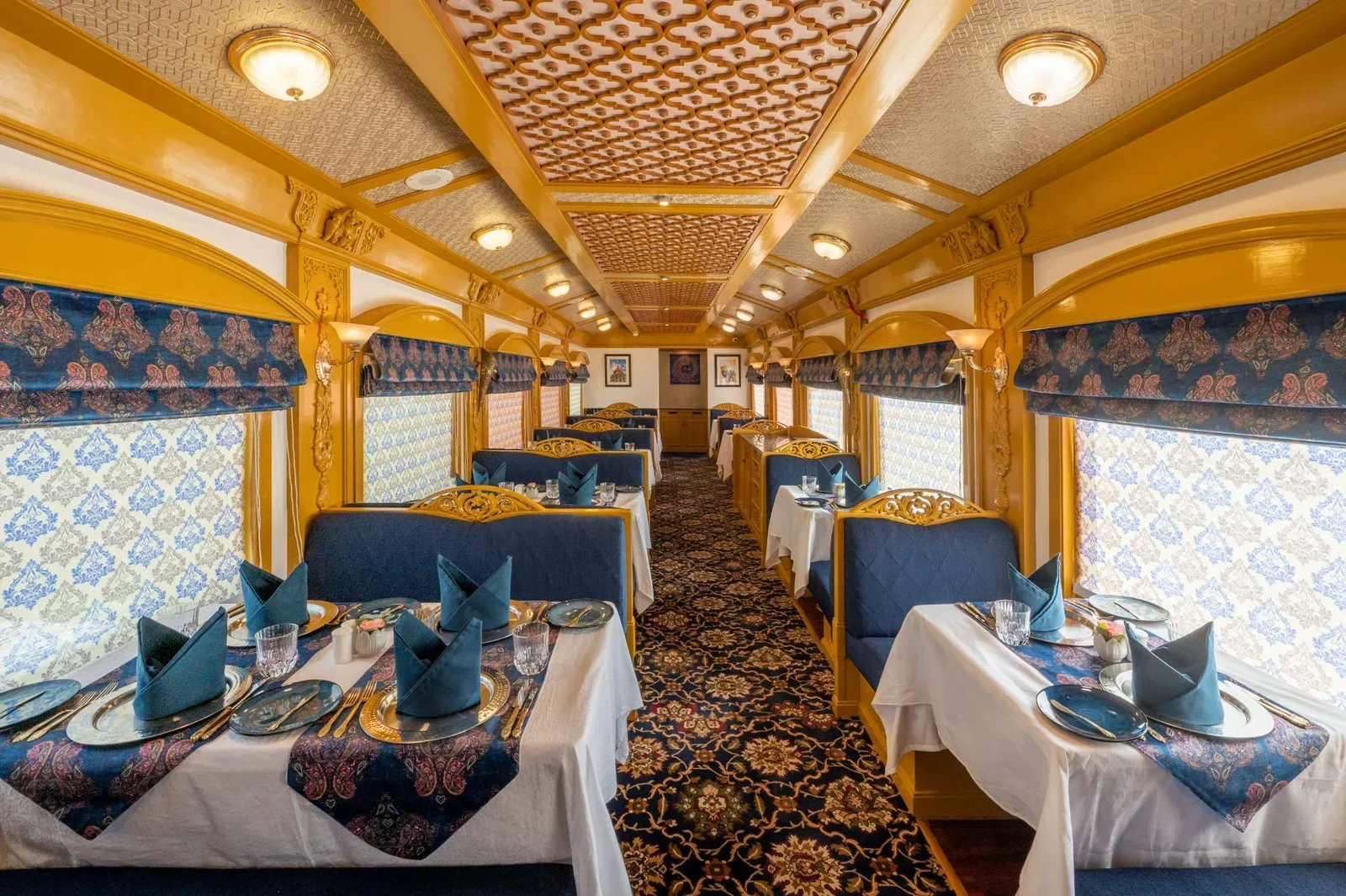
A dining car with white-clothed tables, blue and gold banquettes and glassware set out under ceiling lights

One cabin for a string of cities

Your bags stay in the same compartment while the map changes outside. No nightly repacking, no repeat check-ins, no hauling suitcases through lobbies. On a first long trip in India that removes the part most people find tiring. Cabin grades and bathrooms still differ by carriage.

Travellers in casual clothes standing in a loose group beside a stopped train, some turning toward the camera
Route

Where seven nights of rail sit in a longer trip

Most itineraries run seven nights and eight days, so the train is the spine of the trip rather than a night out. Place it before or after a Mumbai stay, then add a beach, another city or South India on the far side. A northern route in and out of Delhi is the alternative.

Putting seven nights of rail into the trip

The main itinerary is a week long, which shapes everything around it. Fix the buffer nights first, then choose the route that reaches the sites you want.

Stay

The main rail itinerary usually runs seven nights and eight days. Add a night at each end in Mumbai, or in whichever city the route actually starts and finishes.

Getting there

You join at Mumbai CSMT or another station named on the itinerary; the real start depends on the route. Sleep in the departure city the night before.

Season

Departures cluster between October and April, which keeps the trip clear of the hottest weeks and the heaviest monsoon. Check the specific dates against the route.

Watch out

Several agencies sell this train. Confirm the operating dates, the train's current status and what is included before you commit to a route.

Plan this into a journey

The train sets the timetable. The nights before and after it, and the city you add at either end, are where the trip takes its shape.

[email protected]

Read this page in Chinese

Discuss this journey