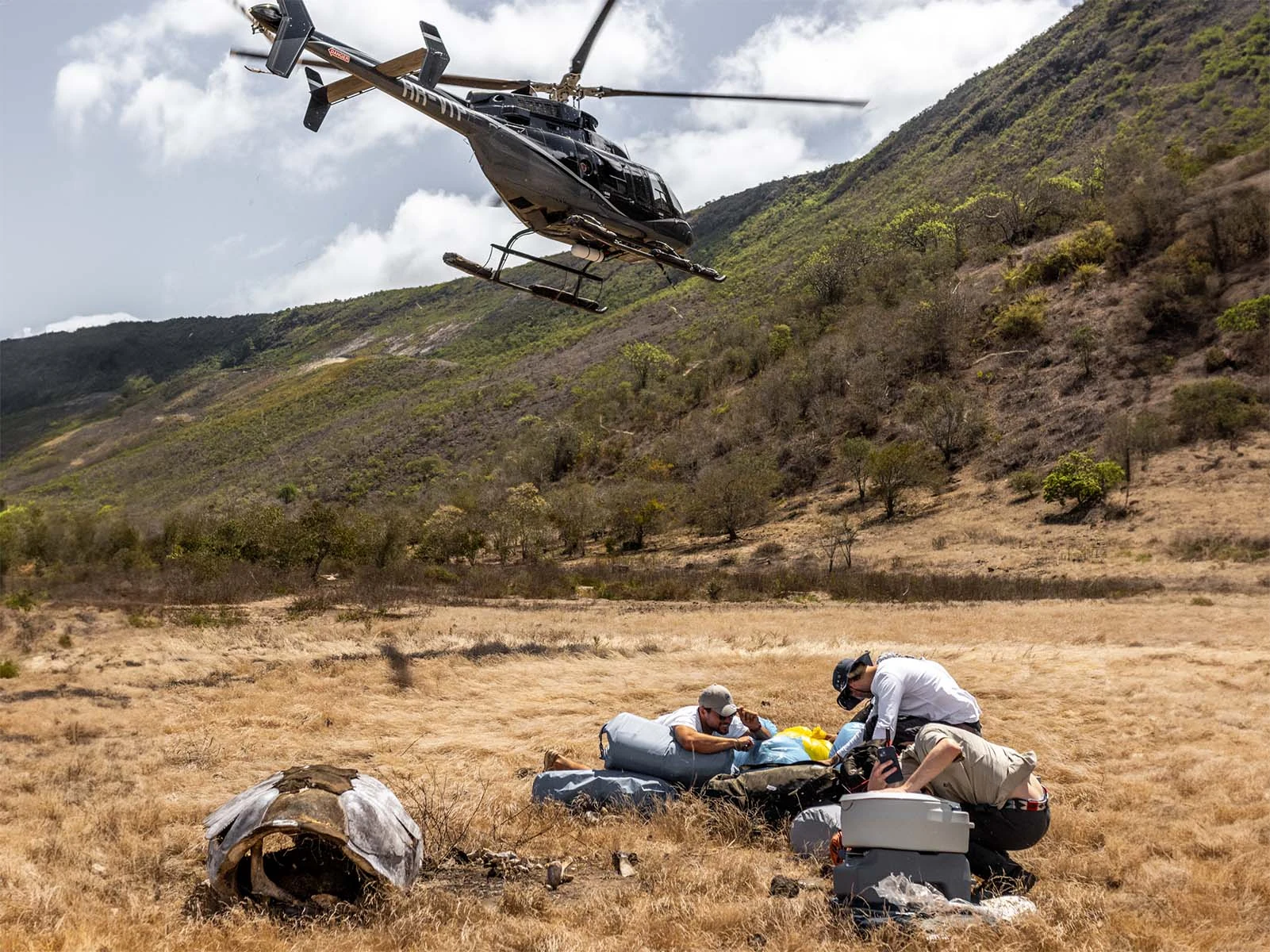
A white helicopter parked on rough wilderness ground, several passengers standing beside the open door with packs at their feet

Remote destinations worldwide

Cookson AdventuresYachts, aircraft and camps assembled for a single trip

Some trips start with a place and end with a booking. This one starts with a task: a species to find, a site to reach, a date that cannot move. The team works out where that is possible, what permits it needs and who has to be on the boat, then builds the transport around it.

The company is based in Britain and works on locations worldwide, holding no lodge or vessel of its own. Where a group goes, and how it gets in, is settled project by project.

PlaceWorldwide, remote
TypeExpedition design
SuitsPrivate groups and yacht owners
Stay7-14 nights

Boats, aircraft and specialists folded into one plan

Remote destinations worldwide — Private expedition design company.

The work begins with what a group wants to accomplish, not with a list of ready departures. A team then tests that wish against the ground: whether the place can be reached, which permits apply, what transport exists within range and which specialists need to travel with you. Destinations get chosen because they answer the question, not because they are on a brochure page.

Yachts, fixed-wing aircraft, helicopters and temporary camps are treated as tools rather than the point of the trip. The useful conversation is about where you are going and why, what the people travelling with you can actually take part in, and whether there is enough time to prepare. A camp that suits one objective will not suit the next.

It fits families or private groups who already know what they are curious about and need privacy plus heavy logistics behind it. Both the budget and the lead time sit well above ordinary tailor-made travel, and a loose idea is harder to price than a specific one. Bring the objective first.
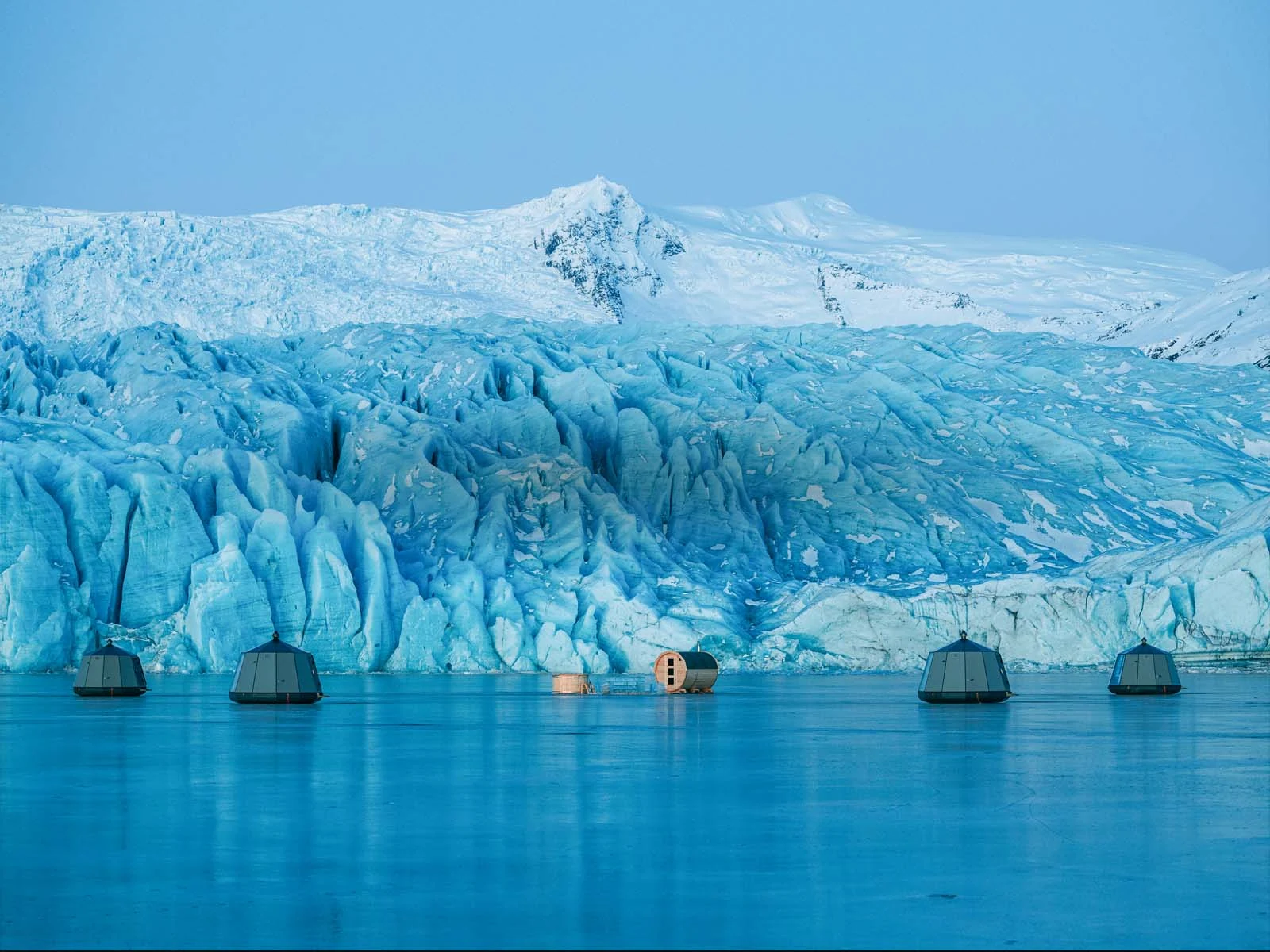
Several small rigid boats floating in dark water at the base of a tall blue glacier face, ice chunks scattered around them
Small boats held at the face of a blue glacier
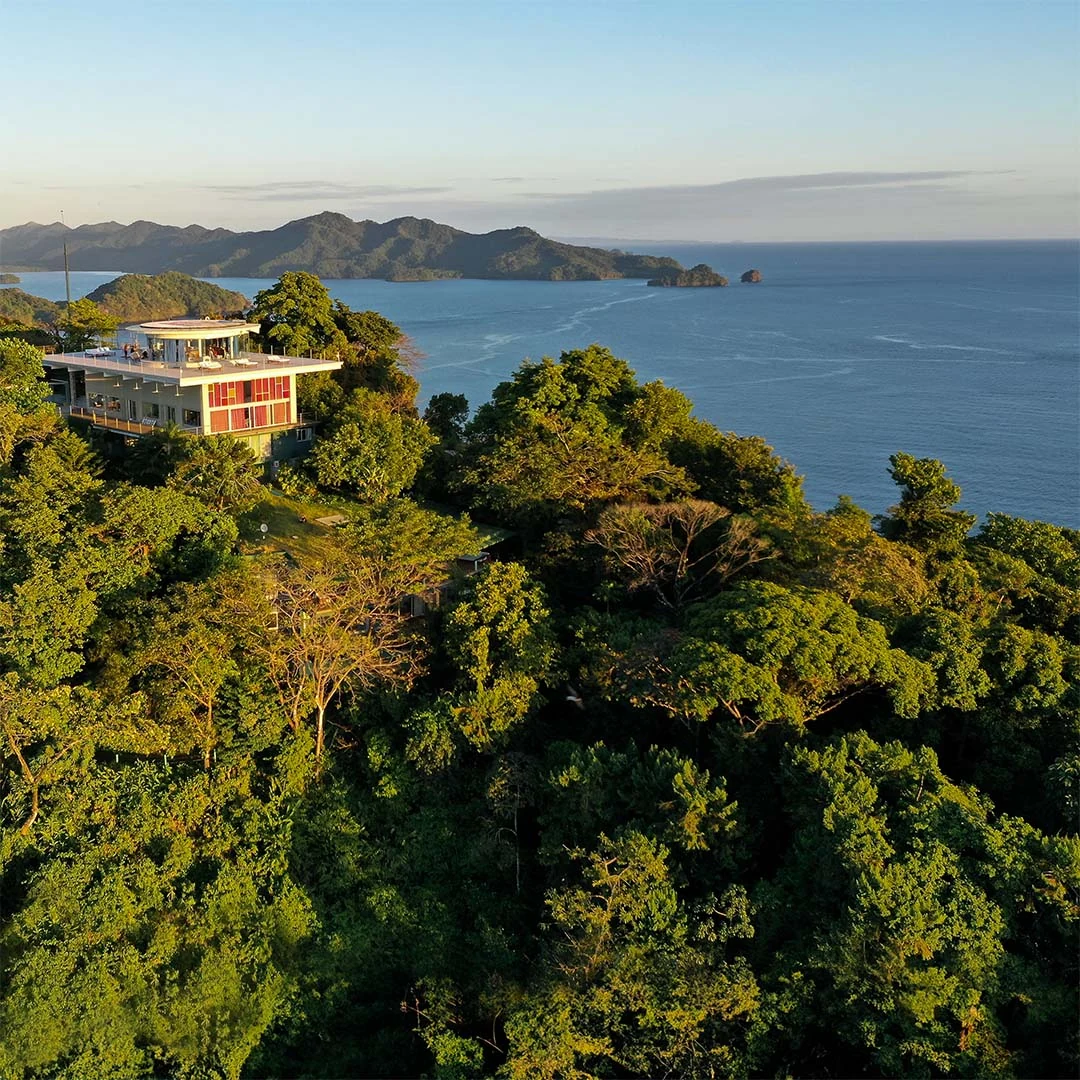
Forested hills running down to a grey shoreline, with a low lodge building set among trees above the water
Forest running downhill to water below a coastal lodge
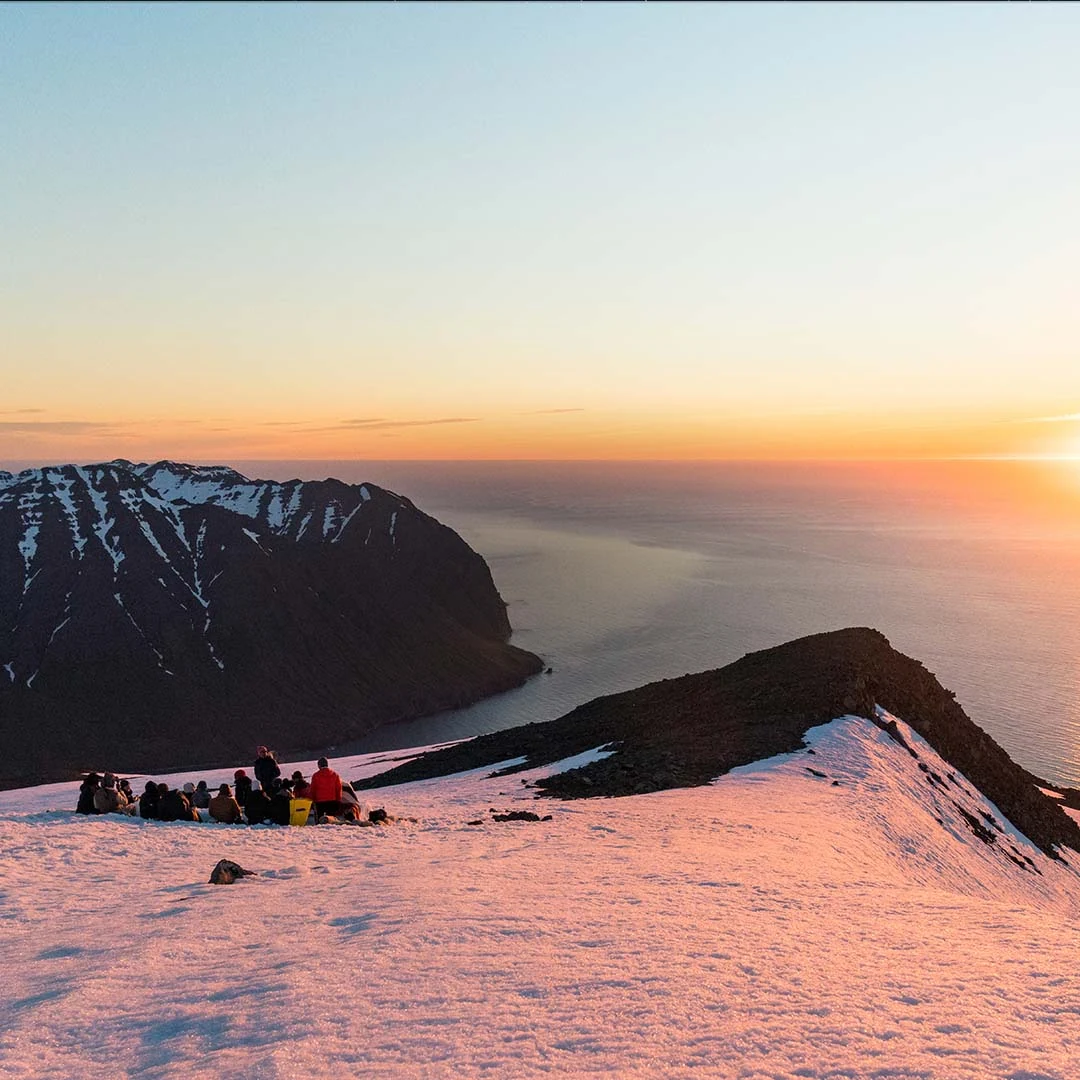
A narrow snow-covered ridge curving toward the camera, lit orange by low sun, with shadowed valleys on both sides

Turning a wish into a workable route

Permits, specialists, transport and safety get handled as one package, because on a remote project they fail together. A route only holds if the landing permission, the weather window and the person qualified to lead the landing all line up on the same dates. The plan is drawn around that overlap.

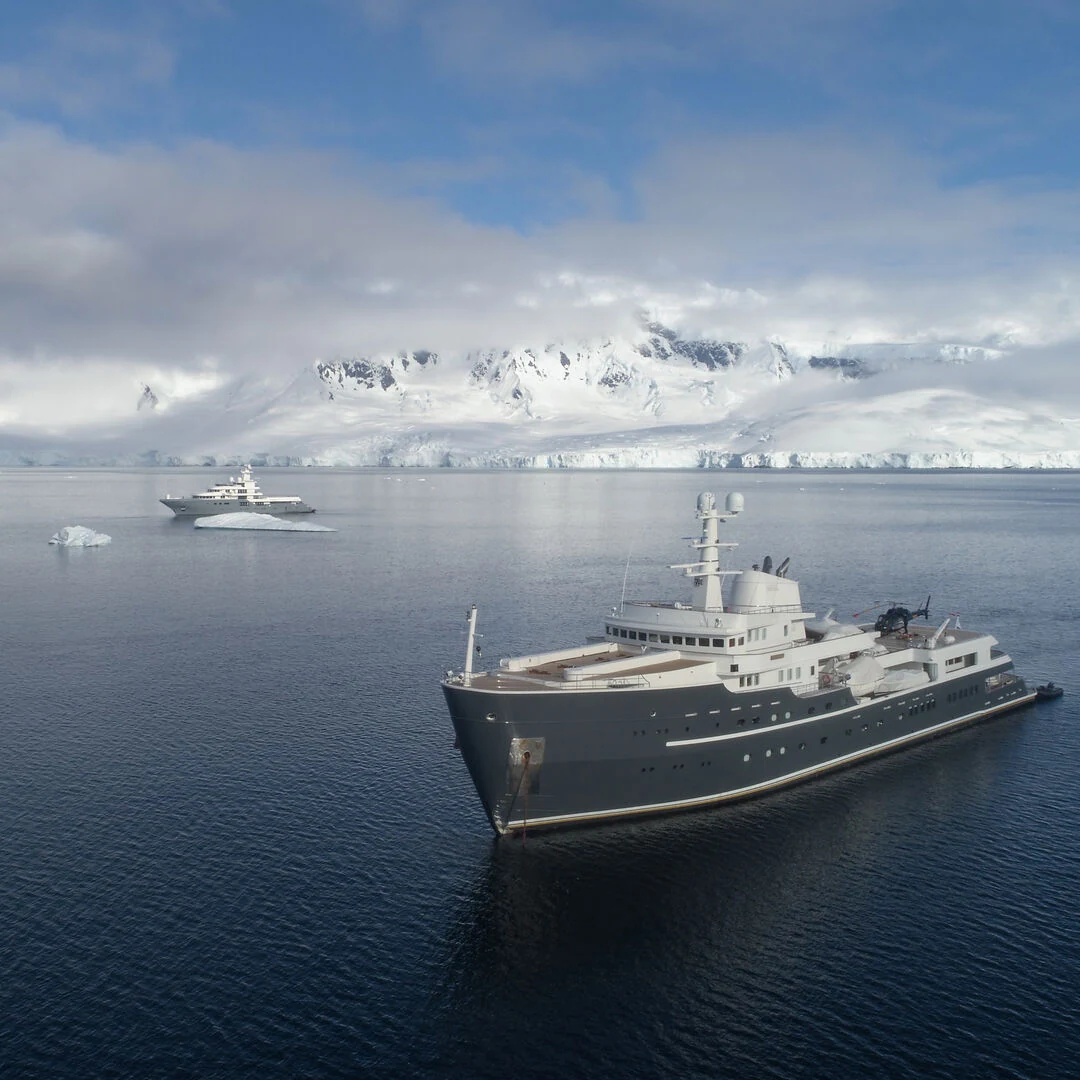
A dark-hulled expedition ship at anchor in a still bay, snow-covered mountains rising behind it under flat cloud

Submersibles, helicopters and expedition ships

Some locations open up only with equipment most trips never carry. A submersible extends a survey below the depth a diver can work at. A helicopter removes a two-day approach. An expedition ship is the platform, the fuel and the cabins that let a group stay out there instead of visiting and leaving.

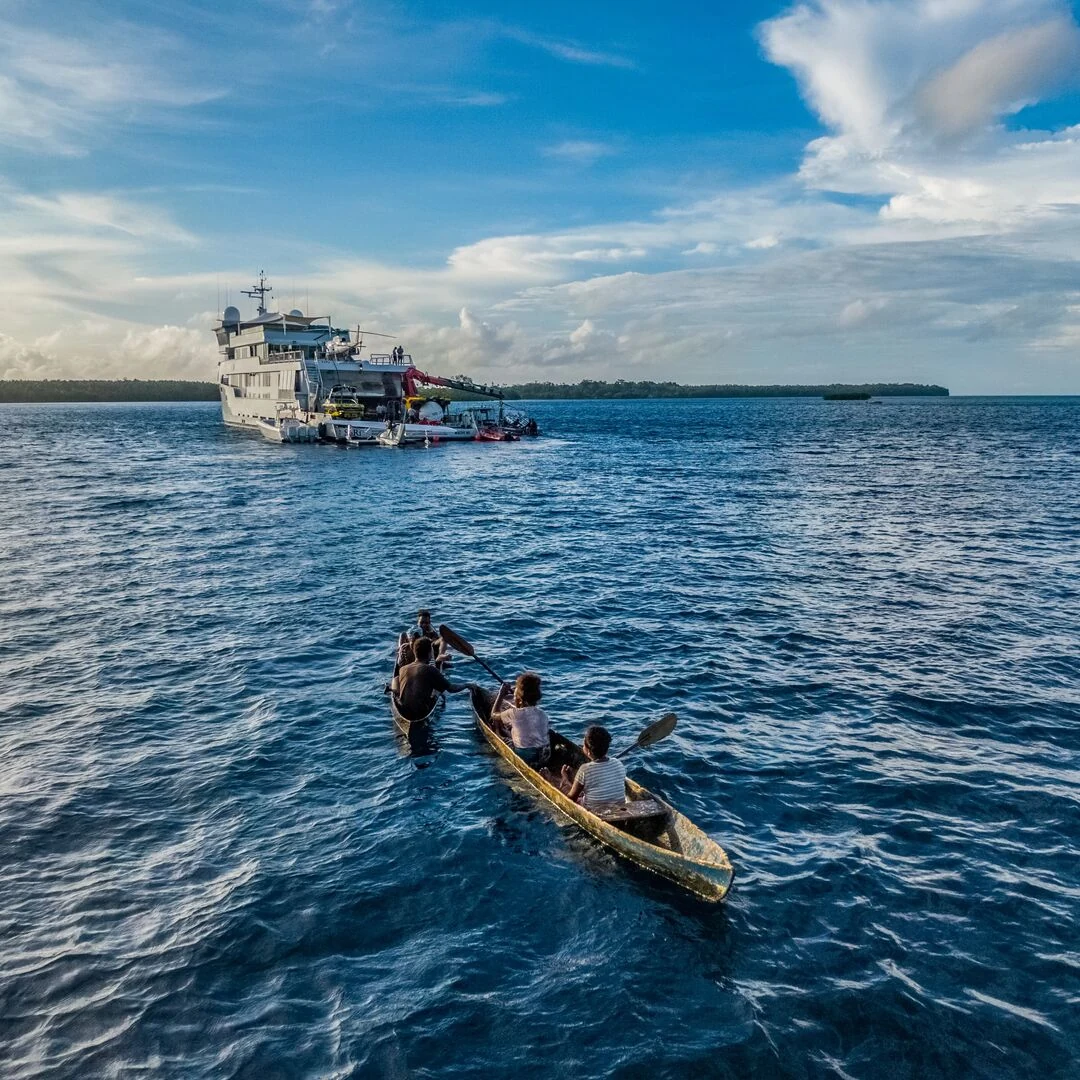
Two people in a loaded canoe on calm water, paddling toward the steel hull of a larger vessel

Specialists travelling inside the group

Scientists, explorers and local guides join trips where their presence earns its place, bringing observation and explanation in the field rather than a briefing beforehand. They are not standard on every departure. Their involvement gets arranged alongside the theme, the dates and how much the group wants to take part.

A carved wooden canoe resting on sand between palm trunks, with shallow water and reef visible beyond
Route

One core objective, with the rest of the year built around it

A journey like this is usually organised around a single central task, and that task sets the length. It can also be attached to plans a group already has: a yacht already booked, aircraft already chartered, a family celebration already fixed to a date. Seven to fourteen nights is a common span, with preparation running far longer.

Putting a seven-to-fourteen-night expedition into a year

Long lead times are normal here. Confirm the preparation window before anyone books an international flight.

Stay

Seven to fourteen nights is the usual scale, set by the destination and the objective. Preparation takes considerably longer than the trip itself.

Getting there

Arrival depends entirely on the project. Commercial flights, private aircraft, helicopters, yachts and camp logistics may all appear in the same movement.

Season

Fixed by the destination and the project window. There is no general season that applies across the portfolio, and a window that suits one objective will seldom serve the next.

Watch out

Every expedition is redesigned for its destination, season and group, so feasibility gets confirmed case by case. Ask early rather than assuming a route exists.

Plan this into a journey

If you already know what you want to see or survey, that is enough to start. The location follows from the objective.

[email protected]

Read this page in Chinese

Discuss this journey