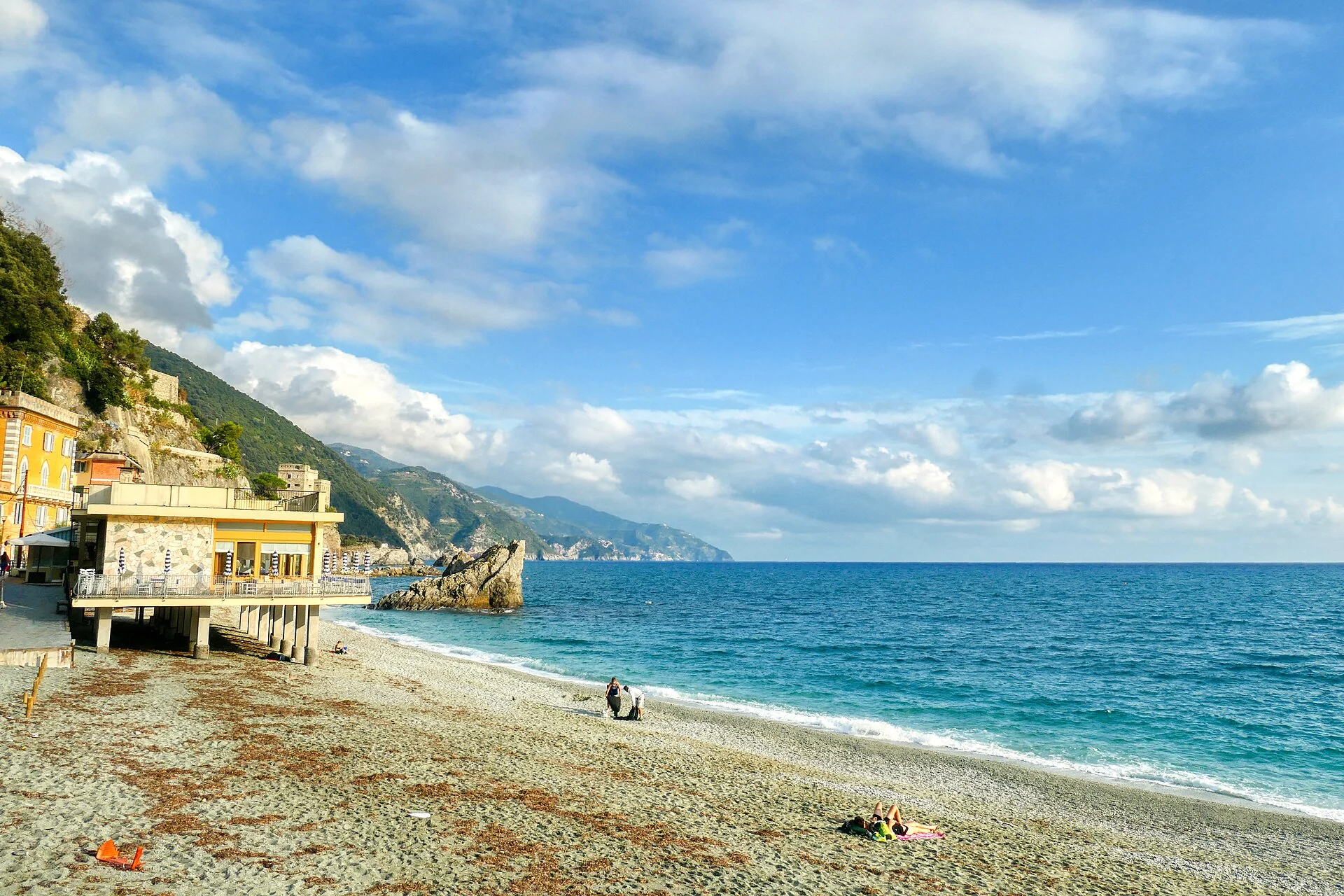
A small sandy beach and pale blue sea, sunshades on the shore

Liguria, Italy

Cinque TerreHouses stacked on the cliff

Every time the train stops, the door opens onto a small patch of houses squeezed onto the rock. Behind the villages the slope drops straight up and down, its face cut into terraces by lines of stone wall, running all the way to the ridge.

The mountain falls straight into the water; flat ground to build on is almost nonexistent.

PlaceLiguria, Italy
TypeCoastal village cluster
SuitsThose who'll stop at several stations and read the hand-made traces of terraces and stone

Seeing it station by station

Liguria, Italy — Coastal village cluster.

First fix the order of the five villages in mind, then pick one or two to walk slowly.

The stone-walled terraces on the slope were built over centuries and repay attention more than the colourful houses by the sea.

The villages are linked by footpaths, train and boat; move to another and the sea is a completely different angle.

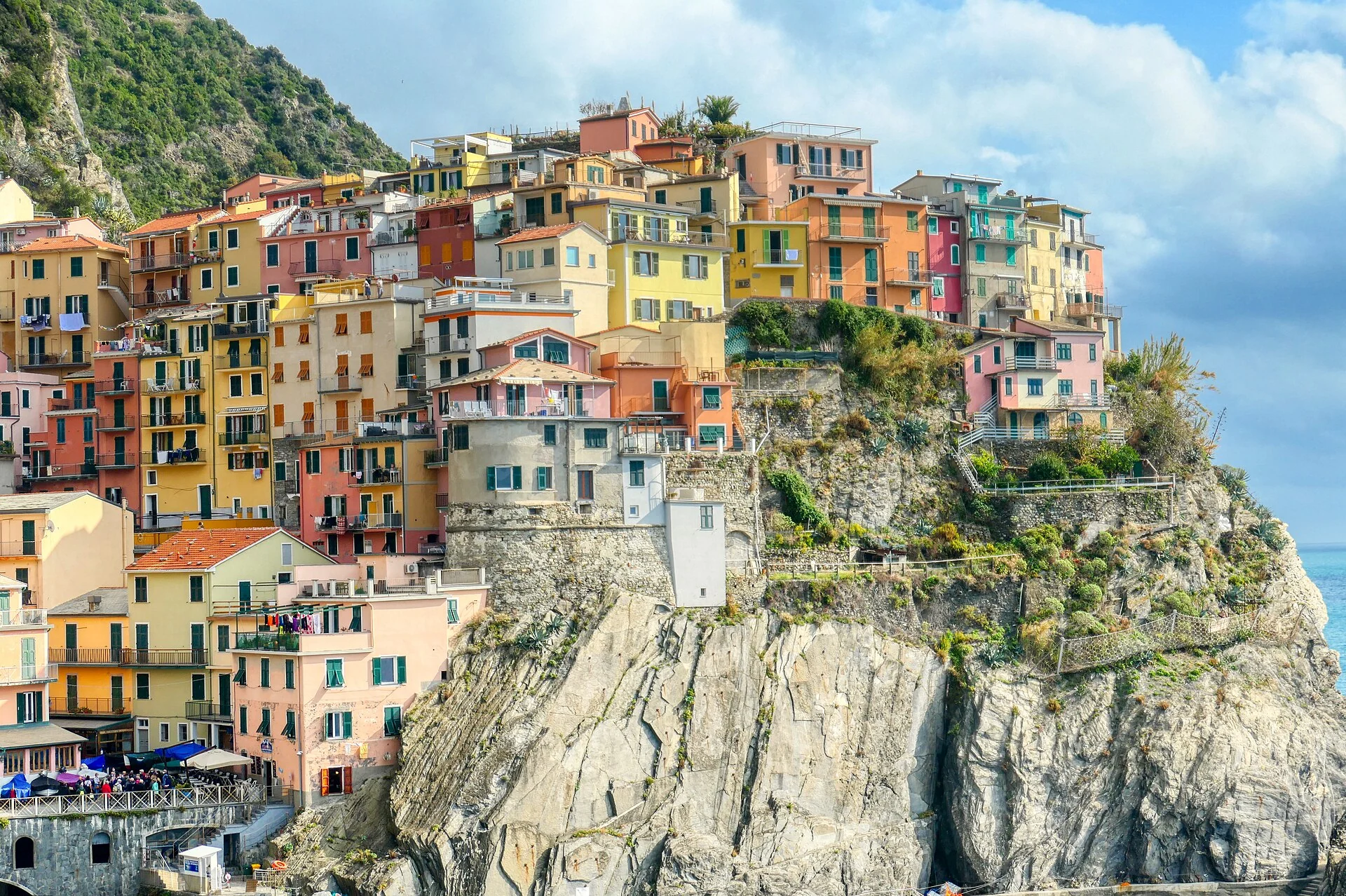
Colourful houses stacked up a rocky promontory, rocks and sea below
Houses stacked on the rocky promontory
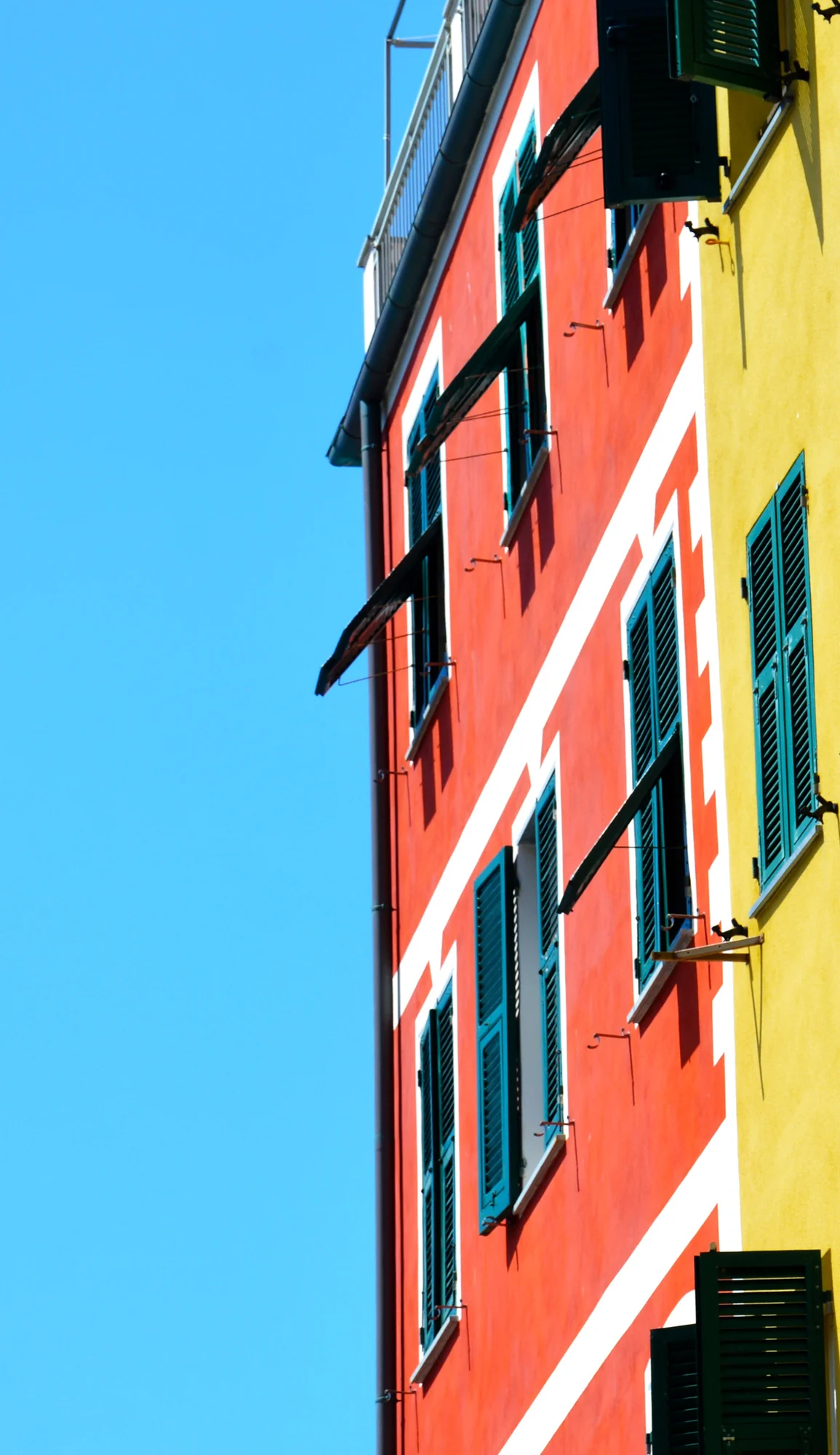
A narrow red-and-yellow building seen from below, green shutters in white frames
A wall where red meets yellow
Several yellow- and red-walled buildings together, a mountain behind

The row of houses pinned to the cliff

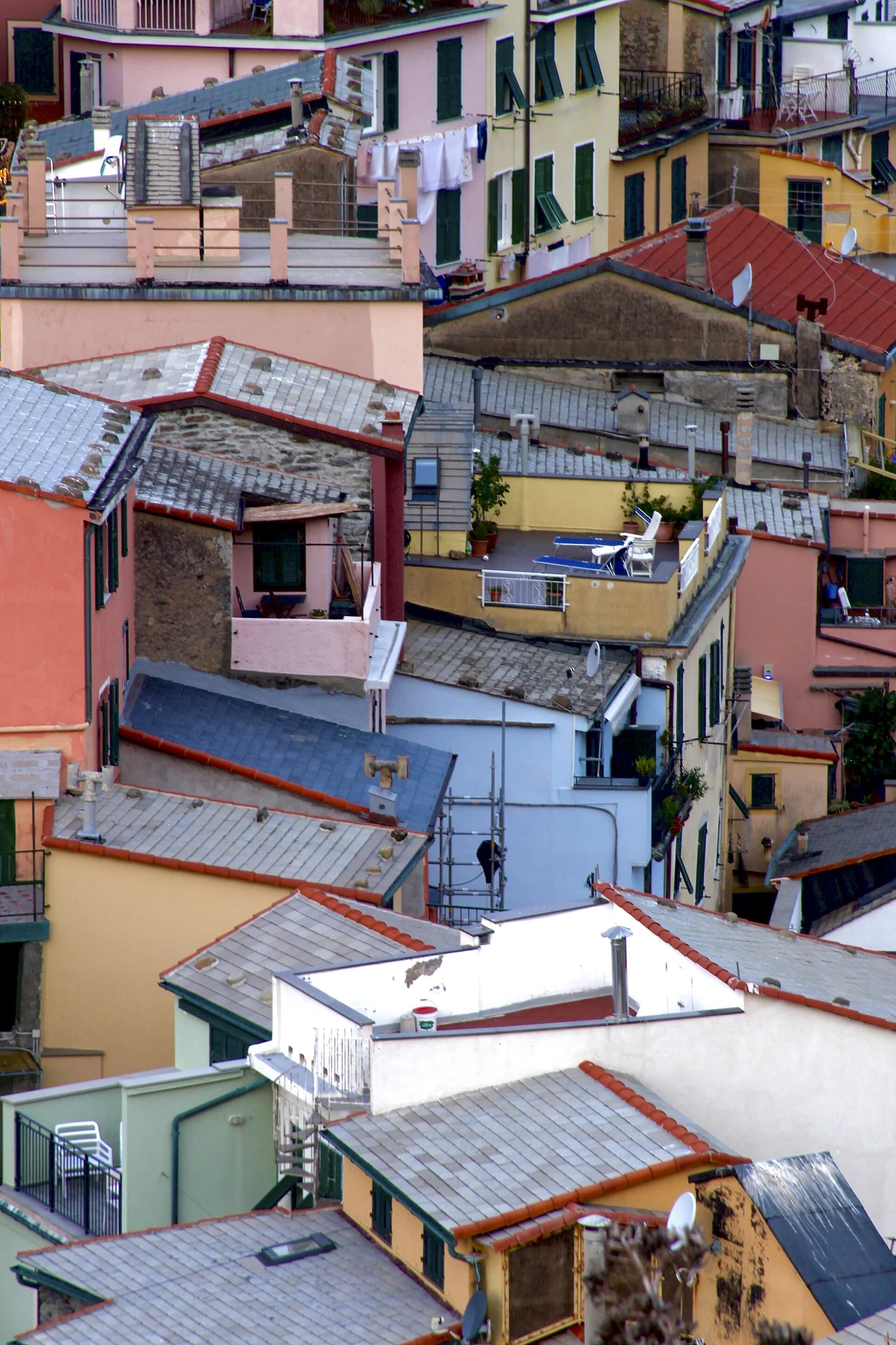
In Manarola the houses stack up a rocky promontory, windows toward the sea, walls washed ochre-red, bright yellow and pink, layer upon layer. From the path opposite, the rooftops read as one sloping line with water directly below. The same houses, seen from the dock and from the coastal path, differ sharply in colour and intensity.

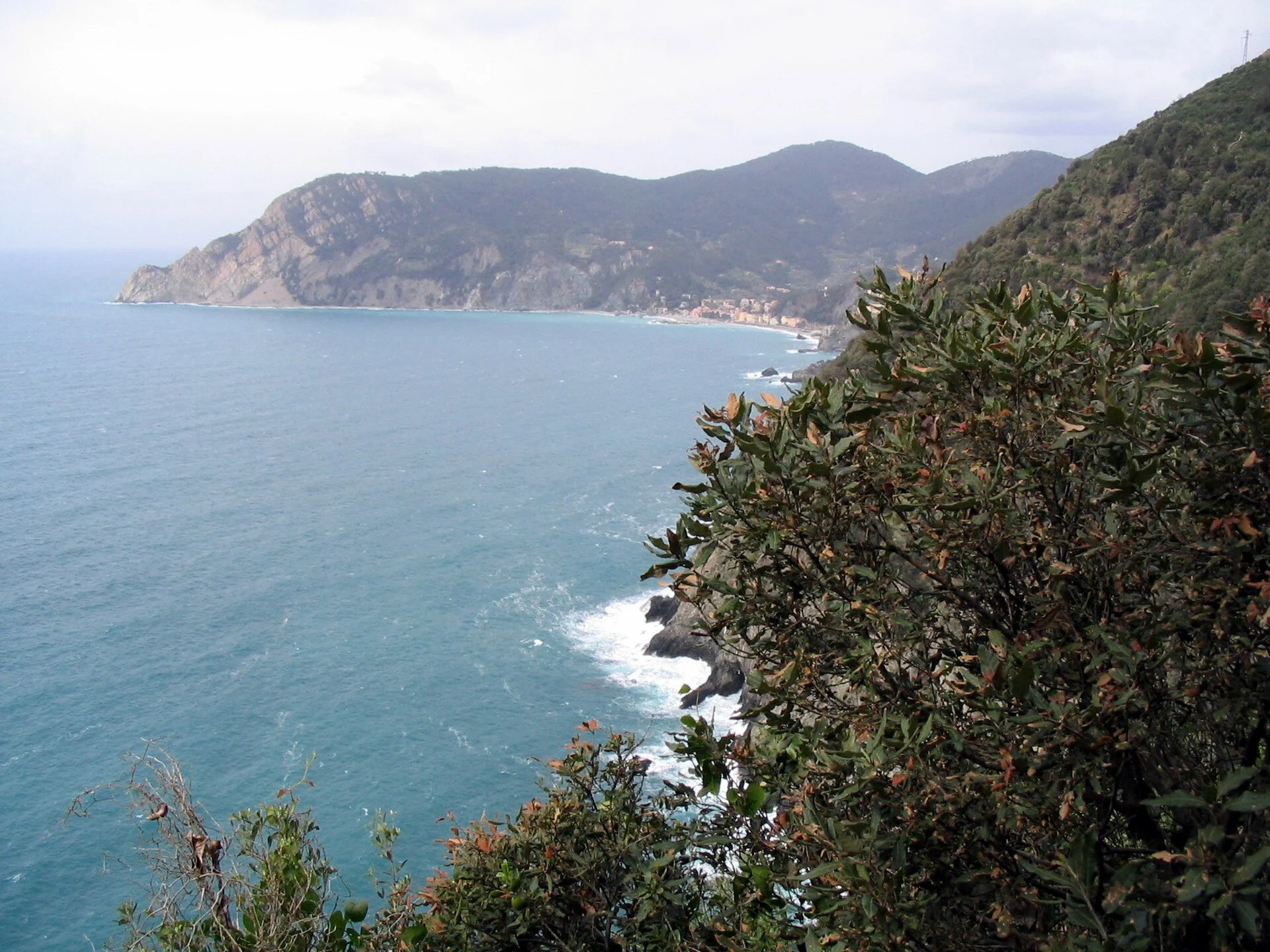
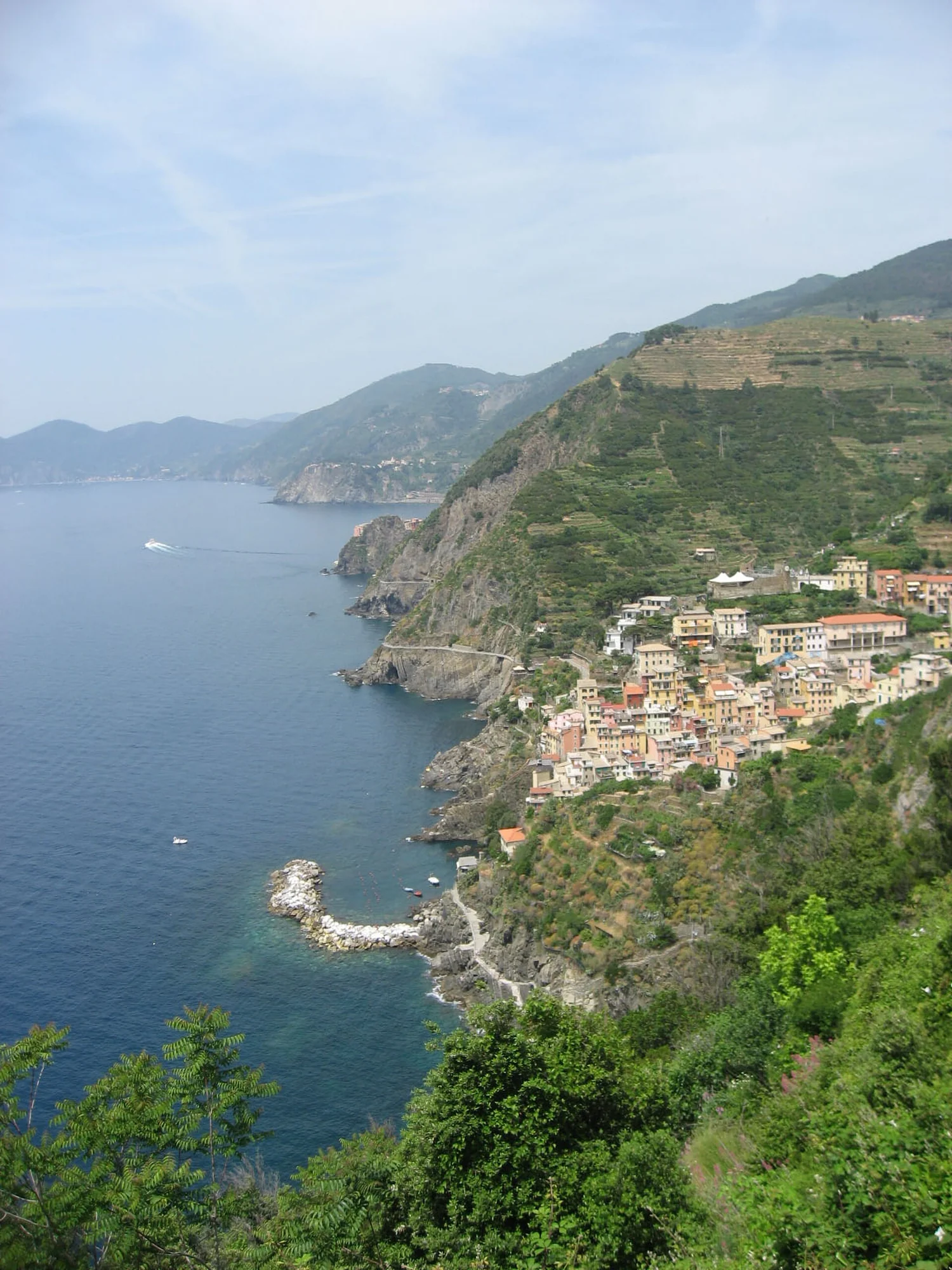
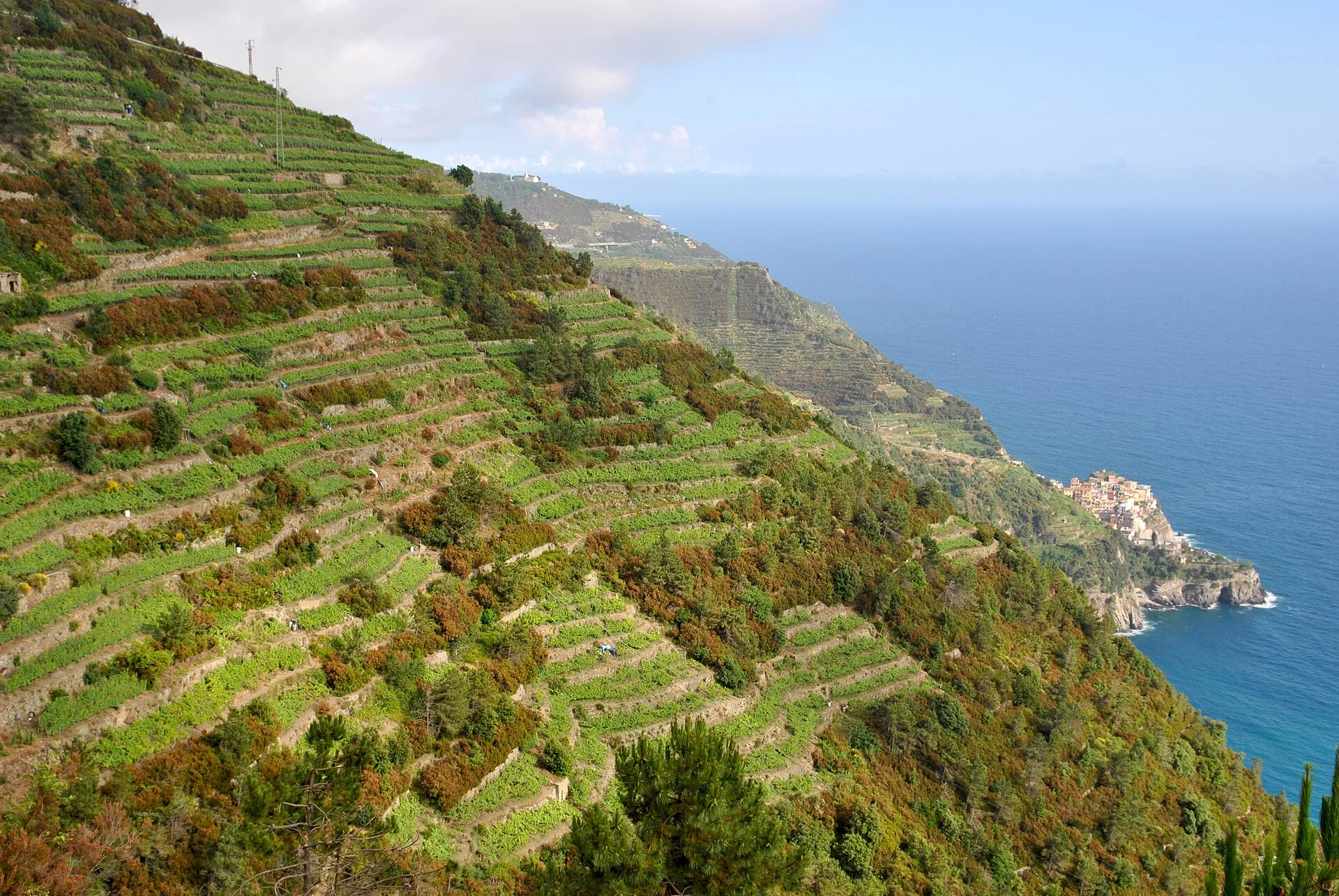
Coastal ridge seen from above, the village tucked in a cove

The spread of stone walls on the slope

More lasting than the houses is the slope behind. Over centuries people built the steep hillside into terraces, stone walls bending along the contours for grapes and olives. From the sea the fine horizontal lines run all the way to the cliff top; from high in the village looking down, you learn each wall is barely wide enough for a single vine row.

An overhead view of roofs, ochre tiling meeting at different heights

A different sea at each stop

Each of the five villages occupies a promontory or small cove, visible to one another yet unable to meet on foot. Cars from outside can only use a narrow, dangerous mountain road; what links them is the footpath, the railway and the boat. Some walk village to village along the path; others wait at the dock for the next boat, and looking back from the water the slope just walked becomes one continuous face.

Terraces sloping down the hillside to the sea, stone walls drawing fine lines
Route

Two days on the Ligurian coast

Don't put it on a day you're catching a train. Stay the night before in La Spezia or one of the villages, so the next day you have time to wait for a boat and for the light.

First remember the five village names

Cinque Terre is in northwest Liguria, on a stretch of coast west of the province of La Spezia. The 'five' are Monterosso, Vernazza, Corniglia, Manarola and Riomaggiore, lined up from northwest to southeast. The coast, the five villages and the hills behind together form a national park, listed as World Heritage in 1997.

Documents of the eleventh century already mention this area. The first settlements were Monterosso and Vernazza, then under the Republic of Genoa; the other three villages grew later. In the sixteenth century residents strengthened old forts and added watchtowers against sea raids.

From the seventeenth to nineteenth centuries the area slowly emptied, until La Spezia built its arsenal and the railway reached Genoa and revived it. The railway also carried people out, and traditional livelihoods declined; from the 1970s, as visitors grew, the villages grew lively again.
The stone walls came before the houses

The slope is too steep; every patch that can grow something was built. Over centuries people stacked stone walls along the contours, cutting the slope into narrow terraces for grapes and olives. The walls are unrendered, grass grows in the joints, and from afar they are one fine set of horizontal lines from the village to the ridge.

This sea was not always gentle. In October 2011 a storm brought floods and mudslides, hitting Vernazza and Monterosso hardest. Bombing and fighting in the Second World War also badly damaged these villages. Some of the retaining walls you see today were rebuilt later.

The colourful houses are another clue. Monterosso was originally a fishing village; the bright colours of the shore cottages only became a thing for tourists in the late 1970s. Taking them as centuries-old is to misdate this coast.

Changing angle along the coast

The five villages sit on promontories and small coves, visible to each other yet separated by steep slopes. The outside road is narrow and dangerous; what links them is the footpath, railway and ferry. The train stops at each, and when the door opens the sea is right outside the platform.

To see the terraces whole, climb a stretch of the path behind a village. The stone walls bend with the slope, the sea appears at the end of the wall line, and the slope you looked up at from the beach now lies flat beneath your feet.

Or change to the water. The boat leaves the dock and looks back: each village pinned to its cliff, separated by ridges, none touching another. This single view best explains why they remained five villages and never grew into one town.

Two days for a stretch of coast

On day one pick two neighbouring villages and walk slowly, with a stretch of coastal path between; on day two switch to the boat looking back at the shore — far more relaxed than rushing all five in a day.

Time needed

A full half-day to see two neighbouring villages in depth; allow an extra day to set foot in all five

Getting around

The villages are mostly stone steps and steep lanes with real climbs; slow walkers should shorten the route and ride more of the train or boat. Check current notes for step-free access

Best light

Sea light is flattest at noon; the stone walls on the slope only show their layers in side light — check current conditions before walking the paths

What's open

Coastal paths and boat services adjust with the weather; confirm which sections are open in the current period

Talk through my trip idea

If you're planning your Ligurian days, tell me whether you mean to spend one day or two, and whether anyone in your group walks slowly.

[email protected]

Read this page in Chinese

Discuss this journey