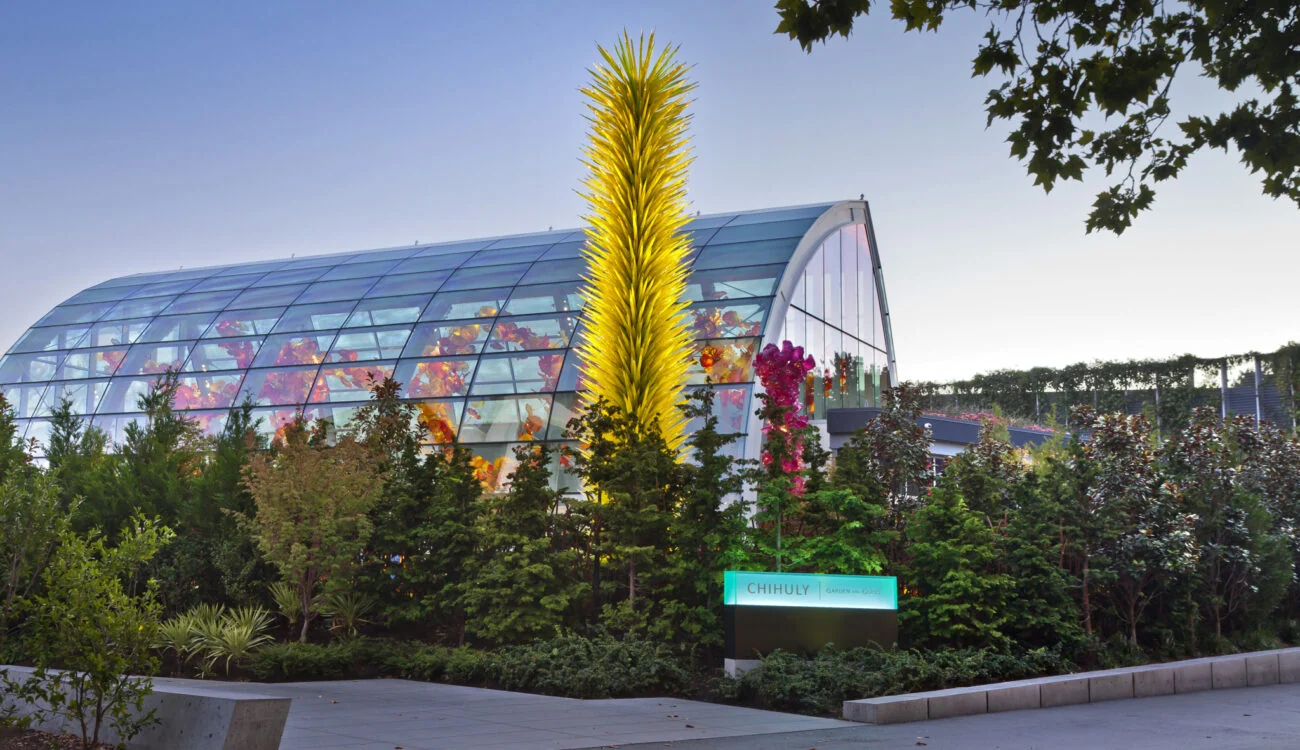
The yellow glass tower and curved glass house in the distance, trees in front

Seattle Center, United States

Chihuly Garden and GlassGlass taller than trees, colour descends

Yellow glass columns stand in front of the trees, and the curved roof behind gathers the whole sky into one long line.

In the grounds of Seattle Center, right beside the Space Needle, the glass house visible from the street.

PlaceSeattle Center, United States
TypeGlass art exhibition garden
SuitsGlass-art viewers and families wanting to take a few areas slowly

Glass placed among the plants

Seattle Center, United States — Glass art exhibition garden.

First, take in that yellow column.

Outdoors, hard material is planted into the flower beds. Thin tubes rise in clumps from the soil, uneven in height, while the real tree's leaves still move beside them, but this clump never does; round a wall and a bright yellow bursts from a blue ground, colour and shape each going their own way. Up close you see how long a single tube can be.

Inside, the light becomes human-made. A whole warm sheet presses down from overhead as you pass beneath, colour landing on your shoulders and the floor; further in, a room drops the background to full black, leaving only the work's edge traced by sidelight. Looking up and looking down show two different densities.
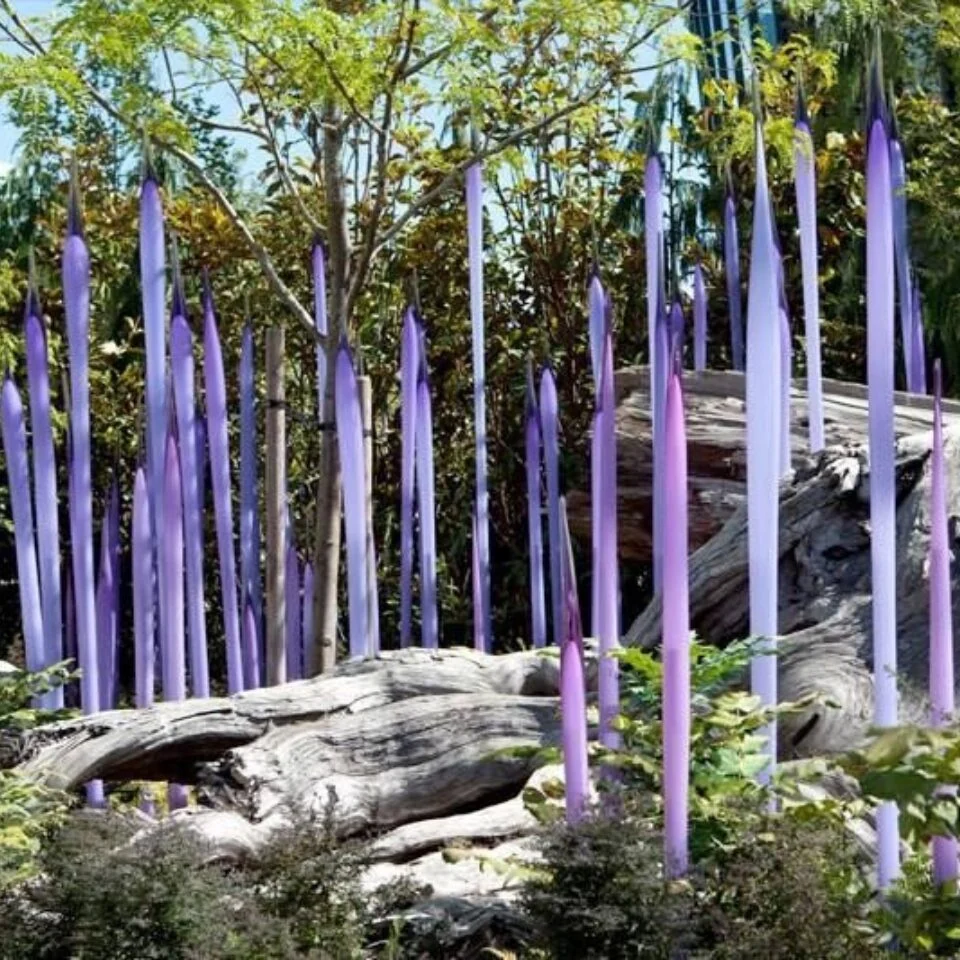
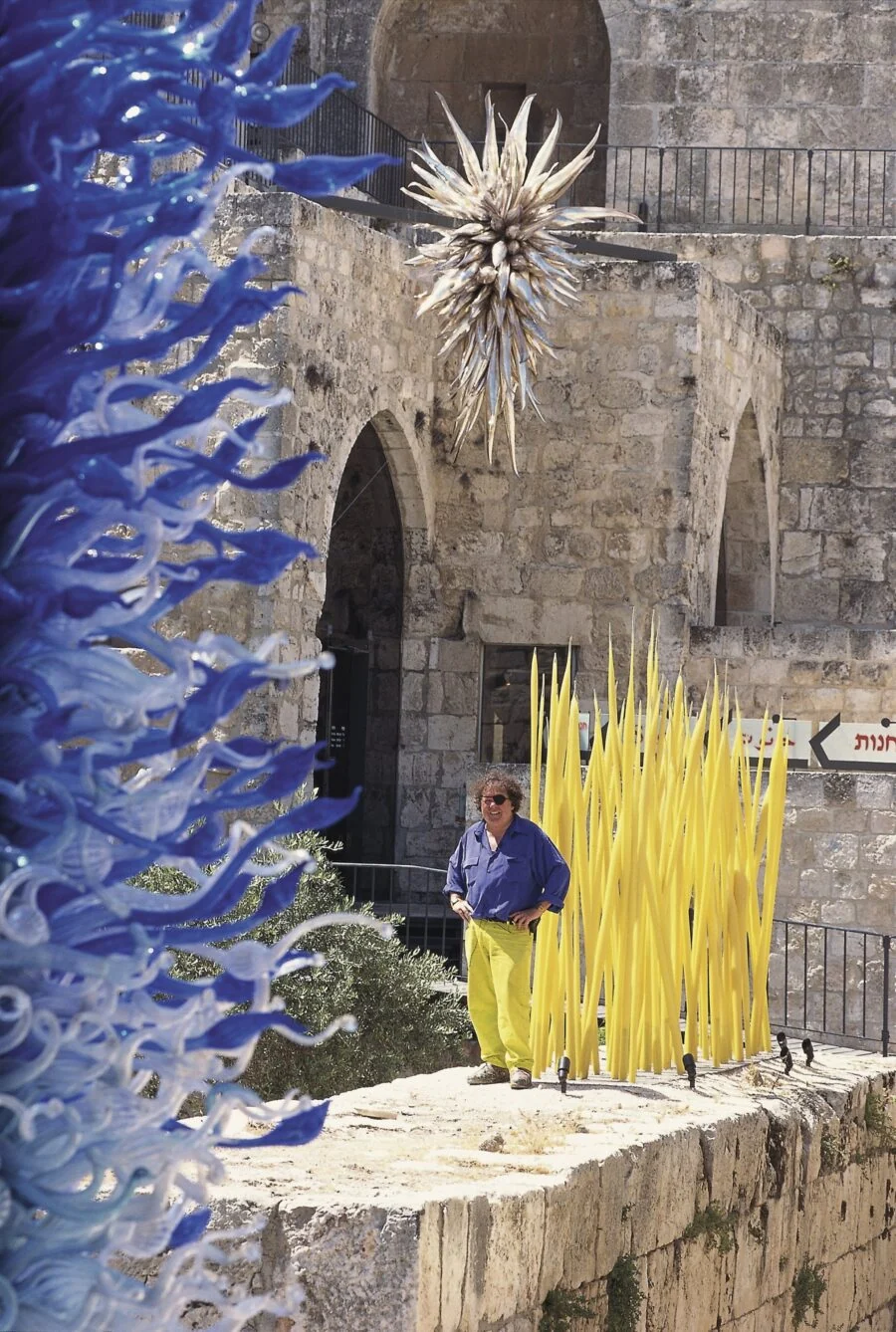
Clumps of purple glass tubes standing among dead wood and trees
The purple tubes beside the dead wood
A clump of bright-yellow glass grass before a blue patterned glass wall
The yellow glass grass before the blue wall
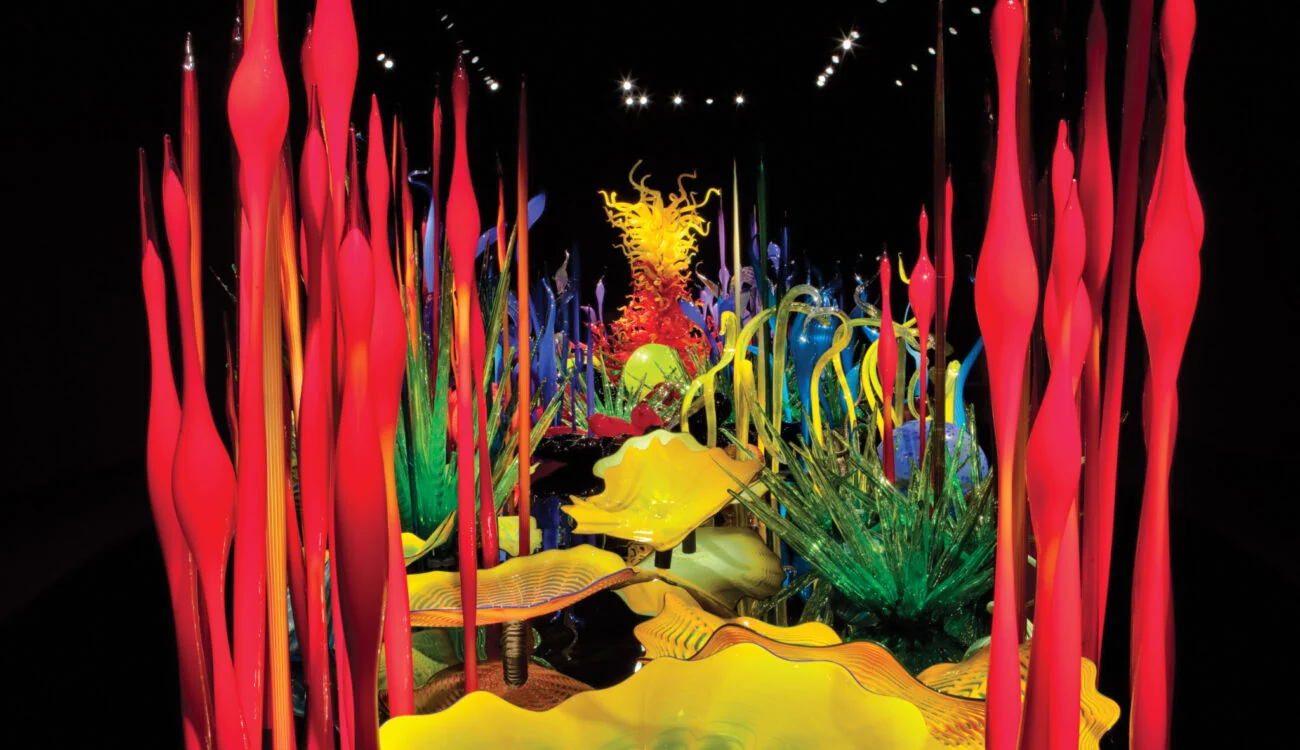
Red glass columns standing in a row with yellow flower-shaped glass between

Flowers open among the red columns

Red glass tubes stand in a row, uneven in height, the background pressed to black. Between them burst a few yellow flower shapes, with a sheet of bright yellow beneath. Light skims from the side, leaving a fine bright line along the red.

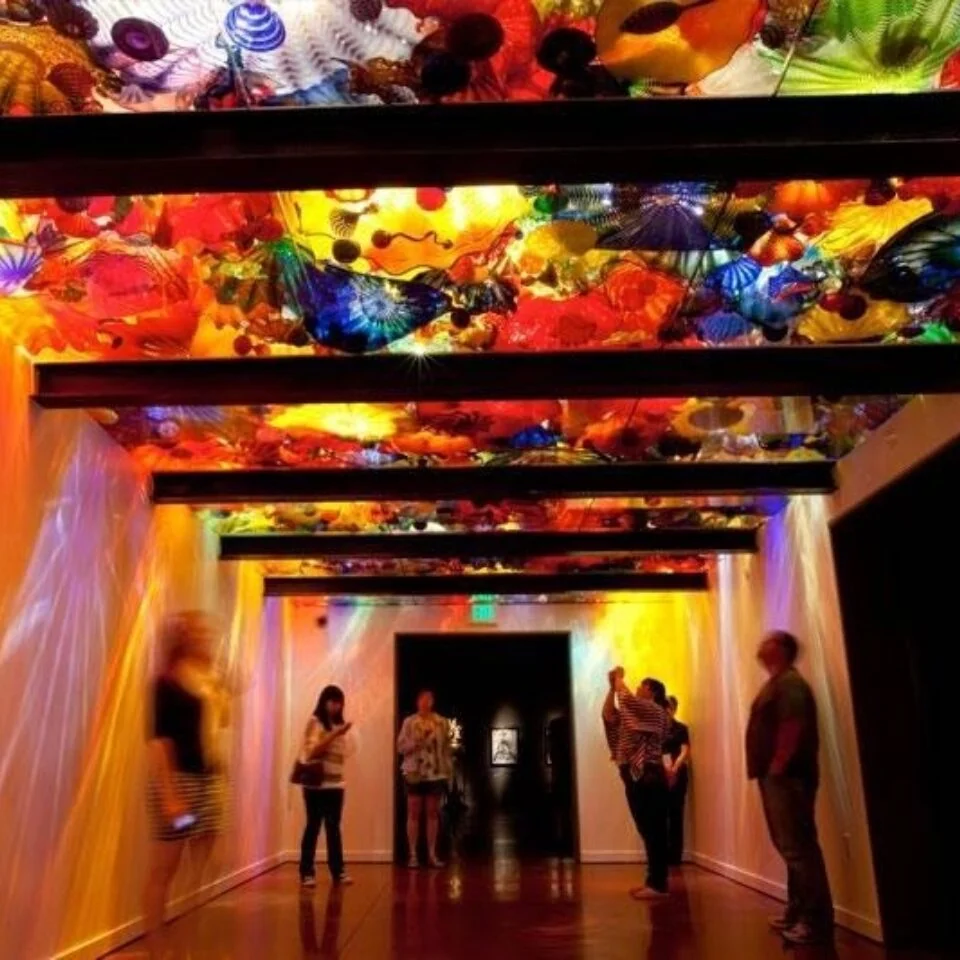
Coloured glass filling the long gallery ceiling, a few people before the lit doorway at the end

Colour spread across the ceiling

The whole ceiling of the long gallery is filled with orange, red and yellow glass, piece against piece, with occasional deep blue pressed in. At the end is a lit doorway where a few shadows stand. The walls warm with the colour above, and the floor tiles throw back a little light.

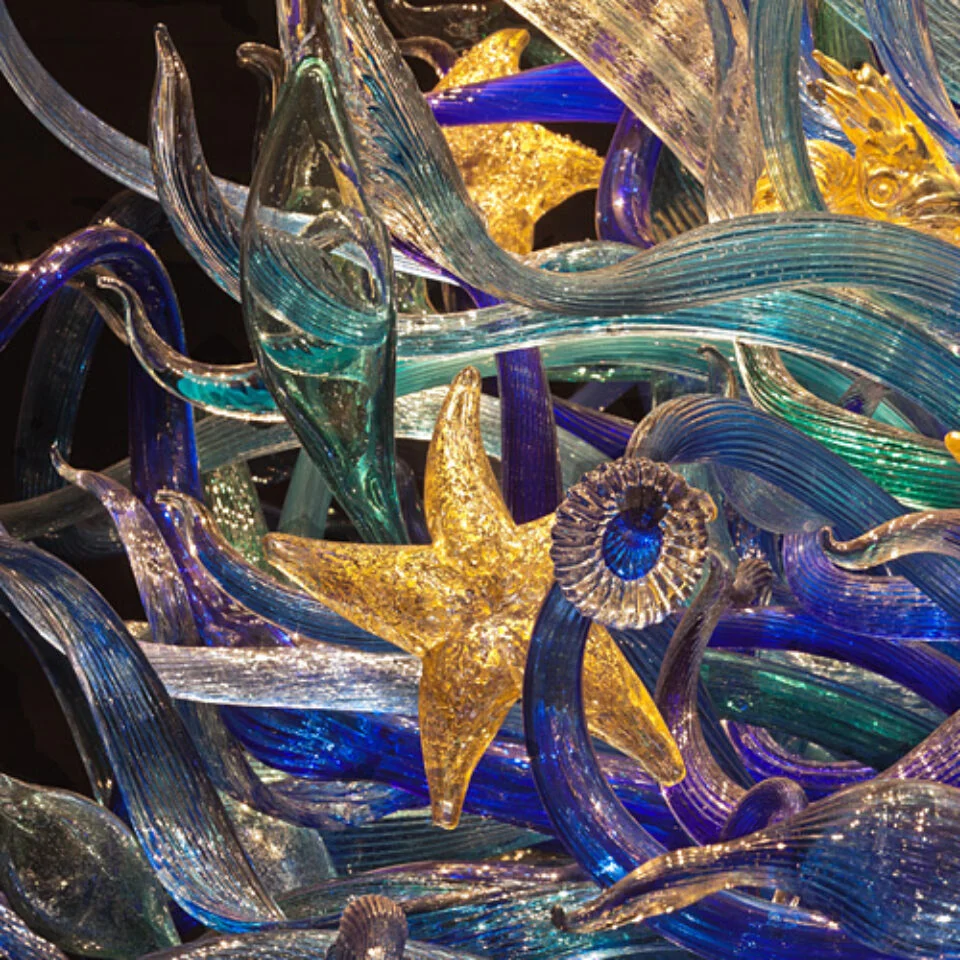
Deep-blue and teal glass pieces rolled into layers, gold filaments tracing the edges

Blue rolled into layers

Deep-blue and teal glass pieces roll into arcs, gold filaments tracing the edges, with stray bright-yellow bits set in. The frame is filled with these arcs and you cannot tell where they begin. Light on the curves shifts light and dark with the angle.

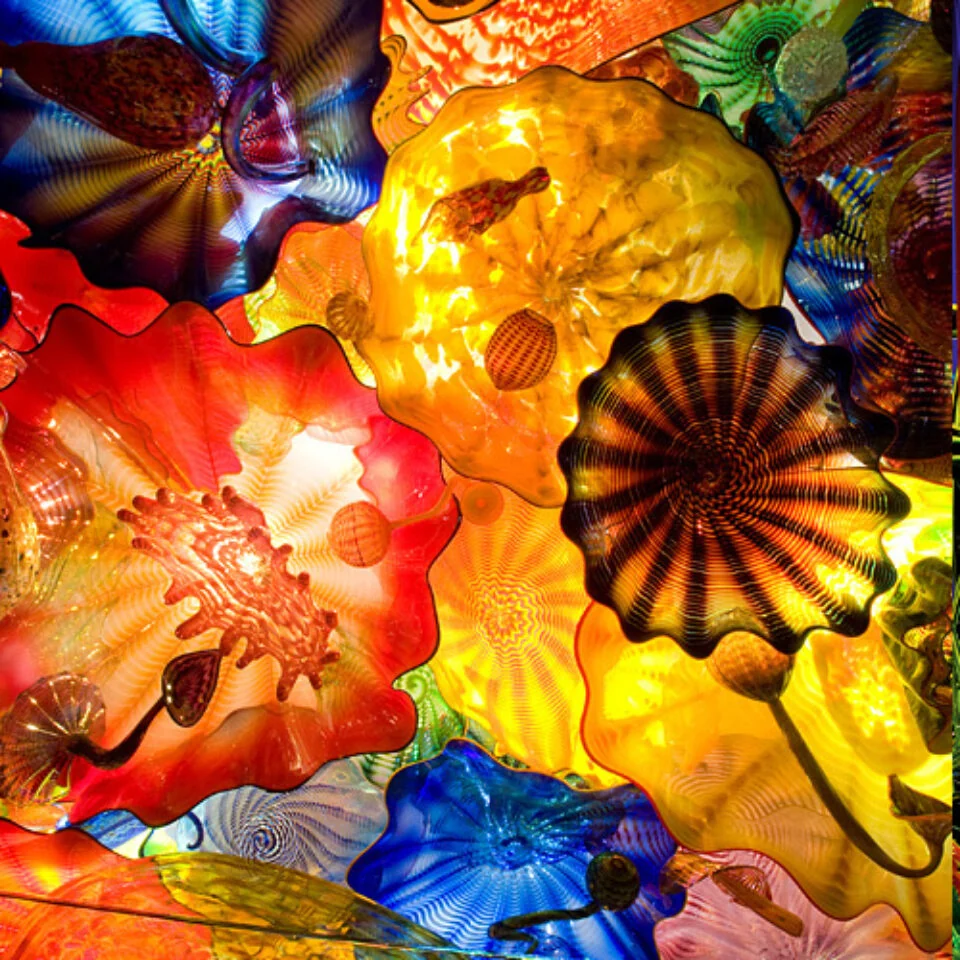
Orange-yellow and blue glass flowers crowding the whole frame
Route

A full day you leave for Seattle Center

Do not put it in the hour before you leave; walk the outdoor area first, then go into the glass house and the indoor rooms.

21 May 2012

The exhibition opened on 21 May 2012 on the site of the closed Fun Forest amusement park. It shows Dale Chihuly's studio glass; the buildings were designed with architect Owen Richards and earned USGBC LEED Silver certification.

The whole is in three parts: the outdoor garden, the glass house, and several indoor galleries. Outdoors, glass tubes are planted with real trees; in the glass house, works hang beneath the curved roof; the indoor rooms hold the edges with dark backgrounds. The three sit close, and a walk through changes the light three times.

The suspended work in the glass house is 100 feet long, among his largest hanging sculptures. Walking beneath it, you look up at a whole sheet of colour and down to see your shadow tinted. The glass house reads wider than it is tall; only from one end looking to the middle does the work join into a line.

Leaves made of glass

Here glass is shaped like plants and set among real ones. Outdoors it borrows daylight — overcast and sunny differ widely in saturation; the wind moves only the nearby tree, the glass never does, and you need a moment to tell which layer is real.

Indoors it switches to installed lighting. With the background darkened, the bright line at the edge becomes the work's outline; half a circuit around and the light-and-dark on the curves shifts with your angle. The works sit close, and detail needs your eyes to move slowly — stepping back and leaning in show different things.

The three parts have no fixed order. Outdoors to the glass house to indoors is one route; reversed, ending back under daylight, the colour looks a shade lighter than when you entered.

The curved roof still shows from the street

From the street, the glass house's curved roof and the yellow glass tower sit before the trees, a small sign at the base naming the garden. The building is not tall but runs long, a different scale from the tower beside it.

Up close, orange-yellow and blue crowd together and you cannot say which is the background. After a full loop you recall mostly that density, and could not quite say what any single work looked like.

The gallery arrangement changes; do not take a photo of that red-column group as something always present. Back on the street, the curved roof shows only its edge behind the trees — a different thing from the colour inside.

Leave an hour or two for Seattle Center

The exhibition sits by the Space Needle with walkable routes on either side; indoor and outdoor each take a stretch.

Dates

Check current notices for open areas and exhibition rotation; the indoor works are rearranged, so do not use old photos for the current layout.

Duration

The three areas take one to two hours on foot; add half an hour to pause at each.

Note

The indoor arrangement changes; do not take a photo of one red-column group as something always there. The indoor lighting is dim, so photos and close looking are different things.

Talk through my trip idea

If you are planning your Seattle days, tell me whether you will leave one or two hours or a half-day, and whether there are children with you.

[email protected]

Read this page in Chinese

Discuss this journey