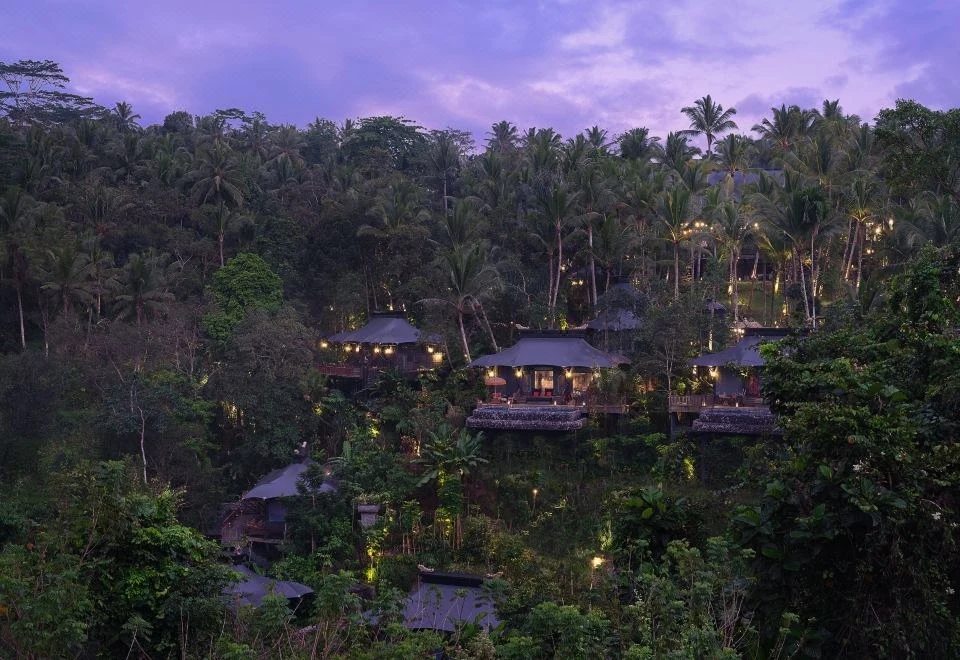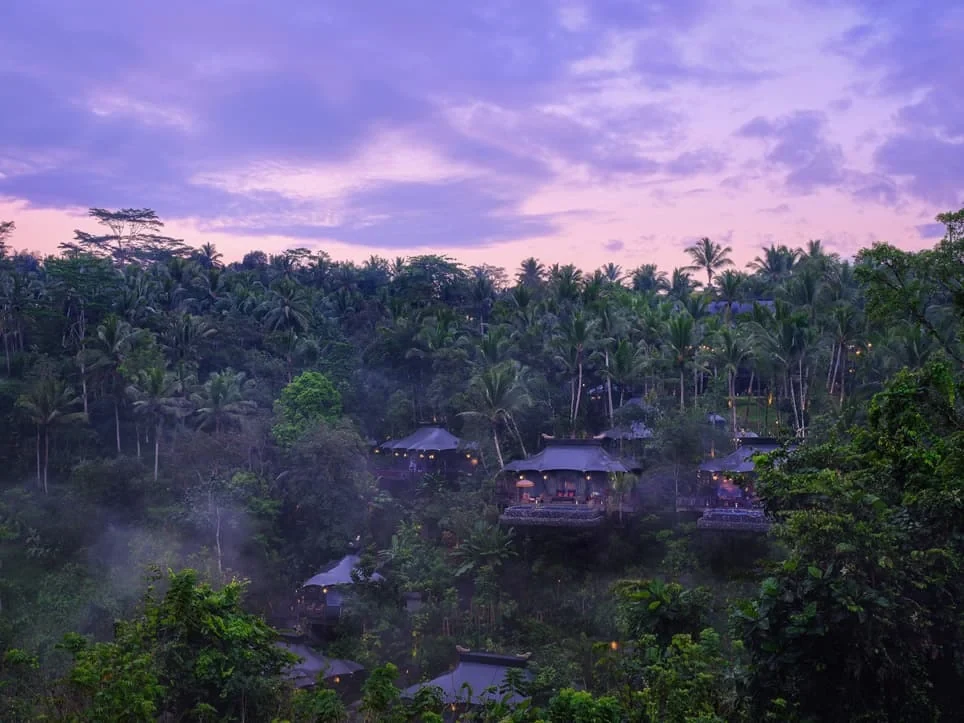
Dusk over a rainforest valley, a few tent roofs and lit paths showing between dense trees.

Keliki, Ubud, Bali, Indonesia

Capella UbudExplorer tents on a hillside above Keliki village

Twenty-two tents stand on a jungle slope in Keliki village, each with its own pool, each with a different theme. Bill Bensley filled the interiors with maps, brass and travel objects from a nineteenth-century expedition camp. Step outside the gate and you are among rice fields and a village that still works for a living.

Keliki village sits north of Ubud, about half an hour by car from the centre of town. Many trips pair the mountain camp with a coastal hotel, which splits the Bali stay into two very different halves.

PlaceKeliki, Ubud, Bali
TypeTented resort
SuitsDesign, jungle, honeymoons
Stay3 nights

The village keeps working around the camp

Keliki, Ubud, Bali, Indonesia — Rainforest tented resort.

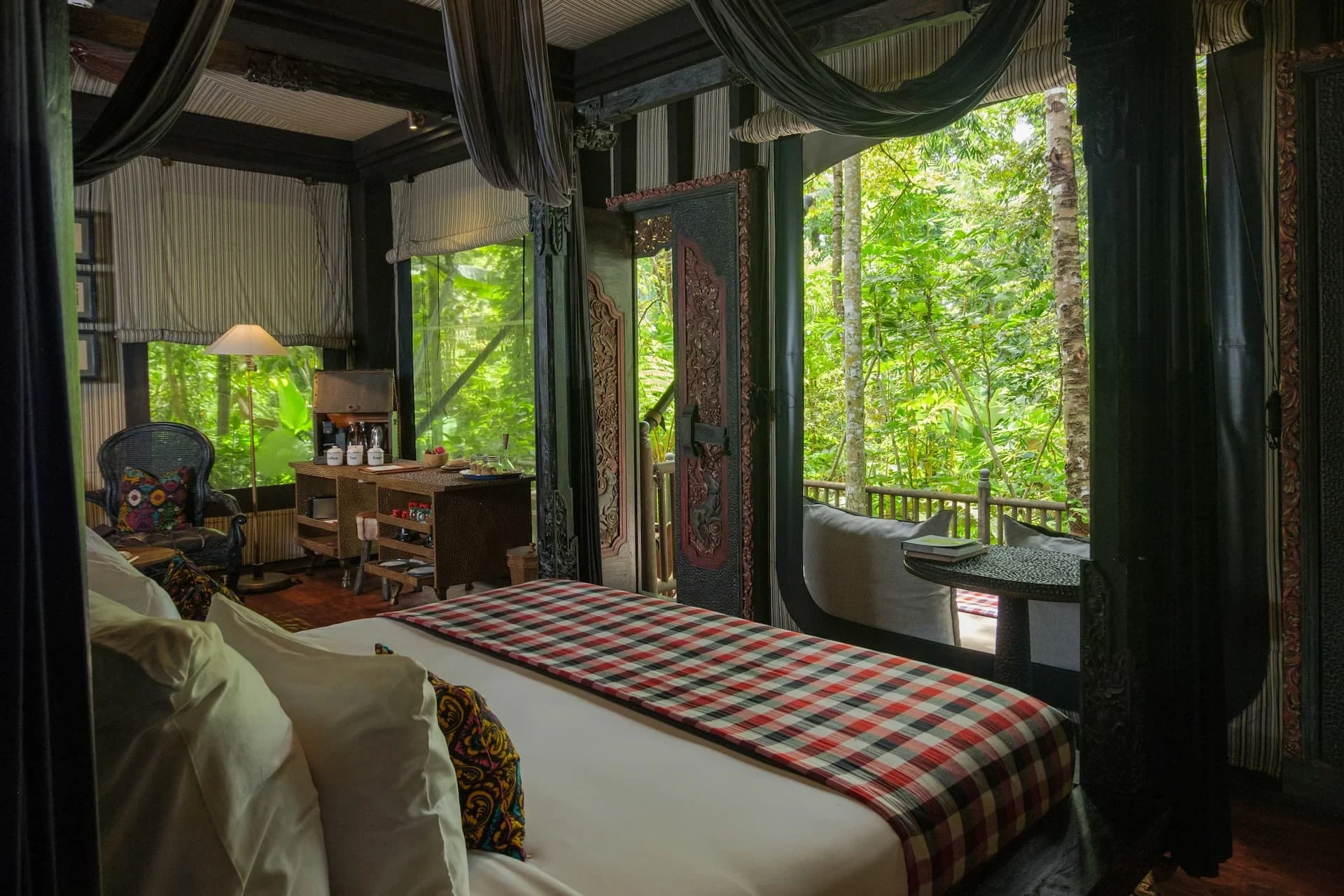
The camp sits in Keliki village, north of Ubud. Bill Bensley built the interiors around maps, brass and travel objects from nineteenth-century expedition camps, so each tent reads as a small narrative rather than a hotel room. The theme is strong and deliberate; you either enjoy living inside the story or you do not.

Rice fields, villages and temples fill the hours the design does not. Give half a day to the countryside on foot or by bicycle, and keep the other half at the pool or on the camp grounds. Otherwise a single night becomes a drive in, a sleep and a drive out.

This is for travellers drawn to design, jungle, honeymoons and anyone steering away from the beach-resort template. The ground is steep and stepped, which matters if stairs are difficult. And if theatrical interiors leave you cold, a plainer hotel in Ubud will serve you better.
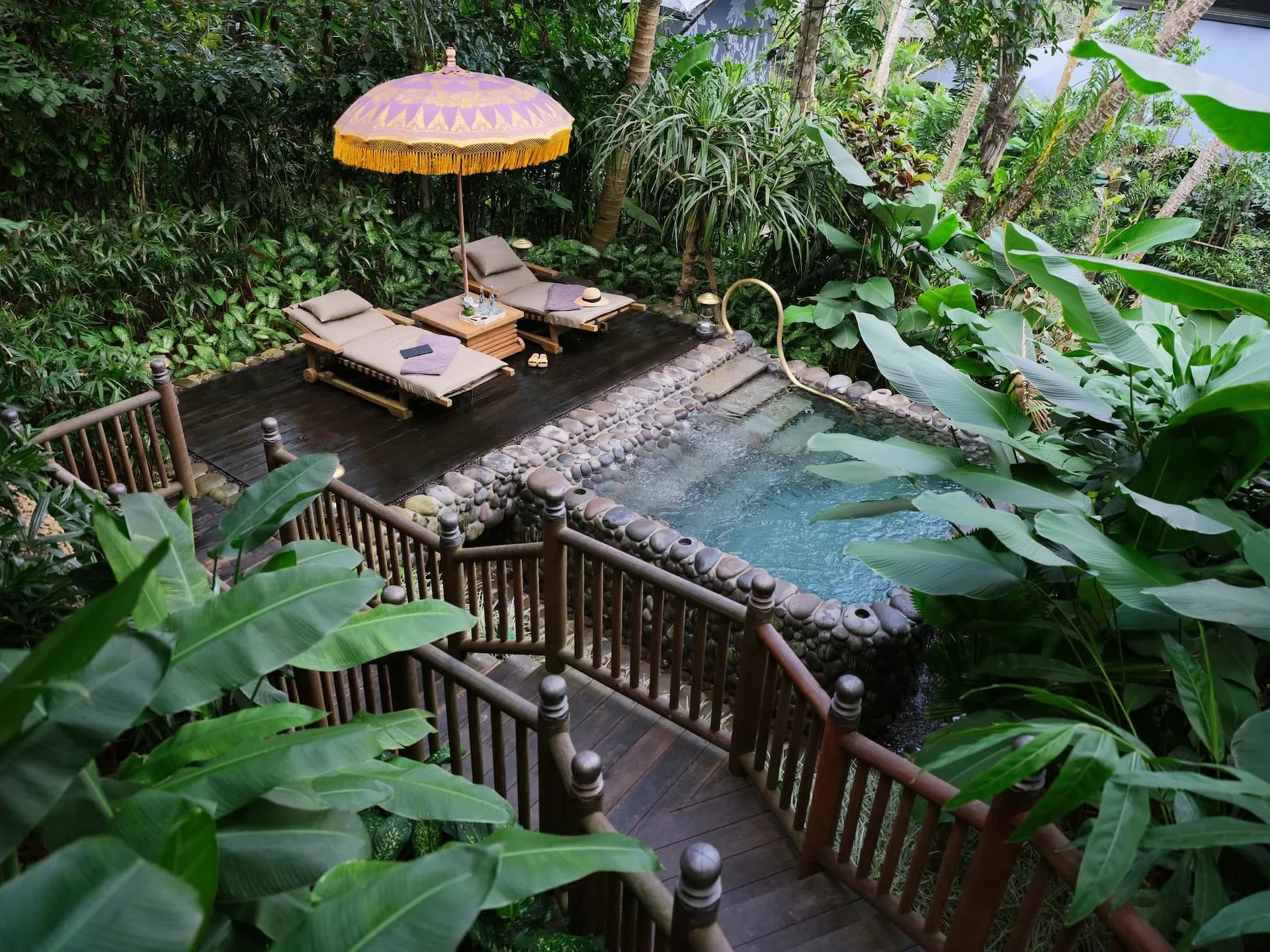
An open-air bathtub and a parasol stand on a timber platform, jungle pressed close on three sides.
Open-air bath on a timber deck
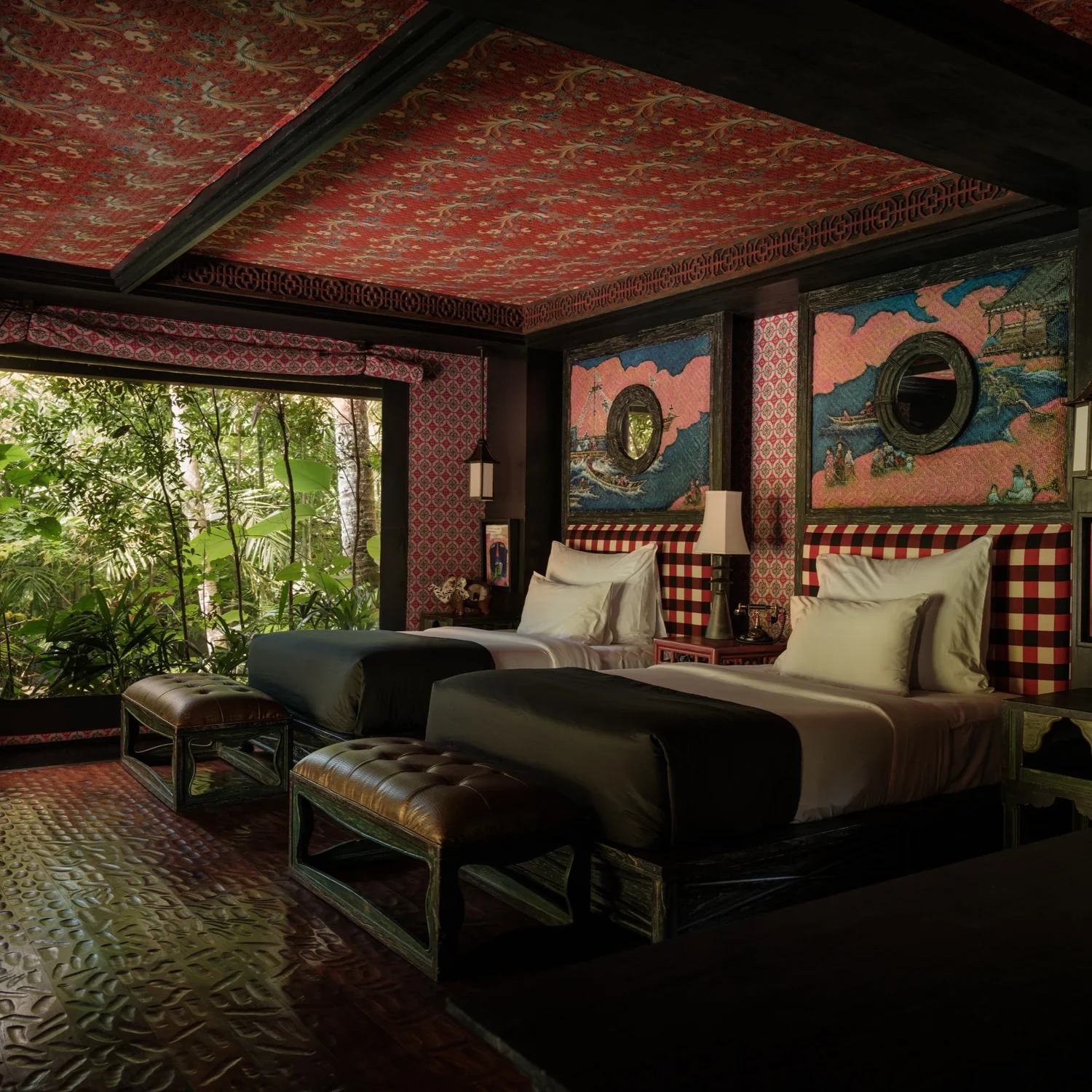
A guest tent interior with painted wall panels, layered textiles and a made bed in warm lamplight.
Painted walls and textiles in a guest tent
A room seen from inside, glass from floor to ceiling, thick green foliage filling the view.

Twenty-two tents, twenty-two themes

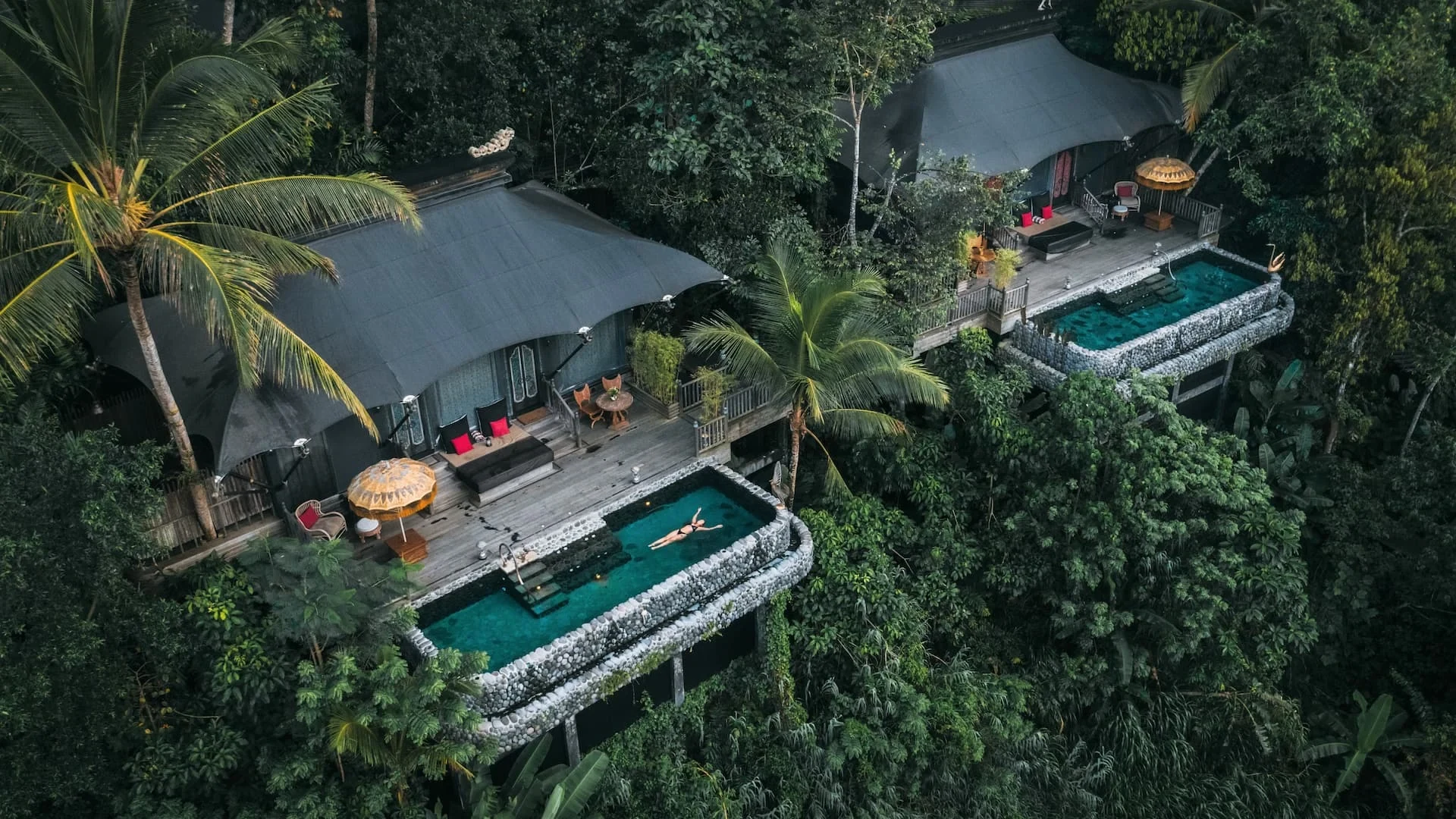
Each tent builds its own visual world from travel, nature or local craft, and each one comes with a private pool. Pools and terraces run out into the vegetation, so the boundary between room and slope is mostly glass. Which tent you get shapes the stay as much as which resort you chose in the first place.

Tented villas with private pools sit on a wooded slope, seen from above through the tree canopy.

Bicycles out to the rice fields

The gate opens almost straight onto village lanes, temples and farmland, and bicycles put you among them within minutes. Routes differ in length and climb, so pick one for the legs you have that day and for how the roads are running after rain, then ask the guide which lane is passable this week.

Scattered roofs and warm lights across a forested hillside at dusk, trees massed between them.

The night ends at the fire

Storytelling, live sound and the noise of the valley carry the camp theme past dark. Cooking sessions give daylight hours something to do with your hands, which means a day on the grounds never runs out of shape. You do not have to leave to fill it.

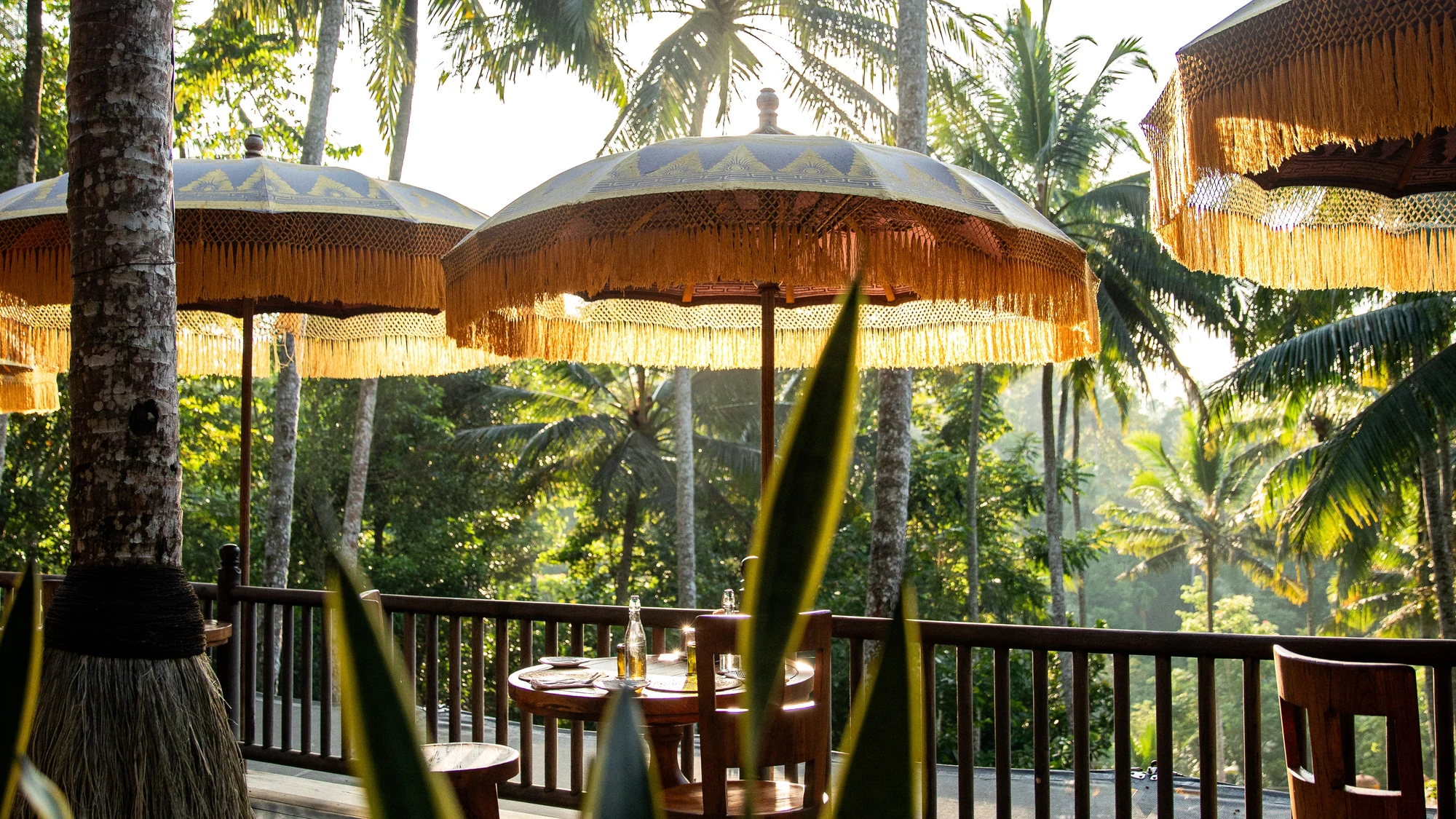
A terrace dining table with chairs under palms, low seating nearby and greenery along the edge.
Route

Three nights between the mountains and the coast

Give the camp three nights in the Ubud or north Bali stretch, then move to Uluwatu, Nusa Dua or another island. Two nights only let you taste the hotel; village time, a bicycle ride and a full rest day do not fit. Staying up here once, rather than driving up daily, is the point.

Three nights on the Keliki slope

The camp rewards time rather than efficiency. Book three nights, then decide how much of each day stays inside the grounds.

Stay

Three nights is the useful minimum. Two nights leaves time only for a quick look at the hotel and no room for the village, a ride and a proper rest day.

Getting there

The drive from Ngurah Rai International Airport usually takes two to three hours, and traffic can stretch that. Some trips stop in the south first, then climb to the hills.

Season

April to October is usually drier. The wet season brings denser vegetation, but roads and outdoor plans need to stay flexible.

Watch out

The site is steep and full of steps. If you dislike strong themed design, a simpler hotel in Ubud may suit you better.

Plan this into a journey

Tell us how many nights you have in Bali and we will show you where the camp fits between the hills and the coast.

[email protected]

Read this page in Chinese

Discuss this journey