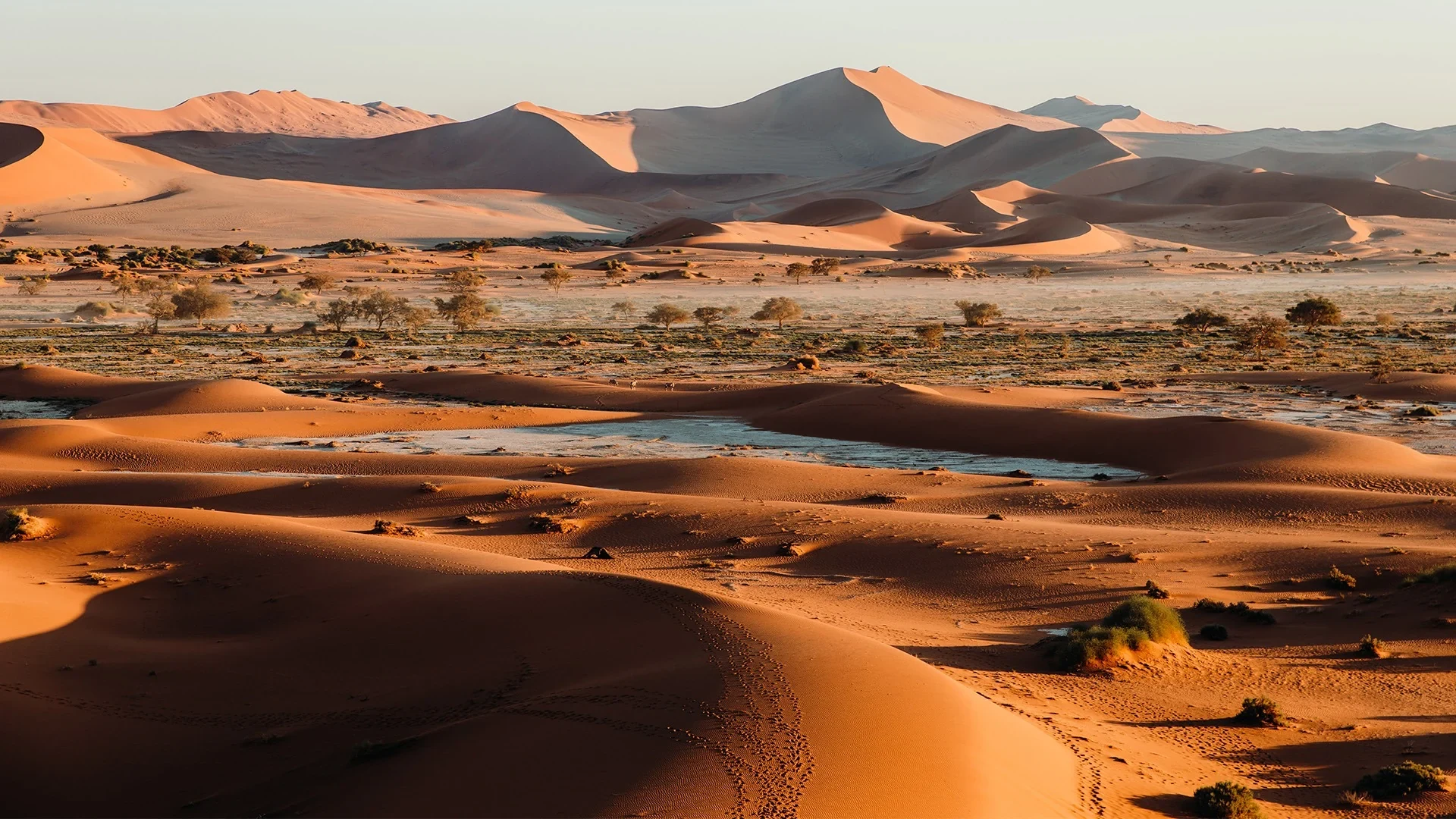
Orange-red dunes run in long ridges toward a line of dark mountains under a pale sky.

Namib Desert, Namibia

andBeyond Sossusvlei Desert LodgeGlass and stone facing a gravel plain

Glass and stone suites face a gravel plain, and the dunes of Sossusvlei and Deadvlei are a morning away. A private observatory takes the night shift. The stay divides into sunrise, the hot middle of the day, and the sky after dark.

The lodge sits in a private desert reserve near Sossusvlei and Deadvlei. Access is usually by light aircraft via Windhoek, and it works as a three-night core stop on a Namibian route.

PlaceNamib Desert
TypeDesert lodge
SuitsPhotography, dark skies
StayThree nights

Red dunes at dawn, the southern sky at night

Namib Desert, Namibia — Desert lodge and observatory.

andBeyond Sossusvlei Desert Lodge sits inside a private desert reserve. Suites and shared spaces both face the plain and the mountains, and the dunes around Sossusvlei and Deadvlei belong to the lodge's own ground rather than a separate excursion. Glass, stone and steel are set low against the sand.

Desert activity depends on temperature, and stargazing depends on a clear sky. Three nights in a row let the early starts, the midday rest and the night sessions sit on separate days instead of piling onto one. Weather moves things anyway, so expect the programme to be adjusted on the spot.

It suits photographers, people who want the southern sky, and travellers drawn to landforms and private nature experiences. Dune drives, balloon flights, helicopters and stargazing all depend on the weather. Book it for what it is and let the days rearrange themselves around the conditions.
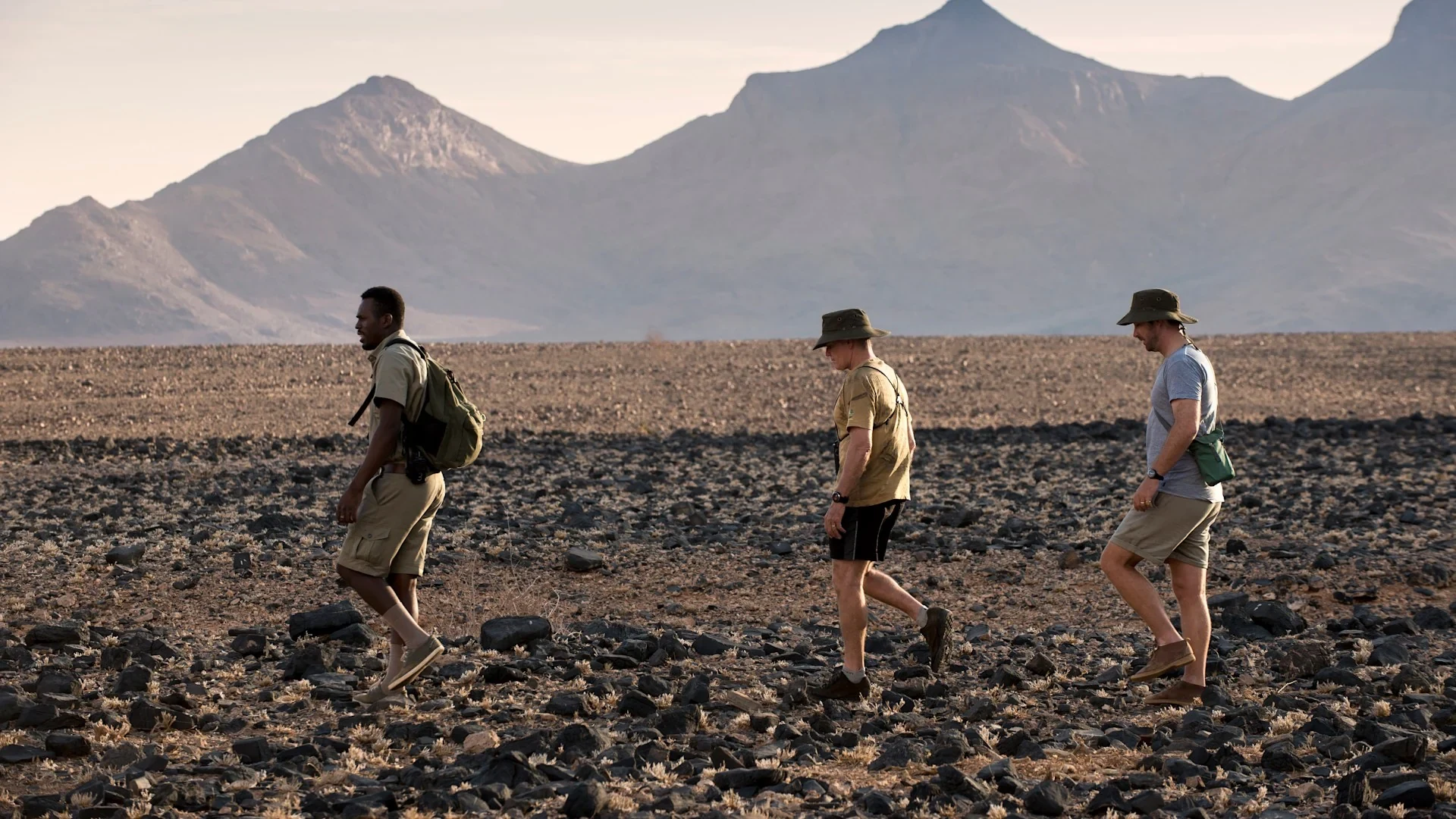
A single traveller walks across a flat gravel plain, small against the open ground and distant hills.
One figure crossing the open gravel plain
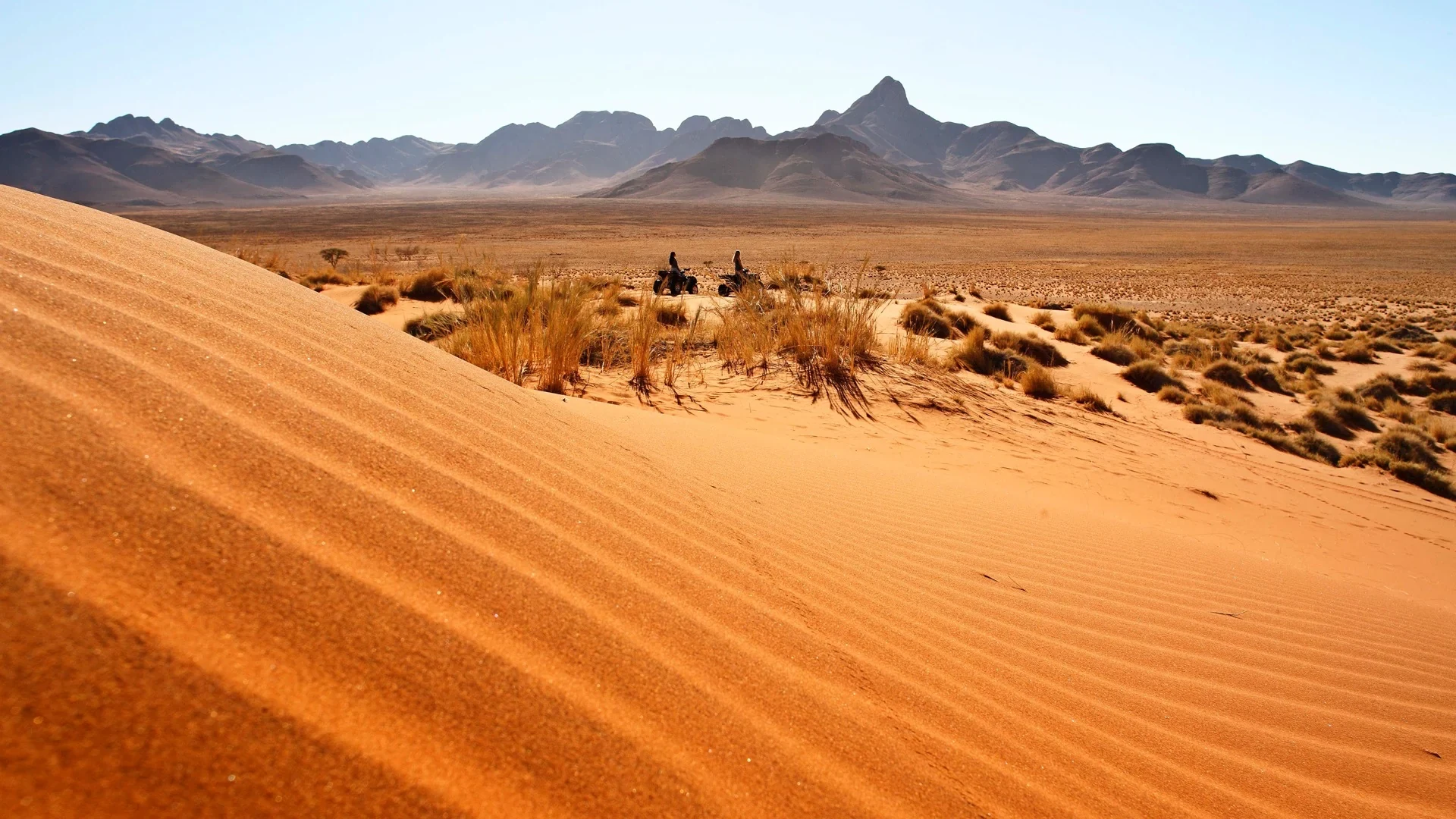
Rolling red dunes in full sunlight, the crests sharp and the shadowed faces deep red-brown.
Red sand folding under full sun
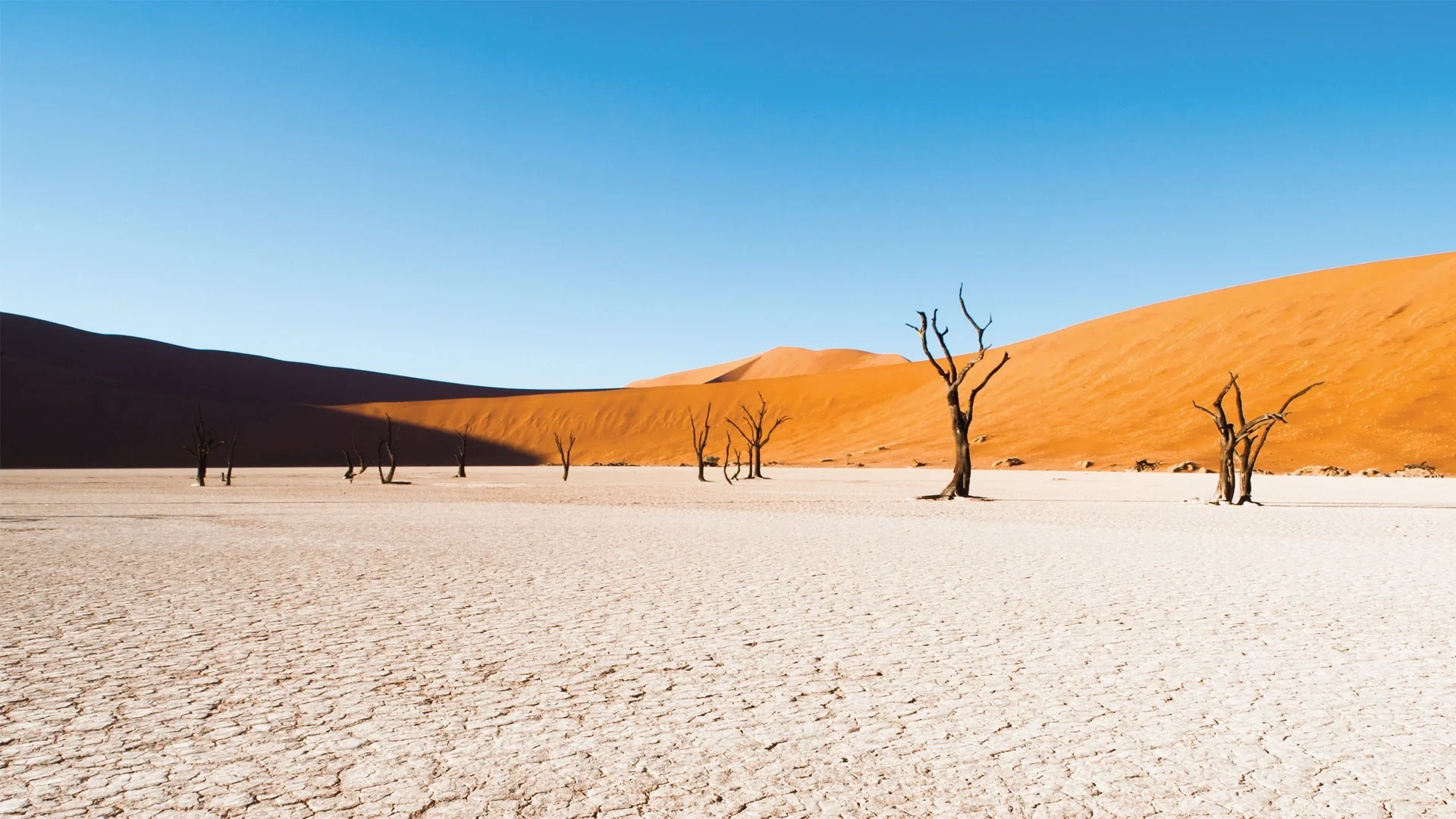
Orange dunes stand behind a white clay pan scattered with the blackened stumps of dead trees.

Into Sossusvlei before sunrise

The morning vehicle reaches the high dunes and Deadvlei while the sand is still cool, and the light moves fast across the slopes and the dry pan. Photography and walking each take time, so do not stack a long activity onto the same outing. Those dawn hours are the reason for the early start.

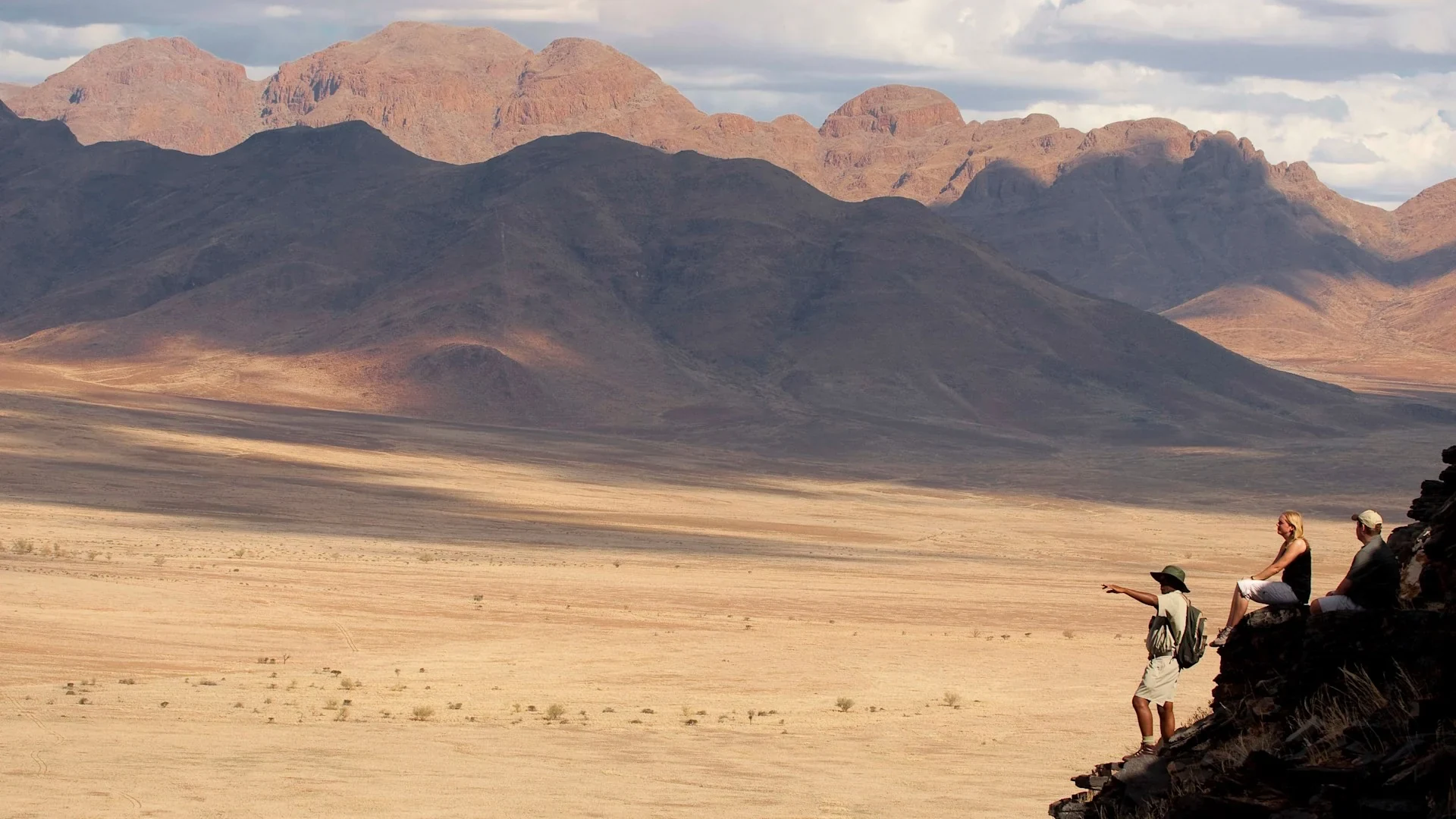
A traveller stands at the edge of a desert plain looking toward mountains, the ground pale and empty.

The southern sky from a private observatory

Light pollution is low here, which makes the Milky Way, the planets and the southern constellations easy to place. The observatory has the equipment and someone to explain what you are looking at. Cloud cover decides the night, so sessions can move between the evenings you have.

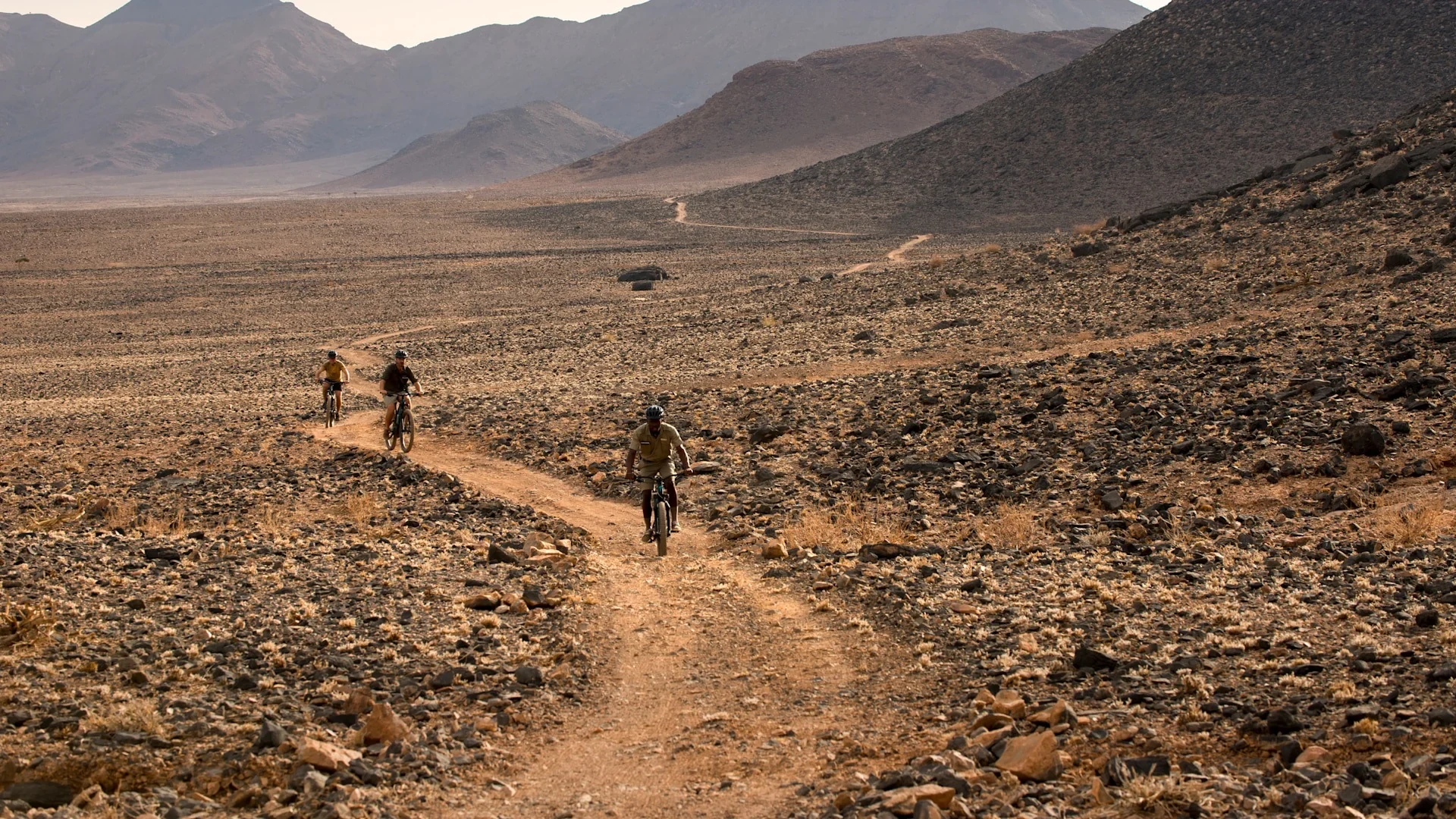
A figure walks a sandy track that runs up a dry valley between low rocky slopes.

Reading the Namib from the air

A light aircraft or a helicopter opens the relationship between the dunes, the dry riverbeds and the Atlantic in a way the ground cannot. It is the quickest way to see how the sand and the coast belong to one system, and how far the whole thing runs.

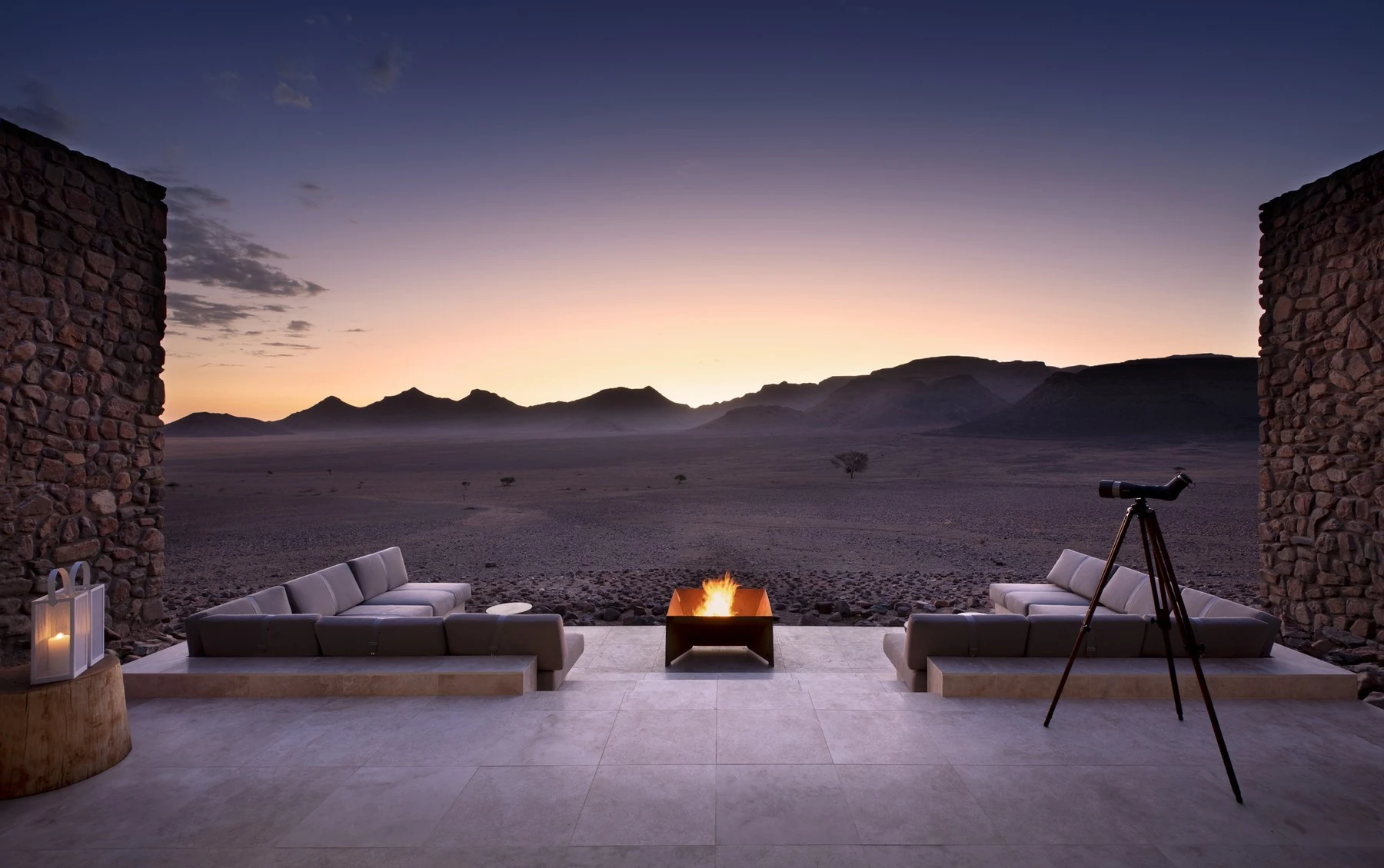
A fire bowl burns on a terrace at dusk, chairs drawn up around it and the desert going dark beyond.
Route

Three nights in the middle of a Namibian route

It combines with the Skeleton Coast, Damaraland and Etosha into a ten- to fourteen-night Namibian trip. The Sossusvlei section works best in the middle of a light-aircraft routing, where it breaks the flying rather than starting or ending it. That middle position keeps the long flights from stacking at either end.

Holding three nights in the Namib

Three nights covers the flights in and out, the dunes and the night sky without leaving any of them half done.

Stay

Three nights is the advice. Two are easily used up by arrival, departure and a single outing to the dunes, with no room for the sky.

Getting there

Usually a light aircraft from Windhoek or another Namibian camp, then a lodge transfer. Confirm the soft-bag luggage limit before you pack.

Season

April to October is cooler, with cold early mornings in winter. Summer is hotter but can bring dramatic cloud and sudden weather.

Watch out

Dunes, balloon flights, helicopters and stargazing all depend on weather. Expect the plan to be adjusted on site, often at short notice.

Plan this into a journey

Tell us how long you have in Namibia and we will place the dunes and the observatory where they break the flying rather than ending it.

[email protected]

Read this page in Chinese

Discuss this journey